Work record
West Coast Hotel Co. v. Parrish
1937 · Early 20th Century · Court Decision · English
Abstract
Question Presented. May a state, consistent with the Fourteenth Amendment's guarantee of due process, compel employers to pay adult women a wage set by a public commission as adequate for their support?
Arguments. The hotel company leaned on the 1923 precedent invalidating a similar District of Columbia scheme, contending that a wage fixed apart from what the labor was worth seized the owner's property. Parrish and Washington State maintained that women were poorly placed to bargain, that pay below subsistence injured their health, and that lawmakers could reasonably act on those facts.
Holding. Five justices sustained the act and expressly abandoned Adkins. Hughes wrote that the charter guards liberty, which may be limited by measures reasonably related to the general welfare, and that employers paying below subsistence pass costs to taxpayers. Sutherland and three colleagues countered that judges may not revise the document's meaning in response to hard times.
Significance. The ruling is widely taken to mark the close of close judicial scrutiny of economic regulation. Coming weeks after Roosevelt's proposal to enlarge the bench, it fed the legend of a switch in time, and it cleared a path for the national wage floor adopted in 1938.
Text. Both opinions appear complete in the library version, minus the original notes.
Key figures
- Elsie Parrish: Hotel chambermaid seeking wages owed under the state minimum
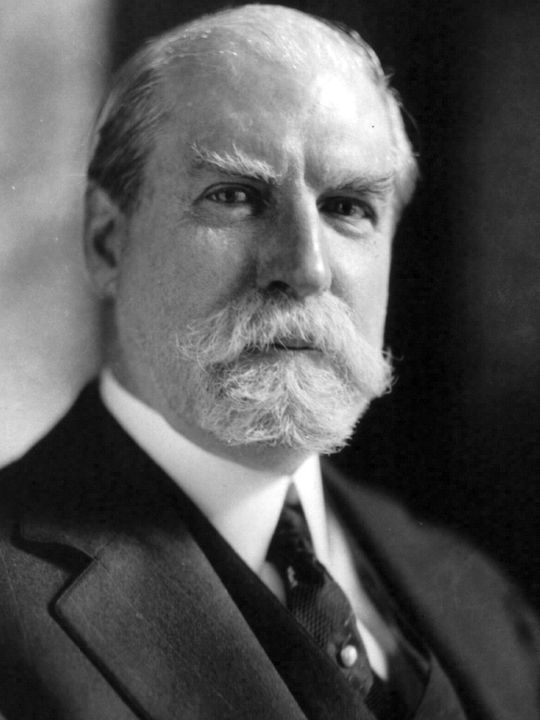
- Charles Evans Hughes: Chief Justice who wrote that liberty is subject to reasonable regulation
- George Sutherland: Author of Adkins, dissenting for four justices
- Owen J. Roberts: Justice whose vote formed the new majority

Summary
Washington State's 1913 Minimum Wages for Women act declared that inadequate wages and unsanitary conditions harmed the health and morals of women and minors, and it created an Industrial Welfare Commission to fix wages sufficient for their decent maintenance. Elsie Parrish worked as a chambermaid at the Cascadian Hotel in Wenatchee, owned by the West Coast Hotel Company. The minimum set for her work was $14.50 for a forty-eight-hour week, and she was paid less. With her husband she sued for the difference. The trial court ruled for the hotel on the strength of Adkins v. Children's Hospital (1923), which had struck down a District of Columbia minimum wage for women; the Supreme Court of Washington reversed and upheld the statute. The hotel argued that Adkins controlled: a wage fixed by the state without regard to the value of the work was an arbitrary taking of the employer's property and liberty of contract under the Fourteenth Amendment, as the Court had reaffirmed in Morehead v. New York ex rel. Tipaldo only the year before. Parrish's side and the state answered that the legislature could reasonably conclude that women workers bargained from weakness, that starvation wages damaged health and threw the cost of relief on the public, and that the Constitution left such judgments to lawmakers. On 29 March 1937 the Court affirmed, five to four, and overruled Adkins. Chief Justice Hughes observed that the Constitution mentions liberty, not freedom of contract, and that liberty is always subject to reasonable regulation for the protection of the community. He traced earlier decisions upholding hours laws and price regulation, adopted the reasoning of the Adkins dissents by Chief Justice Taft and Justice Holmes, and stressed the burden that underpaid workers placed on public relief during the Depression. A legislature, he added, need not cure every evil at once, so limiting the law to women did not deny equal protection. Justice Sutherland, for himself and Justices Van Devanter, McReynolds and Butler, replied that the Constitution's meaning does not shift with economic conditions, that judges must enforce it even against desirable legislation, and that Adkins had been rightly decided. A wage fixed without reference to the worth of the service, he argued, compelled the employer to support the employee, and the ability to bargain does not depend on sex. The library text gives the Chief Justice's opinion and Sutherland's dissent in full, with the notes left out. Because Roosevelt had announced his plan to enlarge the Court in February 1937, Roberts's vote was soon nicknamed the switch in time that saved nine, though historians have shown that the conference vote was taken in December 1936. Congress enacted a federal minimum wage in the Fair Labor Standards Act of 1938, which the Court upheld in United States v. Darby (1941).
Virtues in this work
- Justice: Hughes asks what a worker is owed when her bargaining position leaves her unable to earn enough to live, and what the community is owed when it must make up the difference.
- Fortitude: Sutherland holds to the reading he thought correct in the middle of a national crisis and a public campaign against the Court.
- Humility: In overruling Adkins, the Court openly acknowledges that its own earlier judgment had been mistaken.
Plot or Argument
- The statute and the chambermaid's claim
Hughes quotes the Washington act at length, recounts Parrish's suit for back wages, and explains that the hotel relied on Adkins, which the state court had declined to follow.
- Reopening the question left closed in Morehead
Because Morehead had decided only whether the New York law could be distinguished from Adkins, Hughes holds that the validity of Adkins itself is open here, and that the economic emergency and the importance of the question call for fresh consideration.
- Liberty under the due process clause
The Constitution speaks of liberty, not freedom of contract, and liberty in a social organization is subject to regulation reasonable in relation to its subject and adopted in the interests of the community. Hughes lists precedents sustaining limits on contracts, from Holden v. Hardy to Nebbia v. New York.
- Women's bargaining position and the public burden
Drawing on Muller v. Oregon and the Adkins dissents, Hughes holds that the legislature could consider women's weak bargaining power and the cost to taxpayers of supporting underpaid workers. He then overrules Adkins and rejects the equal protection objection that the act reached women alone.
- Sutherland's dissent
Sutherland defends the duty of each justice to follow his own judgment of the Constitution, denies that its meaning changes with events, restates the reasoning of Adkins about wages untied to the value of services, and argues that women and men stand on equal terms in making wage contracts.
Characters
- Elsie Parrish, appellee
Chambermaid at the Cascadian Hotel in Wenatchee, Washington, who sued for the difference between her pay and the state minimum.
- West Coast Hotel Company, appellant
Owner of the hotel, which contended that the minimum wage law violated its liberty of contract.
- Chief Justice Charles Evans Hughes, author of the majority opinion
Wrote that liberty is subject to reasonable regulation and that Adkins should be overruled.
- Justice George Sutherland, dissenter
Author of the Adkins opinion fourteen years earlier, he defended it for four dissenting justices.
- Justice Owen J. Roberts, member of the majority
Had voted against New York's minimum wage in Morehead in 1936 and joined Hughes here.
Lessons
Liberty versus freedom of contract
Hughes reads the due process clause as protecting liberty in general rather than any particular doctrine of contract, so that the question becomes whether a regulation is reasonable. Sutherland answers that liberty to agree on wages had been settled as part of that liberty by earlier decisions and should not be qualified by economic need.
- Why does Hughes point out that the words freedom of contract do not appear in the Constitution?
- What does Hughes mean by liberty in a social organization?
- Can a right be protected by the Constitution even if it is not named there?
Overruling a precedent
The Court had decided Adkins in 1923 and reaffirmed its rule in 1936. Hughes explains why the question was open again and why the earlier dissents now persuade a majority; Sutherland insists that a sound decision should not give way merely because times are hard. The case is a lesson in how courts weigh stability against correction.
- What reasons does Hughes give for reconsidering Adkins instead of following it?
- Why does Sutherland think changed economic conditions are no reason to reread the Constitution?
- When, if ever, should a court overturn its own recent decision?
Wages, the employer and the community
Hughes argues that paying less than a living wage shifts the cost of a worker's support onto taxpayers, so the public has a stake in wage bargains. Sutherland argues that a wage fixed without regard to the value of the work forces the employer to carry a social burden that belongs to the community as a whole.
- How does Hughes connect low wages to the public relief rolls of the Depression?
- Why does Sutherland call the minimum wage an arbitrary exaction from the employer?
- Who should bear the cost when a worker's earnings fall short of the cost of living?
Protecting women or treating them equally
The statute applied only to women and minors. Hughes relied on Muller v. Oregon and women's weaker bargaining position; Sutherland held that a woman's ability to make a fair bargain is no less than a man's. Both justices claimed to respect women's dignity while reaching opposite conclusions.
- What reasons does Hughes give for allowing a law that applies only to women?
- Why does Sutherland think the sex-based line makes the statute worse rather than better?
Context
The Depression had left millions unemployed, and states and Congress had passed wage, hour and price laws that the Court struck down in several cases between 1935 and 1936, including Morehead v. New York ex rel. Tipaldo, which invalidated a New York minimum wage for women in June 1936. Minimum wage laws for women had been enacted by many states after 1912, encouraged by reformers such as Florence Kelley and the National Consumers' League, but Adkins had cast doubt on all of them.
Composition
Parrish worked at the hotel from 1933 to 1935 and brought suit afterward. The Washington Supreme Court ruled for her in 1936, and the case was argued in Washington, D.C., on 16 and 17 December 1936. Justice Stone was ill at the time, and the Court held the case until he returned; it announced the decision on 29 March 1937, seven weeks after President Roosevelt proposed adding up to six justices.
Reception
Contemporaries read the decision as a sudden change of course timed to defeat the Court plan, which the Senate shelved later in 1937. Later scholars, drawing on a memorandum Roberts gave Felix Frankfurter, published in 1955, have argued that Roberts's vote preceded the plan and reflected his reading of the issue the parties had raised in Morehead. Either way, the case is usually treated as the close of the Lochner era and the start of deferential review of economic legislation.
Comparisons
- lochner-v-new-york
Hughes's opinion rejects the liberty-of-contract reasoning that Peckham had used in 1905 to strike down New York's bakery hours law.
- nlrb-v-jones-and-laughlin-steel
Decided two weeks later by the same five-justice majority, it upheld federal protection of union organizing and widened the reach of the Commerce Clause.
- wickard-v-filburn
By 1942 the deference Hughes showed to state wage laws had been extended to federal crop quotas, with no dissent recorded.
- the-wealth-of-nations
Smith's chapter on wages describes masters as able to hold out longer than workmen in a dispute, an observation close to Hughes's point about unequal bargaining.
- the-federalist-papers
Sutherland's insistence that judges interpret rather than amend the Constitution echoes Federalist No. 78 on the judiciary's duty of judgment rather than will.
Quotes
Frequently cited
“What is this freedom? The Constitution does not speak of freedom of contract. It speaks of liberty and prohibits the deprivation of liberty without due process of law.”
Frequently cited
“The community is not bound to provide what is in effect a subsidy for unconscionable employers.”
Frequently cited
“the meaning of the Constitution does not change with the ebb and flow of economic events.”
“But the liberty safeguarded is liberty in a social organization which requires the protection of law against the evils which menace the health, safety, morals, and welfare of the people.”
“Our conclusion is that the case of Adkins v. Children's Hospital, supra, should be, and it is, overruled.”
“The judicial function is that of interpretation; it does not include the power of amendment under the guise of interpretation.”
For Students
A reading companion for classical Christian high school students. See the student guide.
Reading Guide
Watch for
- The preamble of the Washington act, which states the legislature's reasons in terms of health and morals.
- Hughes's explanation of why the Morehead decision did not settle the question.
- The series of earlier cases Hughes cites to show that contracts have long been regulated.
- Hughes's reference to the unparalleled demands for relief during the Depression.
- Sutherland's opening defense of each justice's duty to decide by his own conscientious judgment.
Key terms and names
- Minimum wage
- The lowest pay an employer may lawfully offer for a given amount of work.
- Overrule
- To declare that an earlier decision of the same court is no longer good law.
- Stare decisis
- Latin for to stand by things decided: the practice of following precedent.
- Appellee
- The party who won in the lower court and defends that judgment on appeal; here, Elsie Parrish.
- Equal protection
- The Fourteenth Amendment's command that no state deny any person the equal protection of the laws.
Seminar Questions
- Comprehension What did the Washington statute require of employers, and why did Elsie Parrish sue her employer?
- Comprehension Which earlier decision did the Court overrule, and what had that decision held?
- Comprehension Which three justices joined Sutherland's dissent, and what did they think the judgment below should be?
- Interpretation How does Hughes use the costs of public relief to justify a law about private wages?
- Interpretation Sutherland says the blame for blocking desirable legislation must rest on the Constitution, not the Court. What view of the judge's role does this express?
- Big Question Should the meaning of a constitution remain fixed through economic crises, or should its application adapt to new conditions?
Faith Connections
- James 5:4 (Scripture)
James warns that the hire of the labourers kept back by fraud cries out and reaches the ears of the Lord, a text long cited on the justice of wages.
- 1 Timothy 5:18 (Scripture)
Paul repeats that the labourer is worthy of his reward, a principle both sides could claim: one for a living wage, the other for pay matched to the value of the work.
- Pius XI, Quadragesimo Anno (1931) (Great Conversation)
Published six years before the decision, the encyclical taught that a just wage should support the worker and his family while also taking account of the condition of the business.
Logic and Rhetoric
Central argument: Hughes reasons that the Constitution protects liberty rather than an absolute freedom of contract, that liberty may be regulated when the regulation is reasonable and serves the community, and that a minimum wage for women meets that test; Sutherland replies that the Constitution's meaning is fixed, that Adkins correctly applied it, and that a wage untied to the value of work arbitrarily burdens the employer.
Rhetorical device: rhetorical question. Hughes opens his central argument by asking what this freedom is (quote 0), then answers his own question, turning a settled doctrine into an open problem.
Debate: Resolved: that a state may require employers to pay a minimum wage fixed by law.
Memory Work
What is this freedom? The Constitution does not speak of freedom of contract. It speaks of liberty and prohibits the deprivation of liberty without due process of law.
the meaning of the Constitution does not change with the ebb and flow of economic events.
Writing Prompts
Essay: Explain how Hughes and Sutherland each understand the relation between the Constitution and changing economic conditions, and identify the strongest point each makes against the other.
Comparison with Lochner v. New York: Compare Peckham's reasons for striking down the bakery hours law in 1905 with Hughes's reasons for upholding the minimum wage in 1937, and explain what each justice thinks the word liberty protects.
Medical Lens
The Washington statute justified the minimum wage as a protection for the health and morals of women and minors, and Hughes accepts the legislature's judgment that wages too low for decent maintenance endanger health, so the case shows wage law being defended in the language of public health.
Creative Prompts
- Classroom
Stage the December 1936 argument: one team speaks for the West Coast Hotel Company relying on Adkins, another for Elsie Parrish and the state, and a bench of nine student justices votes and explains each vote in two sentences.
- Essay
Write a newspaper editorial for 30 March 1937 explaining the decision to readers in Wenatchee, presenting both Hughes's and Sutherland's reasons fairly.
- Dialogue
Imagine a conversation between Justice Roberts and Justice Sutherland in the conference room, in which each explains how he understands his duty to precedent.
- Essay
Compare the 1913 Washington act with a modern state minimum wage law, noting which of Hughes's reasons a legislature might still give today.
Further Reading
- The Constitution Reborn: The Supreme Court and the Constitutional Revolution in the Age of Roosevelt, William E. Leuchtenburg
Essays on the Court-packing fight and the 1937 decisions, including the story of Elsie Parrish.
- Rethinking the New Deal Court: The Structure of a Constitutional Revolution, Barry Cushman
Argues that doctrinal developments, not political pressure, best explain the Court's change in 1937.
- Supreme Power: Franklin Roosevelt vs. the Supreme Court, Jeff Shesol
Narrative history of the conflict between the President and the Court in 1935-1937.
Verification notes
All six quotations, four from Hughes and two from Sutherland, were located by Grep as exact strings in content/texts/west-coast-hotel-v-parrish.txt; the Sutherland line on economic events begins mid-sentence in the original and is quoted from the word the. The $14.50 weekly minimum and the four dissenters' names appear in the stored text. The hotel's name, Parrish's years of employment and the account of the December 1936 conference vote come from standard histories such as Leuchtenburg and Cushman rather than from the opinion.
- Confirm that Parrish worked at the Cascadian Hotel from 1933 to 1935 and the amount of back pay sought (often given as $216.19).
- Confirm the argument dates of 16 and 17 December 1936.