Work record
Youngberg v. Romeo
1982 · Postwar Contemporary · Court Decision · English
Abstract
Question Presented. When Pennsylvania confines a resident with a severe intellectual disability against his will, does the Fourteenth Amendment entitle him to reasonable safety, to freedom from unnecessary physical restraint, and to some degree of training?
Arguments. For Romeo, it was urged that confinement leaves fundamental liberties in place and that only weighty necessity can justify injury or shackling, with habilitation owed as a right. The administrators contended that they supplied the essentials of care and that choices about restraint and programs belonged to staff working with scarce resources.
Holding. Unanimous in result, the justices sent the case back for retrial. Powell recognized interests in safety and in freedom from unreasonable restraint, plus whatever training those interests demand, and told courts to presume that decisions by qualified staff are sound unless they abandon accepted practice. Blackmun's concurrence left room for a later claim to preserve existing self-care skills; Burger rejected habilitation as an independent right.
Significance. The deference rule announced here governs most later suits over conditions in mental hospitals and residential facilities, and the decision stands between earlier rulings on who may be committed and the 1999 statutory ruling on community placement.
Text. Included are all three opinions; the official notes are dropped apart from a handful of explanatory notes printed at the close.
Key figures
- Nicholas Romeo: Pennhurst resident whose mother sued on his behalf
- Duane Youngberg: Pennhurst superintendent and lead petitioner
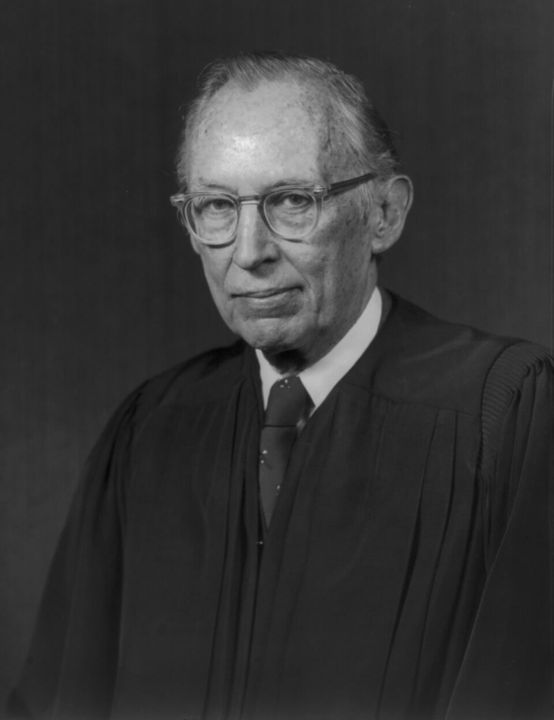
- Lewis F. Powell Jr.: Author of the professional-judgment test
- Harry A. Blackmun: Concurred for three to mark open questions
- Warren E. Burger: Chief Justice who denied any freestanding right to habilitation

Summary
Nicholas Romeo, a man with a profound intellectual disability who could not speak and needed help with the most basic tasks, lived with his parents in Philadelphia until his father died in May 1974. His mother, unable to care for him or to manage his outbursts, asked a county court to admit him to a state facility, and in June 1974 he was committed to the Pennsylvania institution known as Pennhurst State School and Hospital. There he was hurt on many occasions, by his own violence and by other residents, and for a period in the hospital ward his arms were restrained for part of each day. In November 1976 his mother sued three Pennhurst administrators for damages under the federal civil rights statute. After an eight-day trial in 1978, a jury instructed under Eighth Amendment standards found for the officials. The Third Circuit, sitting en banc, ordered a new trial, holding that the Fourteenth Amendment governed but dividing over the proper test. The question was what the Due Process Clause guarantees to a person whom a state has involuntarily committed and does not release: safe conditions, freedom from bodily restraint, and training, often called habilitation. Romeo's counsel argued that a man confined by the state retains fundamental liberties that may be curtailed only for compelling reasons, and that he was owed minimally adequate habilitation in its own right. Pennsylvania's officials answered that they had provided food, shelter, clothing and medical care, that restraint and training were matters of professional discretion in an underfunded institution, and that the Constitution imposed no duty to provide any particular program. On 18 June 1982 the Court vacated and remanded, with all nine justices agreeing in the judgment. Justice Powell held that Romeo retained liberty interests in reasonable safety and freedom from undue restraint, and that the state must provide such training as is reasonable to secure those interests. Courts were to balance these interests against the state's, deferring to the judgment of qualified professionals: a decision is presumptively valid unless it departs so far from accepted professional standards that no professional judgment was actually exercised. Justice Blackmun, joined by Justices Brennan and O'Connor, concurred to identify two questions the Court left open, including whether training needed to preserve self-care skills a resident brought into the institution is itself constitutionally required. Chief Justice Burger concurred only in the judgment, stating that he would hold that there is no constitutional right to habilitation as such. The library text contains Powell's opinion, Blackmun's concurrence and Burger's separate opinion; the notes of the official report are left out, though a few explanatory notes about the parties and the record appear at the end. The professional-judgment standard became the leading test for claims by residents of state institutions. Pennhurst itself had been the subject of separate class litigation, Pennhurst State School and Hospital v. Halderman, and the institution closed in 1987. The Court later addressed community placement under federal disability law in Olmstead v. L. C. (1999).
Virtues in this work
- Charity: Romeo's mother persisted in objecting to her son's injuries and finally went to court on behalf of a man who could not speak for himself.
- Prudence: Powell's opinion weighs the resident's liberty against the practical limits of an understaffed institution rather than adopting a rule that ignores either.
- Humility: Blackmun and the majority decline to settle questions the record did not clearly present, leaving them for a fuller case.
Plot or Argument
- Romeo's commitment and the trial below
Powell narrates Romeo's admission to Pennhurst, his injuries, the restraints ordered in the hospital ward, the jury instructions framed around the Eighth Amendment, and the fractured en banc ruling of the Third Circuit.
- Three claimed liberty interests
Part II takes up safety, freedom from bodily restraint and training in turn. The first two are recognized as liberty interests that survive commitment; the claim to training is accepted only so far as it is needed to secure safety and freedom from undue restraint, since the record left uncertain whether Romeo sought anything more.
- Balancing liberty against institutional needs
Part III observes that safety and freedom of movement can conflict inside an institution, and, drawing on Justice Harlan's Poe v. Ullman dissent and Bell v. Wolfish, holds that the residents' interests must be weighed against legitimate state interests under a standard that does not leave the matter to the unguided discretion of judges or juries.
- The professional-judgment standard
Powell adopts the test proposed by Chief Judge Seitz below: decisions of qualified professionals are presumptively correct, and liability attaches only for a substantial departure from accepted professional practice. Part IV restates the state's duties and remands because the jury was instructed under the wrong amendment.
- Blackmun's concurrence
Blackmun, joined by Brennan and O'Connor, flags two open issues: whether a state that commits a person for care and treatment may then provide no treatment at all, and whether training needed to keep a resident's existing self-care skills from deteriorating is constitutionally owed.
- Burger's opinion concurring in the judgment
The Chief Justice would decide flatly that the Constitution imposes no affirmative duty to provide habilitation, noting that Romeo's family had sought the state's help and that the state's custody was justified by the care it already gave.
Characters
- Nicholas Romeo, respondent
Pennsylvania man with a profound intellectual disability, committed to Pennhurst in 1974 at his mother's request.
- Paula Romeo, respondent's mother and next friend
Filed the 1976 complaint after objecting repeatedly to the injuries her son suffered at Pennhurst.
- Duane Youngberg, petitioner
Superintendent of Pennhurst, sued with the director of resident life and a unit director.
- Justice Lewis F. Powell Jr., author of the opinion of the Court
Framed the professional-judgment standard for the rights of residents of state institutions.
- Justice Harry A. Blackmun, concurring
Wrote for three justices to mark the questions the Court left undecided.
- Chief Justice Warren E. Burger, concurring in the judgment
Would have rejected any freestanding constitutional right to training.
Lessons
Liberty that survives commitment
The Court held that a person lawfully committed by a state does not lose every liberty at the institution's door. Romeo kept interests in bodily safety and in not being restrained without reason, and Powell compared his position favorably with that of convicted prisoners, whose confinement is meant to punish.
- Why does Powell say that the involuntarily committed deserve more considerate treatment than prisoners?
- Which liberty interests does the Court recognize, and which does it decline to decide?
- What does a state owe to a person it has taken into its care against his will?
Deference to professionals
Rather than letting juries second-guess daily decisions in crowded institutions, the Court gave the judgment of qualified staff a presumption of correctness. Supporters saw this as realistic about how institutions work; others worried that it might shield poor practice so long as a professional had signed off.
- What must a plaintiff prove to overcome the presumption the Court creates?
- Why does Powell think a stricter standard would burden institutions such as Pennhurst?
- When should judges trust the expertise of doctors, teachers or social workers, and when should they look harder?
Deciding only what the record requires
Blackmun's concurrence shows the discipline of leaving hard questions for a case that squarely presents them. Because the record did not clearly show what training Romeo sought, the Court declined to announce a broader right to habilitation, while Burger would have rejected that right at once.
- What two questions does Blackmun say the Court leaves open?
- Why does Burger think the Court cannot avoid the habilitation issue?
- Is it wiser for a court to decide narrowly or to settle a question for future cases?
Context
From the late nineteenth century American states housed large numbers of people with intellectual disabilities in residential institutions. By the 1960s and 1970s journalists, parents' associations and lawyers drew public attention to crowding and understaffing in such places, and federal courts began to hear suits claiming constitutional rights for residents. Pennhurst, opened in 1908 in southeastern Pennsylvania, became a focus of that litigation.
Composition
Romeo's case was tried in 1978 in the Eastern District of Pennsylvania, decided by the en banc Third Circuit in 1980, argued in Washington on 11 January 1982 and decided on 18 June 1982. It reached the Court one year after the Court's first decision in Pennhurst State School and Hospital v. Halderman, a separate class action over conditions at the same institution.
Reception
Lower courts adopted the professional-judgment standard widely, and it remains the usual test for claims about conditions of civil confinement. Advocates for people with disabilities often read Blackmun's concurrence as an opening for broader claims, while others praised the majority for respecting the limits of judicial competence. Over the following decades many states moved residents from large institutions into community settings, a shift addressed under federal statute in Olmstead v. L. C. (1999).
Comparisons
- oconnor-v-donaldson
Seven years before Romeo's case, the Court held that a state may not confine a non-dangerous person who can live safely in freedom, but it reserved the question of a right to treatment that Youngberg partly addressed.
- olmstead-v-lc
Where Powell asked what conditions are owed inside an institution, the 1999 decision asked when federal disability law requires placement outside one, again giving weight to the judgment of treating professionals.
- addington-v-texas
Addington set the standard of proof for committing a person in the first place; Youngberg concerns the rights that follow once commitment is accepted.
- buck-v-bell
Both cases arose from residents of state institutions for people judged to have intellectual disabilities, decided fifty-five years apart under very different understandings of the state's role.
Quotes
Frequently cited
“Persons who have been involuntarily committed are entitled to more considerate treatment and conditions of confinement than criminals whose conditions of confinement are designed to punish.”
Frequently cited
“the decision, if made by a professional, is presumptively valid; liability may be imposed only when the decision by the professional is such a substantial departure from accepted professional judgment, practice, or standards as to demonstrate that the person responsible actually did not base the decision on such a judgment.”
“We have established that Romeo retains liberty interests in safety and freedom from bodily restraint. Yet these interests are not absolute; indeed to some extent they are in conflict.”
“Respondent thus enjoys constitutionally protected interests in conditions of reasonable care and safety, reasonably nonrestrictive confinement conditions, and such training as may be required by these interests.”
“For many mentally retarded people, the difference between the capacity to do things for themselves within an institution and total dependence on the institution for all of their needs is as much liberty as they ever will know.”
“I would hold flatly that respondent has no constitutional right to training, or "habilitation," per se.”
For Students
A reading companion for classical Christian high school students. See the student guide.
Reading Guide
Watch for
- Powell's list of the three interests Romeo claims and how each is treated.
- The comparison between residents of an institution and prisoners.
- The phrase presumptively valid and what it means for a jury.
- Blackmun's two open questions.
- Burger's reminder that Romeo's family sought the state's help.
Key terms and names
- Involuntary commitment
- A court order placing a person in a state institution without his own consent.
- Habilitation
- Training meant to develop or maintain a person's basic skills, as distinct from treating an illness.
- Substantive due process
- The doctrine that the Due Process Clause protects certain liberties from government interference, not only fair procedures.
- Professional-judgment standard
- The rule that decisions by qualified staff are presumed valid unless they depart substantially from accepted practice.
- En banc
- A hearing before all the active judges of a court of appeals rather than a three-judge panel.
- Next friend
- A person who brings a lawsuit on behalf of someone unable to sue for himself.
Seminar Questions
- Comprehension Why was Nicholas Romeo committed to Pennhurst, and what did his mother's lawsuit claim?
- Comprehension Why did the Court say the jury had been instructed under the wrong amendment?
- Interpretation How does Powell's standard try to protect both the resident's liberty and the institution's ability to function?
- Interpretation How do Blackmun and Burger differ on whether the Court could avoid deciding the habilitation question?
- Interpretation Why does the Court borrow its test from Chief Judge Seitz rather than from the majority of the Third Circuit?
- Big Question What does justice require of a community toward those who cannot care for themselves or speak for themselves?
Faith Connections
- Proverbs 31:8-9 (Scripture)
The command to open one's mouth for the speechless and plead the cause of the poor and needy speaks to a case brought by a mother for a son who could not speak.
- Matthew 25:35-40 (Scripture)
Christ identifies himself with the sick and the imprisoned, a passage long invoked in Christian care for the confined and dependent.
Logic and Rhetoric
Central argument: Powell reasons that commitment leaves certain liberty interests intact, that those interests conflict with one another and with the state's legitimate needs, and that the conflict is best resolved by presuming professional decisions valid unless they abandon accepted practice; Burger replies that no right to training exists apart from safety, while Blackmun would leave room to recognize one.
Rhetorical device: comparison. Powell measures the rights of the committed against those of convicted prisoners (quote 1) to show that a standard designed for punishment sets the bar too low.
Debate: Resolved: that a state which commits a person for care owes him training to preserve the skills he had when he arrived.
Memory Work
Persons who have been involuntarily committed are entitled to more considerate treatment and conditions of confinement than criminals whose conditions of confinement are designed to punish.
For many mentally retarded people, the difference between the capacity to do things for themselves within an institution and total dependence on the institution for all of their needs is as much liberty as they ever will know.
Writing Prompts
Essay: Explain the professional-judgment standard and evaluate whether it gives adequate protection both to residents of institutions and to the staff who care for them.
Comparison with O'Connor v. Donaldson: Compare what the Court decided about Kenneth Donaldson in 1975 with what it decided about Nicholas Romeo in 1982, and explain why the two men's situations called for different questions.
Medical Lens
A central case in the law of institutional care: it defines what a state owes residents it holds involuntarily and makes the judgment of qualified staff the measure of constitutional adequacy, so that the history of restraint, safety and habilitation in American institutions is read through a standard of professional practice rather than of punishment.
- Opinion of the Court, Part I, paragraph beginning At Pennhurst, Romeo was injured on numerous occasions
Describes the injuries and the complaint that led a mother to sue the administrators of the institution where her son lived, and the arm restraints later used in its hospital ward.
- Opinion of the Court, Part IV, at the sentence beginning In determining whether the State has met its obligations
Gives decisions of professional staff a presumption of correctness and acknowledges that such institutions were often overcrowded and understaffed.
- Concurrence of Justice Blackmun, paragraph beginning The second difficult question left open today
Raises whether training to preserve a resident's existing self-care skills, such as dressing and hygiene, is part of the minimally adequate care the Constitution requires.
Creative Prompts
- Classroom
Stage a moot court for January 1982 with counsel for the Pennhurst administrators, counsel for Romeo, and three student justices writing as Powell, Blackmun and Burger.
- Essay
Draft the jury instruction a trial judge on remand might give under Powell's professional-judgment standard, in plain language a juror could follow.
- Dialogue
Write an exchange between a unit director at Pennhurst and a new staff member about when, under the Court's ruling, restraint may be used.
Further Reading
- Pennhurst and the Struggle for Disability Rights, Dennis B. Downey and James W. Conroy, eds.
Essays on the institution, its residents and the litigation that surrounded it.
- Inventing the Feeble Mind: A History of Intellectual Disability in the United States, James W. Trent
Survey of American institutions and ideas about intellectual disability from the nineteenth century onward.
Verification notes
All six quotations (four from Powell, one from Blackmun, one from Burger) were found by Grep as exact substrings of content/texts/youngberg-v-romeo.txt; the third begins mid-sentence after the words For these reasons. Facts about Romeo's commitment, the sixty-three injuries alleged, the petitioners' positions and the trial come from the opinion itself. The stored text omits the official footnotes but ends with several explanatory notes on the parties and the record. The vote is given as unanimous on the judgment, since Burger concurred only in the judgment. Prose uses current terms for intellectual disability; the quotations keep the vocabulary of the 1982 report.
- Confirm the mother's first name (Paula Romeo) from a source outside the opinion.
- Confirm that Pennhurst closed in 1987.
- Confirm the argument date of 11 January 1982.