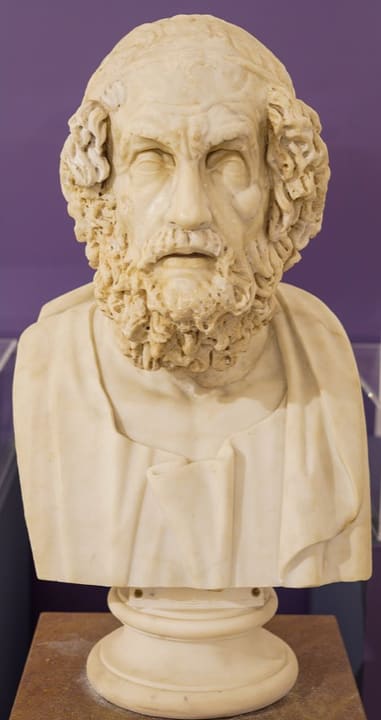
The Homeric Hymns are anonymous. Ancient readers, Thucydides among them, attributed at least some of them to Homer because they share the language and meter of the Iliad and Odyssey, but modern scholars regard them as the work of many rhapsodes composing over several centuries, the longest hymns probably between the 7th and 6th centuries BC and some of the shortest much later.
“Happy is he among men upon earth who has seen these mysteries; but he who is uninitiate and who has no part in them, never has lot of like good things once he is dead, down in the darkness and gloom.”
The Homeric Hymns are a collection of thirty-three anonymous Greek poems addressed to the gods, composed in the same dactylic hexameter and formulaic language as the Iliad and Odyssey. Ancient audiences treated many of them as Homer's own; most scholars now see them as the work of different singers over a long period, with the four great narrative hymns usually dated to the archaic age and some short pieces much later.