Work record
Across Five Aprils
1964 · Postwar Contemporary · Novel · English
Abstract
Background. Hunt, a longtime Illinois schoolteacher, built her first book from her grandfather's memories of a boyhood in Jasper County when the Union split, joining them to the record of the war's campaigns.
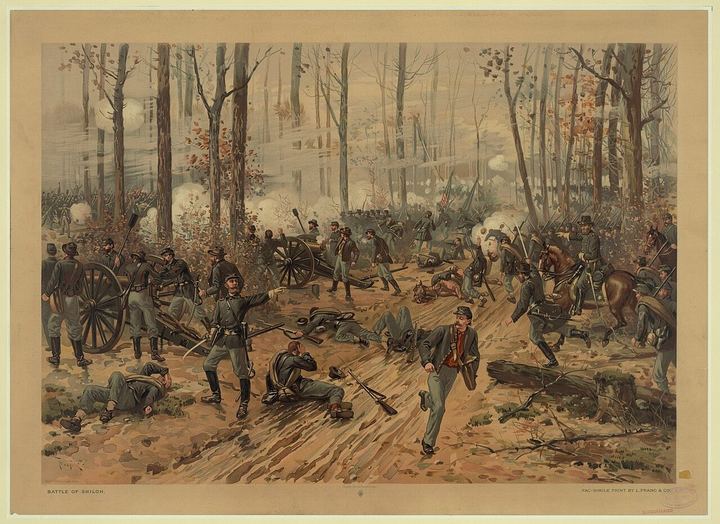
Plot. Two Creighton brothers and their cousin put on Union blue, the schoolmaster follows them, and the gentlest brother rides south to the Confederacy, and nine-year-old Jethro is left to plough beside his sister after their father's heart fails. Neighbours brand the household disloyal and set fire to its barn; Shiloh takes one brother and Gettysburg nearly takes the teacher. A starving cousin's desertion leads the boy to petition the President himself, and a pardon arrives.
Themes. Love that survives political division, mercy returned across years, the moral weight carried by a child, and learning as a way to understand suffering.
Form. Each April marks a stage of the war and of Jethro's growth. Distant battles reach the farm through letters and newspapers, so the reader learns the war as the family did, waiting weeks for word of each battle and reading every page brought home from town.
Significance. A 1965 Newbery Honor Book, it remains one of the most widely read Civil War novels for the middle grades, admired for its picture of a border-region family and its fairness to both armies' sons.
Main characters
- Jethro Creighton: Youngest son who comes of age during the war
- Matt and Ellen Creighton: His parents, farmers who have already buried children
- Bill Creighton: Beloved brother who goes south to fight
- Tom and John Creighton: Brothers in the Union army
- Jenny Creighton: Sister and companion in the farm work
- Shadrach Yale: Schoolmaster, soldier and Jenny's sweetheart
- Eb Carron: Cousin who deserts and is pardoned
- Ross Milton: Newton editor and Jethro's friend

Summary
Across Five Aprils follows the Creighton family of Jasper County in southern Illinois through the Civil War, from April 1861 to April 1865, as seen by the youngest son, Jethro, who is nine when the story opens. The family farm is worked by Matt and Ellen Creighton and their grown and growing children: John, a married son with a family of his own nearby; Bill, thoughtful and gentle, the brother Jethro loves best; Tom, eager for adventure; Jenny, close to Jethro in spirit; and their cousin Eb Carron, raised in the household. The schoolmaster Shadrach Yale, who loves Jenny, lends Jethro books and teaches him to think. The Creightons have already known grief, including the death of a daughter, Mary, killed when a drunken Travis Burdow fired wildly while chasing her and her young man home from a dance; Matt kept the neighbours from lynching him. News of Fort Sumter divides the region. A visiting Kentucky relative, Wilse Graham, argues the Southern side at the supper table, and the family's sympathies are mixed, as many in that border area were. Tom, Eb and John join the Union army, and Shad later enlists. Bill, who hates slavery but cannot fight against the South's people, quarrels with John and leaves to join the Confederacy. Matt suffers a heart attack, and the work of the farm falls on Jethro and Jenny. Because of Bill, some neighbours treat the Creightons as traitors: a gang connected with the bully Guy Wortman burns their barn and pours coal oil in their well. Jethro, driving the wagon alone to Newton, is threatened by Wortman and protected by Dave Burdow, Travis's father, who later helps the family. Ross Milton, the editor of the Newton newspaper, befriends Jethro and shames the barn-burners in print. Word comes that Tom has been killed at the Battle of Shiloh. Letters from the front teach Jethro the names of generals and battles, and the war's waste. In the hard winter of 1863 Eb deserts and hides, starving, in the woods; rather than turn him in or abandon him, Jethro writes to President Lincoln, who answers that deserters who return to their regiments may be pardoned, and Eb goes back. Shad is gravely wounded at Gettysburg, and Jenny travels east to nurse him and marry him. The war ends in April 1865, joy is cut short by Lincoln's assassination, and Shad and Jenny come home with a plan for Jethro to live with them and go on with his education. Follett published the novel in 1964; it was a Newbery Honor Book in 1965.
Virtues in this work
- Fortitude: Jethro takes on the ploughing and the farm after his father's heart attack and keeps working through threats, the burned barn and Tom's death.
- Charity: Jethro feeds and shelters his deserter cousin Eb in the woods instead of abandoning him to hunger or arrest.
- Justice: Matt's earlier refusal to let a mob hang Travis Burdow shows a respect for law that Dave Burdow later repays by protecting Jethro.
- Prudence: Torn between the law and his cousin, Jethro seeks counsel from the highest authority and writes to President Lincoln.
Plot or Argument
- April 1861: The farm and the news
Jethro plants potatoes with his mother, hears the family's memories of earlier losses, and listens to Wilse Graham, Shadrach Yale and his brothers argue about secession. News of Fort Sumter arrives, and Tom, Eb and John prepare to enlist.
- The brothers divide
Bill, unable to fight against the South, quarrels with John and leaves home to join the Confederate army, a blow that hurts Jethro most of all.
- The home front turns hostile
Matt's heart attack leaves Jethro and Jenny with the farm. Neighbours who resent Bill's choice burn the Creighton barn and foul the well; on a trip to Newton Jethro is threatened by Guy Wortman and saved by Dave Burdow.
- Shiloh and the editor
News of Tom's death at Shiloh reaches the family. Ross Milton of Newton befriends Jethro and defends the Creightons in his newspaper, and the community helps rebuild.
- Eb and the letter to Lincoln
Eb, a deserter, hides in the woods; Jethro, torn between law and mercy, writes to President Lincoln, whose reply allows Eb to return to his regiment.
- Gettysburg and the long war
Shad is badly wounded at Gettysburg and Jenny goes east to nurse and marry him. Letters follow the war through Chattanooga, Atlanta and Sherman's march, while Jethro grows into a man's work.
- April 1865: Peace and grief
Lee's surrender brings celebration, then Lincoln's assassination brings mourning. Shad and Jenny return, and Jethro is offered the chance to study with them.
Characters
- Jethro Creighton, protagonist
Youngest Creighton son, nine in 1861, who grows up carrying the farm and following the war through letters and newspapers.
- Matt Creighton, Jethro's father
Fair-minded farmer weakened by a heart attack early in the war.
- Ellen Creighton, Jethro's mother
Steady mother who has buried children and now sends sons to both armies.
- Bill Creighton, Jethro's favourite brother
Thoughtful son who opposes slavery yet joins the Confederacy rather than fight the South.
- John Creighton, elder brother
Married son who fights for the Union and breaks with Bill.
- Tom Creighton, brother
Eager Union volunteer killed at Shiloh.
- Jenny Creighton, Jethro's sister
Spirited sister who shares the farm work and later nurses and marries Shad.
- Shadrach Yale, schoolmaster and soldier
Teacher who guides Jethro's mind, enlists, and is gravely wounded at Gettysburg.
- Eb Carron, cousin
Orphaned cousin raised by the Creightons who deserts and is restored through Lincoln's mercy.
- Ross Milton, newspaper editor in Newton
Educated editor who befriends Jethro and defends the family in print.
- Guy Wortman, local bully
Loud neighbour who stirs up hatred against the Creightons.
- Dave Burdow, neighbour
Father of the man who killed Mary Creighton, who protects Jethro in return for Matt's past mercy.
Lessons
A house divided
Hunt shows the Civil War as a family quarrel in which those on both sides were loved. Bill's choice wounds the Creightons, yet they never stop loving him, and the novel lets a young reader feel why Lincoln spoke of a house divided.
- Why does Bill choose the Confederacy even though he does not believe in slavery?
- How do Matt and Ellen treat Bill's choice, and how do the neighbours treat it?
- Can you love someone deeply and still believe he is wrong?
Mercy repays mercy
Years before the war Matt stopped a mob from lynching Travis Burdow, and during the war Dave Burdow protects Jethro and helps the family. Lincoln's pardon of Eb repeats the pattern on a national scale.
- Why does Dave Burdow help the Creightons when other neighbours turn against them?
- What does Lincoln's letter teach Jethro about justice and mercy?
Growing up in hard times
Jethro takes on a man's work at ten and eleven, ploughing, driving to town and making moral choices alone. The book shows responsibility shaping character, and Shad's lessons show that learning helps a boy understand his times rather than merely suffer them.
- What choices does Jethro have to make by himself that a grown man would usually make?
- How does Shadrach Yale help Jethro understand the war?
- What did Jethro lose in these five years, and what did he gain?
The cost of war at home
Letters bring news of battles far away, but the war's cost is counted in Illinois too: in Tom's death, Matt's illness, the burned barn and the empty places at the table. Hunt makes the distant war personal without glorifying it.
- How does the family receive the news of Tom's death?
- Why does the war cause cruelty among neighbours who never see a battle?
Context
Southern Illinois, settled largely by families from Kentucky, Tennessee and the upper South, was divided in sympathy during the Civil War, and resentment of the war and the draft ran high in some counties. The novel draws on that setting and on real events: Fort Sumter, Shiloh, Fredericksburg, Chancellorsville, Gettysburg, Sherman's campaigns, Lee's surrender and Lincoln's assassination. Desertion was a serious problem for the Union army, and in March 1863 Lincoln issued a proclamation offering pardon to absent soldiers who returned to their regiments; Lincoln's letter to Jethro is a novelist's invention built on that policy.
Composition
Hunt drew on the stories of her grandfather, who had been a boy on a southern Illinois farm during the war, and on years of reading in Civil War history. She set the Creighton farm in Jasper County, near Newton. Follett Publishing Company of Chicago published the book in 1964.
Reception
Across Five Aprils was named a Newbery Honor Book in 1965 and received other awards, including the Charles W. Follett Award. It became a standard middle-school novel of the Civil War, valued for its account of the home front and for its fair portrayal of divided loyalties.
Comparisons
- the-red-badge-of-courage
Crane shows the war from inside a Union regiment in battle; Hunt shows it from a farm in Illinois, where battles arrive only as letters and grief. Read together they give the front and the home front.
- little-women
The March girls also live the Civil War through letters from an absent man and a journey to nurse him in Washington, as Jenny goes east to nurse Shad; both books are about families learning duty while the war is far away.
- house-divided-speech
Lincoln's 1858 warning that a house divided against itself cannot stand becomes literal in the Creighton household, where brothers fight on opposite sides.
- lincoln-second-inaugural-address
Lincoln's call for malice toward none and charity for all, delivered in March 1865, matches the mercy his letter shows Eb and the Creightons' refusal to stop loving Bill.
- johnny-tremain
Both are award-winning historical novels in which a boy comes of age as a war begins around him; Johnny is in Boston at the start of the Revolution, Jethro on an Illinois farm through the Civil War.
Quotes
For Students
A reading companion for classical Christian high school students. See the student guide.
Reading Guide
Watch for
- The five Aprils themselves, 1861 to 1865: notice what changes in Jethro and on the farm each spring.
- The supper-table argument with Wilse Graham early in the book, and how each Creighton son answers him.
- Bill's departure and the fight with John, and how Jethro carries his love for Bill afterwards.
- The burned barn and the threat on the road to Newton, and who stands with the family when others turn on them.
- Jethro's letter to Lincoln about Eb and the President's reply.
Key terms and names
- Jasper County
- The southern Illinois county where the Creighton farm lies, near the town of Newton. Many families there had roots in Kentucky and the South, so loyalties were divided.
- Copperheads
- Northerners who opposed the war and favoured peace with the South. Suspicion of Copperheads in southern Illinois helps explain why neighbours turn on the Creightons after Bill joins the Confederacy.
- Deserter
- A soldier who leaves his army without permission. Eb becomes one, and harbouring him could bring the law down on the family.
- Shiloh
- The battle in Tennessee in April 1862, also called Pittsburg Landing, where Tom Creighton is killed.
- Gettysburg
- The Pennsylvania battle of July 1863 where Shadrach Yale is gravely wounded.
- Secession
- The withdrawal of Southern states from the Union in 1860 and 1861, argued over at the Creighton table before Fort Sumter.
Seminar Questions
- Comprehension Which members of the Creighton family go to war, and on which side does each one fight?
- Comprehension What happens to the Creightons' barn and well, and why do some neighbours do these things?
- Comprehension What does Jethro do when he finds Eb hiding in the woods, and what does President Lincoln answer?
- Interpretation Matt once stopped a mob from hanging Travis Burdow. How does that old act of mercy come back to help Jethro during the war?
- Interpretation Why does Bill's choice hurt Jethro more than Tom's death in some ways, and how does Jethro keep loving his brother?
- Interpretation What does Ross Milton see in Jethro, and why does an editor in town matter so much to a farm boy?
- Big Question When the law and mercy seem to pull in different directions, as with Eb, how should a person decide what is right?
Faith Connections
- Mark 3:24-25 (Scripture)
Jesus says that a house divided against itself cannot stand, words Lincoln used in 1858. The Creighton family is that house, and the novel shows how love can hold it together even when the nation splits.
- Luke 15:11-32 (Scripture)
The father in the parable runs to meet a son who has gone astray. Lincoln's pardon of Eb, and the family's refusal to disown Bill, show the same father's heart.
- James 2:13 (Scripture)
Mercy triumphs over judgment. Matt's mercy to the Burdows before the war is repaid when Dave Burdow protects Jethro, and Lincoln chooses mercy for deserters like Eb.
- Abraham Lincoln, Second Inaugural Address (1865) (Great Conversation)
Lincoln asked the nation to bind up its wounds with malice toward none and charity for all. The Creightons, who lost sons on both sides of the war, live out that spirit before the speech is given.
Logic and Rhetoric
Central argument: A civil war divides not only a nation but neighbourhoods and families, and it tests whether people can hold to justice and love at once. The Creightons lose a son to each army's cause, are persecuted by neighbours, and face the choice of betraying or shielding a deserter. Because they answer suspicion with steadiness and wrongdoing with mercy, and because Lincoln does the same, the family survives with its love intact. Therefore mercy, not vengeance, is what allows a divided house to stand again.
Rhetorical device: epistolary narrative. Much of the war reaches Jethro, and the reader, through letters from Tom, Shad, John and finally the President, so that the distant battles are always filtered through people the family loves.
Debate: Resolved: Jethro was right to write to President Lincoln instead of reporting Eb to the authorities.
Writing Prompts
Essay: Choose one April in the novel and argue that it marks the most important turning point in Jethro's growing up. Use events from that spring and what came after.
Comparison with The Red Badge of Courage: Henry Fleming learns about courage in battle; Jethro Creighton learns about it on a farm far from any battlefield. Compare the two boys and argue which kind of courage is harder.
Medical Lens
Medicine is in the background. Matt Creighton's heart attack leaves him an invalid early in the war and moves the farm's labour onto a child, a common pattern on 19th-century farms where illness of the father threatened the family's living. Shadrach Yale's grave wound at Gettysburg and Jenny's journey to nurse him reflect the Union's crowded military hospitals around Washington, where many wounded soldiers depended on family members and volunteers. Eb's return as a hungry, sick deserter hints at the hunger and exhaustion behind much Civil War desertion. The family's grief for Tom, and for children lost before the war, is handled with restraint. None of this is given in clinical detail.
- Early chapters, 1861
Matt suffers a heart attack and cannot work; Jethro and Jenny take over the farm.
- 1862
The family learns that Tom has been killed at Shiloh.
- 1863
Shad is badly wounded at Gettysburg and Jenny travels east to nurse him.
Creative Prompts
- Fiction
Write the letter Jethro sends to President Lincoln about Eb, in a ten-year-old farm boy's careful handwriting and plain words.
- Essay
Explain why Hunt chose to tell the Civil War through a boy who never goes to battle. What can Jethro see that a soldier could not?
- Dialogue
Write a conversation between Bill and John on the night before Bill leaves, in which each tries to explain his choice without losing his brother.
- Classroom
Mark each of the five Aprils on a timeline with the war's major events and what was happening to each Creighton at that moment.
Further Reading
- Up a Road Slowly, Irene Hunt
- Lincoln: A Photobiography, Russell Freedman
- Battle Cry of Freedom, James M. McPherson
- Rifles for Watie, Harold Keith
1958 Newbery Medal novel of a Union boy in the Civil War's western theatre.
Verification notes
Publication and award facts (Follett, 1964; 1965 Newbery Honor; Jasper County setting) were checked at https://en.wikipedia.org/wiki/Across_Five_Aprils, and Hunt's birth in Pontiac in 1907, her grandfather's stories and her 1967 Newbery Medal for Up a Road Slowly at https://en.wikipedia.org/wiki/Irene_Hunt. Plot events (Matt's heart attack, the barn burning and well, Tom killed at Shiloh, Ross Milton's editorial, Eb's desertion and the Lincoln letter, Shad wounded at Gettysburg and Jenny's marriage to him, the ending with Jethro invited to study) were checked against https://www.gradesaver.com/across-five-aprils/study-guide/summary and https://booksthatslay.com/across-five-aprils-summary-characters-and-themes/; Dave Burdow's protection of Jethro, the logs he sends for the barn, and Travis Burdow's part in Mary's death at https://www.litcharts.com/lit/across-five-aprils/characters/travis-burdow and an eNotes chapter summary. No quotations are included, because no line could be confirmed on a reliable source.
- Text is under copyright; check quotations against an authorized edition before publication.
- Exact circumstances of Mary Creighton's death and of Dave Burdow's protection of Jethro on the road home from Newton.
- Whether Matt's illness is described as a heart attack and in which year it falls.
- Number of chapters (recalled as twelve) and how Bill's later fate is reported to the family.
- Whether the Charles W. Follett Award is correctly attributed to this book.
- Hunt's university teaching post (recalled as the University of South Dakota).