Work record
Beauty and the Beast
1756 · 18th Century · Short Stories · French
Abstract
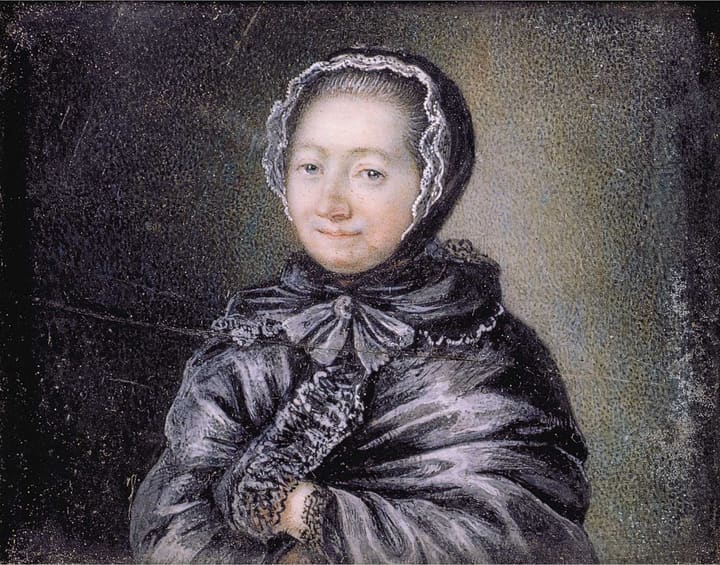
Background. Beaumont, a French governess living in England, condensed a sprawling romance by Madame de Villeneuve into a lesson for the girls of her schoolroom book, Le Magasin des enfants.
Plot. Bankrupt and lost in a winter wood, a trader takes shelter in an empty castle and cuts a single bloom for his youngest child, who has asked for nothing else. Its monstrous owner demands a life in payment, and the girl goes in her father's stead. Courted nightly by her captor, who is courteous but plain-spoken about his own dullness, she declines his proposals, overstays a visit home, and hurries back to find him near death. Her pledge to wed him breaks a curse.
Form. Compact and swiftly told, the tale relies on a few emblematic objects: a rose, an enchanted mirror, a ring that carries its wearer home, and statues at a palace gate.
Themes. Character over appearance and cleverness, filial love, the binding force of a promise, contentment in poverty, and the stubbornness of envy. Wonder serves instruction throughout.
Significance. This shortened version, rather than Villeneuve's, became the form most readers know; it fixed the episodes later used by Cocteau's film and countless children's editions. The library's copy is an unsigned English chapbook printing.
Main characters
- Beauty: Youngest and most virtuous of the merchant's daughters
- The Beast: Enchanted prince who keeps the palace of roses
- The merchant: Her ruined father, condemned for plucking a rose
- The elder sisters: Vain, jealous siblings who scheme against her
- The fairy: Benevolent lady who appears in dreams and judges at the end

Summary
A rich merchant has three sons and three daughters. The youngest daughter is so lovely that everyone calls her Beauty, and she is also the kindest; she spends her time reading good books, while her two proud elder sisters go to balls and plays and refuse every suitor below a duke or an earl. When the merchant loses his fortune and the family moves to a small house in the country, the elder sisters sulk and lie in bed till ten, but Beauty rises at four, cleans the house, cooks breakfast, and sings while she spins, and she grows stronger and healthier than before. A year later the merchant hears that one of his ships has come in and sets off to claim the cargo. The elder sisters beg for gowns and jewels; Beauty asks only for a rose, so as not to seem to rebuke them. The merchant's lawsuit leaves him as poor as before, and on the way home, lost in a snowy forest, he finds an empty palace lit from top to bottom, where a fire, a supper and a bed are ready for him. In the morning he picks a branch of roses from the garden for Beauty, and a terrible Beast appears and condemns him to death for the theft, but agrees to spare him if one of his daughters will come willingly to die in his place. Beauty insists on going. Instead of devouring her, the Beast gives her a splendid apartment with a library and harpsichord, a magic mirror in which she can see her home, and his company at supper every evening at nine. He tells her plainly that he is ugly and has no wit, and each night he asks whether she will be his wife; each night she gently says no, though she comes to value his kindness and good sense. When the mirror shows her father sick with grief, the Beast lets her go home for a week on her promise to return. Her jealous sisters, unhappily married to a vain husband and a spiteful wit, pretend affection to keep her longer, hoping the Beast will devour her for breaking her word. On the tenth night Beauty dreams that the Beast lies dying in the garden. She returns by laying her ring on the table, finds him senseless by the canal, having resolved to starve himself, and promises to marry him. At once he becomes a handsome prince, freed from a wicked fairy's spell. The fairy who had appeared in Beauty's dreams praises her for preferring virtue to wit and looks and turns the sisters into statues at the palace gate until they own their faults. Beaumont's tale, a much shortened rewriting of the long novella by Gabrielle-Suzanne de Villeneuve (1740), appeared in Le Magasin des enfants, published in London in 1756. The library text is an anonymous English version printed in an early nineteenth-century chapbook for juvenile readers.
Virtues in this work
- Charity: Beauty insists on going to the Beast's palace to die in her father's place, though he begs her not to.
- Industry: After the family's ruin Beauty rises at four to clean and cook while her sisters lie in bed till ten.
- Humility: Beauty asks only for a rose so as not to seem to rebuke her sisters, and the Beast speaks frankly of his own lack of wit.
- Prudence: Beauty judges that virtue and good temper make a happier marriage than wit or looks, and chooses the Beast on that ground.
Plot or Argument
- The merchant's family and its fall
The merchant's ruin sends the family to the country, where Beauty works cheerfully while her proud sisters idle and mock her.
- The rose and the Beast
Returning from a fruitless journey, the merchant shelters in an enchanted palace, picks a rose for Beauty, and is sentenced to death unless a daughter comes in his place.
- Beauty's choice
Beauty insists on going, leaves her father at the palace, and is comforted by a dream of a lady who promises that her good action will be rewarded.
- Evenings with the Beast
For three months the Beast visits her at supper, speaks honestly and kindly, and each night asks her to marry him; she refuses but grows to esteem him.
- The visit home and the sisters' plot
Allowed a week with her ailing father, Beauty stays longer when her envious sisters feign affection in hope that the Beast will punish her.
- The dream, the return and the transformation
A dream of the Beast dying sends her back; she finds him starving himself for grief, promises to marry him, and he becomes a prince.
- The fairy's judgment
The fairy rewards Beauty's choice of virtue, turns the sisters into statues until they own their faults, and the prince and Beauty marry and reign happily.
Characters
- Beauty, heroine
The merchant's youngest daughter, beautiful, studious, hard-working and generous, who goes to the Beast to save her father.
- The Beast, master of the enchanted palace
A prince under a fairy's spell, frightful in form and forbidden to show his intelligence, but honest, gentle and devoted.
- The merchant, Beauty's father
Ruined trader whose theft of a rose puts his life in the Beast's power.
- The two elder sisters, Beauty's rivals
Proud, idle and envious young women who resent Beauty's virtue and plot to keep her from returning.
- The three brothers, Beauty's brothers
Loyal sons who offer to fight the Beast and later go to the army.
- The fairy, the lady of Beauty's dreams
Good fairy who promises Beauty a reward, brings her family to the palace and passes judgment on the sisters.
Lessons
Goodness is worth more than a handsome face
Beauty decides that what makes a marriage happy is not wit or good looks but virtue, sweetness of temper and kindness, and the Beast has all three. Her sisters marry a handsome man and a clever man and are miserable. Beaumont wrote the tale for girls in the schoolroom, and her point is clear: judge people by their character, not by their appearance or their cleverness.
- Why are Beauty's sisters unhappy with their husbands?
- What good qualities does Beauty find in the Beast?
- Can you think of someone whose kindness made you stop noticing how they looked?
Keeping a promise
The merchant swears to return to the palace, and Beauty promises to come back after a week. When she lets her sisters persuade her to stay longer, the Beast nearly dies of grief. The story treats a promise as something sacred, and Beauty's tears when she dreams of the dying Beast show that she knows she has done wrong.
- What promise does Beauty break, and why?
- How does Beauty know she must go back at once?
- Is it ever right to break a promise?
Contentment in hard times
When the family loses its money, Beauty tells herself that crying will not make things better and sets to work, rising at four to clean and cook. Her sisters lament their lost gowns and do nothing. Work and cheerfulness make Beauty stronger and healthier, while idleness makes her sisters bitter.
- How does Beauty spend her days in the country?
- What do her sisters do instead?
- Why does Beauty ask her father only for a rose?
Envy is hard to cure
The fairy says that pride, anger, gluttony and idleness can sometimes be overcome, but that turning an envious heart is almost a miracle. The sisters' punishment is to stand as statues watching Beauty's happiness until they admit their faults. The tale warns young readers that envy hurts the envious most of all.
- Why do the sisters envy Beauty?
- What punishment does the fairy give them, and why is it fitting?
Context
Tales of a maiden married to a monster or an enchanted animal husband are very old; Apuleius's story of Cupid and Psyche in the second century is often named as an ancestor. The French literary fairy tale flourished from the 1690s, when Charles Perrault and Madame d'Aulnoy published their collections. In 1740 Gabrielle-Suzanne Barbot de Villeneuve included a long Belle et la Bête, with elaborate histories of the Beast and of Beauty's royal parentage, in her collection La Jeune Américaine et les contes marins. Beaumont, writing for the education of girls, cut the story to a few pages, kept its core of choice, promise and transformation, and shaped it as a moral lesson.
Composition
Beaumont included the tale in Le Magasin des enfants, published in London in 1756 (some sources give 1757), a book of conversations between a governess and her young pupils that mixes Bible history, natural history and moral stories. An English translation of the Magasin was published in London soon after, and the tale circulated widely in English chapbooks and children's books. The library text, from Project Gutenberg #7074 (transcribed by the Hockliffe Project), is an anonymous English version printed as a separate chapbook titled Beauty and the Beast: A Tale for the Entertainment of Juvenile Readers, ornamented with engravings; it names the author as Marie Le Prince de Beaumont.
Reception
Beaumont's short version became the standard form of the story in France and England and the basis of most later retellings for children. Andrew Lang's Blue Fairy Book (1889) instead followed Villeneuve's longer version. Jean Cocteau's 1946 film La Belle et la Bête and many later stage and screen adaptations drew on Beaumont's plot of the rose, the mirror, the ring and the dying Beast.
Comparisons
- the-blue-fairy-book
Lang's Beauty and the Beast is based on Villeneuve's long 1740 novella, with twelve children, many dreams and a longer palace sojourn; reading it beside Beaumont shows how much she cut and what she chose to keep.
- perrault-cinderella
Both heroines are youngest daughters mocked by proud sisters and rewarded for patience and humility; Cinderella forgives her sisters and finds them husbands, while Beaumont's fairy turns the unrepentant sisters to stone.
- perrault-sleeping-beauty
Perrault, like Beaumont, ends his tale with a moral addressed to young readers; in both, a fairy's spell holds a royal person until the right moment of release.
- grimms-fairy-tales
The Grimms' animal-bridegroom tales, such as The Frog King, share the pattern of an enchanted creature bound to a young woman by a promise and finally restored to human form, but are told in a plainer folk voice without Beaumont's spelled-out moral.
- the-golden-ass
Apuleius's tale of Cupid and Psyche, told within The Golden Ass, has a youngest daughter given to a supposed monster, jealous sisters, a broken condition and a long trial before the lovers are united.
Quotes
Frequently cited
“it is neither wit nor a fine person in a husband, that makes a woman happy; but virtue, sweetness of temper, and complaisance: and Beast has all these valuable qualifications.”
“were I to cry ever so much, that would not make things better, I must try to make myself happy without a fortune.”
“there are many that deserve that name more than you, and I prefer you, just as your are, to those, who, under a human form, hide a treacherous, corrupt, and ungrateful heart.”
“you have preferred virtue before either wit or beauty, and deserve to find a person in whom all these qualifications are united”
“Pride, anger, gluttony, and idleness, are sometimes conquered, but the conversion of a malicious and envious mind is a kind of miracle.”
For Students
A reading companion for classical Christian high school students. See the student guide.
Reading Guide
Watch for
- What Beauty asks her father to bring her, and why she asks for it.
- The words written in gold in the book in Beauty's apartment, and the magic looking-glass.
- The question the Beast asks every night at supper, and how Beauty answers.
- Beauty's dream on the tenth night at her father's house.
- What happens to the two sisters at the very end.
Key terms and names
- Merchant
- A trader who buys and sells goods carried by ship; Beauty's father loses his fortune when his ventures fail.
- Harpsichord
- A keyboard instrument that Beauty plays in the country and finds waiting in her apartment at the palace.
- Complaisance
- An old word for a kind, obliging readiness to please others; Beauty names it as one of the Beast's virtues.
- Wit
- Quick cleverness in talk; the Beast was forbidden to show his, and one sister's husband uses his to torment others.
- Enchantment
- A spell; a wicked fairy turned the prince into a Beast until a good young woman would agree to marry him.
Seminar Questions
- Comprehension Why does the Beast become angry with Beauty's father?
- Comprehension What does Beauty do when she hears what happened to her father?
- Comprehension How do Beauty's sisters trick her into staying home too long?
- Interpretation Beauty tells the Beast that he is ugly because she cannot tell a lie. Was that kind or unkind?
- Interpretation Why does Beauty say no to the Beast so many times before she says yes?
- Interpretation Why do you think the fairy made the prince hide his cleverness as well as his handsome face?
- Big Question What makes a person truly beautiful?
Faith Connections
- 1 Samuel 16:7 (Scripture)
When Samuel judges Jesse's sons by their height and looks, God tells him that He sees the heart. Beauty learns the same way of seeing at the Beast's supper table, until his shape scarcely matters to her.
- Proverbs 31:30 (Scripture)
Favour is deceitful, and beauty is vain. Beauty is lovely, but the tale praises her goodness and hard work, not her looks.
- John 15:13 (Scripture)
Jesus calls laying down one's life for one's friends the greatest love. Beauty, offering to die in her father's place and refusing to let him return alone, acts out that love within a family.
- Apuleius, Metamorphoses IV-VI (Cupid and Psyche) (Great Conversation)
The ancient tale of Psyche, given to a husband she fears is a monster and tested after her jealous sisters lead her astray, is often named as a forerunner of Beaumont's story; C. S. Lewis retold it in Till We Have Faces.
Logic and Rhetoric
Central argument: A happy marriage depends on virtue, good temper and kindness rather than on wit or handsome looks; the Beast has those virtues and the sisters' husbands lack them; therefore Beauty is wiser to marry the Beast than her sisters were to marry for looks and cleverness.
Rhetorical device: contrast (antithesis of characters). Beauty and her sisters are set side by side throughout: rising at four against lying in bed till ten, asking for a rose against asking for gowns, true tears against tears forced with an onion.
Debate: Resolved: that Beauty was right to tell the Beast honestly that he was ugly.
Memory Work
Pride, anger, gluttony, and idleness, are sometimes conquered, but the conversion of a malicious and envious mind is a kind of miracle.
Writing Prompts
Essay: Explain how Beauty shows her goodness in three places in the story: when the family becomes poor, when her father returns with the rose, and when she dreams of the dying Beast.
Comparison with Cinderella; or, The Little Glass Slipper: Compare Beauty and Cinderella as youngest sisters treated unkindly by proud older sisters: how does each heroine behave, and how does each story end for the sisters?
Medical Lens
The tale is a moral fable, and its few bodily details serve the moral. Beauty's hard country work makes her stronger and healthier, while idleness leaves her sisters listless. Grief is shown as able to make people ill: the magic mirror shows Beauty's father pining himself sick at her absence, and the Beast, believing himself abandoned, resolves to starve himself and is found senseless in the garden, revived when Beauty pours water on his head. These are conventional eighteenth-century pictures of love-sickness and grief, not clinical observations, and reading them in modern terms is an interpretation.
- Beauty's stay at the palace
In the magic mirror Beauty sees that her father has pined himself sick with grief at losing her.
- The return and the transformation
Beauty finds the Beast senseless by the canal; he says he had resolved to starve himself for grief at losing her.
Creative Prompts
- Classroom
Make a chart of the three sisters: what each wants, how each behaves when the family is poor, and what happens to each at the end.
- Fiction
Write the Beast's thoughts on the evening Beauty fails to come back after her week at home.
- Dialogue
Act out one of the suppers at nine o'clock in which the Beast asks Beauty to marry him and she answers honestly but kindly.
- Essay
Compare Beaumont's short version with Lang's longer one in The Blue Fairy Book. Which do you prefer, and what is lost or gained by shortening the story?
Further Reading
- The Blue Fairy Book, Andrew Lang (ed.)
Contains a longer Beauty and the Beast based on Villeneuve.
- The Classic Fairy Tales, Iona and Peter Opie
Prints early English texts of famous tales with notes on their history.
- Till We Have Faces, C. S. Lewis
A novel retelling Cupid and Psyche, the ancient tale often linked with Beauty and the Beast.
Verification notes
Plot details and quotations follow the attached Project Gutenberg text (#7074), an anonymous English chapbook version with no chapter divisions; quote locations are therefore given by episode. The text keeps its printer's misprint 'just as your are', which is copied exactly. Beaumont's authorship of the abridgment, its appearance in Le Magasin des enfants (London, 1756), and its basis in Villeneuve's 1740 novella were checked by web search (Morgan Library catalogue record and other sources); some sources date the Magasin to 1757. That Lang's Blue Fairy Book version follows Villeneuve is confirmed by the source note in the library's Blue Fairy Book text. All five quotes were found in the attached text.
- Confirm the date and title of the first English translation of Le Magasin des enfants (variously given as 1757 or 1759) before citing it.
- Confirm the date of the chapbook printing reproduced by Project Gutenberg #7074.