Work record
The Book of Enoch (1 Enoch)
c. 300–100 BC · Ancient · Religious Scripture · Ge'ez (Ethiopic), from Aramaic and Greek
Abstract
Background. Different authors writing in Aramaic during the Second Temple era assembled revelations under the name of the patriarch who, in Genesis, was taken by God. Qumran fragments prove four sections circulated before the Christian era; Ethiopian Christianity kept the whole and counts it as Scripture.
Content. Rebel angels swear on Hermon, sire giants and spread forbidden crafts until archangels bind them before the Deluge. Escorted by angels, the seer tours prisons, mountains and the tree of life. The Parables reveal an Elect One beside the Head of Days; Uriel discloses a 364-day calendar; an animal allegory runs through sacred history; a testament of woes and blessings and the wondrous birth of Noah conclude.
Teaching. Evil is traced to angelic rebellion, the cosmos models obedience, and the afflicted righteous are promised vindication at a coming judgment of kings and the mighty, while sinners are told that their wealth will not save them.
Text. Charles's 1917 version keeps his symbols for corrupt or reconstructed words; Oesterley's introduction is omitted here.
Significance. Quoted in Jude, debated by Tertullian and Augustine, the book is basic evidence for Jewish angelology and messianic expectation before and around the time of Jesus.
Key figures
- Enoch: Antediluvian patriarch and heavenly scribe who narrates the visions
- Methuselah: His son, charged with keeping the books
- Semjaza and Azazel: Leaders of the rebel Watchers
- Uriel: Angelic guide who reveals the laws of the luminaries
- Raphael: Archangel sent to bind Azazel and heal the earth
- The Son of Man: Pre-existent Elect One enthroned as judge in the Parables
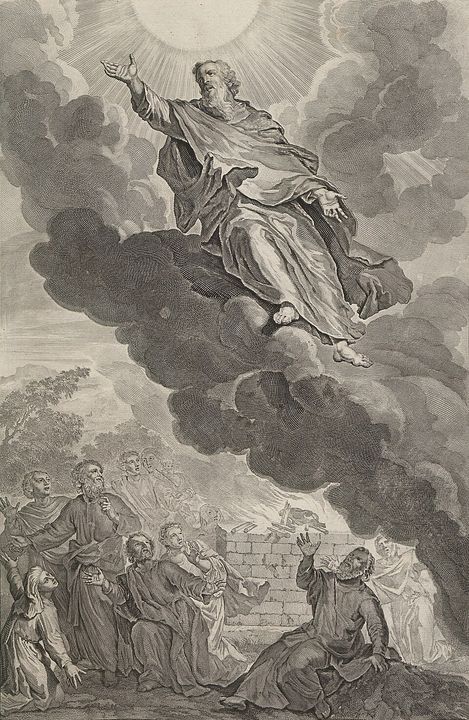

Summary
The Book of Enoch, usually called 1 Enoch, is a collection of five Jewish apocalyptic books gathered under the name of Enoch, the patriarch of Genesis 5 who walked with God and was not, for God took him. Written in stages during the Second Temple period, it presents Enoch as a righteous scribe who is shown the secrets of heaven, earth and the coming judgment and writes them down for his son Methuselah and for a remote generation. The first part, the Book of the Watchers (chapters 1–36), opens with a prophecy of God coming down on Mount Sinai with ten thousands of holy ones, a passage quoted in the Epistle of Jude. It then expands Genesis 6:1–4: two hundred angels, the Watchers, led by Semjaza, swear an oath on Mount Hermon, take human wives and father giants who devour the earth. Azazel teaches the making of weapons and ornaments, and others teach charms, root-cutting and astrology. Michael, Uriel, Raphael and Gabriel bring the cry of the earth before God; Raphael is sent to bind Azazel in the desert and heal the earth, Noah is warned of the Flood, and the Watchers are condemned. When they ask Enoch to intercede, he ascends in a vision to a house of fire where the Great Glory sits enthroned, and then journeys with angelic guides to the ends of the earth, the prison of the fallen stars, the place of the dead, the mountain of God and the tree of life. The second part, the Similitudes or Parables (37–71), describes a heavenly figure called the Elect One, the Righteous One and that Son of Man, hidden before creation, who sits on the throne of glory beside the Head of Days to judge the kings and the mighty. The third, the Astronomical Book (72–82), sets out the courses of sun, moon and stars as revealed by Uriel and defends a year of 364 days. The fourth, the Dream Visions (83–90), contains a vision of the Flood and the Animal Apocalypse, which retells Israel's history from Adam to the Maccabean age as a story of bulls, sheep and seventy shepherds, ending with a new house and a white bull. The fifth, the Epistle of Enoch (91–105), includes the Apocalypse of Weeks and a long series of woes against the rich and those who wrong the poor, with exhortations to the righteous to walk in uprightness. The book closes with the miraculous birth of Noah (106–107) and a short appendix (108). Aramaic fragments of every part except the Similitudes were found among the Dead Sea Scrolls. The full text survives in Ge'ez, and 1 Enoch is canonical in the Ethiopian Orthodox Tewahedo Church, though not in Jewish, Roman Catholic, Eastern Orthodox or Protestant canons. The library text is R. H. Charles's 1917 translation, with his editorial brackets retained.
Virtues in this work
- Justice: The archangels bring the cry of the slain earth before God in Chapter IX, and judgment falls on the Watchers who corrupted it.
- Hope: The Epistle promises the persecuted righteous that their names are written before the Most High and that they will be vindicated after death.
- Piety: Enoch, waking from his dream of destruction in Chapter LXXXIII, rises to pray that a remnant may be left on the earth.
Plot or Argument
- Chapters I–V: The coming judgment
Enoch's parable announces God's descent on Sinai with his holy ones to judge the ungodly and give peace to the elect, contrasting the obedient order of nature with human disobedience.
- Chapters VI–XVI: The fall of the Watchers
Two hundred angels descend on Hermon, take wives and father giants; forbidden arts are taught; the archangels intercede, Azazel and Semjaza are bound, and Enoch's petition for the Watchers is refused after his vision of the fiery throne.
- Chapters XVII–XXXVI: Enoch's journeys
Guided by Uriel, Raphael and other angels, Enoch tours the ends of the earth, the prison of the disobedient stars and angels, the hollow places where the souls of the dead await judgment, the tree of life and the accursed valley.
- Chapters XXXVII–LXXI: The Similitudes
Three parables reveal the Lord of Spirits, the Head of Days and the Elect One or Son of Man who will judge the kings and the mighty; the section includes Noah fragments and ends with Enoch's translation to heaven.
- Chapters LXXII–LXXXII: The Astronomical Book
Uriel shows Enoch the portals of sun and moon, the laws of the luminaries and winds, and a 364-day year; Enoch charges Methuselah to preserve the books.
- Chapters LXXXIII–XC: The Dream Visions
A dream of the earth's destruction is followed by the Animal Apocalypse, an allegorical history from Adam through the Flood, the Exodus, the kingdoms, the exile and the seventy shepherds to a final judgment and a new house.
- Chapters XCI–CV: The Epistle of Enoch
Enoch's testament to his children includes the Apocalypse of Weeks, exhortations to love uprightness, and repeated woes against the unjust rich, with promises of vindication for the righteous after death.
- Chapters CVI–CVIII: Noah's birth and appendix
Lamech's wondrous son alarms him; Methuselah consults Enoch, who explains that the child will survive the Flood; a final chapter promises reward to the humble.
Characters
- Enoch, seer and scribe
The patriarch of Genesis 5, presented as a righteous scribe who receives visions and writes them for later generations.
- Methuselah, Enoch's son
The recipient of Enoch's books and testaments.
- Semjaza (Semjâzâ), leader of the Watchers
Chief of the two hundred angels who bind themselves by oath on Mount Hermon.
- Azazel (Azâzêl), fallen Watcher
Teaches metalwork, weapons and cosmetics; bound by Raphael in the desert of Dudael.
- Michael, Gabriel, Raphael and Uriel, archangels
Intercede for the earth and execute judgment; Uriel guides Enoch and reveals the laws of the luminaries.
- The Son of Man (the Elect One), heavenly judge
The figure of the Similitudes who sits on the throne of glory beside the Head of Days.
- Noah, righteous survivor
Warned of the Flood and born, in the closing chapters, with wondrous signs.
Lessons
Knowledge without righteousness
In the Watchers story the fallen angels corrupt the earth partly by teaching: weapons, cosmetics, charms, root-cutting and astrology. The book does not condemn knowledge as such, since Enoch himself receives the true laws of the heavens from Uriel, but it asks what happens when skill is given apart from obedience.
- Which arts do the Watchers teach in Chapters VII–VIII, and why might these be grouped together?
- How does the knowledge Uriel gives Enoch differ from what Azazel gives humankind?
- Is any knowledge dangerous in itself?
Judgment as hope for the oppressed
The repeated scenes of judgment, from Chapter I to the woes of the Epistle, are written for people who see the powerful prosper. The promise that the Lord will judge the kings and the mighty is meant to steady the righteous, not to make them fearful.
- Who are the targets of the woes in Chapters XCIV–C?
- Why might a persecuted community value a vision of the Head of Days on his throne?
Reading the order of creation
Chapters II–V and the Astronomical Book present the regular motions of sun, moon, stars and seasons as obedience to God, a standard against which human disorder is measured. Calendar and conduct belong together in this way of thinking.
- Why does Enoch begin by pointing to the trees, seasons and luminaries?
- What is at stake for the author in the correct number of days in a year?
Canon and its edges
1 Enoch was treasured at Qumran, quoted in Jude, discussed by early Christian writers, and preserved as Scripture in Ethiopia, while other churches did not receive it into their canons. Studying it shows students how the Bible's neighbours were read and why communities drew their boundaries where they did.
- What does Jude's use of 1 Enoch 1:9 suggest about how the book was regarded in the first century?
- Why might Augustine, in City of God XV, decline to treat it as canonical?
- How should a reader approach a text that one church holds as Scripture and another does not?
Context
1 Enoch belongs to the Jewish literature of the Second Temple period (late sixth century BC to AD 70) and is one of the earliest extended apocalypses, alongside Daniel. Its sections reflect different moments: the Book of the Watchers and the Astronomical Book are generally dated to the third century BC; the Animal Apocalypse alludes to the Maccabean revolt of the 160s BC; the Epistle is usually placed in the second century BC; the Similitudes, absent from Qumran, are dated by most scholars to the late first century BC or the first century AD, though their date remains debated.
Composition
The parts were composed in Aramaic and translated into Greek, from which the Ge'ez version was made. Aramaic fragments from Qumran Cave 4, published by J. T. Milik in 1976, confirmed the antiquity of four of the five books. Greek portions survive in the Akhmim manuscript (Codex Panopolitanus) and in quotations by the Byzantine chronicler George Syncellus. The Scottish traveller James Bruce brought Ethiopic manuscripts to Europe in 1773, and Richard Laurence published an English translation in 1821. R. H. Charles issued critical editions and translations in 1893 and 1912; the 1917 version in the Translations of Early Documents series, used here, keeps his marks for corrupt or reconstructed readings.
Reception
The Epistle of Jude quotes 1 Enoch 1:9 as the prophecy of Enoch, and the Epistle of Barnabas cites Enoch. Tertullian defended the book's authority, while Augustine discussed it in City of God XV and judged it outside the canon. It fell from use in most of the Church but remained Scripture in the Ethiopian Orthodox Tewahedo Church. Since the Qumran discoveries it has been central to the study of Jewish apocalyptic, angelology, calendar debates and the background of New Testament titles such as Son of Man; scholars differ on how far it shaped the Gospels.
Comparisons
- the-bible
1 Enoch expands Genesis 5:21–24 and 6:1–4, shares the throne-vision and Son of Man imagery of Daniel 7, and is quoted in Jude 14–15; reading them together shows how a Second Temple author interpreted and filled out brief biblical passages.
- city-of-god
In Book XV Augustine discusses the sons of God, the giants and the writings attributed to Enoch, explaining why the Church did not receive them as canonical while allowing that Enoch wrote something divine.
- paradise-lost
Both portray a rebellion of angels and its consequences on earth; Milton wrote before the full Ethiopic text reached Europe, so the parallels in fallen angels teaching forbidden arts are best treated as a shared tradition rather than direct borrowing.
- jewish-antiquities
Josephus retells the union of angels and women from Genesis 6 in Book I, giving a first-century Jewish historian's brief, restrained version of the story 1 Enoch tells at length.
- early-christian-writings
The Epistle of Barnabas among the Apostolic Fathers cites Enoch, a witness to how the book circulated among early Christians.
- the-divine-comedy
Enoch's guided journey past the prisons of the fallen, the waiting places of the dead and the mountain of God is an early form of the otherworld tour that Dante perfected.
Quotes
Frequently cited
“And behold! He cometh with ten thousands of ⌈His⌉ holy ones To execute judgement upon all,”
“And it came to pass when the children of men had multiplied that in those days were born unto them beautiful and comely daughters.”
“And Azâzêl taught men to make swords, and knives, and shields, and breastplates,”
“And heal the earth which the angels have corrupted, and proclaim the healing of the earth, that they may heal the plague,”
“This first is Michael, the merciful and long-suffering: and the second, who is set over all the diseases and all the wounds of the children of men, is Raphael:”
“And at that hour that Son of Man was named In the presence of the Lord of Spirits, And his name before the Head of Days.”
“For I exhort you and say unto you, beloved: Love uprightness and walk therein.”
“Woe to you, ye rich, for ye have trusted in your riches, And from your riches shall ye depart,”
For Students
A reading companion for classical Christian high school students. See the student guide.
Reading Guide
Watch for
- The oath on Mount Hermon in Chapter VI and the list of arts the Watchers teach in Chapters VII–VIII.
- Enoch's vision of the house of fire and the Great Glory on the throne in Chapter XIV, and how he reacts to it.
- The titles given to the heavenly judge in the Similitudes (Chapters XXXVII–LXXI): the Elect One, the Righteous One, that Son of Man.
- The Animal Apocalypse (Chapters LXXXV–XC), where people appear as bulls, sheep and beasts of prey; try to identify Adam, Noah, Moses and the exile.
- The repeated woes in Chapters XCIV–C, and whom they are addressed to.
Key terms and names
- Watchers
- The angels who keep watch over the world; in this book two hundred of them leave heaven, take human wives and father giants.
- Apocalypse
- From the Greek for revelation or unveiling: a writing in which a seer receives visions of heaven or the future, often through an angelic guide, as Enoch does.
- Head of Days
- The Similitudes' name for God enthroned, echoing the Ancient of Days in Daniel 7.
- Lord of Spirits
- The most frequent divine title in the Similitudes, stressing God's rule over the angelic hosts.
- Pseudepigrapha
- Writings attributed to a figure of the distant past; 1 Enoch is the best-known example, written centuries after the patriarch whose name it bears.
- 364-day year
- The solar calendar of the Astronomical Book, also found in Jubilees and the Dead Sea Scrolls, which keeps festivals on the same weekday each year.
- Charles's brackets
- The half-brackets, daggers and angle brackets in this text are R. H. Charles's signs for doubtful, corrupt or restored words in the manuscripts.
Seminar Questions
- Comprehension What do the Watchers do on Mount Hermon, and what are the consequences for the earth in Chapters VI–VIII?
- Comprehension What tasks are given to Raphael, Gabriel and Michael in Chapter X?
- Comprehension What does Uriel show Enoch in the Astronomical Book, and what does Enoch tell Methuselah to do with the books?
- Interpretation Why does the book connect the corruption of the earth with the teaching of particular skills, and what does that suggest about its view of human culture?
- Interpretation How does the Son of Man of the Similitudes compare with the one like a son of man in Daniel 7:13–14?
- Interpretation The Epistle pronounces woe on the rich who trust in their riches. Is the book against wealth itself or against wealth gained by injustice? Use Chapters XCIV–XCVII.
- Big Question Jude quotes Enoch as prophecy, yet most churches do not count the book as Scripture. What should determine whether a book belongs in the canon?
- Big Question 1 Enoch traces evil in the world largely to fallen angels, while Genesis 3 begins with human disobedience. How do these accounts differ, and can they be held together?
Faith Connections
- Jude 14-15 (Scripture)
Jude quotes the prophecy that the Lord comes with ten thousands of his saints to execute judgment, which is 1 Enoch 1:9; this is the clearest point where the New Testament touches the book directly.
- Genesis 5:21-24; 6:1-4 (Scripture)
The few verses about Enoch's walk with God and about the sons of God and the daughters of men are the seed of the Book of the Watchers, which fills in what Genesis leaves unsaid.
- 2 Peter 2:4 (Scripture)
Peter speaks of angels who sinned being cast down to Tartarus and kept in chains for judgment, language close to Enoch's prison of the angels in Chapters X and XXI.
- Augustine, City of God XV.23 (Church Fathers)
Augustine weighs the writings attributed to Enoch, grants that Enoch wrote something by divine inspiration as Jude says, and explains why the Church did not receive these books into the canon.
Logic and Rhetoric
Central argument: The world is disordered not because God is absent but because rebellious angels and wicked people have broken the order he set; that order is still visible in the obedient courses of the heavens; God has revealed to Enoch that the guilty will be judged and the righteous vindicated; therefore the righteous should keep faith, love uprightness and wait for judgment even when the mighty prosper.
Rhetorical device: anaphora. The woes of the Epistle (Chapter XCIV onward) repeat Woe to you at the head of line after line, as in the woe against the rich who trusted in their riches, so that the warnings gather force by repetition.
Debate: Resolved: Christians should read 1 Enoch as an aid to understanding the New Testament.
Memory Work
For I exhort you and say unto you, beloved: Love uprightness and walk therein.
And behold! He cometh with ten thousands of ⌈His⌉ holy ones To execute judgement upon all,
Writing Prompts
Essay: Explain how 1 Enoch uses the regular motions of the heavens, described in Chapters II–V and LXXII–LXXXII, as an argument about human obedience and disobedience.
Comparison with Paradise Lost: Compare the fall of the Watchers in 1 Enoch with the fall of the rebel angels in Paradise Lost. What does each work say about why angels fell and how their fall touches humanity?
Medical Lens
1 Enoch is an important witness to how Second Temple Judaism thought about the origin of disease and of medical and magical knowledge. In the Watchers story the fallen angels teach charms, enchantments and the cutting of roots, so that herbal lore is placed alongside sorcery as illicit heavenly knowledge; later tradition (the Book of Jubilees) answers this by having an angel teach Noah healing herbs. Raphael, whose name means God heals, is commissioned to heal the earth and is named the angel set over diseases and wounds, a root of his later role as the angel of healing in Tobit and Christian devotion. The Similitudes describe hot healing waters that serve the kings for the healing of the body, and list among the secrets taught by the Watcher Kasdeja the smiting of the embryo in the womb, read by commentators as a reference to procuring abortion. Spirits of the dead giants are presented as the source of afflictions on earth, an early form of the demonological explanation of illness. These are theological categories, not clinical descriptions, and should be read as such.
- Chapters VII–VIII
The Watchers teach charms, enchantments, root-cutting and the knowledge of plants, alongside weapons, cosmetics and astrology.
- Chapter X
Raphael is sent to bind Azazel and to heal the earth that the angels have corrupted.
- Chapter XV
The spirits that come forth from the giants are described as evil spirits that afflict and oppress on the earth.
- Chapter XL.9
Raphael named as the presence set over all diseases and wounds.
- Chapters LXVII and LXIX
The waters that heal the body of the kings while punishing the spirit, and the Watcher Kasdeja's teaching of smitings of spirits and of the embryo in the womb.
Creative Prompts
- Classroom
Lay Genesis 6:1–4 beside 1 Enoch 6–8 and list every detail Enoch adds; discuss what each addition explains.
- Essay
Compare the throne vision of 1 Enoch 14 with Daniel 7 and Isaiah 6: what does each seer see, and how does he respond?
- Fiction
Write Methuselah's account of receiving his father's books, using the charge in Chapter LXXXII to preserve them for the generations of the world.
Further Reading
- 1 Enoch: A New Translation, George W. E. Nickelsburg and James C. VanderKam
A modern translation based on all the textual evidence.
- The Book of Enoch, R. H. Charles
Charles's 1912 annotated edition, with full commentary.
- The Old Testament Pseudepigrapha, Volume 1, James H. Charlesworth (ed.)
Contains E. Isaac's translation of 1 Enoch.
- The Apocalyptic Imagination, John J. Collins
- Enoch: A Man for All Generations, James C. VanderKam
Verification notes
All quotes are exact substrings of the stored sacred-texts.com transcription of Charles's 1917 translation; the first quote keeps Charles's half-brackets as they appear in the file, and line breaks in verse passages are joined with single spaces. Verse numbers for Chapter X follow Charles's traditional numbering (10:7) though the transcription omits the verse number at that point, so the locator is given by chapter only. The division into five books and the outline of dates follow the standard scholarly account; the dating of the Similitudes is genuinely disputed. Web lookups were unavailable while drafting.
- Year of J. T. Milik's edition of the Qumran Aramaic fragments (1976).
- That the Epistle of Barnabas cites Enoch (Barnabas 4:3 and 16:5 are the usual references).
- Chapter XV pointer: that the evil spirits from the giants are described as afflicting and oppressing (check exact chapter and verse in Charles).
- Interpretation of Kasdeja's smitings of the embryo (Chapter LXIX.12) as abortion follows commentators; present as a reading.