Work record
Legends of Charlemagne
1863 · 19th Century · Collection · English
Abstract
Background. The last of Bulfinch's three popular compendia condenses the Italian Renaissance epics of Pulci, Boiardo and Ariosto, supplemented by Tressan's French versions and borrowings from Leigh Hunt, for American readers without Italian. A historical preface separates the real Frankish king from his romance double.
Narrative. Angelica's beauty scatters the peers across the world; a Saracen invasion besieges Paris; enchanters, a winged steed and magic rings complicate the courtship of Bradamante and Rogero. Orlando, discovering that Angelica has married Medoro, runs mad until Astolpho fetches his sense in a bottle from the lunar valley of lost things. Pulci's treacherous ambush in the Pyrenees ends Orlando's life, and three further romances follow Rinaldo's reconciliation and holy death, Huon's quest with Oberon's aid, and Ogier's centuries in Avalon.
Method. Bulfinch writes in plain, brisk prose, keeps some of the poets' asides to the reader, cites Archbishop Turpin with mock solemnity as Ariosto did, and untangles the Italian poems' interlaced episodes into a sequence of self-contained chapters.
Themes. Loyalty and betrayal, love as both ennobling and destructive, conversion and Christian knighthood, comic satire on human folly, and humility after glory run through the cycle.
Significance. For generations of English-speaking readers this was the doorway to Orlando Furioso and the background needed for Spenser, Cervantes and countless paintings and operas, and it remains a compact guide to the matter of France.
Main characters
- Charlemagne: Frankish emperor and lord of the twelve peers
- Orlando: champion driven mad by love, slain in the Pyrenees
- Rinaldo: rebellious cousin who ends as a saintly laborer
- Astolpho: Englishman who flies to the moon on the hippogriff
- Angelica: Cathayan princess who weds a humble soldier
- Bradamante and Rogero: warrior maiden and the Saracen she marries
- Gan: Maganzese traitor who sells out the rearguard
- Huon and Ogier: heroes of the closing fairy romances

Summary
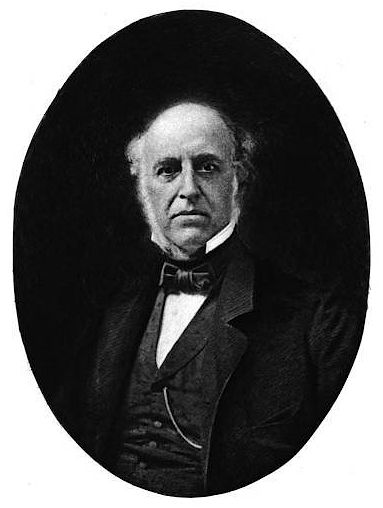
Legends of Charlemagne, or Romance of the Middle Ages, is the third of Thomas Bulfinch's books of legend, published in 1863. It retells in English prose the romances that grew up around Charlemagne and his twelve peers, or paladins, chiefly as the Italian Renaissance poets Luigi Pulci, Matteo Maria Boiardo and Ludovico Ariosto shaped them. Bulfinch says in his preface that his sources were these poets, the Comte de Tressan's French romances, and certain German collections, and that some chapters are borrowed from Leigh Hunt's translations of the Italian poets. A historical introduction sketches the rise of Islam, the Arab conquest of Spain, Charles Martel's victory near Tours, and the real reign of Charlemagne, before describing how later centuries turned the emperor into the centre of a cycle of romance. The paladins are introduced: Orlando (Roland) with his sword Durindana, his cousin Rinaldo of Montalban with the horse Bayard, the English duke Astolpho, the enchanter Malagigi, Oliver, Namo, and the traitor Gan, or Ganelon, of the house of Maganza. The first chapters follow Boiardo. Angelica, a princess of Cathay, comes to Charlemagne's tournament with her brother and enchants every knight; Orlando and Rinaldo pursue her across the world, and Orlando fights the Tartar king Agrican at the siege of Albracca. The long central section follows Ariosto's Orlando Furioso: the Saracen king Agramant invades France and besieges Paris; the warrior maiden Bradamante loves the Saracen knight Rogero, held back by the enchanter Atlantes and the enchantress Alcina; Astolpho is turned into a myrtle and freed; Angelica, rescued from the sea-monster called the Orc, falls in love with the wounded young soldier Medoro and marries him. When Orlando reads their names carved in the trees, he goes mad, tears up the forest and roams naked through France. Astolpho rides the hippogriff to Abyssinia and is carried by St. John to the moon, where all things lost on earth are kept, and brings back Orlando's wits in a sealed vial; Orlando inhales them and is restored. The war shifts to Africa, Rogero is baptized, and he finally marries Bradamante. The Battle of Roncesvalles follows Pulci: through Gan's treachery the rearguard is ambushed in the Pyrenees; Orlando sounds his horn too late, dies kneeling over the hilt of his sword, and Charlemagne mourns him and punishes Gan. The book closes with three French romances: Rinaldo's long feud with Charlemagne over the horse Bayard, and his death as a humble labourer on a church at Cologne; Huon of Bordeaux, sent to Babylon on an impossible errand and helped by Oberon, king of the fairies; and Ogier the Dane, carried to Avalon by Morgana and returning to France centuries later. A glossary of names closes the volume.
Virtues in this work
- Humility: Rinaldo, once the proudest of the paladins, hides his name and works for a penny a day carrying stone for the church at Cologne.
- Fortitude: Orlando fights on at Roncesvalles until all his strength is spent and dies having made his confession to Turpin.
- Friendship: Zerbino gives his life defending the abandoned sword of the mad Orlando, who had once rescued him and Isabella.
- Hope: Alardo begs his brothers to spare Bayard a little longer in the starving castle, trusting that God may yet help them.
Plot or Argument
- Preface and Introduction: history behind the romance
Bulfinch explains that the tales are untrustworthy as fact but valuable as pictures of manners, names his Italian, French and German sources, and surveys the rise of Islam, Charles Martel, and Charlemagne's real reign and empire.
- The Peers, the Tournament and the Siege of Albracca
The paladins are introduced; Angelica's arrival at Charlemagne's tournament sends Orlando, Rinaldo and Ferragus after her; Orlando defends her at Albracca and fights the Tartar king Agrican, who asks for baptism as he dies.
- The Invasion of France
Agramant and Rodomont lead the Saracens against Charlemagne; Rinaldo and Orlando wander among enchantresses such as Morgana; Paris is besieged and the paladins are scattered.
- Bradamante and Rogero; Astolpho and the Enchantress; the Orc
Bradamante seeks Rogero, who is kept from her by Atlantes's castle and Alcina's enchanted island; Astolpho is freed from the shape of a myrtle; Angelica is saved from the sea-monster on the isle of Ebuda.
- Medoro and Orlando Mad
Angelica nurses and marries the wounded soldier Medoro; Orlando finds their names carved in the grotto, lies senseless for three days, then rages through the countryside, destroying everything in his path.
- Zerbino and Isabella; Astolpho in Abyssinia
Zerbino dies defending Orlando's abandoned sword, and Isabella, seized by Rodomont, contrives her own death to keep her vow to him; Astolpho flies to Abyssinia, then with St. John to the moon, where he finds the vial labelled with Orlando's sense.
- The War in Africa; Rogero and Bradamante
Astolpho's army attacks Agramant's kingdom; Orlando is captured, bound and restored by breathing in his wits; the Saracen champions fall; Rogero is baptized by a hermit after his shipwreck and at last marries Bradamante.
- The Battle of Roncesvalles
Gan conspires with King Marsilius; the rearguard under Orlando is overwhelmed; Orlando blows his horn three times, strikes the rock with Durindana, receives absolution from Turpin and dies; Charlemagne grieves and punishes the traitors.
- Rinaldo and Bayard; Death of Rinaldo
Rinaldo, besieged at Montalban, surrenders Bayard to win pardon for his brothers; he becomes a pilgrim, then a labourer on the church of St. Peter at Cologne, where jealous workmen kill him and his body is honoured as a saint's.
- Huon of Bordeaux and Ogier the Dane
Huon, after killing Charlemagne's wicked son Charlot in self-defence, must bring hairs of the Emir's beard and four of his teeth from Babylon, aided by Oberon's horn and cup; Ogier serves Charlemagne, is taken by Morgana to Avalon, and returns in the reign of Hugh Capet.
Characters
- Charlemagne, emperor
King of the Franks and Christian emperor, a just but sometimes deceived ruler around whom the paladins gather.
- Orlando (Roland), greatest of the paladins
Charlemagne's nephew, wielder of Durindana, maddened by love for Angelica and later killed at Roncesvalles.
- Rinaldo, paladin of Montalban
Orlando's bold cousin, master of the horse Bayard, often at odds with Charlemagne; he dies a humble labourer at Cologne.
- Astolpho, English paladin
A light-hearted knight who rides the hippogriff and recovers Orlando's lost wits from the moon.
- Angelica, princess of Cathay
A beautiful princess pursued by many knights who chooses the humble Medoro.
- Medoro, young Saracen soldier
A loyal youth wounded while burying his king, nursed by Angelica, whom he marries.
- Bradamante, warrior maiden
Rinaldo's sister, a knight in armour who seeks and finally marries Rogero.
- Rogero, Saracen knight
A brave knight kept from Bradamante by enchantments; he becomes a Christian and her husband.
- Gan (Ganelon), traitor
Count of Maganza, who betrays the rearguard at Roncesvalles to King Marsilius.
- Turpin, archbishop and warrior
The fighting archbishop who absolves the dying Orlando and is cited as the supposed chronicler of the deeds.
- Malagigi, enchanter
Rinaldo's cousin, a magician whose tricks rescue the brothers of Montalban.
- Agramant, Saracen king
King of Africa who invades France to avenge his father.
- Huon of Bordeaux, young duke of Guienne
A knight sent on an impossible mission to Babylon who succeeds with the help of Oberon.
- Oberon, king of the fairies
A dwarfish fairy king whose magic horn and cup aid Huon.
- Ogier the Dane, paladin
A Danish knight who serves Charlemagne, lives for ages with Morgana in Avalon and returns to defend France.
Lessons
Orlando's wits on the moon
Orlando, the strongest of the paladins, abandons his duty to chase Angelica and loses his reason when he learns she loves another. St. John tells Astolpho that the madness is a punishment, and on the moon Astolpho finds that men's good sense is kept in vials, many of them belonging to people thought wise. Ariosto's comic fable, as Bulfinch retells it, teaches how easily passion and vanity overthrow reason.
- What does Orlando find in the grotto that sets off his madness?
- Why does St. John say Orlando's reason was taken away?
- What other lost things does Astolpho see in the valley on the moon, and why are they there?
Orlando's horn at Roncesvalles
Orlando delays sounding his horn and the rearguard is destroyed before Charlemagne can return. At the end he asks Turpin for absolution and dies looking on the hilt of his sword as on a crucifix, and the emperor blesses his whole life. The chapter shows the cost of pride and treachery and the medieval ideal of a Christian knight's good death.
- Why does Orlando tell Oliver he did not sound the horn sooner?
- Why does Orlando try to break Durindana on the rock before he dies?
- What does Charlemagne mean when he says that Orlando lives and he himself is worse than dead?
Rinaldo, Bayard and the humble end
Rinaldo, the proudest rebel among the paladins, gives up his beloved horse to win pardon for his brothers and later lays down all rank to work as an unknown labourer on a church at Cologne. Bulfinch's source treats his death at the hands of envious workmen as a holy end. The story teaches that greatness can be completed in humility.
- Why does Rinaldo agree to give Bayard to Charlot?
- Why does Rinaldo hide his name while working at Cologne?
- Why might medieval audiences have loved a story in which the great knight dies as a common labourer?
Old stories reused by new poets
Bulfinch points out that the Siren of Ulysses becomes the Siren of Orlando and that Circe returns as Alcina, and he tells how Pulci, Boiardo and Ariosto reshaped old French and Latin tales. Reading these romances teaches how literature is built from earlier literature, and why a reader of Spenser, Shakespeare or Milton needs to know them.
- Which characters in this book remind you of figures from Greek myth?
- How is Alcina's island like Circe's, and how is it different?
- Why do poets keep retelling the same old stories rather than inventing completely new ones?
Context
The historical Charlemagne (c. 742-814), king of the Franks and from 800 emperor, campaigned in Spain in 778, and his rearguard was ambushed in the Pyrenees at Roncesvalles, where his official Roland, prefect of the Breton march, was killed. Over the next centuries French poets made the battle into the Song of Roland and gathered other tales into the matter of France. In Renaissance Italy, Pulci's Morgante, Boiardo's Orlando Innamorato and Ariosto's Orlando Furioso turned the paladins into heroes of romance, love and enchantment.
Composition
Bulfinch published Legends of Charlemagne, or Romance of the Middle Ages in Boston in 1863 to complete the series begun with The Age of Fable (1855) and The Age of Chivalry (1858). His preface names his sources: the Italian poets, the Comte de Tressan's eighteenth-century French versions of the romances, German collections of popular tales, and Leigh Hunt's translations from the Italian poets, from which some chapters are borrowed. The library text, Project Gutenberg #4927, comes from a later complete edition of Bulfinch's Mythology and contains Legends of Charlemagne only, with the general Author's Preface of the series and a glossary of names.
Reception
After Bulfinch's death the three books were issued together as Bulfinch's Mythology (1881), and in that form they stayed in print for more than a century. For many English-speaking readers the book was the only introduction to Ariosto and Boiardo, whose poems are long and seldom read in full; it gave them the background to Spenser's Faerie Queene, to Don Quixote's imitation of Orlando's madness, and to the many paintings and operas drawn from Orlando Furioso.
Comparisons
- the-song-of-roland
The Old French epic tells the death of Roland at Roncevaux with stark grandeur; Bulfinch's Roncesvalles chapter follows Pulci's much later Italian version, keeping the horn, the traitor and the unbroken sword but adding Rinaldo and Turpin's arrival.
- two-lives-of-charlemagne
Einhard's life gives the historical emperor and the brief notice of the Roncesvalles ambush that the romances later inflated; Notker's anecdotes show the legend already beginning within a century of his death.
- le-morte-darthur
Malory's Arthurian cycle is the English counterpart of the Charlemagne cycle: a king surrounded by champions, quests, enchantresses (Morgan in both) and a final betrayal; Bulfinch's own Age of Chivalry retells the Arthurian matter.
- the-faerie-queene
Spenser modelled his allegorical romance on Ariosto's Orlando Furioso; the enchantress Alcina's island, retold here, is a source for Acrasia's Bower of Bliss, and Bradamante is a model for Spenser's knight Britomart.
- don-quixote
Cervantes's hero has read the romances of Orlando and Rinaldo and deliberately imitates Orlando's madness in the Sierra Morena; this book supplies the stories he is copying.
- bulfinch-age-of-fable
Bulfinch's first volume does for Greek and Roman myth what this book does for medieval romance; the preface notes that Alcina reworks Circe and the Siren of Orlando reworks the Siren of Ulysses.
Quotes
Frequently cited
“But he also saw among so many lost things a great abundance of one thing which men are apt to think they all possess, and do not think it necessary to pray for,--good sense.”
Frequently cited
“Orlando fixed his eyes on the hilt of his sword as on a crucifix, and embraced it, and he raised his eyes and appeared like a creature seraphical and transfigured, and bowing his head, he breathed out his pure soul.”
“The tales, though not to be trusted for their facts, are worthy of all credit as pictures of manners”
“The Siren of Ulysses is the prototype of the Siren of Orlando, and the character of Circe reappears in Alcina.”
“Ah, how easy it is to lose one's reason! Some lose theirs by yielding to the sway of the passions;”
“He felt like one who had awakened from a painful dream, in which he had believed that monsters were about to tear him to pieces.”
“I bless thee, Orlando; I bless thy whole life, and all that thou wast, and all that thou ever didst, and the father that begat thee;”
“Brother, let Bayard live a little longer; who knows what God may do for us?”
For Students
A reading companion for classical Christian high school students. See the student guide.
Reading Guide
Watch for
- Bulfinch's historical introduction, and how much of what follows has any basis in the real Charlemagne's reign.
- Every enchanted object: Angelica's ring, the hippogriff, Astolpho's horn and book, Oberon's horn and cup, and what each makes possible.
- The signs of Orlando's coming madness in the grotto, and the stages of his recovery on the African shore.
- Gan's conversations with Marsilius before Roncesvalles, and how the treachery is set up.
- Rinaldo's change from proud rebel to unknown labourer in the last chapters about him.
Key terms and names
- Paladin
- One of the twelve peers of Charlemagne's court, such as Orlando, Rinaldo, Oliver or Astolpho.
- Durindana
- Orlando's sword, which he cannot break against the rock as he dies at Roncesvalles.
- Bayard
- Rinaldo's marvellous horse, which understands speech and which Rinaldo surrenders to win pardon for his brothers.
- Hippogriff
- A winged creature, half horse and half griffin, ridden by Rogero and Astolpho.
- Saracens
- The name medieval Christian writers used for Muslims; here the armies of Agramant and Marsilius.
- Montalban
- Rinaldo's castle, besieged by Charlemagne during their long quarrel.
- Roncesvalles
- The pass in the Pyrenees where the rearguard under Orlando is ambushed through Gan's treachery.
- Avalon
- Morgana's enchanted island, where Ogier the Dane lives without aging while centuries pass in France.
Seminar Questions
- Comprehension Why do so many knights leave Charlemagne's tournament to follow Angelica?
- Comprehension How does Astolpho reach the moon, and what does he bring back?
- Comprehension What impossible errand is Huon of Bordeaux given, and who helps him complete it?
- Interpretation Orlando is the greatest Christian knight, yet he deserts the army for love. Is his madness presented as a tragedy, a joke, a punishment, or all three?
- Interpretation Several Saracen knights, such as Agrican and Rogero, ask for baptism. What do these conversions show about the ideals of the romances?
- Interpretation Compare Gan's treachery with Charlemagne's misplaced trust. Who bears responsibility for Roncesvalles?
- Big Question Rinaldo ends his life as an unknown labourer. Is it greater to win fame as a knight or to give it up in humility?
- Big Question Can love that makes a man forget his duty ever be called true love?
Faith Connections
- John 21:20-23 (Scripture)
Bulfinch's St. John identifies himself as the apostle of whom the Lord said, I will that thou tarry till I come; the romance builds its journey to the moon on the old misunderstanding that John would not die, which the Gospel itself corrects.
- Proverbs 16:18 and 1 Corinthians 13:4-5 (Scripture)
Pride goes before destruction: Orlando's pride delays the horn at Roncesvalles and his wounded pride turns love into madness. Paul's charity, which does not seek its own and is not puffed up, is the opposite of Orlando's possessive passion for Angelica.
- Augustine, Confessions, Book IV (Church Fathers)
Augustine describes his inconsolable grief over a friend's death as the result of loving a mortal as if he would never die. Orlando's frenzy over Angelica shows the same disordered love on a heroic scale.
- Miguel de Cervantes, Don Quixote, Part I, ch. 25 (Great Conversation)
Don Quixote decides to imitate Orlando's madness in the Sierra Morena, debating with Sancho whether a knight should go mad without a cause; Cervantes's comedy shows how deeply these romances had shaped the European imagination.
Logic and Rhetoric
Central argument: Every educated young person is expected to know the Golden Fleece; the legends of Charlemagne are just as rich in poetic material and are the subject of the great Italian poets; therefore they deserve to be known, and a plain prose retelling should make them accessible to readers who cannot read Ariosto.
Rhetorical device: Apostrophe. In the chapter Orlando Mad, the narrator turns to address the grotto and the fountain directly, telling them they will no longer give shade or pure water to shepherds after Orlando's rage.
Debate: Resolved: Orlando was more to blame than Gan for the destruction of the rearguard at Roncesvalles.
Memory Work
But he also saw among so many lost things a great abundance of one thing which men are apt to think they all possess, and do not think it necessary to pray for,--good sense.
Brother, let Bayard live a little longer; who knows what God may do for us?
Writing Prompts
Essay: Trace the story of Orlando from his pursuit of Angelica through his madness, cure and death at Roncesvalles. What kind of hero does Bulfinch's book make him, and what is its final judgment on his life?
Comparison with The Song of Roland: Compare Roland's death in the Song of Roland with Orlando's death in Bulfinch's chapter on Roncesvalles. What has the later Italian tradition added, and what has it lost?
Medical Lens
The madness of Orlando, retold from Ariosto, is one of the most influential literary portraits of love-madness in European literature, and Bulfinch keeps its sequence: the shock of discovery, sleepless wandering, three days and nights lying insensible, then violent frenzy, nakedness, prodigious strength, indiscriminate eating and forgetfulness of self. The cure is a fable rather than medicine: St. John explains the madness as a three-month punishment for deserting his duty, and Orlando's sense, kept as a volatile liquor in a vial on the moon, is restored by inhalation, after which he wakes as from a nightmare. Renaissance readers placed this beside the old idea of lovesickness as a disease; modern readings that label it as a particular diagnosis are interpretive. The book also has the plague near Cologne stayed by Rinaldo's prayers, the famine of the siege of Montalban, and the wounds and deaths of Roncesvalles.
- Orlando Mad
Orlando reads Angelica and Medoro's names in the grotto, wanders all night, lies insensible three days and nights, then strips off his armour and rages through the countryside uprooting trees and attacking shepherds and flocks.
- Astolpho in Abyssinia
St. John explains Orlando's madness as a punishment of fixed duration and leads Astolpho to the moon, where lost wits are kept as liquor in sealed, labelled vials.
- The War in Africa
Orlando is seized, washed and bound; Astolpho stops his mouth so that he must breathe through his nose and holds the vial beneath his nostrils, and Orlando wakes as if from a terrible dream.
- Death of Rinaldo
The besieged garrison of Montalban eats its horses; later a pestilence near Cologne is stayed by Rinaldo's prayers.
- The Battle of Roncesvalles
Orlando, spent with toil and fever, rides to a fountain where his dying horse kneels and falls; he strikes the rock with Durindana, receives Turpin's absolution and dies, and Charlemagne grieves over the field of slain.
Creative Prompts
- Fiction
Write a new scene in the valley of lost things on the moon: Astolpho finds three more labelled vials or objects belonging to people he knows, and the saint explains how each was lost.
- Dialogue
Write the conversation between Orlando and Oliver at Roncesvalles about whether to sound the horn, giving each knight his best reasons.
- Essay
Bulfinch says these tales are not to be trusted for their facts but are worthy of credit as pictures of manners. Using Einhard's life of Charlemagne and one chapter of this book, explain what each kind of source can and cannot teach.
- Classroom
Build a class map of the book's journeys: Paris, Albracca in Cathay, Alcina's island, Ebuda, Abyssinia, the moon, Roncesvalles, Montalban, Cologne, Babylon and Avalon, with one sentence on what happens at each.
Further Reading
- Orlando Furioso, Ludovico Ariosto
The main source of the central chapters; available in many English verse and prose translations.
- The Song of Roland, Anonymous; trans. Dorothy L. Sayers
The Old French epic of Roncesvalles.
- Two Lives of Charlemagne, Einhard and Notker the Stammerer
The historical emperor, also in this library.
- The Age of Chivalry, Thomas Bulfinch
Bulfinch's companion volume of Arthurian legend.
- Charlemagne, Rosamond McKitterick
A modern scholarly study of the historical king.
Verification notes
All quotations were checked by exact search against the stored Project Gutenberg #4927 text. Chapter locators use the chapter titles in the text, which are unnumbered. Bulfinch's own preface (reproduced in the text) names his sources, including Leigh Hunt's translations; the record does not attempt to say which chapters come from Hunt. Historical facts about Charlemagne and Roncesvalles (778) are standard; the Author's Preface printed in the etext is the general preface of Bulfinch's Mythology, beginning with the Age of Fable's defence of mythology and ending with the Charlemagne section.
- The exact 1863 publication details (publisher and whether the title page is dated 1863 or 1864) should be checked against a first edition.