Work record
Experience and Education
1938 · Early 20th Century · Essays · English
Abstract
Background. Near the end of a long career, the Columbia philosopher answered critics who blamed progressive schooling for slack standards and admirers who had turned his ideas into slogans. The honor society Kappa Delta Pi commissioned it for its lecture series.
Argument. Schools built on drill and inherited content and schools built on spontaneous activity both go wrong when each simply opposes the other. What is needed instead is a reasoned account of which experiences lead to further growth and which close it off, and a teacher who arranges conditions accordingly.
Key Concepts. Mis-education, the experiential continuum, the meeting of inner and outer conditions, order arising from shared activity, liberty understood as trained judgment, purposes formed through reflection, and the gradual ordering of knowledge.
Structure. After an opening contrast of the two camps, the chapters move from a theory of experience to its criteria, then to discipline, liberty and purpose, and close with curriculum and a short conclusion. The method of the sciences is held up throughout as the model of intelligent inquiry.
Availability. The text is in copyright; no copy is stored and only two brief sentences are quoted.
Significance. Widely assigned in teacher-training programs, it remains the most concise statement of its author's educational thought and a reference point for debates between progressive and classical approaches to schooling.

Summary
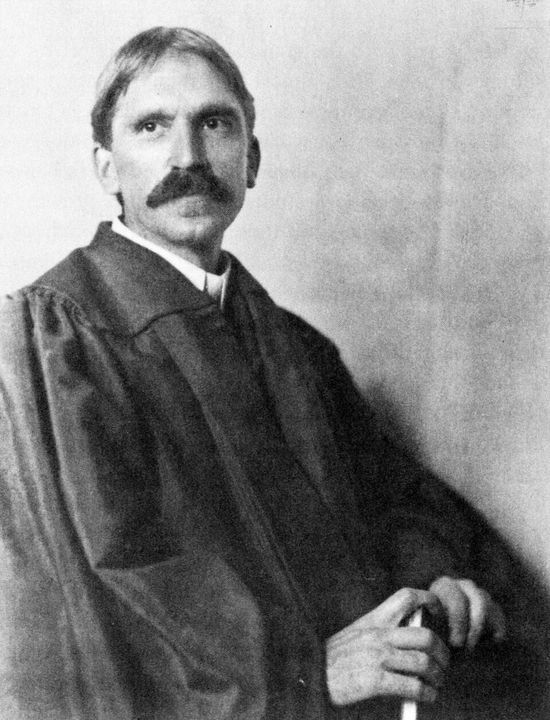
Experience and Education is a short book of eight chapters in which John Dewey, then nearly eighty, restates his philosophy of education and answers both its opponents and some of its followers. By the 1930s progressive education, often associated with Dewey's name, had become a broad movement in American schools, and critics charged it with neglecting knowledge, discipline and the inherited wisdom of the past. Dewey argues that the quarrel between traditional and progressive education has been framed as a false either-or. In Chapter 1 he describes traditional education: subject matter of information and skills worked out in the past, transmitted by teachers to pupils who are expected to be docile, receptive and obedient, with textbooks and rules as the chief means. Progressive education rejected this imposition from above in favor of expression, free activity and learning from experience. Dewey grants the progressive criticism but warns that rejecting the old is not enough; a new education needs a sound philosophy of experience, or it will merely react against tradition. Chapters 2 and 3 supply that philosophy. Not every experience is educative; some are mis-educative, arresting or distorting further growth by producing callousness, carelessness or narrow habits. Dewey offers two criteria for judging experiences. The principle of continuity holds that every experience takes something from those before it and modifies those that follow, so the educator must ask where an experience leads. The principle of interaction holds that experience arises from the meeting of a person's inner condition with an objective situation, which the teacher is responsible for arranging. The teacher must therefore know both the pupils and the world of things and people around them. Chapters 4 to 6 treat social control, freedom and purpose. Like children at a game, who accept rules because the rules belong to the activity, pupils can be governed by the shared work of the group rather than by the teacher's personal will, though the teacher remains its mature leader. The freedom that matters is freedom of intelligence, the power to form purposes and judge wisely, not mere freedom of movement or impulse. A genuine purpose grows out of impulse through observation, knowledge of what similar situations have meant, and judgment. Chapter 7 addresses the progressive weakness Dewey most regrets: the failure to organize subject matter. Experience must lead step by step from what pupils already know toward the ordered knowledge of the mature adult and of the sciences, and the scientific method is the best model of intelligent experience. Chapter 8 concludes that the issue is not old against new but what deserves the name of education. The book was published in 1938 by Macmillan as one of the Kappa Delta Pi Lecture Series. It is under copyright; the library stores no text.
Virtues in this work
- Prudence: Dewey's teacher must judge, from knowledge of both pupil and situation, which experiences will lead toward further growth, as Chapter 3 requires.
- Temperance: Chapter 5 makes self-control, the power to stop and think before acting on impulse, the true aim of a free education.
- Industry: Chapter 7 calls for steady, progressive organization of subject matter rather than activity for its own sake.
Plot or Argument
- Chapter 1: Traditional vs. Progressive Education
Educational thought is framed as a set of opposites; Dewey describes traditional schooling and the progressive reaction against it, and warns against defining a new education merely by rejection.
- Chapter 2: The Need of a Theory of Experience
Experience and education are not identical; some experiences are mis-educative, so educators need a theory of what makes an experience worth having.
- Chapter 3: Criteria of Experience
Continuity and interaction are offered as the two principles by which the educational value of an experience is judged; the teacher must shape the objective conditions of learning.
- Chapters 4–5: Social Control and the Nature of Freedom
Order in a good school comes from the shared activity of the group, as in a game with rules; the freedom worth having is the freedom of intelligence and self-control.
- Chapter 6: The Meaning of Purpose
Purposes are formed from impulse and desire through observation, knowledge and judgment; the teacher guides this formation rather than suppressing or merely indulging desire.
- Chapters 7–8: Organization of Subject-Matter and Conclusion
Learning must move progressively from everyday experience to organized knowledge, with the method of science as a model; the true question is what education is, not which school of thought prevails.
Lessons
Beyond either-or
Dewey argues that the debate between traditional and progressive education has hardened into opposing slogans, and that each side defines itself against the other. He asks educators to think about what education actually requires rather than choosing a camp.
- What does Dewey see as the strengths and weaknesses of traditional schooling?
- Why does he warn progressive educators against defining themselves by what they reject?
- Are there other debates in which an either-or hides a better question?
Not every experience educates
Dewey insists that experience can teach bad habits as well as good ones. An experience is educative only if it opens the way to richer future experience; one that leaves a person careless, callous or bored is mis-educative, however lively it seemed.
- What is a mis-educative experience, according to Chapter 2?
- How can an enjoyable activity still be mis-educative?
- Can you recall an experience that made later learning easier, or harder?
Continuity and interaction
Every experience carries forward into later ones, and every experience arises from a person meeting a particular situation. These two principles make the teacher responsible both for knowing the learner and for arranging the conditions of learning.
- What does Dewey mean by the principle of continuity?
- What does he mean by interaction between internal and objective conditions?
- How do these principles change the role of the teacher?
Freedom as self-control
Dewey distinguishes outward freedom of movement from the inner freedom of intelligence: the power to form purposes, weigh consequences and act on judgment. In his view the aim of education is the growth of this kind of self-control, not the removal of all restraint.
- Why does Dewey think the rules of a game are not felt as an imposition?
- What is the difference between freedom of movement and freedom of intelligence?
- How does acting on impulse differ from acting on purpose?
Context
By the 1930s Dewey's earlier books, especially Democracy and Education (1916), had made him the best-known philosopher of American education, and the Progressive Education Association, founded in 1919, promoted child-centered schooling. Critics such as Robert Maynard Hutchins at Chicago and the essentialist educators led by William C. Bagley argued that progressive schools neglected disciplined knowledge. Dewey had also come to think that some progressive schools misunderstood him, reacting against tradition without a positive theory.
Composition
The book was written as the tenth lecture in the Kappa Delta Pi Lecture Series, sponsored by the education honor society, and was published by Macmillan in New York in 1938, the same year as Dewey's Logic: The Theory of Inquiry. It is brief, about ninety pages in its first edition, and contains no notes.
Reception
Experience and Education became Dewey's most widely read book on education, partly because of its brevity, and has been reprinted many times, including an anniversary edition by Kappa Delta Pi in 1998. Readers have taken it both as a defense of progressive education and as a correction of it. Critics from traditional and classical perspectives have argued that Dewey's naturalistic view of experience leaves too little room for permanent truths and inherited authority, while admirers credit it with a balanced account of the teacher's role and of subject matter.
Comparisons
- james-pragmatism
James's lectures of 1907 set out the pragmatic theory of truth and meaning that underlies Dewey's insistence on judging experiences by where they lead.
- lewis-the-abolition-of-man
Lewis's 1943 lectures on education defend objective value and the training of right sentiment, a classical and Christian counterpoint to Dewey's account of growth through experience.
- the-republic
Plato's long discussion of the education of the guardians, from music and gymnastic to dialectic, is the oldest systematic philosophy of education in the West and a natural foil for Dewey's.
- plato-meno
Socrates's questioning of the slave boy treats learning as recollection drawn out by questions; Dewey too wants learning to arise from the learner's own activity, but grounds it in experience rather than recollection.
- rush-essays-on-education-in-a-republic
Benjamin Rush's essays tie education to the needs of a free republic, an early American concern that Dewey renews in his own democratic terms.
Quotes
Frequently cited
“The belief that all genuine education comes about through experience does not mean that all experiences are genuinely or equally educative.”
“It is not enough to insist upon the necessity of experience, nor even of activity in experience.”
For Students
A reading companion for classical Christian high school students. See the student guide.
Reading Guide
Watch for
- Dewey's description of traditional education in Chapter 1 and the criticisms he accepts and rejects.
- The term mis-educative in Chapter 2.
- The two principles of continuity and interaction in Chapter 3.
- The example of children playing a game with rules in Chapter 4.
- Dewey's regret in Chapter 7 that progressive schools have neglected the organization of subject matter.
Key terms and names
- Traditional education
- In Chapter 1, schooling that transmits a fixed body of past knowledge and rules to pupils expected to receive it with docility.
- Progressive education
- The movement, often linked with Dewey's name, that stressed learning through activity and experience; Dewey both defends and corrects it here.
- Mis-educative experience
- An experience that arrests or distorts the growth of further experience, for example by producing callousness or careless habits.
- Continuity
- Dewey's principle that every experience takes up something from earlier ones and changes the quality of later ones.
- Interaction
- Dewey's principle that experience arises from the meeting of a person's internal conditions with an objective situation.
- Collateral learning
- Dewey's term for the attitudes, likes and dislikes formed alongside a lesson, which may matter more than the lesson itself.
- Availability note
- The book is under copyright; the library stores no text and quotes two short sentences only.
Seminar Questions
- Comprehension How does Dewey describe traditional education in Chapter 1?
- Comprehension What are the two criteria Dewey offers for judging whether an experience is educative?
- Comprehension What does Dewey mean by freedom of intelligence in Chapter 5?
- Interpretation Why does Dewey think the teacher's responsibility increases, rather than decreases, in a school built on experience?
- Interpretation How does the example of a game help Dewey explain social control without the teacher's personal command?
- Interpretation Why does Dewey criticize progressive schools for neglecting the organization of subject matter?
- Big Question Should education aim chiefly at growth, at the transmission of inherited wisdom, or at both, and how would one decide between them?
Faith Connections
- Deuteronomy 6:6-9 (Scripture)
Israel is told to teach God's words when sitting at home, walking by the way, lying down and rising up, an education woven into daily experience but anchored in a revealed and unchanging word.
- Hebrews 5:14 (Scripture)
The mature are those whose senses are exercised by reason of use to discern good and evil, a biblical picture of judgment trained through practice that can be set beside Dewey's freedom of intelligence.
- Augustine, De Magistro (On the Teacher) (Church Fathers)
Augustine argues that words alone do not teach and that the learner must see the truth within, illumined by Christ the inner teacher; like Dewey he rejects mere transmission, but for a very different reason.
- Dorothy L. Sayers, The Lost Tools of Learning (1947) (Great Conversation)
Sayers proposed recovering the medieval trivium of grammar, logic and rhetoric, an approach later taken up by classical Christian schools and offering a sharply different answer to the problems of modern schooling that Dewey addresses.
Logic and Rhetoric
Central argument: If all genuine education comes through experience, but some experiences hinder further growth, then educators need criteria for judging experiences; continuity and interaction provide those criteria; therefore a sound education must be planned by teachers who understand both learners and subject matter, rather than left to tradition alone or to unguided activity.
Rhetorical device: antithesis. Chapter 1 sets traditional and progressive education against each other in paired contrasts (imposition from above against expression, external discipline against free activity) in order to show the limits of each.
Debate: Resolved: that Dewey's principles of continuity and interaction are compatible with a classical curriculum.
Writing Prompts
Essay: Explain Dewey's distinction between educative and mis-educative experience, and argue whether it gives teachers a clear enough standard.
Comparison with The Abolition of Man: Compare Dewey's view of the aims of education with C. S. Lewis's in The Abolition of Man: what does each think a teacher should form in a student?
Medical Lens
The book has no medical content. Its account of habit and of the growth of self-control draws on the functional psychology of Dewey's era, but it does not discuss illness, psychiatry or medicine.
Creative Prompts
- Essay
Using Dewey's principles of continuity and interaction, evaluate one class or activity you have taken part in: was it educative or mis-educative, and why?
- Dialogue
Write a dialogue between Dewey and C. S. Lewis about whether education should train pupils to feel rightly about what is objectively good.
- Classroom
Play a simple game with rules, then discuss Dewey's Chapter 4 claim that rules accepted as part of a shared activity are not felt as outside control.
Further Reading
- Democracy and Education, John Dewey
Dewey's fullest statement of his philosophy of education (1916).
- The School and Society, John Dewey
Lectures of 1899 on the Laboratory School and the school as a community.
- John Dewey and American Democracy, Robert B. Westbrook
Intellectual biography placing Dewey's educational thought within his public philosophy.
- The Lost Tools of Learning, Dorothy L. Sayers
Sayers's 1947 Oxford address proposing a revival of the medieval trivium, a classical alternative to progressive education.
Verification notes
Abstract-only record of a copyrighted work; no text is stored. Quote 1 wording was checked at https://punyamishra.com/?p=12667 and in several quotation sources that give p. 25 of the 1938 edition; quote 2 wording and the pp. 27–28 locator were checked at the McGill Teaching and Learning blog, https://teachingblog.mcgill.ca/2013/08/30/back-to-dewey/. Chapter titles and the 1938 Kappa Delta Pi publication are standard (see https://en.wikipedia.org/wiki/Experience_and_Education_(book)). Summary and guide paraphrase the book; no other wording is quoted.
- Text is under copyright; check quotations against an authorized edition before publication.
- Confirm that the book was the tenth lecture in the Kappa Delta Pi Lecture Series.
- Confirm the term collateral learning appears in Chapter 3.