Work record
The Chemical History of a Candle
1861 · 19th Century · Essays · English
Abstract
Background. By 1860 Faraday was the most celebrated experimenter in Britain and a veteran of the Royal Institution's holiday courses for children. He returned to the candle, a theme he had used before, convinced that it touched every branch of natural philosophy.
Content. The first talks examine candle-making, the cup of liquid wax, the wick and the hollow, luminous flame. Later talks collect the water given off by burning, split it into hydrogen and oxygen with metals and a battery, analyse the atmosphere into oxygen and nitrogen, and produce carbon dioxide, which he calls carbonic acid. The final talk follows carbon from charcoal and coal-gas to the human lungs, where food is slowly burnt to keep the body warm, and to the leaves that absorb what animals exhale.
Method. Every claim is staged before the audience: tubes, jars, lime-water, potassium and a voltaic pile do the arguing. Faraday addresses the children as fellow philosophers and asks them to seek the cause of each effect.
Significance. Crookes's printed version became a standard of popular science, translated widely and reprinted for over a century and a half. It remains a model of teaching an entire science from one familiar object, and its moral close, likening a good life to a shining candle, reflects Faraday's Christian convictions.
Key figures
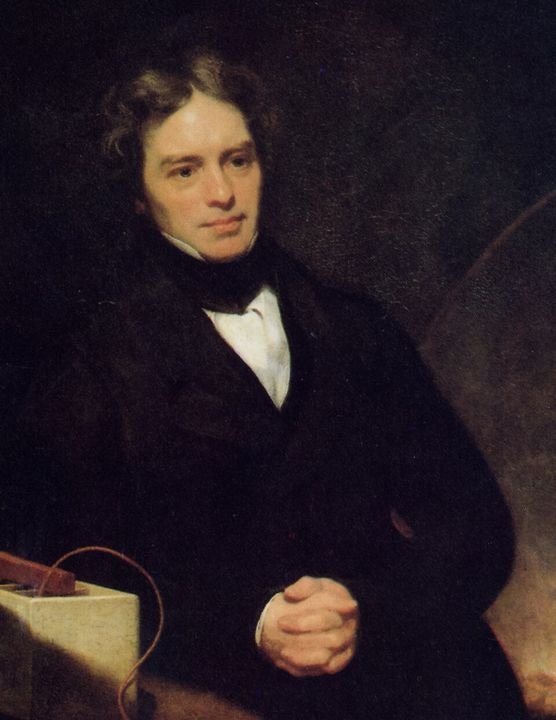
- Michael Faraday: Chemist and physicist of the Royal Institution, lecturing to young people
- William Crookes: Chemist who took down, edited and annotated the lectures
- Mr. Anderson: Faraday's laboratory assistant, who works the furnace and apparatus during the demonstrations
- Humphry Davy: Faraday's mentor, inventor of the miners' safety lamp mentioned in Lecture I

Summary
The Chemical History of a Candle prints six lectures that Michael Faraday gave to a 'juvenile audience' at the Royal Institution in London over the Christmas season of 1860–61. Faraday opens by declaring that no door into natural philosophy is more open than the burning candle, and he keeps the whole course tied to that single object while it leads him through heat, chemistry, the air and the living body. Lecture I looks at the candle itself: tallow dips, stearin and spermaceti, wax, the cup of melted fuel kept cool by the rising current of air, the capillary climb of fuel up the wick, and the shape and brightness of the flame. Lecture II shows that the flame needs air, that it has dark and bright regions, and that solid particles of carbon, glowing in the heat, give it its light; a glass held over the flame collects a dew. Lecture III identifies that dew as water, bursts stoppered iron bottles by freezing the water inside them, and decomposes water with potassium and iron to obtain hydrogen. Lecture IV burns hydrogen back into water, then uses a voltaic battery to split water into its two gases and introduces oxygen, in which iron and phosphorus blaze. Lecture V proves that air is mostly nitrogen with a fifth part oxygen, weighs air, shows its pressure with a pair of hollow brass hemispheres and a boys' sucker made of india-rubber, and turns to the other product of the candle, carbonic acid (carbon dioxide), made also from chalk and marble. Lecture VI follows carbon through charcoal and coal-gas and ends with respiration: the lungs burn carbon from food much as the candle burns its wax, the breathed-out carbonic acid feeds plants, and Faraday closes by wishing that his hearers might be like candles, shining as lights to those about them. Throughout he performs experiments with his assistant Mr. Anderson, and he speaks plainly, teasing his listeners with questions and urging them to ask 'Why?' whenever something new happens. The lectures were taken down and edited by the chemist William Crookes and published in 1861; the library text is a 1908 Chatto and Windus reprint that adds Crookes's preface, explanatory footnotes and Faraday's evening lecture on platinum of 22 February 1861. Faraday had given a candle course before, in 1848, and his choice to repeat it shows how highly he rated the subject for teaching. The book has remained in print and is still used to introduce combustion and experimental method to young students.
Virtues in this work
- Industry: Faraday urges his young listeners to ask 'What is the cause?' of every new result and to keep at it until in time they find the reason.
- Humility: In Lecture I he treats the guttering of a badly made candle as a fault that teaches, modelling a willingness to learn from error.
- Charity: The lectures close with his wish that his hearers shine as lights to those about them and do their duty to their fellow-men.
Plot or Argument
- Lecture I: the candle and its flame
Faraday surveys the kinds of candles and their materials, explains how the rising air hollows a cup of melted fuel, how capillary attraction carries the fuel up the wick, and why a fluted candle gutters while a plain one burns well.
- Lecture II: air and brightness
He shows that the flame is hollow, draws unburnt vapour out of its centre with a tube and lights it, proves that combustion needs a fresh supply of air, and traces the brightness of the flame to glowing particles of carbon.
- Lecture III: water from the flame
The moisture collected over a candle is shown to be water. Faraday demonstrates that water expands on freezing and then frees hydrogen from water with potassium and with red-hot iron, explaining the name 'hydrogen' as the generator of water.
- Lecture IV: hydrogen and oxygen
Hydrogen is burnt back into water. A voltaic battery splits water into two volumes of hydrogen and one of oxygen, and Faraday shows how vigorously things burn in oxygen alone.
- Lecture V: the atmosphere and carbonic acid
Air is shown to be oxygen diluted by nitrogen, a gas whose very inactivity keeps fires moderate. Faraday weighs air, demonstrates its pressure, and makes and tests carbonic acid, the second product of the candle.
- Lecture VI: carbon and respiration
Following carbon through charcoal and coal-gas, Faraday compares breathing to burning: the lungs combine oxygen with carbon from food, the exhaled carbonic acid feeds plants, and he ends by bidding his audience to shine as lights to those about them.
- Lecture on platinum
An evening lecture of February 1861, printed as an appendix, describes the properties and uses of platinum, including its power to promote combustion.
Lessons
Ask the cause of what you see
Faraday tells his listeners that whenever something happens, especially something new, they should ask what the cause is, and that patient asking will find the reason. Each lecture models the habit, turning an ordinary flame into a sequence of small questions answered by experiment.
- Which of Faraday's demonstrations best shows the habit of asking 'Why does it occur?'
- What everyday object at home could be studied the way Faraday studies a candle?
Mistakes can teach
A guttering candle is a failure, yet Faraday says that faults of this kind bring instruction that would never come if they had not occurred. The badly made fluted candle teaches more about air currents than the good one.
- What did the guttering candle reveal about how a candle works?
- Can you recall a mistake in an experiment or project that taught you something you would not otherwise have learned?
Use before ornament
Faraday judges the pretty fluted and coloured candles bad burners and says that the perfection of a process lies in its usefulness. The best-acting thing, not the best-looking thing, is the most advantageous.
- Why does the plain candle burn better than the decorated one?
- Is Faraday saying beauty does not matter, or that a different kind of beauty matters more?
One order joins flame and breath
The last lecture links the candle to the human body and to plants: burning and breathing are the same kind of process, and what is waste to animals is food for vegetation. Faraday sees nature as tied together so that one part serves another.
- How is breathing like the burning of a candle, according to Lecture VI?
- What does Faraday mean by calling plants and animals 'fellow-existers'?
- Why do you think he chose to end the course with respiration?
Context
The Royal Institution, founded in 1799 to bring science to the public, made its lecture theatre a fashionable place to see experiments. Faraday, its leading scientist by mid-century, helped begin the Christmas lectures for young people in the 1820s and gave many of the series himself. Gas lighting was spreading through London streets and homes in 1860, but candles of tallow, stearin, wax and the newer paraffin were still the common household light.
Composition
Faraday spoke from notes and demonstrations rather than a written script. The six lectures of the 1860–61 Christmas course were recorded and edited by William Crookes, then a young chemist and editor of the Chemical News, and were published in 1861. Faraday had given a candle course in 1848 as well. Crookes's preface and footnotes explain apparatus and chemistry the audience saw but readers did not.
Reception
The book became one of the best-known popular science works in English, was translated into many languages, and has stayed in print. Teachers continue to stage its demonstrations, and the Royal Institution's Christmas lectures, televised since the 1960s, still follow the tradition Faraday shaped.
Comparisons
- lavoisier-elements-of-chemistry
Lavoisier's Elements set out the oxygen theory of combustion and the composition of water in 1789; Faraday's lectures teach the same conclusions to children seventy years later, with demonstrations instead of tables.
- boyle-the-sceptical-chymist
Boyle argued for testing chemical claims by experiment rather than by the authority of elements and principles; Faraday's lecture-room shows that experimental temper fully at home.
- newton-opticks
Newton's Opticks and Faraday's lectures both build a subject out of a sequence of experiments with simple apparatus, one in light, the other in flame.
- harvey-on-the-motion-of-the-heart-and-blood
Harvey established the circulation that carries blood through the lungs; Faraday's Lecture VI explains, in the chemistry of his day, what the blood meets there.
- walden
Thoreau and Faraday both find large lessons in close attention to ordinary things, though Thoreau's attention is contemplative and Faraday's experimental.
Quotes
Frequently cited
“There is no better, there is no more open door by which you can enter into the study of natural philosophy, than by considering the physical phenomena of a candle.”
Frequently cited
“whenever a result happens, especially if it be new, you should say, “What is the cause? Why does it occur?” and you will in the course of time find out the reason.”
Frequently cited
“that you may, like it, shine as lights to those about you; that, in all your actions, you may justify the beauty of the taper by making your deeds honourable and effectual in the discharge of your duty to your fellow-men.”
“I hope you will now see that the perfection of a process—that is, its utility—is the better point of beauty about it. It is not the best looking thing, but the best acting thing, which is the most advantageous to us.”
“the greatest mistakes and faults with regard to candles, as in many other things, often bring with them instruction which we should not receive if they had not occurred.”
“What diamond can shine like flame?”
“So are we made dependent, not merely upon our fellow-creatures, but upon our fellow-existers, all Nature being tied together by the laws that make one part conduce to the good of another.”
For Students
A reading companion for classical Christian high school students. See the student guide.
Reading Guide
Watch for
- The cup of melted fuel at the top of the candle in Lecture I, and how the rising current of air keeps its edge cool and firm.
- The tube Faraday pushes into the middle of the flame in Lecture II to draw off vapour that can be lit at the far end.
- The dew that forms on a cold glass held over the flame, which becomes the subject of Lectures III and IV.
- The way Faraday uses nitrogen in Lecture V to show that even an 'indifferent' substance has a purpose.
- The closing comparison in Lecture VI between the candle, the breathing body, and a person who shines as a light to others.
Key terms and names
- Combustion
- Burning: the chemical union of a fuel with oxygen from the air, giving off heat and often light.
- Capillary attraction
- The force that draws a liquid up through narrow spaces; it carries melted fuel up the threads of the wick.
- Hydrogen
- The light, inflammable gas freed from water; its name means 'generator of water' because burning it produces water.
- Oxygen
- The part of the air, about one fifth, that supports burning and breathing; in it iron and phosphorus burn brilliantly.
- Nitrogen
- The larger, inactive part of the air, which Faraday shows moderates burning so that fires do not rage out of control.
- Carbonic acid
- Faraday's name for carbon dioxide, the gas produced when carbon burns or when animals breathe; lime-water turns milky in it.
- Voltaic battery
- A set of metal plates and acid producing an electric current, which Faraday uses to split water into hydrogen and oxygen.
Seminar Questions
- Comprehension Why does a well-made candle form a cup of melted fuel at the top, and why does a fluted candle gutter?
- Comprehension What two substances does Faraday find are produced when a candle burns, and how does he show each one?
- Comprehension How does Faraday compare breathing to the burning of a candle in Lecture VI?
- Interpretation Faraday says the 'greatest mistakes and faults' bring instruction. How does he use mistakes, his own or the candle's, to teach?
- Interpretation Why might Faraday have chosen something as ordinary as a candle, rather than a new discovery, to teach children about science?
- Interpretation What does Faraday mean when he says nature is 'tied together by the laws that make one part conduce to the good of another'? How does the example of plants and breath support the claim?
- Big Question Faraday ends a chemistry course by wishing his hearers might shine as lights and do their duty to others. Should the study of nature lead to lessons about how to live, or should science and character be kept separate?
Faith Connections
- Matthew 5:14-16 (Scripture)
Jesus calls his disciples the light of the world and tells them to let their light shine before others, that they may see their good works. Faraday, a devout Christian, closes the lectures with the same image of a person shining as a light to those about him.
- Psalm 104:24 (Scripture)
The psalmist marvels that God has made all his works in wisdom and that the earth is full of his riches. Faraday's wonder at nitrogen's purpose and at the exchange between breathing animals and growing plants echoes this praise of an ordered creation.
- Proverbs 25:2 (Scripture)
It is the glory of God to conceal a thing, and the honour of kings to search out a matter. Faraday's patient questioning of a candle is a picture of searching out what God has hidden in ordinary things.
- Francis Bacon, Novum Organum (Great Conversation)
Bacon urged natural philosophers to learn by experiment and close observation rather than received opinion. Faraday's lecture-room is a working example of the method Bacon advocated two centuries earlier.
Logic and Rhetoric
Central argument: Every law of nature comes into play in a burning candle; by careful experiment one can show that the candle needs air, that it produces water and carbonic acid, that water is made of hydrogen and oxygen, and that air is oxygen moderated by nitrogen; since breathing produces the same products by the same kind of process, the candle opens onto the whole order of nature, including our own bodies and the plants that depend on our breath.
Rhetorical device: analogy. In Lecture VI Faraday likens the lungs to a candle, food to its fuel and exhaled breath to its smoke, and then extends the analogy to character, wishing that his hearers may be like candles, shining as lights to those about them.
Debate: Resolved: Ordinary things are a better starting point for learning science than new discoveries.
Memory Work
whenever a result happens, especially if it be new, you should say, “What is the cause? Why does it occur?” and you will in the course of time find out the reason.
that you may, like it, shine as lights to those about you; that, in all your actions, you may justify the beauty of the taper by making your deeds honourable and effectual in the discharge of your duty to your fellow-men.
Writing Prompts
Essay: Faraday claims that a candle is the most open door into natural philosophy. Using at least three of his experiments, explain how he moves from the candle to water, to the air, and to breathing, and argue whether the claim is justified.
Comparison with Elements of Chemistry: Lavoisier showed in 1789 that burning and the formation of water involve oxygen. Compare how Lavoisier and Faraday present these discoveries, one to fellow chemists and the other to children, and argue what each way of teaching does best.
Medical Lens
The lectures are chemistry, not medicine, but Lecture VI gives a clear mid-Victorian account of respiration as slow combustion: food carried in the blood meets air across a thin membrane in the lungs, carbon combines with oxygen, carbonic acid is breathed out and animal heat is produced. The view descends from Lavoisier's work on respiration and was standard physiology in 1860. Faraday quotes daily figures for the carbon converted by a man, a cow and a horse, and for the carbonic acid produced by breathing in London. He also demonstrates that a single breath spoils a volume of air for a candle and uses this to argue for proper ventilation in crowded dwellings, a theme of the sanitary movement of the period.
- Lecture VI
Breathing into a closed jar extinguishes a taper; Faraday applies the result to poorly ventilated houses where air is breathed over and over.
- Lecture VI
Account of the lungs, where blood and air are separated by a thin surface and carbon from food is converted to carbonic acid with the production of heat.
- Lecture VI
Daily carbon output by respiration in a man, a cow and a horse, and the exchange by which plants take up the carbonic acid animals exhale.
Creative Prompts
- Classroom
With adult supervision, repeat three of Faraday's safe candle demonstrations (the cup of melted fuel, the cold glass that collects water, the snuffed candle relit through its smoke) and keep a lab notebook asking 'What is the cause?' for each.
- Essay
Faraday says the best-acting thing, not the best-looking thing, is most advantageous. Write an essay testing that claim against one designed object you use every day.
- Fiction
Write a short scene from the point of view of a child in the Royal Institution audience at Christmas 1860, watching Faraday split water with a battery.
Further Reading
- Experimental Researches in Electricity, Michael Faraday
- Michael Faraday: Sandemanian and Scientist, Geoffrey Cantor
- Michael Faraday, L. Pearce Williams
- Faraday, Maxwell, and the Electromagnetic Field, Nancy Forbes and Basil Mahon
Verification notes
Contents, demonstrations and quotations come directly from the stored Project Gutenberg text, a 1908 Chatto and Windus impression of the Crookes edition, which includes Crookes's preface, his footnotes and the separate Lecture on Platinum (22 February 1861). Biographical facts (birth, apprenticeship, assistant to Davy from 1813, Fullerian Professorship from 1833, Sandemanian membership) are standard. Faraday's mention of having treated the subject 'on a former occasion' refers to an earlier candle course, usually dated 1848. The assistant 'Mr. Anderson' named in the text was Faraday's long-serving laboratory assistant Charles Anderson.
- The exact year Faraday first gave or organized a Royal Institution Christmas course (often given as 1825 or 1827).
- The date of the earlier candle course (usually 1848).