Work record
The Golden Bough (abridged edition)
1922 · Early 20th Century · Essays · English
Abstract
Background. A Cambridge classicist tried to account for a priesthood near Rome that passed by murder. Across three editions his answer swelled from two volumes to twelve; this condensed version of 1922 keeps the argument and the author's own wording while omitting all citations.
Thesis. Peoples who tied the fertility of fields and herds to the vigour of a sacred ruler killed that ruler before age could weaken him. The Arician priest embodied an oak-spirit whose life resided in mistletoe, the bough Virgil's hero carried to the dead.
Method. Parallels are gathered from ancient authors, European peasant festivals and reports from distant regions, then arranged into patterns: two laws of magic, taboo, the slain god, the corn-spirit, scapegoats, and midsummer fires.
Key Concepts. Imitative and contagious magic; the contrast between compelling nature and conciliating gods; sacred kingship; transference of evil; an external soul hidden outside the body. A closing chapter casts the history of thought as a loom weaving three colours, while bells ring the Angelus over the lake where the inquiry began.
Significance. Modernist poets and novelists mined the book for myth, Freud built on it, and later anthropologists turned against its armchair comparisons while still consulting its evidence. Debate continues over whether its dying-and-reviving deities form a real category.
Key figures
- The King of the Wood: Priest at Nemi who held office by slaying his predecessor
- Diana Nemorensis: Goddess of the Arician grove
- Adonis, Attis and Osiris: Near Eastern and Egyptian gods of the yearly cycle
- Balder: Norse god slain with a mistletoe dart
- Aeneas: Virgil's hero who plucks the bough before the underworld
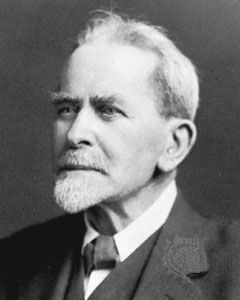

Summary
The Golden Bough sets out to explain one strange rule. In the sacred grove of Diana at Nemi, in the Alban Hills near Rome, the priest, called the King of the Wood, held office until a runaway slave broke a bough from a certain tree and killed him in single combat, becoming priest in turn. Why should a priest have to slay his predecessor, and why must he first pluck the bough? Frazer's answer grows into a survey of magic and religion across the world, drawn from classical authors, folklorists, and reports by missionaries, travellers and officials. The first edition (1890) had two volumes; the third (1906-1915) had twelve. In 1922 Frazer issued this one-volume abridgment, keeping his argument and much of his evidence but dropping the notes; it is the library's complete text, in sixty-nine chapters. The early chapters define sympathetic magic and its two branches: homoeopathic magic, based on the principle that like produces like, and contagious magic, based on the idea that things once in contact continue to act on each other. Frazer distinguishes magic, which tries to compel nature by fixed laws, from religion, which seeks to please or conciliate higher powers, and he proposes that an age of magic preceded an age of religion. He then shows magicians becoming kings, kings regarded as gods, and sacred kings hedged with taboos to protect the divine life within them: tabooed acts, persons, things and words, and the perils of the soul. From there he argues that peoples who believed the health of nature depended on the vigour of a divine king would kill him before he weakened, and he gathers examples of temporary kings, substitutes and the killing of the tree-spirit in European folk custom. The central chapters treat Adonis, Attis, Osiris and Dionysus as gods of vegetation who die and revive with the year, and Demeter and the corn-spirit in harvest customs from Greece to Scotland. Later chapters study eating the god, the killing of sacred animals, the transference of evil to objects, animals and scapegoats, the Mexican sacrifice of a man who represented a god, the fire festivals of Europe, and the Norse myth of Balder, slain by mistletoe. Frazer concludes that the King of the Wood personified the oak-spirit whose life was lodged in the mistletoe, identifies the golden bough of Virgil's Aeneid with the mistletoe, and in Farewell to Nemi describes human thought as moving from magic through religion to science, a web of black, red and white threads, before ending with the Angelus bells of Aricia. The book shaped modernist literature and early anthropology. Later anthropologists, including Bronisław Malinowski and E. E. Evans-Pritchard, valued its range but questioned its armchair comparative method, and Ludwig Wittgenstein wrote critical remarks on it; other scholars have defended parts of its evidence.
Virtues in this work
Plot or Argument
- Chapters I-II: The King of the Wood
The grove of Diana Nemorensis, the priest who must slay his predecessor, the legend of Virbius, and the general phenomenon of priestly kings.
- Chapters III-VI: Magic, religion and kingship
The laws of similarity and contact, homoeopathic and contagious magic, the distinction between magic and religion, the magical control of weather, and the rise of the public magician into a king.
- Chapters VII-XVI: Divine kings and the oak
Incarnate human gods, departmental kings of nature, tree worship and its survivals in European May customs, the sacred marriage, the kings of Rome and Alba, the worship of the oak, and Dianus and Diana.
- Chapters XVII-XXIII: Taboo and the soul
The burden of royalty, the perils of the soul, and tabooed acts, persons, things and words, closing with Our Debt to the Savage, on the value of mistaken early thought.
- Chapters XXIV-XXVIII: Killing the divine king
Why the divine king is killed before he weakens, temporary kings, the sacrifice of the king's son, succession to the soul, and the killing of the tree-spirit in folk custom.
- Chapters XXIX-XLIV: Dying and reviving gods
Adonis in Syria and Cyprus and his gardens, Attis, the spread of Eastern cults in the West, Osiris and Isis, Dionysus, and Demeter and Persephone, read as personifications of the yearly decay and revival of vegetation.
- Chapters XLV-LIV: The corn-spirit and sacred animals
Corn-mother and corn-maiden, Lityerses and harvest killing, the corn-spirit as animal, eating the god, and sacramental killing of animals.
- Chapters LV-LX: Evils and scapegoats
Transference of evil, public expulsions of evils, animal and human scapegoats in antiquity, killing the god in Mexico, and the rule that sacred persons must touch neither heaven nor earth.
- Chapters LXI-LXIX: Balder and the golden bough
The myth of Balder, the fire festivals of Europe and their interpretation, the external soul in folk-tales and custom, the identification of the golden bough with mistletoe, and Farewell to Nemi.
Characters
- The King of the Wood (Rex Nemorensis), priest of Diana at Nemi
The armed priest whose succession by slaying sets the book's question.
- Diana Nemorensis, goddess
Diana of the Wood, worshipped in the grove beside the lake of Nemi.
- Virbius, legendary consort
Identified in legend with Hippolytus, revived by Diana and hidden at Nemi.
- Adonis, Attis and Osiris, gods of vegetation
Deities whose deaths and returns Frazer reads as the cycle of growth and harvest.
- Balder, Norse god
The god killed by a dart of mistletoe, whose myth Frazer links to the bough at Nemi.
- Aeneas, Virgil's hero
Plucks the golden bough before descending to the underworld in Aeneid VI.
Lessons
The two laws of magic
Frazer analyzes magic into two principles: like produces like, and things once in contact continue to act on each other. He calls magic a false science because it applies real habits of association to the wrong connections. The analysis is still a standard starting point for describing magical thinking.
- What examples does Frazer give of homoeopathic magic, and of contagious magic?
- Why does he call magic a false science rather than an early religion?
- Do traces of these two principles survive in ordinary habits today?
A question that grows
The book begins with one local puzzle at Nemi and ends twelve volumes and one abridgment later with a theory of human thought. Frazer admits in Farewell to Nemi that answering one question raised many more. His method shows both the power and the risk of following a comparison wherever it leads.
- What is Frazer's final answer to the riddle of the priest at Nemi?
- How much of the book is about Nemi, and how much about other places?
- When does gathering parallels strengthen an argument, and when does it weaken it?
Magic, religion, science
Frazer proposes that human thought moved from magic through religion to science, and he pictures it as a web of black, red and white threads. He also allows that science itself may be superseded. Many later scholars rejected this scheme of stages, and Christian readers have answered his treatment of religion as a passing phase.
- How does Frazer distinguish religion from magic?
- Why does he say science shares something with magic that religion lacks?
- Is it possible for religion and science to be answers to different questions rather than successive stages?
The scapegoat
Frazer collects customs in which a community's evils are transferred to an animal, an object or a person and driven out. The chapters on public scapegoats and human scapegoats in antiquity gave the word much of its later currency in literature and social thought.
- What different kinds of scapegoat does Frazer describe?
- How does the scapegoat of Leviticus 16 compare with the customs he gathers?
- Why might communities want to place their troubles on a single figure?
Context
Frazer wrote in the age of Darwin, Tylor and comparative philology, when scholars hoped to trace the development of human institutions as naturalists traced species. Victorian anthropology relied on reports collected from missionaries, travellers and imperial officials, which scholars at home compared across continents. Frazer's classical training led him to begin from a passage of the ancient commentator Servius on Virgil and from Strabo and Pausanias on the Arician grove.
Composition
The first edition, in two volumes subtitled A Study in Comparative Religion, appeared in 1890; the second, in three volumes, in 1900; the third, in twelve volumes subtitled A Study in Magic and Religion, from 1906 to 1915, with a supplementary volume, Aftermath, in 1936. Frazer prepared this one-volume abridgment in 1922, removing the notes and references but, as his preface says, neither adding new matter nor altering his views.
Reception
The Golden Bough was widely read by the educated public and deeply influenced writers such as T. S. Eliot, whose notes to The Waste Land acknowledge it, and also W. B. Yeats, D. H. Lawrence and James Joyce; Freud drew on it in Totem and Taboo. Among anthropologists, Malinowski admired Frazer but made fieldwork the discipline's method, Evans-Pritchard criticized his intellectualist account of magic, and Wittgenstein argued that Frazer misread rituals as mistaken science. Later scholars such as Jonathan Z. Smith questioned the category of dying and rising gods, while others, for example Tryggve Mettinger, have argued that some ancient Near Eastern evidence supports a version of it. Christian writers including G. K. Chesterton and C. S. Lewis answered Frazer's placing of Christianity among the vegetation cults.
Comparisons
- eliot-the-waste-land
Eliot's notes name Frazer's volumes on Adonis, Attis and Osiris as a source, and the poem's drowned god, dry land and Fisher King draw on Frazer's vegetation myths.
- the-aeneid
Frazer takes his title from the golden bough Aeneas must pluck in Book VI before entering the underworld, and ends by identifying it with mistletoe.
- metamorphoses
Ovid's tales of Adonis, Attis, Hippolytus-Virbius and Persephone are among Frazer's classical sources; Ovid tells them as stories where Frazer reads them as rituals.
- the-varieties-of-religious-experience
William James studies religion through individual experience and its fruits, while Frazer studies it through collective custom and its supposed origins.
- the-descent-of-man
Darwin's account of human development supplied the evolutionary framework within which Frazer arranged magic, religion and science as stages.
Quotes
Frequently cited
“He was a priest and a murderer; and the man for whom he looked was sooner or later to murder him and hold the priesthood in his stead.”
Frequently cited
“first, that like produces like, or that an effect resembles its cause; and, second, that things which have once been in contact with each other continue to act on each other at a distance after the physical contact has been severed.”
Frequently cited
“the movement of the higher thought, so far as we can trace it, has on the whole been from magic through religion to science.”
“magic is a spurious system of natural law as well as a fallacious guide of conduct; it is a false science as well as an abortive art.”
“Another beneficent use of homoeopathic magic is to heal or prevent sickness.”
“They were the direct predecessors, not merely of our physicians and surgeons, but of our investigators and discoverers in every branch of natural science.”
“The advance of knowledge is an infinite progression towards a goal that for ever recedes.”
“the black thread of magic, the red thread of religion, and the white thread of science”
For Students
A reading companion for classical Christian high school students. See the student guide.
Reading Guide
Watch for
- The opening description of the lake of Nemi and the closing return to it at sunset, which frame the whole book.
- The definitions of homoeopathic and contagious magic in Chapter III and how often Frazer returns to them.
- Frazer's distinction between magic and religion in Chapter IV.
- How the chapters on Adonis, Attis and Osiris build a pattern across many peoples.
- The web of black, red and white threads in Farewell to Nemi.
Key terms and names
- Rex Nemorensis
- The King of the Wood, the priest of Diana at Nemi who succeeded by killing his predecessor.
- Sympathetic magic
- Frazer's term for magic resting on the supposed secret sympathy between things, divided into homoeopathic and contagious.
- Homoeopathic magic
- Magic based on the law that like produces like, such as harming an image to harm a person.
- Contagious magic
- Magic based on the belief that things once joined still affect each other, such as hair or nail clippings.
- Taboo
- A Polynesian word Frazer uses for prohibitions protecting sacred persons and things.
- Scapegoat
- An animal or person onto whom a community's evils are transferred and then driven out.
- Golden bough
- The branch Aeneas plucks in Aeneid VI, which Frazer identifies with the mistletoe on the sacred oak.
Seminar Questions
- Comprehension What was the rule of succession at Nemi, and what two questions does Frazer set out to answer?
- Comprehension State Frazer's two laws of magic and give one example of each from Chapter III.
- Interpretation Why does Frazer think a divine king must be killed before he grows weak?
- Interpretation In Farewell to Nemi, what does Frazer say science shares with magic, and how does it differ?
- Interpretation Why might Frazer end the book with the Angelus bells of Aricia?
- Big Question Can similarities between religious rites across cultures tell us whether any of them is true?
- Big Question Is it fair to judge another people's customs by asking what they were trying to achieve?
Faith Connections
- Leviticus 16 (Scripture)
The Day of Atonement and the goat sent into the wilderness bearing Israel's iniquities is the source of the word scapegoat, which Frazer applies to customs around the world.
- John 12:24 (Scripture)
Jesus speaks of a grain of wheat that must fall into the ground and die to bear fruit. Frazer's corn-spirit chapters gather harvest customs built on the same image; Christian readers have seen in this a natural pattern fulfilled rather than explained away.
- C. S. Lewis, Myth Became Fact (1944) (Great Conversation)
Lewis, who knew Frazer's work well, argued that the dying-god myths are real anticipations and that in Christ the myth entered history, answering Frazer's placing of Christianity among the vegetation cults.
- G. K. Chesterton, The Everlasting Man (1925) (Great Conversation)
Chesterton disputes evolutionary accounts of religion as a steady progress and insists on the uniqueness of the Incarnation within the history Frazer surveys.
Logic and Rhetoric
Central argument: Early peoples believed the life of nature depended on the strength of a divine king or spirit. To keep that life vigorous they killed the god's representative before he weakened and transferred the spirit to a successor. Customs of this kind are found across the world. Therefore the priest of Nemi, who held office only until slain, was such a representative, the embodiment of the oak-spirit whose life was lodged in the mistletoe, the golden bough.
Rhetorical device: inclusio (framing). The book opens with Turner's painting of the lake of Nemi and closes with the author returning to Nemi at sunset, binding sixty-nine chapters of evidence into a single journey.
Debate: Resolved: that Frazer's comparative method explains more than it distorts.
Memory Work
He was a priest and a murderer; and the man for whom he looked was sooner or later to murder him and hold the priesthood in his stead.
Writing Prompts
Essay: Explain Frazer's distinction between magic and religion and evaluate whether his examples support it.
Comparison with The Waste Land: Eliot acknowledged a debt to The Golden Bough. Trace two images in The Waste Land to Frazer's vegetation gods and explain how the poem changes their meaning.
Medical Lens
The Golden Bough is a large archive of magical healing and of beliefs about disease. Homoeopathic magic includes the Vedic jaundice rite, Pliny's jaundice bird and stones, and the remedies of Marcellus of Bordeaux, court physician to Theodosius; contagious magic covers cures worked through hair, nails, blood and wounds; and the chapters on the transference and public expulsion of evils describe sickness sent into objects, animals and human scapegoats, and communities driving out epidemics. Frazer presents the public magician as the forerunner of the physician and surgeon, who had to gain real knowledge to survive his clients' expectations. The killing of the divine king when his strength failed reads as a social response to aging and decline. Frazer's evolutionary scheme from magic to science shaped early 20th-century histories of medicine; later historians have preferred to study healing practices in their own settings rather than as stages on a single path.
- Chapter III, section 2
Homoeopathic cures for jaundice and other illnesses from Vedic India, Pliny and Marcellus of Bordeaux.
- Chapter V, section 1
The public magician's precarious office and Frazer's claim that such men were the predecessors of physicians and surgeons.
- Chapter XXIV
Kings put to death when sickness or age threatened their strength, lest nature decline with them.
- Chapters LV-LVI
The transference of illness to objects and animals, and public expulsions of evils, including measures against epidemics.
Creative Prompts
- Classroom
Read Aeneid VI on the golden bough alongside Frazer's first and last chapters, and map how Frazer turns a poem into evidence.
- Essay
Assess Frazer's claim that thought moves from magic through religion to science, using his own qualifications in Farewell to Nemi and one later critic.
- Fiction
Tell the story of one night in the grove at Nemi from the point of view of the King of the Wood.
Further Reading
- Remarks on Frazer's Golden Bough, Ludwig Wittgenstein
- J. G. Frazer: His Life and Work, Robert Ackerman
- Theories of Primitive Religion, E. E. Evans-Pritchard
- The Everlasting Man, G. K. Chesterton
A Christian reply to comparative accounts of religion.
- Totem and Taboo, Sigmund Freud
Draws heavily on Frazer.
Verification notes
Edition history and the 1922 abridgment follow Frazer's preface and standard accounts. Chapter numbers follow the attached abridged text. The summary of later criticism (Malinowski, Evans-Pritchard, Wittgenstein, J. Z. Smith, Mettinger) is stated briefly and in general terms. The text uses the vocabulary of its period, such as savage and primitive, which the record notes without comment. All quotations were found in the attached text.
- Confirm the date of Aftermath (1936) and the subtitle changes between editions.