Work record
Galileo: The Starry Messenger, Letter to the Grand Duchess Christina, and Two New Sciences (First Day)
1610-1638 · Renaissance Early Modern · Essays · Italian
Abstract
Background. In 1609 Galileo, then professor of mathematics at Padua, turned an improved spyglass on the night sky. What he found earned him a post at the Florentine court and drew him into a dispute about whether a moving Earth could be reconciled with the Bible.
Content. The Starry Messenger reports lunar mountains, swarms of unseen stars, a Milky Way of stars, and four satellites of Jupiter. The 1615 Letter, read here in Salusbury's seventeenth-century English, sets out rules for interpreting Scripture on natural questions. The First Day of the Two New Sciences treats scaling, cohesion, infinity, fall through media, pendulums and musical ratios.
Argument. Scripture, Galileo holds, was written for salvation and in popular speech, so demonstrated facts should guide interpreters where nature is concerned. Cardinal Bellarmine accepted that principle but required proof first, a demand Galileo could not then fully meet.
Method. Dated observation, geometrical estimation, thought experiment and appeal to patristic authority all appear, often on the same page.
Significance. These pages mark the arrival of telescopic astronomy, a lasting Catholic and Protestant discussion of Scripture and science, and the mechanics later extended by Huygens and Newton. The 1633 condemnation remains among the most studied episodes in the history of science and religion.
Key figures
- Galileo Galilei: Tuscan mathematician, telescope maker and natural philosopher
- Christina of Lorraine: Dowager Grand Duchess of Tuscany, addressee of the 1615 Letter
- Cosimo II de' Medici: Grand Duke honoured in the naming of Jupiter's moons
- Augustine of Hippo: Church Father whose exegetical caution the Letter repeatedly invokes
- Cesare Baronius: Cardinal and church historian traditionally credited with the heaven-goes saying
- Salviati, Sagredo and Simplicio: The three speakers of the Two New Sciences
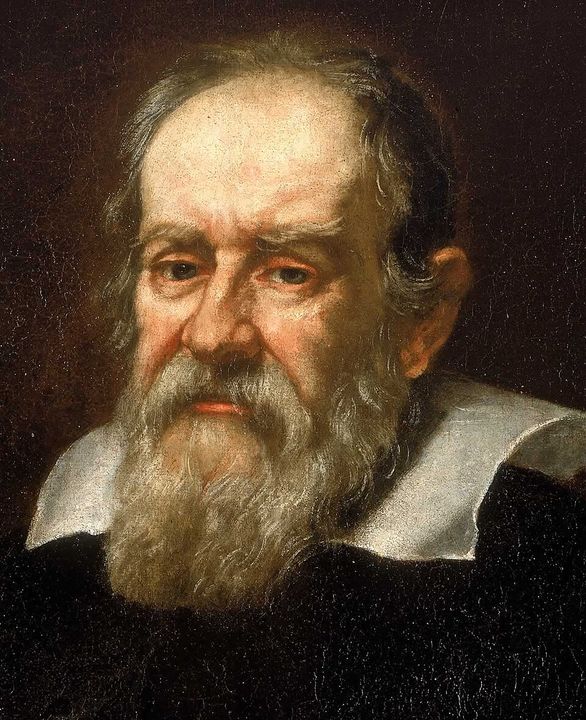

Summary
This volume gathers three works from the three stages of Galileo's career: the discoverer, the defender, and the old master of mechanics. The Starry Messenger (Sidereus Nuncius), printed at Venice in March 1610 and here read in Edward Stafford Carlos's 1880 English version, reports what Galileo saw through a telescope he had built and improved after hearing of a Dutch spyglass. He describes the Moon as mountainous and cratered, measuring the height of its peaks from the shadows they cast at the terminator, and explains the faint glow on its dark part as sunlight reflected from the Earth. He counts many more fixed stars than the eye can see in Orion's belt and the Pleiades, resolves the Milky Way and several nebulae into crowds of stars, and records night by night, from 7 January 1610, four small bodies circling Jupiter, which he names the Medicean Stars in honour of Cosimo II de' Medici. The Letter to the Grand Duchess Christina, written in 1615 and given here complete in Thomas Salusbury's 1661 translation with its original spelling, answers critics who used Scripture against the motion of the Earth. Galileo argues that Scripture cannot err but its interpreters can; that the Bible speaks of nature in terms suited to ordinary people; that God has given human beings sense and reason to learn what can be learned by them; and that, where a natural conclusion is demonstrated, the true sense of Scripture will agree with it. He draws repeatedly on Augustine and quotes the saying of a churchman, traditionally identified with Cardinal Baronius, that the Holy Spirit teaches how to go to heaven, not how the heavens go. The selection closes with the First Day of the Two New Sciences (Leiden, 1638), in Henry Crew and Alfonso de Salvio's 1914 translation, from an OCR text with the diagrams omitted. Three friends, Salviati, Sagredo and Simplicio, meet at the Venetian Arsenal and range over why large structures are weaker in proportion than small ones, the cohesion of solids and the resistance of the vacuum, the puzzles of infinity and indivisibles, a proposed test of the speed of light with lanterns, the fall of heavy and light bodies through air and water, the pendulum, and the ratios of musical consonance. Galileo's alter ego Salviati argues that in a medium without resistance all bodies would fall with the same speed. Read together, the three pieces show observation, argument about the relation of Scripture to nature, and mathematical physics in one mind.
Virtues in this work
- Industry: Galileo observed Jupiter night after night for two months, recording each configuration before drawing his conclusion about its moons.
- Prudence: In the Letter he urges, with Augustine, that interpreters avoid binding the faith to natural claims that later evidence might overturn.
- Piety: He frames the Letter as service to the Church and declares that his book may be torn and burnt if it contains anything not pious and Catholic.
- Humility: In the First Day Salviati offers his theory of fire and vacua as a passing thought, still immature, and invites his friends to judge it.
Plot or Argument
- The Starry Messenger: the telescope and the Moon
Galileo explains how he came to make a telescope magnifying about thirty times in diameter and how to test one. He then describes the Moon as rough and uneven, like the Earth, with mountains whose shadows shift as the terminator moves; he estimates their height and accounts for the secondary light of the dark Moon as earthshine.
- The Starry Messenger: fixed stars, Milky Way and nebulae
The telescope shows the fixed stars as points without the enlargement given to planets, and reveals many more of them. Galileo maps additional stars in Orion's belt and sword and in the Pleiades, and reports that the Milky Way and the nebulae of Orion and Praesepe are clusters of small stars.
- The Starry Messenger: the Medicean Stars
In the longest section Galileo records his nightly observations of Jupiter from 7 January to early March 1610, showing four companions that change position from side to side. He concludes that they revolve around Jupiter and notes that this removes an objection to Copernicus: if Jupiter can carry moons as it travels, so can the Earth.
- Letter to Christina: the occasion
Galileo tells the Grand Duchess that his discoveries have stirred up professors of the received philosophy, who now try to turn Scripture and the pulpit against him. He protests his submission to the Church and says his aim is to offer whatever may help it decide the Copernican question wisely.
- Letter to Christina: Scripture and natural knowledge
Scripture cannot lie when its true meaning is understood, but that meaning often differs from the bare sound of the words, which are fitted to the capacity of common people. God who gave human beings sense and reason does not intend them to set these aside in natural questions that can be settled by experience and demonstration, especially in astronomy, of which Scripture says little.
- Letter to Christina: the Fathers and the limits of interpretation
Galileo gathers passages from Augustine counselling caution in obscure natural questions and warning Christians not to expose the faith to ridicule. He argues that the agreement of the Fathers binds only in matters of faith and morals, that condemning Copernicus without examination would be imprudent, and that Joshua's command to the Sun can be read in harmony with a Copernican cosmos.
- Two New Sciences, First Day: scale and the strength of materials
At the Arsenal of Venice, Salviati explains why a large machine built in the same proportions as a small one is weaker, telling the story of a marble column that broke over a third support meant to protect it. He then asks what holds solids together, distinguishing fibres from the resistance of the vacuum, and notes that a suction pump cannot raise water more than about eighteen cubits.
- Two New Sciences, First Day: the infinite and the indivisible
Through the paradox of Aristotle's wheel and the comparison of all numbers with their squares, Salviati argues that terms like greater, equal and less do not apply to infinite quantities. He speculates about indivisible parts in matter, discusses the melting of metals by fire, and proposes a lantern experiment to test whether light travels instantaneously.
- Two New Sciences, First Day: falling bodies, the pendulum and music
Salviati answers Aristotle's claim that heavier bodies fall faster in proportion to their weight, using a thought experiment of two tied stones, and argues that differences in fall come from the resistance of the medium. The day closes with the equal times of a pendulum's swings, resonance, and the explanation of consonance by the frequencies of vibrating strings.
Characters
- Galileo Galilei, author and observer
Mathematician of Padua and then Florence who reports his telescopic discoveries and writes the Letter in his own voice.
- Christina of Lorraine, addressee
Grand Duchess of Tuscany, mother of Cosimo II, who had raised scriptural objections to the Earth's motion at a court breakfast in 1613.
- Cosimo II de' Medici, patron
Grand Duke of Tuscany, to whom The Starry Messenger is dedicated and after whose family the moons of Jupiter are named.
- Salviati, speaker
Florentine nobleman in the Two New Sciences who speaks for Galileo's views and leads the discussion.
- Sagredo, speaker
Venetian gentleman of quick intelligence who asks probing questions and often reports his own tests.
- Simplicio, speaker
Defender of Aristotle who raises the traditional objections, often in good faith.
- Augustine of Hippo, authority cited
Church Father whose counsel on caution in natural questions Galileo quotes throughout the Letter.
- Nicolaus Copernicus, authority discussed
Astronomer whose sun-centred system the Letter asks the Church not to condemn without examination.
Lessons
Look, record, and let others look
The Starry Messenger is built on dated, repeated observations, with drawings and instructions so that others can check them. Galileo's claims about Jupiter's moons rest on weeks of watching their positions change. The work shows how a discovery becomes public knowledge.
- Why does Galileo give the date and hour of so many observations of Jupiter?
- What does he tell readers about testing a telescope before trusting it?
- What would have made a reader in 1610 believe or doubt his report?
Two books from one Author
In the Letter Galileo insists that Scripture and nature both come from God and cannot finally contradict each other. Conflicts arise from misreading one or the other. He asks interpreters to distinguish what Scripture teaches for salvation from how it speaks of nature in ordinary language.
- How does Galileo use Augustine to support caution in interpreting Scripture on natural questions?
- What does he mean when he says Scripture was accommodated to the capacity of the common people?
- Which questions, in his view, belong to theologians and which to astronomers?
Argument as well as experiment
In the First Day Salviati refutes Aristotle on falling bodies first by reasoning: if a heavy stone is tied to a light one, the light one should both slow and speed the pair. Only then does he turn to experience. Galileo shows that a clear thought experiment can expose a contradiction in a long-held view.
- Explain the tied-stones argument in your own words.
- Why does Salviati say the remaining difference of two finger-breadths does not save Aristotle's claim?
- When is a thought experiment enough, and when must one actually drop the balls?
Wonder at the large and the small
The First Day moves from cathedral-sized columns to the infinitely small, from the scaling of giants to the paradoxes of number. Galileo's characters treat these puzzles with delight and patience. The dialogue form lets doubt and objection play their part in learning.
- Why can't a giant be built like a man only larger, according to Salviati?
- What is surprising about comparing all numbers with all square numbers?
- What does Simplicio contribute to the conversation, even when he is mistaken?
Context
Galileo worked in an Italy where natural philosophy in the universities followed Aristotle and where astronomy commonly used Ptolemy's geocentric models, while Copernicus's De revolutionibus (1543) offered a sun-centred alternative and Tycho Brahe a compromise system. After the Council of Trent the Catholic Church had reserved to itself the authoritative interpretation of Scripture. The telescope, known in the Netherlands in 1608, gave Galileo new evidence, and his discoveries brought him the patronage of the Medici court in Florence.
Composition
The Starry Messenger was written quickly in Latin and published at Venice in March 1610. The Letter to the Grand Duchess Christina, an expansion of a 1613 letter to his former student Benedetto Castelli, was written in 1615 and circulated in manuscript; it was first printed in 1636 at Strasbourg, in Italian with a Latin translation. Cardinal Robert Bellarmine, in an April 1615 letter to Paolo Antonio Foscarini, held that Copernicanism might be used as a mathematical hypothesis, that a real demonstration of the Earth's motion would require Scripture to be reinterpreted with great care, but that no such demonstration had been given. In 1616 the Congregation of the Index suspended Copernicus's book until corrected, and Bellarmine instructed Galileo not to hold or defend the doctrine. After his Dialogue of 1632 Galileo was tried in 1633, abjured, and was confined to his villa at Arcetri, where he finished the Two New Sciences, printed by the Elzevirs at Leiden in 1638.
Reception
The Starry Messenger made Galileo famous across Europe within months, and Kepler answered it in his Dissertatio cum Nuncio Sidereo (1610). Historians differ on how to weigh the theological, philosophical, personal and political causes of the conflict of 1616 and 1633; some stress Galileo's lack of a conclusive proof of the Earth's motion at the time, others the Church's caution after the Reformation, others the tensions of his own manner and the pope's displeasure over the Dialogue. Salusbury's 1661 English translations are said to have survived in few copies, a scarcity often linked to the Great Fire of London. The Two New Sciences laid foundations for the mechanics of materials and of motion taken up by Huygens and Newton. In 1992, after a commission's study, Pope John Paul II spoke publicly about the case, acknowledging errors by the theologians of Galileo's day.
Comparisons
- copernicus-on-the-revolutions
The Letter defends the Copernican system that Copernicus set out in 1543, and the moons of Jupiter answer one objection to a moving Earth.
- ptolemy-almagest
The geocentric system Galileo's discoveries challenged; the phases of Venus and the moons of Jupiter did not fit Ptolemy's arrangement of the planets.
- kepler-new-astronomy-and-harmony-of-the-world
Kepler, Galileo's contemporary and correspondent, welcomed The Starry Messenger and gave Copernicanism elliptical orbits that Galileo never adopted.
- aristotle-posterior-analytics-and-physics
Simplicio defends Aristotle's account of falling bodies and the impossibility of a vacuum from the Physics; the First Day answers both.
- principia
Newton built on Galileo's law of fall and treatment of motion, uniting terrestrial mechanics with the heavens Galileo had observed.
- kuhn-the-structure-of-scientific-revolutions
Kuhn treats the Copernican change and Galileo's pendulum as classic cases of a shift in how scientists see their problems.
Quotes
“the Moon certainly does not possess a smooth and polished surface, but one rough and uneven, and, just like the face of the Earth itself, is everywhere full of vast protuberances, deep chasms, and sinuosities.”
“the Galaxy is nothing else but a mass of innumerable stars planted together in clusters.”
“That it is both piously spoken, and prudently affirmed, That the Sacred Scripture can never lye, when ever its true meaning is understood”
“That the intention of the Holy Ghost, is to teach us how we shall go to Heaven, and not how Heaven goeth.”
“But that that self same God who hath indued us with Senses, Discourse, and Understanding hath intended, laying aside the use of these, to give the knowledg of those things by other means, which we may attain by these”
“for two truths can never contradict each other.”
“Aristotle says that "an iron ball of one hundred pounds falling from a height of one hundred cubits reaches the ground before a one-pound ball has fallen a single cubit." I say that they arrive at the same time.”
“Having observed this I came to the conclusion that in a medium totally devoid of resistance all bodies would fall with the same speed.”
For Students
A reading companion for classical Christian high school students. See the student guide.
Reading Guide
Watch for
- The dated log of Jupiter's companions in The Starry Messenger, and the night Galileo realizes they are moving with Jupiter rather than being left behind.
- How Galileo measures the height of lunar mountains from the length of their shadows near the boundary of light and dark.
- In the Letter, the turn from his critics' premise (Scripture cannot err) to his own point (its true meaning is often hard to find).
- The many quotations from Augustine in the Letter, and what each is used to prove.
- In the First Day, Salviati's tied-stones argument against Aristotle and Sagredo's report of dropping a cannon ball and a musket ball.
Key terms and names
- Medicean Stars
- Galileo's name for the four moons of Jupiter, honouring Cosimo II de' Medici and his brothers; today they are called the Galilean satellites.
- Terminator
- The line dividing the lit and dark parts of the Moon; the points of light just beyond it convinced Galileo that he was seeing sunlit mountain peaks.
- Accommodation
- The principle, used in the Letter, that Scripture speaks of nature in language fitted to the understanding of ordinary people rather than in technical terms.
- De Fide
- A matter of faith that Catholics are bound to believe; Galileo argues that the arrangement of the heavens is not such a matter.
- Necessary demonstration
- A proof that compels assent, as in geometry; the Letter contrasts it with probable reasons and bare narration.
- Simplicio
- The Aristotelian speaker in the Two New Sciences, named after the ancient commentator Simplicius, who voices the traditional objections.
- Resistance of the vacuum
- Salviati's name in the First Day for the force that holds smooth surfaces together and limits a suction pump to about eighteen cubits.
Seminar Questions
- Comprehension What four discoveries does Galileo report in The Starry Messenger, and which does he treat as most important?
- Comprehension In the Letter, why does Galileo say Scripture often speaks of God as having hands, feet and anger, and what does this show about how it speaks of the heavens?
- Comprehension In the First Day, how does Salviati show that a heavier stone cannot fall faster simply because it is heavier?
- Interpretation Galileo quotes the saying that the Holy Spirit teaches how to go to heaven, not how the heavens go. How far does this principle settle the question, and what questions does it leave open?
- Interpretation Bellarmine held that Scripture should be reinterpreted only if the Earth's motion were truly demonstrated. Does the Letter offer such a demonstration, or does it argue for something else?
- Interpretation Why might Galileo have chosen a dialogue among three friends for the Two New Sciences rather than a treatise in his own voice?
- Big Question If two truths can never contradict each other, what should a believer do when a scientific claim and a reading of Scripture seem to clash?
Faith Connections
- Joshua 10:12-14 (Scripture)
The Sun standing still over Gibeon was the passage most often cited against the Earth's motion. Galileo argues near the end of the Letter that it can be read in harmony with the Copernican system, while his critics read it plainly.
- Psalm 19:1-6 (Scripture)
The heavens declare the glory of God, and the Sun goes forth like a bridegroom. The psalm supports Galileo's theme that God is read in the book of the heavens, and its imagery was also cited for the Sun's motion.
- Augustine, The Literal Meaning of Genesis I.19 (Church Fathers)
Augustine warns that Christians who speak foolishly about the heavens and the earth bring the faith into contempt among those who know these things by reason and experience. Galileo builds much of the Letter on this caution.
- Robert Bellarmine, Letter to Paolo Antonio Foscarini (12 April 1615) (Great Conversation)
Bellarmine agreed that a true demonstration would require careful reinterpretation of Scripture but judged that none had been given, and asked that Copernicanism be treated as a hypothesis. Reading it beside the Letter shows how much the two men shared and where they parted.
Logic and Rhetoric
Central argument: Scripture and nature both come from God, so a true reading of one cannot contradict a true finding in the other. Scripture speaks of nature in terms fitted to common understanding and was given chiefly to teach salvation. God gave human beings sense and reason to learn natural truths that experience and demonstration can reach. Therefore, in natural questions such as the arrangement of the heavens, theologians should not condemn conclusions on the basis of the literal sound of a text, and where a conclusion is demonstrated, Scripture must be interpreted to agree with it.
Rhetorical device: concession (concessio). In the Letter Galileo first grants his opponents' principle that the Sacred Scripture can never lie when its true meaning is understood (quotes[2]), and then builds his whole case on the qualifying clause about its true meaning.
Debate: Resolved: That in 1615 the Church's call for a conclusive demonstration before reinterpreting Scripture was a reasonable standard.
Memory Work
That the intention of the Holy Ghost, is to teach us how we shall go to Heaven, and not how Heaven goeth.
for two truths can never contradict each other.
Writing Prompts
Essay: Galileo says that God who gave us sense and reason does not intend us to set them aside in natural questions. Explain how this claim, together with the principle of accommodation, shapes his reading of Scripture in the Letter to the Grand Duchess Christina, and evaluate the strongest objection a theologian of 1615 such as Bellarmine could raise.
Comparison with On the Revolutions of the Heavenly Spheres: Copernicus dedicated his book to Pope Paul III and warned that those ignorant of mathematics might twist Scripture against it; Galileo quotes that preface in the Letter. Compare how each author presents the relation between astronomy and Scripture, and argue which strategy was more prudent.
Medical Lens
Galileo began as a medical student at Pisa in 1581 before turning to mathematics, and his father wished him to become a physician. The works here are not medical, but the First Day measures short intervals by pulse-beats, a reminder that the pulse was the ordinary clock of the period; tradition (not the text) links Galileo's early pendulum observations to the pulsilogium that his Paduan colleague Santorio Santorio used to time the pulse. The closing discussion of consonance explains hearing as the regular striking of air waves on the tympanum, an early physical account of the ear.
- Two New Sciences, First Day, on fall through water and air
Salviati times the descent of bodies through air and water in pulse-beats, using the pulse as a unit of time.
- Two New Sciences, First Day, closing discussion of consonance
Musical intervals are explained by the number of air pulses striking the eardrum in a given time.
Creative Prompts
- Dialogue
Write a conversation in 1615 between Galileo and Cardinal Bellarmine about what would count as a true demonstration of the Earth's motion, letting each make his strongest case.
- Classroom
Have students keep a two-week observing log of the Moon or Jupiter with binoculars, sketching positions with date and hour as Galileo did, and compare their drawings with his.
- Essay
Explain how Galileo uses Augustine in the Letter to the Grand Duchess Christina, and assess whether his reading of Augustine's caution is faithful to the passages he quotes.
- Classroom
Drop two balls of the same size but different weights from the same height, then a ball and a sheet of paper, and use the results to reconstruct Salviati's argument about the resistance of the medium.
Further Reading
- Dialogue Concerning the Two Chief World Systems, Galileo Galilei, trans. Stillman Drake
- The Galileo Affair: A Documentary History, Maurice A. Finocchiaro (ed.)
Translations of the Letter to Castelli, Bellarmine's letter to Foscarini, the 1616 and 1633 documents.
- Galileo at Work: His Scientific Biography, Stillman Drake
- Galileo's Daughter, Dava Sobel
- The Literal Meaning of Genesis, Augustine of Hippo
The source of several passages Galileo quotes in the Letter.
Verification notes
All eight quotations were found by search in the stored text (content/texts/galileo-selected-writings.txt) and copied exactly, including Salusbury's 1661 spelling (lye, goeth, indued, knowledg). Page numbers for the Two New Sciences come from the running heads preserved in the OCR text. Dates of publication (Venice 1610; Strasbourg 1636 for the Letter; Leiden 1638), the 1616 decree and the 1633 trial are standard. The identification of the churchman as Baronius is traditional and rests on a marginal note in early copies; Galileo himself does not name him. Galileo's medical studies at Pisa are standard biography; the link to Santorio's pulsilogium is offered only as tradition.
- Whether Salusbury's translation was in fact largely destroyed in the Great Fire of 1666, as is commonly said.
- The precise date of the Castelli breakfast with the Grand Duchess (December 1613 is usual).
- Page locators for the Two New Sciences quotes against a printed copy of the 1914 edition.