Work record
Deliverance from Error (The Confessions of al-Ghazali)
c. 1100 · Medieval · Memoir · Arabic
Abstract
Background. Islam's most renowned Sunni theologian looks back, past age fifty, on a career that took him from a prestigious Baghdad chair into years of solitary devotion and then back to the lecture hall in Khurasan.
Content. Unable to trust what his parents taught him, he demands knowledge immune to any marvel, loses faith even in reason for about two months, and regains it as a gift. He then weighs the dialectical theologians, the Aristotelians and the mystics in turn. Logic and mathematics pass his inspection; three metaphysical theses do not. A personal collapse in 1095, when speech and appetite fail him, ends in flight from Baghdad and a decade on the Sufi way.
Key Concepts. Certainty, the ladder of human faculties, prophecy as perception above intellect, and the gap between defining a state and living in it are the book's main ideas. Its many images, from cupping glasses and false coins to dreams and drunkenness, make abstract points concrete for ordinary readers.
Edition. Field's Edwardian version, made for a series meant to build understanding between East and West, shortens the Arabic and passes quickly over the Isma'ili controversy.
Significance. Admirers call it the first great Muslim autobiography. Readers have set it beside Augustine and Descartes, and William James used it as evidence for mystical knowledge.
Key figures
- Abu Hamid al-Ghazali: Baghdad law professor turned Sufi, telling his own story
- Ibn Sina and al-Farabi: Aristotelian thinkers whose metaphysics he contests
- The Sufi masters: Makki, Muhasibi, Junayd and others whose books he studies
- The physicians: Doctors who trace his collapse to sorrow of heart
- The correspondent: Unnamed fellow believer whose questions prompt the account
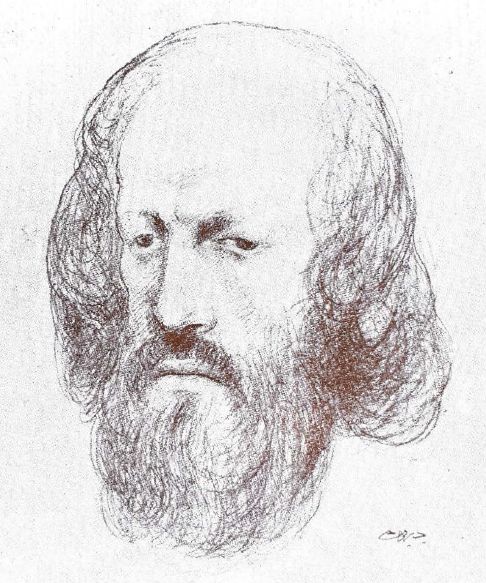

Summary
Deliverance from Error (al-Munqidh min al-dalal) is the intellectual autobiography of Abu Hamid al-Ghazali, the most influential theologian of medieval Sunni Islam. Written in Arabic about 1106–1110, after he had resumed teaching at Nishapur, it answers a 'brother in the faith' who has asked how he found his way through the quarrelling schools of his day and why he gave up his famous chair at Baghdad. The library text is Claud Field's English version, published in London in 1909 as The Confessions of Al Ghazzali in the Wisdom of the East series; it is an abridged rendering and passes briefly over some sections of the Arabic, notably the long examination of the Ta'limites (the Isma'ili party who relied on an infallible teacher). Ghazali begins with a thirst for knowledge that made him question the beliefs he had inherited, since the children of Christians, Jews and Muslims all simply follow their parents. Seeking certainty that no miracle could shake, he tests the senses (a shadow seems still, a star seems small) and then reason itself, which might be overruled by a higher judge as dreams are overruled by waking. For about two months he is, in his words, a sceptic in fact though not in profession, until God heals him not by argument but by a light cast into the heart. He then examines three groups of seekers. Scholastic theology defends orthodoxy well but argues from its opponents' premises and cannot cure his doubt. Philosophy he studies alone for about two years while lecturing to three hundred students. Mathematics, logic and physics he finds largely neutral, though they can lead students to trust philosophers too far; in metaphysics he faults Aristotle as transmitted by al-Farabi and Ibn Sina on twenty points, three of them amounting to unbelief: the denial of bodily resurrection, the claim that God knows only universals, and the eternity of the world. He insists, however, that truth must not be rejected because of who speaks it, comparing the wise reader to a coin-assayer and noting that honey is not made impure by a cupping glass. Finally he turns to the Sufis and learns that their way is a matter of experience, not definition. Seeing that his own teaching was driven by love of fame, he wavers for six months until his tongue fails, he cannot eat, and the physicians say the trouble lies in his heart. He leaves Baghdad, lives in retreat at Damascus and Jerusalem, makes the pilgrimage, and after about ten years concludes that the Sufis walk the true path. The closing sections explain prophecy as a faculty above reason, as reason is above sense, and suggest remedies for the decline of faith in his own age.
Virtues in this work
- Humility: Examining his celebrated lectures, Ghazali admits they were driven by a desire for honor and reputation rather than devotion to God.
- Fortitude: He gives up the most prestigious teaching post in Baghdad and his wealth, despite the criticism of every scholar in Iraq.
- Prudence: Like a skilled coin-assayer, he separates the true parts of philosophy from the false instead of accepting or rejecting it whole.
- Piety: In Damascus he spends his days in prayer and solitude in the minaret of the great mosque, seeking to purify his heart.
Plot or Argument
- The request and the search for certainty
Answering a correspondent, Ghazali describes the sects of his day as an ocean full of wrecks. From youth he questioned inherited belief, noting that children follow their parents' religion, and resolved to find knowledge so certain that even a man who turned a rod into a serpent could not make him doubt that ten is more than three.
- The subterfuges of the sophists: two months of doubt
The senses are corrected by reason, but reason might be corrected by some higher judge, as waking corrects dreams. Ghazali suspects that the Sufis' ecstasy, or death itself, may be such a higher state. Unable to prove first principles without assuming them, he remains a sceptic for about two months, until God restores his trust in reason through a light cast into the heart.
- Three kinds of seekers; the limits of scholastic theology
Truth must lie with the theologians, the philosophers or the Sufis, since blind belief, once broken like glass, cannot be restored. Scholastic theology (kalam) defends the faith against innovators but argues from premises shared with its opponents, and so cannot satisfy one who admits only what is self-evident.
- The philosophers and their sects
Studying philosophy from books, without a teacher, in his spare hours at Baghdad, Ghazali masters it in two years and reflects on it for a third. He divides philosophers into materialists, naturalists who study anatomy but deny the soul's survival, and theists from Socrates to Aristotle, whose followers include al-Farabi and Ibn Sina.
- The six philosophic sciences
Mathematics, logic and physics contain nothing contrary to religion in themselves, though their clarity may lead students to trust philosophers on everything. Metaphysics contains twenty errors, three opposed to all Islam: denial of bodily resurrection, the claim that God knows universals and not particulars, and the eternity of the world. Politics and ethics borrow from revealed books and from the Sufis.
- The two dangers of philosophy
Some reject every truth found among philosophers, judging the truth by its speakers; Ghazali answers with the coin-assayer, the snake-charmer who keeps the antidote, and the honey in a cupping glass. Others accept philosophers' errors along with their truths; for them he would restrict reading, as one keeps poor swimmers from a river bank.
- Sufism and the crisis at Baghdad
Ghazali reads the Sufi masters and learns that their goal is reached by practice, as being drunk differs from defining drunkenness. Examining his own motives, he finds his teaching driven by desire for reputation. For six months he wavers between ambition and the call of religion, until he loses the power to speak and to eat and his physicians say the cause is in his heart. He gives up his chair, provides for his children, and leaves Baghdad.
- Retreat, pilgrimage and the Sufi path
Two years in Damascus, much of it alone in the minaret of the great mosque, are followed by retreat in Jerusalem at the Dome of the Rock, a visit to the shrine of Abraham at Hebron, and the pilgrimage to Mecca and Medina. Family and the prayers of his children bring him home. Over ten years he concludes that the Sufis' life and conduct are the purest, that their way begins in purifying the heart and ends in being lost in God, and that what they experience cannot be put into words.
- The reality of prophetic inspiration
Human faculties unfold in stages: touch, sight and the other senses, then discrimination around age seven, then reason. Above reason lies a faculty that perceives what reason cannot, as dreams already hint. Belief in a particular prophet rests not on single miracles but on many confirming experiences of the truth of his teaching.
- Causes of the decline of faith; closing prayer
Ghazali points to his other works for answers to the Ta'limites and the libertines, explains that he argued from medicine and astronomy for those shaken by philosophy, and answers those who doubt because learned men sin: such men know their fault, as patients who ignore a doctor's orders still believe him. He ends with a prayer to be among those God has cleansed and indwells.
Characters
- Abu Hamid al-Ghazali, narrator
Celebrated Baghdad professor of law and theology who recounts his doubts, his study of every school, his breakdown and his turn to the Sufi way.
- The 'brother in the faith', addressee
The unnamed correspondent whose questions about Ghazali's search and his return to teaching frame the whole book.
- Ibn Sina (Avicenna) and al-Farabi, philosophers examined
The Muslim philosophers whom Ghazali credits as Aristotle's best interpreters and faults on three doctrines he judges incompatible with Islam.
- Aristotle, philosopher examined
Praised as the organizer of logic and the sciences while his metaphysics is rejected on key points.
- Abu Talib al-Makki, al-Harith al-Muhasibi, al-Junayd, al-Shibli, Abu Yazid al-Bistami, Sufi masters
Earlier Sufi writers whose books and sayings Ghazali studies before taking up Sufi practice himself.
- The physicians of Baghdad, doctors
They despair of Ghazali's recovery during his crisis and say the illness lies in his heart and in a grievous sadness.
- Ali ibn Abi Talib, cited authority
The fourth caliph, whose maxim that one should first find the truth and then recognize those who follow it guides Ghazali's method.
Lessons
Honest doubt can be the beginning of firmer faith
Ghazali does not hide that he once doubted the senses and even reason itself. He treats this doubt as a sickness to be healed rather than a pose to be admired, and he finds his cure in God's gift of light, not in a cleverer argument. His story invites readers to ask what certainty is and where it finally comes from.
- Why does Ghazali say that once blind belief is broken it cannot be restored, like glass, without being remade in the furnace?
- How does the argument from dreams make him doubt reason itself?
- Does Ghazali's answer to his doubt (a light cast into the heart) end the argument or step outside it?
Judge a teaching by its truth, not by its teacher
Though he rejects much of the philosophers' metaphysics, Ghazali insists that a true statement does not become false because an opponent says it. His images of the coin-assayer and the honey in the cupping glass teach a discipline of fair reading that is rare in any age of controversy.
- What two dangers does Ghazali see in the study of philosophy, and how do they differ?
- Explain the image of the honey and the cupping glass in your own words.
- Ghazali also says some readers should be kept from philosophical books. How does he reconcile this with his defense of truth wherever it is found?
Knowing about goodness is not the same as being good
Ghazali learns that the Sufis' teaching is easier to study than to practice, as a doctor can define drunkenness without being drunk. When he applies this to himself, he finds that his celebrated teaching was moved by desire for fame. The cost of acting on that discovery is his position, his income and his health.
- What does Ghazali discover when he examines the motives behind his lecturing?
- How do the voice of religion and the Tempter argue with him during his six months of indecision?
- Is it possible to do good work for the wrong reasons? Should one stop doing it?
Reason has a place, and a limit
Ghazali praises logic and mathematics, uses arguments throughout, and still holds that prophecy is a faculty above reason, as reason is above the senses. A child of seven could not imagine the work of the intellect; so, he argues, reason should not deny what lies beyond it.
- List the stages of human faculties Ghazali describes in the section on inspiration.
- How does he use dreams to make the idea of a higher faculty believable?
- Where do you think the boundary between what reason can know and what must be received lies?
Context
Ghazali lived under the Abbasid caliphs at Baghdad, whose real power had passed to the Seljuk Turkish sultans and their Persian vizier Nizam al-Mulk. Nizam al-Mulk founded the Nizamiyya colleges to strengthen Sunni learning, in part against the Isma'ili movement centered on the Fatimid caliphate in Cairo, whose followers Ghazali calls the Ta'limites. The Greek philosophical tradition, transmitted through Arabic translations and developed by al-Farabi and Ibn Sina, enjoyed great prestige, while Sufism, the mystical path of Islam, had produced a substantial literature but was viewed with suspicion by some jurists.
Composition
Ghazali says he wrote after passing his fiftieth year, which places the work about 1106–1110, after his return to teaching at Nishapur. The Arabic title means 'what delivers from error'. Field dates the start of his crisis to 'the month Rajab of the year A.D. 1096'; the Arabic text gives Rajab 488 of the Islamic calendar, usually converted as July 1095. Claud Field's English version appeared in London in 1909 in the Wisdom of the East series edited by L. Cranmer-Byng and S. A. Kapadia; it abridges the original, and later complete translations by W. Montgomery Watt (1953) and R. J. McCarthy (1980) are under copyright.
Reception
The Munqidh has been one of Ghazali's most widely read works and is often called the first great autobiography in Islamic literature. Its account of methodical doubt has prompted comparisons with Descartes, and some scholars have asked whether Descartes could have known it; most find no evidence of direct influence and treat the resemblance as a parallel. Ibn Rushd (Averroes) answered Ghazali's critique of the philosophers in The Incoherence of the Incoherence about a century later. Modern scholars disagree over how far the Munqidh is a straightforward narrative and how far a carefully shaped apologia written for a particular audience. William James quoted it at length in The Varieties of Religious Experience as a classic account of mystical conviction.
Comparisons
- confessions
Augustine and Ghazali both tell of a brilliant teacher of rhetoric or law who doubts, examines the philosophers, struggles to leave a public career, and finds rest in God; Augustine's garden scene in Book VIII and Ghazali's six months of wavering make a close pair.
- meditations-on-first-philosophy
Descartes' First Meditation doubts the senses and raises the dream argument much as Ghazali does; Descartes rebuilds certainty from the thinking self, Ghazali from God's light in the heart.
- pensees
Pascal's claim that the heart has reasons which reason does not know echoes Ghazali's account of a certainty given by God and confirmed by experience rather than by demonstration.
- the-varieties-of-religious-experience
William James quotes the Munqidh in his lectures on mysticism as testimony that mystical states are known by experience and not by definition.
- avicenna-canon-of-medicine-book-i
Ibn Sina is both the physician of the Canon and the philosopher whose metaphysics Ghazali rejects on three points; reading both shows how one mind could be revered in medicine and contested in theology.
Quotes
“Having once surrendered blind belief, it is impossible to return to it, for the essence of such belief is to be unconscious of itself.”
“I owed my deliverance, not to a concatenation of proofs and arguments, but to the light which God caused to penetrate into my heart—the light which illuminates the threshold of all knowledge.”
“they judge the truth according to its professors instead of judging its professors by the standard of the truth.”
“Honey does not become impure because it may happen to have been placed in the glass which the surgeon uses for cupping purposes.”
“To define drunkenness, to know that it is caused by vapours which rise from the stomach and cloud the seat of intelligence, is quite a different thing to being drunk.”
“I saw that Sufism consists in experiences rather than in definitions”
“The mischief is in the heart, and has communicated itself to the whole organism; there is no hope unless the cause of his grievous sadness be arrested.”
For Students
A reading companion for classical Christian high school students. See the student guide.
Reading Guide
Watch for
- The miracle test in the first section: no wonder-worker could make Ghazali doubt that ten is more than three.
- The dream argument and the suggestion that death may be a waking from this life.
- The images of the coin-assayer, the snake-charmer's antidote and the honey in the cupping glass.
- The six months of wavering, the loss of speech, and the physicians' verdict.
- The ladder of faculties in the section on inspiration: senses, discrimination, reason, and the faculty above reason.
Key terms and names
- Kalam
- Scholastic theology: the defense of Islamic doctrine by rational argument, which Ghazali finds useful but unable to cure his doubt.
- Falsafa
- Philosophy in the Greek tradition, especially Aristotle as interpreted by al-Farabi and Ibn Sina.
- Sufism
- The mystical path of Islam, which seeks to purify the heart from all but God through discipline, remembrance and contemplation.
- Ta'limites
- Ghazali's name for the Isma'ili party who held that truth must be received from an infallible living teacher.
- Certitude
- In Ghazali's definition, knowledge so complete that it leaves no room for doubt or error and cannot be shaken by any marvel.
- Nizamiyya
- The college at Baghdad founded by the vizier Nizam al-Mulk, where Ghazali held his celebrated chair.
- Inspiration (prophecy)
- In this book, a faculty above reason by which prophets perceive truths hidden from intellect, as reason perceives what the senses cannot.
Seminar Questions
- Comprehension What three groups of seekers after truth does Ghazali examine, and in what order?
- Comprehension Which three doctrines of the philosophers does Ghazali judge to be contrary to all of Islam?
- Comprehension What happens to Ghazali's body during his six months of indecision, and what do his doctors conclude?
- Interpretation Ghazali is cured of doubt by a light in the heart rather than by argument. Why then does he spend so much of the book arguing?
- Interpretation How does the analogy of the doctor and the drunkard explain why Ghazali had to leave Baghdad?
- Interpretation Why might Ghazali tell his story in the form of a reply to a friend rather than as a treatise?
- Big Question Can we be certain of anything, and if so, how do we know it?
- Big Question Is it right to give up an honored position because one's motives in holding it are impure?
Faith Connections
- Augustine, Confessions VIII.8–12 (Church Fathers)
Augustine, too, is a famous teacher divided between ambition and a call to God, and is held in suspense until a moment of grace resolves his will; Christian readers will see both the likeness and the different Lord to whom each turns.
- 1 Corinthians 1:20–25; 2:9–10 (Scripture)
Paul sets the wisdom of the world against the wisdom of God and says that what eye has not seen God reveals by His Spirit, a Christian account of knowledge beyond reason that invites comparison with Ghazali's faculty above intellect.
- John 7:17 (Scripture)
'If any man will do his will, he shall know of the doctrine' resembles Ghazali's conviction that truth is confirmed by obedience and experience, not by definitions alone.
- Thomas Aquinas, Summa contra Gentiles I.3–8 (Great Conversation)
Aquinas, who knew Ghazali's summary of the philosophers in Latin as the work of 'Algazel', distinguishes truths reason can reach from truths of faith that exceed it, a medieval Christian treatment of the very boundary Ghazali explores.
Logic and Rhetoric
Central argument: Certainty cannot rest on inherited belief, on the senses, or on reason alone, since each can be called into question. Theology defends but cannot ground faith, and philosophy errs where it goes beyond demonstration. The Sufi path, known by practice rather than definition, gives direct experience of what prophecy reveals. Therefore the seeker must purify the heart and accept that there is a faculty above reason.
Rhetorical device: analogy. Ghazali explains the gap between knowing and practicing by comparing a doctor who can define drunkenness with a man who is drunk (quote 5), and defends reading opponents fairly with honey in a cupping glass (quote 4).
Debate: Resolved: That some truths can be known with certainty only through experience and not through argument.
Memory Work
they judge the truth according to its professors instead of judging its professors by the standard of the truth.
I saw that Sufism consists in experiences rather than in definitions
Writing Prompts
Essay: Trace Ghazali's path from doubt to certainty through theology, philosophy and Sufism, and evaluate whether his reasons for rejecting each of the first two are convincing.
Comparison with Confessions: Compare the conversions of Augustine and al-Ghazali: the role of philosophy, the struggle of the will, and the moment of release. Explain what each believes about how a person comes to know God.
Medical Lens
Ghazali describes his intellectual and spiritual life in medical language throughout. His two months of scepticism are a 'mental malady' that God heals; scholastic theology cannot cure 'the malady from which I suffered', and he notes that remedies vary with the disease. The central medical passage is the crisis of 1095: after six months of indecision his tongue is bound so that he cannot lecture, he falls into despair, loses appetite and cannot swallow, and his physicians judge that the trouble lies in the heart and in grievous sadness. Later readers have interpreted this episode as a psychosomatic illness, a depressive crisis, or a conversion-type loss of speech; these are retrospective readings, and Ghazali himself presents it as God's act in turning him from the world. The book also draws on the medicine of its day: drunkenness explained by vapours rising from the stomach, the cupping glass, patients who ignore the doctor's ban on fruit and cold water, and the argument that medicine and astronomy contain knowledge not reached by experience alone. His treatment of dreams as a glimpse of a higher mode of knowing, and of Sufi ecstasy as an altered state with its own certainty, has made the book a reference in the history of religious psychology.
- The Subterfuges of the Sophists
The dream argument and two months of doubt described as a malady healed by God.
- Sufism (the crisis at Baghdad)
Loss of speech, appetite and the ability to swallow; the physicians' verdict that the cause lies in the heart and in sadness.
- Divisions of the Philosophic Sciences (Physics; Moral Philosophy)
Medicine as the study of the body's organs and their changes; the honey in the surgeon's cupping glass.
- Sufism (opening) and The Reality of Inspiration
Drunkenness and the doctor's knowledge of it; ecstasy and dreams as states beyond ordinary perception.
Creative Prompts
- Dialogue
Write the argument between 'the voice of religion' and 'the Tempter' that Ghazali reports during his six months of indecision, extending it into a full scene in his Baghdad lecture hall.
- Essay
Compare Ghazali's doubt about the senses and reason with Descartes' First Meditation. Where do the two arguments run together, and where do they part?
- Classroom
Bring in a statement from a source the class distrusts and test it as Ghazali's coin-assayer would: separate what is true from what is false without regard to the speaker, then discuss how hard that was.
Further Reading
- The Faith and Practice of al-Ghazali, W. Montgomery Watt (trans.)
A complete English translation of the Munqidh with a short work on Sufi practice.
- Al-Ghazali's Path to Sufism (Deliverance from Error), R. J. McCarthy (trans.)
An annotated complete translation with related texts.
- The Incoherence of the Philosophers, Al-Ghazali, trans. Michael E. Marmura
The critique of al-Farabi and Ibn Sina that the Munqidh summarizes.
- Al-Ghazali's Philosophical Theology, Frank Griffel
A study of Ghazali's life and his relation to philosophy, including the dating of his works.
- Muslim Intellectual: A Study of al-Ghazali, W. Montgomery Watt
A classic intellectual biography.
Verification notes
Translation details come from the stored text's title page and meta file (Claud Field, John Murray, Wisdom of the East, 1909). The library text was read in full; its sections are Introduction (by Field), Search for Truth, Subterfuges of the Sophists, Different Kinds of Seekers, Scholastic Theology, Philosophical Sects, Divisions of the Philosophic Sciences, Sufism, and The Reality of Inspiration, with a brief closing section on the decay of faith. It does not contain the extended treatment of the Ta'limites found in the Arabic, mentioning them only in passing. All seven quotations were found by searching the stored text and copied exactly. Biographical dates (birth 1058, Nizamiyya appointment 1091, departure from Baghdad 1095, return to Nishapur c. 1106, death 1111) are standard. Field's 'A.D. 1096' for the crisis differs from the usual conversion of Rajab 488 AH to July 1095; both are reported. The interpretations of the crisis in the medical lens are presented as readings, not diagnoses.
- Whether Field translated from the Arabic or from the French version of C. Barbier de Meynard (1877), as is often said.
- The exact year of composition within c. 1106–1110.
- Section titles of the Field translation against the Arabic divisions used by Watt and McCarthy.