Work record
Helvering v. Davis
1937 · Early 20th Century · Court Decision · English
Abstract
Question Presented. Do the old-age benefit provisions of the 1935 Social Security Act, and the payroll taxes laid alongside them, fall within the taxing and spending authority Congress holds for the general welfare, or do they intrude on powers left to the states?
Arguments. Davis contended that the Constitution grants no authority to pay pensions, that taxes and benefits formed one regulatory plan, and that the 1936 agricultural ruling forbade such a design. Federal lawyers replied that the levies were ordinary excises, that payments came from general revenue, and that poverty among the elderly had outgrown local remedies.
Holding. Seven justices reversed the appeals court. Cardozo found that Congress decides whether an expenditure serves a national rather than local end unless its choice is plainly arbitrary, noted that Hamilton's broad view had won out, and judged that the Depression made provision for the old a nationwide matter. McReynolds and Butler would have struck the provisions down.
Significance. Together with Steward Machine, decided the same morning, the ruling secured the constitutional footing of Social Security and stands as the principal precedent on the breadth of federal spending, though later justices have explored where coercive grant conditions begin.
Text. Cardozo's full opinion is given here without its notes.
Key figures
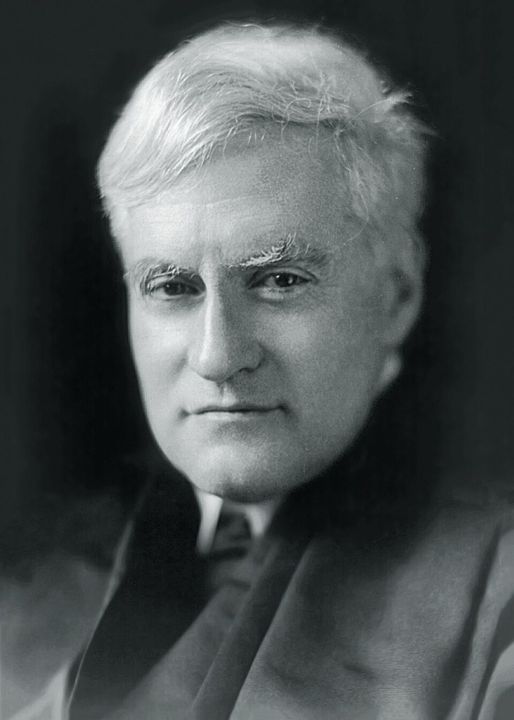
- Benjamin N. Cardozo: Justice who wrote that old-age security had become a national concern
- George P. Davis: Boston utility shareholder challenging the payroll taxes
- Guy T. Helvering: Commissioner of Internal Revenue defending the act
- James C. McReynolds and Pierce Butler: Dissenters who cited the Tenth Amendment without an opinion

Summary
The Social Security Act of 1935 created, among other programs, a national system of old-age benefits. Title VIII levied an excise on employers and an income tax on employees, both measured by wages and paid into the Treasury like other revenue. Title II, separately, authorized monthly payments to qualified workers after they reached sixty-five, drawn from an Old-Age Reserve Account funded by congressional appropriations. George P. Davis, a shareholder of the Edison Electric Illuminating Company of Boston, sued to stop the company from paying the taxes and withholding them from wages, contending that the scheme was void. The federal district court in Massachusetts dismissed his suit, but the Court of Appeals for the First Circuit reversed, holding that Title II invaded powers reserved to the states by the Tenth Amendment and that the taxes fell with it. Guy T. Helvering, the Commissioner of Internal Revenue, sought review. Davis's side argued that Congress has no enumerated power to provide pensions, that the taxes and benefits were parts of one plan to regulate the employment relation, and that the Court had held a similar tax-and-spend arrangement unconstitutional in United States v. Butler (1936). The government answered that the taxes were valid excises, that the benefits were paid from general funds under the power to spend for the general welfare, and that the needs of the aged had become a national problem beyond the capacity of the states. On 24 May 1937 the Court reversed, seven to two. Justice Cardozo first noted that he personally would have denied relief because the shareholder had not shown a proper case for an injunction, but that the majority, at the government's urging, chose to decide the constitutional question. On the merits he held that Congress may spend for the general welfare, that the reading of that clause advanced by Hamilton and Story had prevailed over Madison's narrower one, and that the line between particular and general welfare is for Congress to draw unless its choice is clearly arbitrary. The Depression, he wrote, had shown that the problem of old age was national, and benefits offered in one state but not another would draw the aged and discourage the states from acting at all. Having upheld Title II, the Court sustained the employer tax as a valid excise on employment and found its exemptions reasonable. Justices McReynolds and Butler stated in one sentence that the provisions violated the Tenth Amendment and would have affirmed. The library text is the full majority opinion, notes removed; there is no written dissent to include. The companion case, Steward Machine Co. v. Davis, upheld the act's unemployment tax the same day. Helvering remains the leading authority for the breadth of the spending power, and later disputes, including National Federation of Independent Business v. Sebelius (2012), have returned to the limits Cardozo described.
Virtues in this work
- Charity: Cardozo's opinion dwells on the fear of destitution among the elderly and treats their security as a concern of the whole nation.
- Humility: The Court declares that the wisdom of the benefit scheme is not its question and limits itself to the question of power.
- Prudence: Cardozo weighs the practical consequences of leaving pensions to the states alone, including the pressure on any state that acted first.
Plot or Argument
- The suit and the remedy
Cardozo describes the shareholder's bill, the lower courts' rulings and the government's waiver of objections to the form of the suit. He records his own view that equitable relief should be refused, then explains that the Court will nonetheless decide the constitutional questions.
- Spending for the general welfare
Treating Butler as settling that Congress may spend for the general welfare, Cardozo holds that the choice between particular and general welfare belongs to Congress unless it is a display of arbitrary power, and that the concept of the general welfare changes as the nation's needs change.
- Why old age is a national problem
The opinion reviews reports on the aged in industry, the losses of savings in the Depression and the burden on state poor relief, concluding that only a national power can meet a need that spreads across state lines and that state programs alone would invite a flight of the aged toward generous states.
- The taxes and their exemptions
With Title II upheld, Cardozo declines to ask whether Title VIII depends on it, sustains the employer tax as an excise on the relation of employment as in Steward Machine, and accepts the statute's exemptions as reasonable classifications.
- The two-justice dissent
In a sentence appended to the judgment, McReynolds and Butler state that the challenged provisions are repugnant to the Tenth Amendment.
Characters
- Guy T. Helvering, petitioner
Commissioner of Internal Revenue, named as the official responsible for collecting the Social Security taxes.
- George P. Davis, respondent
Shareholder of a Boston electric company who sued to prevent it from paying and withholding the taxes.
- Justice Benjamin N. Cardozo, author of the majority opinion
Wrote that the needs of the aged had become a national concern within the spending power.
- Justices James C. McReynolds and Pierce Butler, dissenters
Would have affirmed the court of appeals on Tenth Amendment grounds without a written opinion.
Lessons
Hamilton and Madison on the general welfare
The Constitution lets Congress tax to provide for the general welfare. Madison read the phrase as a summary of the enumerated powers that follow; Hamilton read it as an independent power to spend for national purposes. Cardozo accepted Hamilton's view, as Story had, while keeping a judicial check against arbitrary choices.
- What is the difference between Madison's and Hamilton's readings of the general welfare clause?
- Which reading does Cardozo say has prevailed, and on what authority?
- Does a broad spending power make the list of enumerated powers less important?
Who decides what is general?
Cardozo held that the line between particular and general welfare must be drawn, but that Congress draws it unless its choice is clearly wrong. Critics of this deference argue that it leaves almost no judicial limit on federal spending; defenders reply that such questions of policy are suited to elected representatives.
- What standard does Cardozo set for reviewing Congress's judgment about the general welfare?
- Why does he say the concept of the general welfare is not static?
- Should courts or Congress decide whether a national need exists?
Federalism and the race among the states
Cardozo argued that a state which taxed its employers to pay pensions would put them at a disadvantage and might attract the aged from other states, so that local action alone could not solve the problem. The dissenters saw the act instead as federal entry into a field the Tenth Amendment reserved to the states.
- What special dangers does Cardozo see in old-age pensions adopted by one state but not another?
- How does the Tenth Amendment figure in the court of appeals' decision and in the dissent?
Power, not wisdom
Cardozo stressed that the Court's task was to decide whether Congress had power, not whether the plan was wise. The distinction recurs throughout constitutional law and asks students to separate their judgment of a policy from their judgment of its legality.
- Why does Cardozo say it is not for the Court to judge the wisdom of Title II?
- Can a law be constitutional and still unwise, or unconstitutional and still wise?
- What would be lost if judges decided cases according to their views of good policy?
Context
Before 1935 provision for the aged rested on families, private charity, county poorhouses and a few state pension laws, many of them limited by the fiscal strain of the Depression. Proposals such as the Townsend Plan for large flat pensions drew millions of supporters. President Roosevelt's Committee on Economic Security drafted a contributory system instead, which Congress enacted in August 1935.
Composition
Payroll taxes under Title VIII were to begin in January 1937, so challenges reached the Court quickly. The government asked for a prompt decision, and the case was argued in early May 1937 and decided on 24 May, the same day as Steward Machine Co. v. Davis and Carmichael v. Southern Coal & Coke Co., which upheld Alabama's unemployment law.
Reception
The Social Security cases ended serious constitutional doubt about the program, and Congress expanded it with survivors' benefits in 1939. Scholars disagree over whether Helvering left any meaningful judicial limit on the spending power; the Court later held in South Dakota v. Dole (1987) and NFIB v. Sebelius (2012) that conditions attached to federal grants to states may not become coercive.
Comparisons
- the-federalist-papers
In Federalist No. 41 Madison argued that the general welfare phrase is explained by the specific powers that follow it, the narrower reading Cardozo says did not prevail.
- hamiltons-reports-and-opinion-on-the-bank
Hamilton's opinion on the bank defends broad implied national powers, the same outlook that shaped his reading of the spending clause in the Report on Manufactures.
- west-coast-hotel-v-parrish
Decided two months earlier, it upheld state wage regulation; Helvering upheld federal provision for the aged, together marking the Court's acceptance of New Deal economic programs.
- nfib-v-sebelius
Seventy-five years later the Court sustained a federal health insurance requirement as a tax but limited Congress's power to attach conditions to grants to the states.
- democracy-in-america
Tocqueville's chapters on a mild, tutelary central power raise in general terms the question of how far national government should care for citizens' welfare.
Quotes
Frequently cited
“The conception of the spending power advocated by Hamilton and strongly reinforced by Story has prevailed over that of Madison, which has not been lacking in adherents.”
Frequently cited
“Nor is the concept of the general welfare static. Needs that were narrow or parochial a century ago may be interwoven in our day with the well-being of the nation.”
Frequently cited
“The hope behind this statute is to save men and women from the rigors of the poor house as well as from the haunting fear that such a lot awaits them when journey's end is near.”
“The discretion belongs to Congress, unless the choice is clearly wrong, a display of arbitrary power, not an exercise of judgment.”
“Only a power that is national can serve the interests of all.”
“Whether wisdom or unwisdom resides in the scheme of benefits set forth in Title II, it is not for us to say.”
For Students
A reading companion for classical Christian high school students. See the student guide.
Reading Guide
Watch for
- The difference between Title VIII, which lays taxes, and Title II, which pays benefits.
- Cardozo's personal note that he would have refused the injunction on the remedy alone.
- The sentence naming Hamilton, Story and Madison.
- Evidence Cardozo gathers about the aged in industry and the poor relief rolls.
- The one-sentence dissent at the very end.
Key terms and names
- Spending power
- The authority of Congress, drawn from Article I, Section 8, to spend money raised by taxes to provide for the common defense and general welfare.
- Excise
- A tax on an activity or transaction, here on the relation of employment, rather than on property.
- Tenth Amendment
- The provision reserving to the states or the people powers not delegated to the United States.
- Injunction
- A court order commanding a party to do or refrain from doing something, here sought to stop payment of the taxes.
- Shareholder suit
- A lawsuit brought by an owner of shares to challenge a corporation's conduct.
Seminar Questions
- Comprehension What did Title II of the Social Security Act provide, and how was it funded?
- Comprehension Why did a shareholder rather than a taxpayer bring this suit?
- Comprehension What did the Court of Appeals for the First Circuit decide, and on what ground?
- Interpretation How does Cardozo use the experience of the Depression to argue that old-age security had become a national concern?
- Interpretation Why does Cardozo decide the constitutional question even though he believed the injunction should be refused?
- Big Question What duties does a society owe to those who can no longer work, and which level of government, family or church should carry them?
Faith Connections
- 1 Timothy 5:3-8 (Scripture)
Paul instructs children and grandchildren to provide for widowed parents first and the church to honor widows who are truly alone, a passage that speaks to who bears responsibility for the aged.
- Psalm 71:9 (Scripture)
The psalmist prays, Cast me not off in the time of old age; forsake me not when my strength faileth.
- Leviticus 19:32 (Scripture)
The law commands Israel to rise before the hoary head and honor the face of the old man.
Logic and Rhetoric
Central argument: Cardozo reasons that Congress may spend for the general welfare, that Congress decides what is general rather than particular unless its judgment is arbitrary, that the Depression showed security in old age to be a national need no single state could meet, and that the benefits of Title II are therefore within federal power.
Rhetorical device: evocative imagery. Cardozo speaks of the haunting fear of the poor house when journey's end is near (quote 3), using the image of a journey to give a legal opinion on taxation a human face.
Debate: Resolved: that the general welfare clause gives Congress an independent power to spend for national purposes not otherwise enumerated.
Memory Work
Nor is the concept of the general welfare static. Needs that were narrow or parochial a century ago may be interwoven in our day with the well-being of the nation.
The hope behind this statute is to save men and women from the rigors of the poor house as well as from the haunting fear that such a lot awaits them when journey's end is near.
Writing Prompts
Essay: Explain Cardozo's reasoning that Congress, not the courts, should usually decide what counts as the general welfare, and assess one strength and one weakness of that approach.
Comparison with The Federalist Papers: Compare Madison's reading of the general welfare clause in Federalist No. 41 with Cardozo's in Helvering, and explain why the difference matters for the size of the national government.
Medical Lens
The case concerns taxation and federal spending for old-age benefits; the opinion speaks of the needs of the aged in economic rather than medical terms.
Creative Prompts
- Classroom
Hold a debate between a student playing Madison in 1792 and one playing Hamilton, each explaining what the general welfare clause allows; then have a third student read Cardozo's verdict on their dispute aloud and explain it.
- Essay
Write the dissenting opinion that McReynolds and Butler did not publish, arguing from the Tenth Amendment that pensions for the aged belong to the states.
- Dialogue
Imagine an elderly Massachusetts mill worker in 1937 talking with a grandchild about what the poor house meant and what the new benefits might change.
- Essay
Choose a modern federal spending program and apply Cardozo's test: is Congress's choice of a general rather than particular welfare clearly wrong or an exercise of judgment?
Further Reading
- The Constitution Reborn: The Supreme Court and the Constitutional Revolution in the Age of Roosevelt, William E. Leuchtenburg
Covers the Social Security decisions in the setting of the 1937 Court crisis.
- Cardozo, Andrew L. Kaufman
Full biography of the justice, including his years on the Supreme Court.
- The Formative Years of Social Security, Arthur J. Altmeyer
Memoir by a member of the first Social Security Board on how the program was designed and defended.
Verification notes
Each of the six quotations from Cardozo's opinion was found by Grep as an exact string in content/texts/helvering-v-davis.txt; no written dissent exists to quote. The rulings of the district court and the First Circuit, the reference to Hamilton, Story and Madison, and the one-sentence dissent of McReynolds and Butler all appear in the stored text. The plaintiff's first name, the argument date and the later history come from standard references.
- Confirm the argument date (generally given as 5 May 1937).
- Confirm the respondent's full name as George P. Davis.