Work record
The Travels of Ibn Battuta
1355 · Medieval · Travel · Arabic
Abstract
Background. Back in Morocco after almost three decades abroad, the jurist was commanded by Sultan Abu Inan to recount his journeys. Ibn Juzayy shaped the dictation into an elegant book; centuries later al-Bailuni condensed it, and Lee rendered that condensation into English for the Oriental Translation Committee.
Scope. Starting from a pilgrimage in 1325, the route runs eastward through the Mamluk lands, the Hejaz, Mongol Persia, Anatolian emirates, the Kipchak steppe and Byzantium, across the Oxus lands and Afghanistan into Sind and Delhi. Later chapters reach the Indian Ocean islands, China, Andalusia and the Niger.
Content. Shrines, scholars and sultans fill the pages: a saint's prophecy at Alexandria, prayers against pestilence at Damascus, the steppe khan's honoured wives, an audience with the Greek emperor, and relay posts that speed news to Delhi.
Method. The narrator speaks in the first person, joining eyewitness detail with hearsay, miracle stories and borrowed geography. This file reproduces OCR of the 1829 printing, with Lee's comparative notes interleaved.
Significance. No other medieval traveller described so much of Afro-Eurasia, and the book remains a central witness to the fourteenth-century Islamic world as a network of law, devotion and trade. Historians of the Mongol khanates, the Delhi sultanate and the Indian Ocean ports still mine it, while weighing its borrowed passages.
Key figures
- Ibn Battuta: Tangier-born Maliki jurist, pilgrim and narrator
- Ibn Juzayy: Scholar who took down and edited the dictated account
- Burhan al-Din: Alexandrian saint who sends the traveller to greet his brothers in India, Sind and China
- Abu Said: Mongol Ilkhan of Persia whose camp he joins
- Uzbek Khan: Ruler of the Golden Horde on the steppe
- Muhammad ibn Tughluq: Sultan of Delhi, later his employer
- Samuel Lee: Cambridge Arabist whose annotated 1829 version is used here
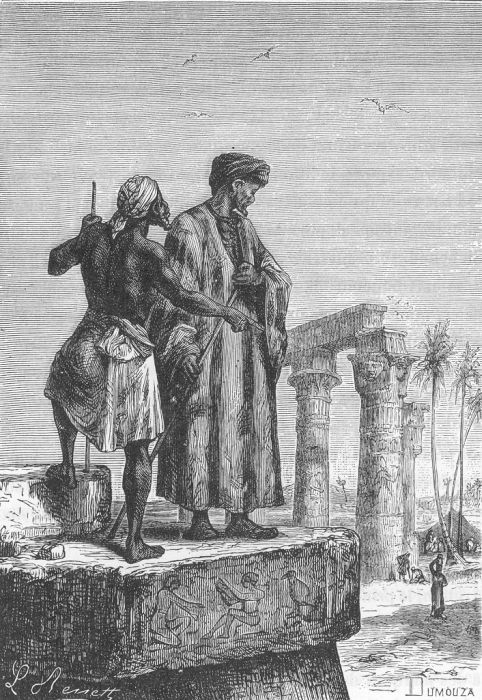

Summary
The Travels of Ibn Battuta is the account of a Moroccan legal scholar who left Tangier in June 1325, aged twenty-one, to make the pilgrimage to Mecca and did not settle at home again until 1349. Its Arabic title, given by its editor Ibn Juzayy, means A Gift to Those Who Contemplate the Wonders of Cities and the Marvels of Travelling; it is usually called simply the Rihla, the Journey. Ibn Battuta dictated it at Fez, and Ibn Juzayy finished the text in 1355. The narrative crosses most of the Islamic world of the fourteenth century, which shared a faith, a sacred law and Arabic learning from Morocco to the Indies, and it shows how a scholar could travel within it as guest, pilgrim and judge. Samuel Lee's 1829 English version, used here, translates a later abridgement by Muhammad ibn Fath Allah al-Bailuni from manuscripts bequeathed to Cambridge by J. L. Burckhardt. The library's stored file contains Lee's first fifteen chapters. They begin with the journey along the coast of the Maghreb through Tlemcen, Bejaia, Tunis and Tripoli to Alexandria, where the holy man Burhan al-Din tells Ibn Battuta he must greet his brothers in India, Sind and China, and where another sheikh interprets his dream of being carried east on a great bird's wings. He sees Cairo and the Nile, goes up the river to the Red Sea port of Aidhab, turns back, and crosses Sinai to Palestine and Syria, visiting Hebron, Jerusalem, Damascus and Aleppo. He makes the pilgrimage to Mecca and Medina in 1326, then travels with the Iraqi caravan to Najaf, Basra, Persia, Shiraz, Baghdad and Tabriz in the company of the Ilkhan Abu Said. Further chapters take him back to Mecca, down the Red Sea to Yemen and the East African coast, round Oman and the Persian Gulf with its pearl fisheries, through Anatolia's Turkish principalities, across the Black Sea to the steppe camp of Uzbek Khan of the Golden Horde, and to Constantinople in the train of a Byzantine princess married to the khan. He then crosses Khwarezm, Bukhara, Samarkand and Afghanistan to the Indus, describes India's courier posts and customs, reaches Delhi, and recounts the history of the Delhi sultans up to Muhammad ibn Tughluq. Lee's remaining chapters, not in the stored file, cover his years at Muhammad's court, his embassy toward China, the Maldives, Ceylon, Bengal, Southeast Asia and China, the return west through Damascus during the Black Death, a visit to Granada, and the journey across the Sahara to Mali. Lee's notes, comparing Ibn Battuta with Arabic geographers and European travellers, are interleaved in the OCR text.
Virtues in this work
- Fortitude: Ibn Battuta crosses deserts, mountains and seas for years after a holy man's charge in Alexandria, and does not abandon the purpose until he has met all three brothers.
- Piety: He sets out to perform the pilgrimage to Mecca and seeks out the shrines and holy men of every city on his way.
- Friendship: Hospices, judges and rulers welcome him across the Islamic world, and he records their hospitality, such as the cells with food for travellers in the Persian mountains.
Plot or Argument
- Chapters I-II: The Maghreb and Alexandria
Ibn Battuta leaves Tangier in 1325 and follows the North African coast to Alexandria. There Burhan al-Din's request that he greet three brothers in India, Sind and China fixes his course, and Sheikh al-Murshidi interprets his dream of a great bird.
- Chapters III-V: Egypt, Palestine and Syria
He travels from Cairo up the Nile to Aidhab on the Red Sea, turns back, and crosses to Gaza, Hebron and Jerusalem. He visits the coastal and inland cities of Syria and describes Damascus, its mosques and shrines, including the prayers against plague he later witnessed there.
- Chapters VI-VIII: Pilgrimage, Iraq and Persia
After the pilgrimage of 1326 he joins the Iraqi caravan to Najaf and Basra, crosses into Persia to Isfahan and Shiraz, and travels with the army of the Ilkhan Abu Said through Baghdad.
- Chapters IX-X: Arabia, East Africa and the Gulf
Residence at Mecca is followed by voyages to Yemen and down the African coast, then to Oman, Hormuz and the pearl fisheries of the Gulf, and back overland through eastern Arabia.
- Chapters XI-XII: Anatolia and the steppe
He passes through the Turkish principalities of Anatolia, crosses the Black Sea to the Crimea, and reaches the moving camp of Uzbek Khan, whose honoured wives he visits; he describes the respected, unveiled Turkish women and hears of the northern city of Bulgar.
- Chapter XIII: Constantinople and Central Asia
Accompanying a khatun of Byzantine birth, he visits Constantinople, is received by the emperor and sees Hagia Sophia from outside. He returns to the steppe and crosses Khwarezm, Bukhara, Samarkand, Khorasan and the Hindu Kush, with an account of Chinggis Khan's conquests and the Yasa.
- Chapters XIV-XV: Into India
On the Indus he describes the horse and foot couriers, the burning of widows and pilgrimages to the Ganges, and arrives at Delhi. The stored text ends with a history of the Delhi sultans from Qutb al-Din Aibak to the accession of Muhammad ibn Tughluq.
- Chapters XVI-XXV (not in the stored file): India to Mali
Lee's later chapters cover Ibn Battuta's service as a judge in Delhi, the failed embassy to China, the Maldives, Ceylon, China and the return to Morocco in 1349, Granada, and the Saharan journey to Mali in 1352-1353.
Characters
- Ibn Battuta, traveller and narrator
Moroccan jurist who travels as pilgrim, guest of rulers and judge across the Islamic world.
- Burhan al-Din al-A'raj, holy man of Alexandria
Foretells the young traveller's journeys to India, Sind and China.
- Sheikh al-Murshidi, Sufi hermit
Holy man near Alexandria who interprets Ibn Battuta's dream of the great bird.
- Al-Nasir Muhammad, Mamluk sultan of Egypt and Syria
Ruler of Cairo, named in the Friday prayers of the Holy Cities.
- Abu Said, Ilkhan of Persia and Iraq
Mongol ruler with whose camp Ibn Battuta travels.
- Muhammad Uzbek Khan, khan of the Golden Horde
Steppe ruler whose wives receive Ibn Battuta and whose Byzantine-born khatun takes him to Constantinople.
- Tarmashirin Khan, Chaghatayid khan
Central Asian ruler whose neglect of the Yasa leads to his deposition.
- Muhammad ibn Tughluq, sultan of Delhi
The emperor of Hindustan toward whose court the stored chapters lead.
- Ibn Juzayy al-Kalbi, editor and scribe
Granadan scholar who wrote down and polished Ibn Battuta's account at Fez.
Lessons
A connected world of faith and law
Ibn Battuta moves from Morocco to Delhi without ever being wholly a foreigner, because mosques, colleges, Sufi lodges and the courts of Islamic law spread a shared culture across thousands of miles. His welcome as a scholar shows how learning itself served as a passport in the fourteenth-century Dar al-Islam.
- What institutions does Ibn Battuta rely on for food, lodging and introductions as he travels?
- Why do rulers from Anatolia to the steppe honour a young jurist from Tangier?
- Where does he feel most a stranger, and why?
Travel guided by holy men
The journey is shaped by encounters with saints and Sufi masters: Burhan al-Din's prophecy, al-Murshidi's interpretation of the dream, the shrines of Damascus and Hebron. Ibn Battuta presents travel as both curiosity and devotion.
- How does the prophecy in Alexandria change Ibn Battuta's plans?
- What role do dreams and miracles play in how he tells his story?
- How is a pilgrimage different from other journeys?
Observing others honestly
Ibn Battuta records customs that surprise him, such as the unveiled and highly respected Turkish women of the steppe, Byzantine court ceremonies and Indian postal couriers, and judges them by his own law and taste. Readers can learn both from what he saw and from how a medieval Muslim scholar framed it.
- What customs does Ibn Battuta admire, and what does he disapprove of?
- How does he describe Christian Constantinople and its emperor?
- How should a reader weigh a traveller's judgments alongside his observations?
A book shaped by many hands
The Rihla was dictated years after the events, polished by Ibn Juzayy, abridged by al-Bailuni and translated by Lee from that abridgement. Each stage added or removed something, and scholars debate whether some journeys, such as the trip to Bulgar, really took place as told.
- Why might a narrative dictated from memory years later contain errors or borrowings?
- What does Lee's habit of comparing Ibn Battuta with other geographers add for the reader?
- How can historians test a traveller's claims?
Context
In the early fourteenth century the Islamic world stretched from Morocco and Granada to Delhi and the Indian Ocean ports, and Muslim merchant communities lived as far as China. Mongol successor states, the Ilkhanate in Persia, the Golden Horde on the steppe and the Chaghatayids in Central Asia, had converted to Islam or were converting, while the Mamluks ruled Egypt and Syria and the Tughluq sultans ruled north India. Pilgrimage, trade and the demand for trained jurists kept scholars moving across this space.
Composition
After returning to Fez, Ibn Battuta was ordered by the Marinid sultan Abu Inan to dictate his travels to Ibn Juzayy, who completed the text in 1355 and added poetry and quotations from earlier geographers, notably Ibn Jubayr. The work survived in Arabic manuscripts and abridgements. Samuel Lee, Cambridge professor of Arabic, translated al-Bailuni's abridgement from three manuscripts in Burckhardt's bequest; it was published in London for the Oriental Translation Committee in 1829, with extensive notes. The complete Arabic text, recovered from manuscripts in Algeria, was edited with a French translation by C. Defrémery and B. R. Sanguinetti in 1853-1858.
Reception
Ibn Khaldun reports in the Muqaddimah that some at the Marinid court doubted Ibn Battuta's stories of India. The Rihla was little known in Europe until the nineteenth century, when Burckhardt, Kosegarten and Lee made extracts and translations. H. A. R. Gibb's annotated English translation for the Hakluyt Society (1958-2000, completed by C. F. Beckingham) became standard. Modern historians use the book as a major source for the fourteenth-century Islamic world, while debating the authenticity of certain sections and the extent of borrowing from earlier writers.
Comparisons
- the-travels-of-marco-polo
Marco Polo, a Venetian merchant, dictated his account of Asia in a Genoese prison a generation earlier; both books were taken down by another writer and raise similar questions about memory, ghostwriting and credibility.
- ibn-khaldun-muqaddimah
Ibn Khaldun, writing in the Maghreb soon after, mentions the doubts raised at Fez about Ibn Battuta's accounts of India and uses the episode to discuss how historians should judge reports.
- the-koran
The Quran's command of pilgrimage to Mecca for those able to make it (Surah 3:97) is the occasion of the whole journey, and Ibn Battuta's judicial career rests on the sacred law drawn from it.
- ghazali-deliverance-from-error
Al-Ghazali's account of turning to Sufism illuminates the world of lodges, sheikhs and miracles that guides Ibn Battuta from Alexandria onward.
- fall-of-constantinople-1453-eyewitness-accounts
Ibn Battuta's respectful visit to Byzantine Constantinople in the 1330s can be set beside the accounts of the city's capture by the Ottomans a little over a century later.
Quotes
Frequently cited
“I was astonished at what he said, and determined with myself to visit those countries : nor did I give up my purpose till I had met all the three mentioned by him, and presented his compliments to them.”
“saw in a dream the same night, myself placed on the wings of a great bird, which fled away with me towards the temple at Mecca.”
“The Nile, which runs through this country, excels all other rivers in the sweetness of its taste,”
“I myself was present at this mosque in the year 746 (A.D. 1345), when the people were assembled for the purpose of prayer against the plague : which ceased on that very day.”
“I THEN travelled for three days over high mountains, and found in every stage, in these countries, a cell with food for the accommodation of travellers.”
“The Turkish women of these parts are very highly respected, particularly the wives of the nobles and kings. These women are religious, and prone to almsgiving and other good works.”
“A Jew was our interpreter. The King was much surprised at my tale ; and said to his sons: Let this man be treated honourably, and give him a letter of safe conduct.”
“The horse courier, which is part of the Sultan’s cavalry, is stationed at the distance of every four miles.”
For Students
A reading companion for classical Christian high school students. See the student guide.
Reading Guide
Watch for
- The prophecy of Burhan al-Din and the dream of the great bird in Chapter II, which frame the whole journey as a calling.
- How Ibn Battuta finds lodging and support: Sufi lodges, colleges, mosques and the gifts of rulers.
- The visit to Constantinople in Chapter XIII, where a Muslim jurist meets a Christian emperor through a Jewish interpreter.
- His remarks on the women of the steppe in Chapter XII and how they differ from his expectations.
- The description of Indian couriers and of Delhi's history in Chapters XIV-XV, showing how a great state kept watch over travellers.
Key terms and names
- Rihla
- Arabic for journey; the name of a genre of travel writing, often tied to pilgrimage, of which Ibn Battuta's book is the most famous example.
- Hajj
- The pilgrimage to Mecca required once in life of Muslims able to make it; Ibn Battuta's first hajj in 1326 begins his travels.
- Qadi
- A judge of Islamic law; Ibn Battuta's training as a Maliki jurist earned him posts and honour in distant lands.
- Zawiya
- A Sufi lodge or hospice offering prayer, teaching and lodging to travellers, like the cells with food he finds in the Persian mountains.
- Dar al-Islam
- The lands under Muslim rule, through which Ibn Battuta could travel within a shared law and learned language.
- Khatun
- Title of a Mongol or Turkish royal lady; one of Uzbek Khan's khatuns, born a Byzantine princess, takes Ibn Battuta to Constantinople.
- Golden Horde
- The Mongol khanate of the western steppe ruled by Uzbek Khan, visited in Chapter XII.
Seminar Questions
- Comprehension What does Burhan al-Din ask Ibn Battuta to do, and how does Ibn Battuta respond?
- Comprehension Trace the route of the stored chapters from Tangier to Delhi. Which regions does Ibn Battuta visit more than once?
- Comprehension How is Ibn Battuta received at Constantinople, and what is he allowed and not allowed to see?
- Interpretation Ibn Battuta presents his journey as guided by saints, dreams and prophecies. How does this framing change the way a reader understands his curiosity?
- Interpretation What does Ibn Battuta's description of the Turkish women of the steppe reveal about both the women and the traveller?
- Interpretation Why might the Delhi sultans keep couriers posted every few miles? What does this system suggest about power in fourteenth-century India?
- Big Question Ibn Battuta travels as a pilgrim whose home is defined by faith more than by place. How does the Christian idea of being strangers and pilgrims on earth compare with his experience?
- Big Question When we read a traveller's account of other peoples, how do we learn about them without simply taking on the traveller's judgments?
Faith Connections
- Hebrews 11:13-16 (Scripture)
The patriarchs confessed that they were strangers and pilgrims seeking a better country; Ibn Battuta's lifelong pilgrimage offers a point of comparison and contrast for the Christian understanding of earthly travel and heavenly home.
- Genesis 23 and 25:9 (Scripture)
Abraham buys the cave of Machpelah at Hebron, where he is buried; Ibn Battuta visits the shrine of Abraham at Hebron, a holy place shared by Jews, Christians and Muslims.
- Acts 17:26 (Scripture)
Paul tells the Athenians that God made all nations of one blood and fixed their bounds; the Travels shows the variety of those nations from the Atlantic to India.
- Augustine, City of God, Book XIX, ch. 17 (Church Fathers)
Augustine describes the heavenly city as a pilgrim on earth that calls citizens from every nation and language; it is a Christian counterpart to the community of faith that Ibn Battuta finds across languages and empires.
Logic and Rhetoric
Central argument: The marvels a trustworthy traveller reports are worth recording because they are seen with his own eyes; Ibn Battuta is a faithful witness, a jurist of known piety; therefore his account, even of things strange and hard to believe, deserves credit and inquiry, as the abridger argues in the prologue.
Rhetorical device: Catalogue (enumeratio). The chapter headings and many passages proceed by lists of stations and cities, as in the opening survey of Tilimsan, Milyana, Algiers and Bijaya, and the list of the world's great rivers at Cairo in Chapter II, building a sense of the immensity of the journey.
Debate: Resolved: A traveller who dictates his memories years later should be trusted as a historical source only where other evidence confirms him.
Memory Work
I was astonished at what he said, and determined with myself to visit those countries : nor did I give up my purpose till I had met all the three mentioned by him, and presented his compliments to them.
Writing Prompts
Essay: Using Chapters II, VII and XII, write an essay on how holy men, hospices and rulers made Ibn Battuta's travels possible.
Comparison with The Travels of Marco Polo: Compare how Marco Polo and Ibn Battuta describe the rulers they meet. What does each traveller's own background, Venetian merchant or Moroccan jurist, lead him to notice?
Medical Lens
The book's chief medical interest is its witness to epidemic disease and communal response. In Damascus, Ibn Battuta describes the population praying together against plague and reports very high daily deaths; the full Rihla dates this to 1348, making it a first-hand Muslim account of the Black Death, though the abridgement Lee translated gives the year as 746 AH (1345). The prologue notes that Ibn Battuta's descriptions of the aromatic roots of India differ from those of the physicians, a reminder that travellers supplied the drug lore of medieval pharmacy. Other passages concern a well of poisonous water at Humaithira in the Egyptian desert, dream interpretation by Sufi masters, the city water supply of Delhi discussed in Lee's notes, and a Delhi sultan whose side became withered by an illness the physicians could not cure, which modern readers might suspect was a stroke, though the text gives too little to say. Ibn Battuta also reports, with disapproval, the burning of widows and religious drowning in the Ganges.
- Prologue (Chapter I)
The abridger notes that Ibn Battuta's account of Indian aromatic roots differs from the physicians' and is probably correct.
- Chapter II (Alexandria)
Sheikh al-Murshidi interprets the dream of the great bird as a prophecy of travels.
- Chapter II (Upper Egypt, Humaithira)
Story of the Sufi master al-Shadhili, who dies at a desert station with a poisonous well after foretelling his own burial.
- Chapter V (Damascus)
The people of Damascus gather at the Mosque of the Footprint to pray against plague amid thousands of deaths a day.
- Chapter XIV (India)
Ibn Battuta describes the burning of widows and drowning in the Ganges as religious practices of some Hindus.
- Chapter XV (history of Delhi)
Sultan Muizz al-Din Kaiqubad suffers a complaint that withers one side of his body and that the physicians cannot remedy.
Creative Prompts
- Classroom
Trace the stored chapters on a map from Tangier to Delhi, marking where Ibn Battuta stays with a ruler, a judge or a Sufi lodge.
- Fiction
Write the evening at Fez when Ibn Battuta first tells Ibn Juzayy about the dream of the great bird, with Ibn Juzayy asking questions as an editor.
- Essay
Compare Ibn Battuta's descriptions of Byzantine Constantinople and the camp of Uzbek Khan. What does he notice first in each place, and why?
- Dialogue
Imagine a conversation at the Marinid court between Ibn Battuta and a skeptical courtier who doubts his stories of India.
Further Reading
- The Adventures of Ibn Battuta: A Muslim Traveler of the Fourteenth Century, Ross E. Dunn
- The Travels of Ibn Battuta, A.D. 1325-1354, H. A. R. Gibb and C. F. Beckingham (trans.)
The complete annotated translation for the Hakluyt Society.
- The Travels of Ibn Battutah, Tim Mackintosh-Smith (ed.)
An abridged modern edition based on the Gibb translation.
- Travels with a Tangerine, Tim Mackintosh-Smith
A modern traveller follows Ibn Battuta's route.
Verification notes
Quotations were checked by search against the stored OCR text of Lee's translation and copied with its spacing and punctuation. The stored file holds Lee's Chapters I-XV only; a check of the Internet Archive full text (b28406084) shows that Lee's book runs to Chapter XXV, so the summary describes the later chapters without quoting them. Contrary to the meta note, many of Lee's footnotes and Arabic fragments remain interleaved in the OCR text. Chapter assignments for quotations follow the chapter headings in the stored file. The basic biography and the 1355 completion date are standard.
- The stored text ends in Chapter XV; Chapters XVI-XXV of Lee's translation are not included in content/texts.
- The Damascus plague passage gives 746 AH (1345) in Lee's abridgement; the complete Rihla dates it to 749 AH (1348). Check against Gibb's translation.
- Ibn Battuta's death date (1368/69 or 1377) differs between sources.
- Scholars debate whether the journeys to Bulgar and parts of China and Anatolia happened as narrated.