Work record
Critique of Practical Reason
1788 · 18th Century · Philosophy · German
Abstract
Background. Having shown in his first Critique that theory cannot reach God, freedom or the soul, Kant turned to the will. The Groundwork of 1785 had stated the categorical imperative; this book sets it inside his critical philosophy.
Thesis. Reason by itself can move the will. Its law is purely formal, demanding maxims fit to be laws for everyone, and our awareness of that demand proves we are free. Happiness is not dismissed; it simply cannot supply the ground of obligation.
Structure. The Analytic moves from principles to the concept of good and evil to the motive of respect. The Dialectic takes up the highest good, the clash between Epicurean and Stoic answers, and the postulates. A short Methodology on training young judgment and a Conclusion on two sources of awe close the volume.
Key Concepts. Maxim and law; autonomy and heteronomy; the fact of reason; respect; the typic; holiness; primacy of practical reason; the postulates of freedom, immortality and God.
Significance. Kant here gives moral grounds for religious belief while denying it theoretical proof, a settlement that shaped nineteenth-century Protestant theology. The book remains central to deontological ethics, and its closing words on the heavens and the conscience are among the most famous sentences in modern philosophy.
Key figures
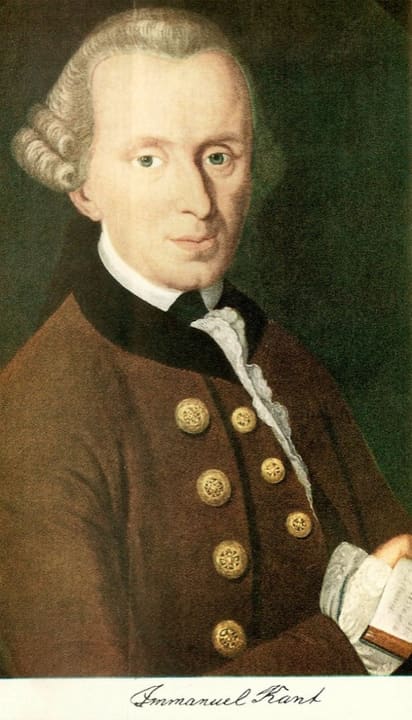
- Immanuel Kant: Königsberg professor completing the practical half of his critical system
- Epicurus: Ancient philosopher who, in Kant's account, made virtue a means to happiness
- Zeno and the Stoics: School that, for Kant, made virtue alone the whole highest good
- David Hume: Sceptic whose doubts about causality Kant answers in Book I
- Anne Boleyn: Queen whose slander an honest man refuses to join in Kant's teaching example

Summary
Immanuel Kant's Critique of Practical Reason, published at Riga in 1788, is the second of his three Critiques. Where the first Critique limited what reason can know about God, freedom and the soul, this book argues that pure reason is practical by itself: it can determine the will without any help from desire, and in doing so it gives freedom, God and immortality a secure footing as matters of rational belief. The Preface calls freedom the keystone of the whole system of reason. Freedom cannot be proved by theory, but we become aware of it through the moral law, which we cannot escape knowing. Book I, the Analytic, begins with definitions and theorems. All practical principles that rest on an object of desire are material, belong to the principle of self-love or one's own happiness, and can never give a law valid for every rational being. Only the form of a maxim, its fitness to be a universal law, can do that. Kant states the fundamental law of pure practical reason: act so that the maxim of your will could always hold as a principle of universal legislation. Consciousness of this law is a fact of reason. A man who claims his lust is irresistible would master it if a gallows stood at the door; asked whether he could refuse, on pain of death, to bear false witness against an innocent man, he must admit that he could, and so learns that he is free. Autonomy of the will is the sole principle of morality; heteronomy, taking the law from an outside object, cannot ground duty. The second chapter defines good and evil as objects of a will so determined and offers a typic, the natural law used as a model, to apply the law in experience. The third chapter treats respect for the law as the one moral feeling, humbling self-conceit, and closes with the famous address to Duty. Book II, the Dialectic, asks about the highest good, virtue joined with happiness in proportion to it. The Epicureans made virtue a means to happiness, the Stoics made virtue sufficient for it; both erred by treating the two as identical. Since the moral law commands us to promote the highest good, it must be possible. Holiness, the perfect fit of the will to the law, requires endless progress, and so the immortality of the soul is postulated; the proportion of happiness to worth requires a moral author of nature, and so the existence of God is postulated. Morality, Kant writes, is not the doctrine of how to make ourselves happy but of how to become worthy of happiness. The Methodology describes moral education, imagining a ten-year-old who hears of an honest man who will not join the slander of Anne Boleyn. The Conclusion sets side by side the starry heavens above and the moral law within.
Virtues in this work
- Fortitude: Kant's honest man in the Methodology keeps refusing to slander Anne Boleyn even when friends, kin and a prince threaten him with ruin and death.
- Humility: In Chapter III the moral law strikes down self-conceit, and Kant says his spirit bows before an upright person of humble station.
- Justice: The gallows example turns on refusing to bear false witness against an innocent man, a duty the reader recognizes even at the cost of life.
- Hope: Book II grounds hope in God and immortality as conditions under which the highest good can be achieved.
Plot or Argument
- Preface and Introduction: why a critique of practical reason
Kant explains that the task is to show that pure reason can be practical, not to criticize it. Freedom, proved real by the moral law, becomes the keystone that gives the ideas of God and immortality practical reality.
- Book I, Chapter I, sections 1-6: maxims, laws, and the failure of happiness
Definitions and theorems distinguish subjective maxims from objective laws and show that every principle based on desire for an object reduces to self-love. Only a principle that determines the will by its form can serve as a law for all rational beings.
- Book I, Chapter I, sections 7-8: the fundamental law and autonomy
The fundamental law commands acting on maxims fit for universal legislation. Awareness of it is called a fact of reason, illustrated by the man before the gallows who knows he could refuse to bear false witness. Autonomy, giving oneself the law, is the sole principle of morality.
- Book I, Chapter I, Part I-II: deduction and the right to extend reason
Unlike the categories of the first Critique, the moral law needs no deduction; it instead serves to prove freedom. Kant discusses Hume's challenge to causality and argues that practical reason may use the concept of a free cause without claiming theoretical knowledge.
- Book I, Chapter II: good and evil and the typic
Good and evil are defined by the moral law rather than by pleasure and pain. Kant gives a table of the categories of freedom and explains the typic: we test a maxim by asking whether it could belong to a system of nature.
- Book I, Chapter III: respect and the address to Duty
The moral law strikes down self-conceit and produces respect, the one feeling known a priori. Kant warns against moral enthusiasm and fanciful self-praise, and ends with an apostrophe to Duty, asking where its noble descent is to be found.
- Critical Examination of the Analytic: freedom and natural necessity
Kant defends the coherence of holding an agent free while his actions in time are causally determined, by distinguishing the agent as appearance from the agent as thing in itself, and rejects any freedom that would be merely psychological.
- Book II, Chapters I-II.I-III: the highest good and its antinomy
The highest good unites virtue and proportionate happiness. Against the Epicureans and the Stoics, Kant holds that virtue and happiness are distinct elements, and he resolves the antinomy by the primacy of practical over speculative reason.
- Book II, Chapter II.IV-IX: the postulates of immortality, God, and freedom
Holiness requires endless progress, so the immortality of the soul is postulated; happiness proportioned to worth requires a moral and omnipotent author of nature, so God's existence is postulated. Kant explains in what sense these are rational belief rather than knowledge, and why it is wise that we do not see God and eternity directly.
- Methodology and Conclusion: moral education and the two wonders
The Methodology shows how a child's moral judgment can be trained by examples such as the honest man threatened for refusing to slander Anne Boleyn. The Conclusion contrasts the starry heavens, which humble our animal importance, with the moral law, which raises our worth as intelligences.
Lessons
Ought implies can
Kant's gallows example in Book I argues that our sense of what we ought to do reveals what we are able to do. A person who doubts his own freedom learns it the moment he recognizes that he could refuse to betray an innocent man even at the cost of life. Freedom is discovered through duty, not proven before it.
- Why does Kant think the man would answer differently about lust and about false witness?
- Does recognizing that you ought to do something prove that you can?
- What would follow if freedom were only an illusion?
Worthiness before happiness
Kant does not despise happiness; he includes it in the highest good. But he insists that morality teaches how to become worthy of happiness, not how to get it, and that only virtue makes happiness deserved. The order matters more than the parts.
- How does Kant's highest good differ from the Stoic and Epicurean versions he criticizes?
- Is it wrong to want to be happy as a reward for doing right?
Respect as a moral feeling
In Chapter III Kant argues that the moral law produces a distinctive feeling, respect, which humbles self-conceit and raises the person who obeys. Respect is owed first to the law and then to persons who exemplify it. This gives a precise account of why moral examples move us.
- Why does Kant say we bow before an upright man of humble station?
- What is the difference between respect and admiration in Kant's account?
Faith grounded in practice
The postulates of God and immortality are not proofs of theory but conditions without which the command to seek the highest good would be empty. Kant thereby places religious belief on moral ground. Readers can weigh both what this secures and what it leaves out.
- Why does the pursuit of holiness require, for Kant, an endless life?
- Is a God reached by moral postulate the same as the God of Scripture?
- What does Kant mean by saying our cognitive faculties are wisely adapted to our practical vocation?
Context
Kant wrote in Königsberg during the late Enlightenment, after his Critique of Pure Reason had argued that speculative reason cannot prove God, freedom or immortality. Readers and critics asked whether morality and religion were left without support. The Groundwork (1785) had already set out the categorical imperative; the second Critique places that principle within the critical system and explains how practical reason restores what theory could not reach.
Composition
Kant at first meant to include a critique of practical reason in the second edition of the first Critique (1787), but expanded it into a separate book. It was published by Johann Friedrich Hartknoch at Riga, appearing in late 1787 with the date 1788. Thomas Kingsmill Abbott of Trinity College Dublin translated it into English in his collection of Kant's ethical writings, first issued in 1873 and reprinted in later editions; the library text gives 1889.
Reception
The book became a standard text of moral philosophy. Schiller teased the severity of its view of inclination; Hegel objected that the moral law was too formal to yield concrete duties; and later utilitarians such as Mill argued that the universal law test in practice depends on consequences. The closing sentence about the starry heavens and the moral law was inscribed, in German, on a memorial tablet to Kant in Königsberg and is among the most quoted lines in philosophy. Twentieth-century moral philosophy saw a strong revival of Kantian ethics.
Comparisons
- groundwork-of-the-metaphysics-of-morals
The Groundwork reaches the categorical imperative by analyzing ordinary moral judgment and gives several formulations; the second Critique restates the law in one form, calls it a fact of reason, and adds the highest good and the postulates.
- critique-of-pure-reason
The first Critique denies theoretical knowledge of freedom, God and the soul in order to make room for faith; the second shows how practical reason gives those ideas their reality.
- the-nicomachean-ethics
Aristotle makes happiness the final end and virtue its chief part; Kant separates virtue from happiness, makes virtue the condition of deserving happiness, and joins them only in the highest good.
- utilitarianism
Mill names Kant in his first chapter and argues that the universal-law test, applied in practice, turns on consequences, a reading Kant's insistence on the form of the maxim is meant to rule out.
- meditations
Kant discusses the Stoics in Book II as the school that made virtue the whole highest good; Marcus Aurelius's notebook shows the Stoic discipline Kant admired and corrected.
Quotes
Frequently cited
“Act so that the maxim of thy will can always at the same time hold good as a principle of universal legislation.”
Frequently cited
“Duty! Thou sublime and mighty name that dost embrace nothing charming or insinuating, but requirest submission”
Frequently cited
“Hence also morality is not properly the doctrine how we should make ourselves happy, but how we should become worthy of happiness.”
Frequently cited
“Two things fill the mind with ever new and increasing admiration and awe, the oftener and the more steadily we reflect on them: the starry heavens above and the moral law within.”
“Inasmuch as the reality of the concept of freedom is proved by an apodeictic law of practical reason, it is the keystone of the whole system of pure reason, even the speculative”
“He judges, therefore, that he can do a certain thing because he is conscious that he ought, and he recognizes that he is free”
“the perfect accordance of the will with the moral law is holiness, a perfection of which no rational being of the sensible world is capable at any moment of his existence.”
For Students
A reading companion for classical Christian high school students. See the student guide.
Reading Guide
Watch for
- The keystone image in the Preface, where freedom holds the ideas of God and immortality in place.
- The gallows example in the Remark to section 6, which contrasts a man's claim that his lust is irresistible with his admission that he could refuse to betray an innocent man.
- The apostrophe to Duty in Chapter III, where Kant asks what origin is worthy of the moral law.
- The antinomy in Book II between the Epicurean and Stoic accounts of virtue and happiness.
- The honest man and Anne Boleyn in the Methodology, told in stages to a boy of about ten.
Key terms and names
- Maxim
- The personal rule on which someone acts. Kant's test asks whether a maxim could serve as a universal law for all rational beings.
- Fact of reason
- Kant's name for our immediate consciousness of the moral law, which cannot be derived from anything prior and which in turn reveals our freedom.
- Autonomy
- The will's giving the law to itself through reason. Kant calls it the sole principle of morality; its opposite, heteronomy, takes direction from objects of desire.
- Respect (Achtung)
- The one moral feeling, produced by the law itself, which humbles self-conceit and is directed toward the law and toward persons who exemplify it.
- Summum bonum
- The highest good: virtue together with happiness in proportion to it, the whole object of pure practical reason in Book II.
- Postulate
- A proposition that cannot be proved theoretically but must be assumed because the moral law requires it; Kant postulates freedom, immortality and God.
- Typic
- In Chapter II, the use of the form of natural law as a model for judging whether an action could belong to a moral order.
Seminar Questions
- Comprehension Why does Kant say that no principle based on the desire for happiness can be a practical law?
- Comprehension What does the man in the gallows example learn about himself, and how?
- Comprehension What two elements make up the highest good, and how did the Epicureans and the Stoics each misjoin them?
- Interpretation Kant calls the moral law a fact of reason. Is he giving an argument or refusing to give one, and is that refusal reasonable?
- Interpretation In the apostrophe to Duty, the law commands without charm or threat. Why does Kant think that is a strength rather than a weakness?
- Interpretation Why does holiness require immortality, and why does proportionate happiness require God?
- Big Question Should a good person act without regard to happiness, or is the hope of a reward part of a sound moral life?
- Big Question Is the moral law within as clear to an ordinary child as Kant claims in the Methodology?
Faith Connections
- Romans 2:14-15 (Scripture)
Paul speaks of Gentiles who show the work of the law written on their hearts, their conscience bearing witness. Kant's moral law within, known to every rational person, is a philosophical cousin of this passage, though Kant grounds it in reason rather than in creation.
- Psalm 19 (Scripture)
The psalm moves from the heavens declaring God's glory to the perfect law of the Lord converting the soul. Kant's Conclusion sets the same two things side by side, the starry heavens and the moral law, without naming God in that sentence.
- Matthew 5:48 and Philippians 3:12-14 (Scripture)
Jesus commands, Be ye therefore perfect, and Paul presses toward a goal not yet attained. Kant's argument for immortality rests on the same pairing: holiness is commanded, yet no one achieves it at any moment, so progress must be endless.
- Augustine, City of God XIX (Great Conversation)
Augustine surveys the philosophers' accounts of the supreme good and argues that true happiness is found only in eternal life with God. Kant's Book II likewise rejects the ancient schools and places the union of virtue and happiness beyond this life, but on the ground of practical reason rather than revelation.
Logic and Rhetoric
Central argument: A practical law must hold for every rational being. Every principle based on desire for an object depends on a feeling that varies from person to person, so none can be such a law. Therefore only the form of a maxim, its fitness for universal legislation, can determine a will by law. We are conscious of this law, and in recognizing that we ought to obey it we recognize that we can, so we are free. The law commands us to promote the highest good, which must therefore be possible; its possibility requires endless moral progress and a just author of nature. Therefore immortality and God must be postulated.
Rhetorical device: apostrophe. In Book I, Chapter III Kant breaks off his analysis to address Duty directly as a sublime and mighty name, quoted in quotes[3], turning a technical argument about respect into a question about the dignity of the person.
Debate: Resolved: An action done from duty against inclination has greater moral worth than the same action done from love.
Memory Work
Two things fill the mind with ever new and increasing admiration and awe, the oftener and the more steadily we reflect on them: the starry heavens above and the moral law within.
Hence also morality is not properly the doctrine how we should make ourselves happy, but how we should become worthy of happiness.
Writing Prompts
Essay: Kant claims that freedom is known only through the moral law. Using the gallows example and the Critical Examination of the Analytic, explain the claim and argue whether it succeeds against a determinist.
Comparison with The Nicomachean Ethics: Aristotle and Kant both write about virtue and happiness. Compare Aristotle's account of happiness as the final end with Kant's account of the highest good, and argue which better explains why a good person should care about happiness.
Medical Lens
Kant's ethics is not medical, but two points matter to a psychiatric reader. First, Kant calls a will determined by inclination or feeling pathologically determined; the word means affected by sensibility, from the Greek pathos, not diseased, so the term carries no clinical sense here. Second, his account of respect as a feeling produced by reason, humbling self-conceit, is an early, precise moral psychology of an emotion. Kant later wrote on the mind's power to master morbid feelings by resolution, in The Conflict of the Faculties (1798), a separate work in which he describes managing his own hypochondriac tendencies.
- Book I, Chapter I, section 1 and Remark
Kant defines practical principles and contrasts a will pathologically affected by desire with one determined by reason alone.
- Book I, Chapter III
The analysis of respect as a feeling produced by the moral law, which strikes down self-conceit and limits self-love.
Creative Prompts
- Dialogue
Stage the gallows example of Book I as a scene: a ruler presses a courtier to bear false witness, and the courtier reasons aloud about what he can and cannot do.
- Essay
Explain why Kant thinks both the Epicureans and the Stoics misunderstood the highest good, and whether his own solution needs God.
- Classroom
Follow Kant's Methodology: tell the story of the honest man urged to slander Anne Boleyn in stages of increasing threat, and have students record at which stage their judgment shifts from approval to admiration.
- Poetry
Write a poem pairing a night sky with a moment of moral choice, answering the two wonders of the Conclusion.
Further Reading
- Groundwork of the Metaphysics of Morals, Immanuel Kant
- Religion within the Limits of Reason Alone, Immanuel Kant
- A Commentary on Kant's Critique of Practical Reason, Lewis White Beck
- Kant: A Biography, Manfred Kuehn
Verification notes
Publication facts (Riga, Hartknoch; appeared late 1787 with the date 1788) and the book's structure match standard accounts and the stored text. All seven quotations were found by search in the stored Project Gutenberg text of Abbott's translation. Locators follow the headings in that text. The reception summary (Schiller, Hegel, Mill) states well-known positions in general terms without quotation.
- Abbott's translation first appeared in 1873; the library text and metadata give 1889, which is taken to be a later edition.
- The location of the starry-heavens inscription on Kant's memorial in Königsberg (now Kaliningrad).