Work record
Little Britches
1950 · Postwar Contemporary · Memoir · English
Abstract
Background. At about fifty, a businessman who had grown up on the Colorado Front Range took a writing course and set down his boyhood; Norton issued the result in the summer of 1950, with the subtitle Father and I Were Ranchers.
Scope. Four years, from the family's arrival out of East Rochester to Charles Moody's death in 1910, seen through the eyes of a boy growing from eight to eleven.
Content. A cowboy mentor, a generous neighbor and a healer in the hills help the newcomers; a domineering employer, a schoolyard tormentor and water-stealing ranchers upstream test them. Discipline over a poached bird and pilfered candy ends in a father-son partnership. Contests won on a blue roan colt, a drowned mare, a court fight and a move to town lead to the fatal fall and pneumonia.
Method. Plain retrospective narration lets the older author voice the child's resentment of correction while quietly showing its purpose; episodes are grouped by season and job. Edward Shenton's drawings of horses, ranch buildings and open range accompany the text, and the adult author rarely interrupts the boy's view with later commentary.
Significance. Opening a long autobiographical series, it was filmed loosely by Disney in 1970 and remains a favorite family read-aloud on western life, work and the making of character.
Key figures
- Ralph Moody: Author and narrator, aged eight to eleven, called Little Britches
- Charles Moody (Father): Rancher and builder with a chronic cough, firm teacher of honesty
- Mother (Mary Emma Moody): Steady center of the household
- Grace Moody: Ralph's older sister
- Hiram (Hi) Beckman: Cowboy and foreman, Ralph's mentor in riding
- Fred Aultland: Young neighboring rancher who lends water and teaches riding
- Two Dog: Native American friend in the mountains who heals the horse Bill

Summary
Little Britches: Father and I Were Ranchers is Ralph Moody's memoir of the four years, 1906 to 1910, that his family spent on a Colorado ranch, told from the point of view of the boy he was, eight years old when the story begins. His father, Charles, has a persistent cough from his work in a New Hampshire mill, and when a cousin, Phil, who sells gold stock in Denver, promises better prospects, the family leaves East Rochester for a run-down rented ranch near Fort Logan, southwest of Denver. Father, Mother, Ralph, his older sister Grace and the younger children set about digging a well, building a privy and a barn, and buying horses, and they weather a windstorm that strips the place. At school Ralph is bullied by Freddie Sprague and has to fight. Neighbors shape his boyhood: Fred Aultland, a young rancher who lends water and teaches him to ride, and Hiram (Hi) Beckman, a cowboy who gives him the nickname Little Britches and becomes his mentor in horsemanship. Ralph earns his first wages herding cows for the overbearing Mrs. Corcoran, hays with his father for Fred, and, when the horse Bill falls sick, secretly takes him to Two Dog, a Native American friend living in the mountains with the hunter Mr. Thompson, who cures him. Because the Moodys' land lies at the end of the irrigation ditch, upstream ranchers take the water in dry weather, and Father negotiates a settlement. Ralph is punished for trapping a pheasant out of season and lying about it, and for stealing chocolate; after a spanking his father offers to make him his partner, and Ralph promises never to lie again. Other episodes include threshing beans, nine broken toes when Ralph loses control of the team, a tornado that misses the house, and the drowning of the mare Fanny when a bridge gives way in a cloudburst. Hired at twenty dollars a month by the rancher Mr. Cooper, Ralph trains a blue roan colt, Sky High, and with Hi wins trick-riding contests at the Fourth of July and the Labor Day roundup. When Father takes the upstream ranchers to court over the water, shots are fired at the family, and money troubles force a move into Littleton, where Father builds houses and at last tells Ralph he will treat him as a man. Thrown from the mare Babe near Fort Logan, Father catches pneumonia and dies. In the last scene Mother signals Ralph to say grace at supper, and he takes his place as the man of the family. W. W. Norton published the book in August 1950 with illustrations by Edward Shenton.
Virtues in this work
- Honor: After lying about the trapped pheasant, Ralph confesses to the sheriff and promises Father never to lie again.
- Industry: Ralph herds cows for Mrs. Corcoran, hays, threshes beans and trains Sky High, earning wages to help the family.
- Justice: Father first negotiates a fair sharing of the ditch water with the upstream ranchers before taking them to court.
- Fortitude: When Father dies of pneumonia, eleven-year-old Ralph takes up the duties of the man of the family.
Plot or Argument
- From New Hampshire to the ranch
Father's mill cough and Cousin Phil's promises bring the family west in 1906; they repair the ranch, dig a well and build a barn, and Ralph faces the school bully.
- Neighbors and first wages
Fred Aultland and Hi Beckman teach Ralph to ride and name him Little Britches; he herds cows for Mrs. Corcoran and hays alongside his father.
- Two Dog and the water
Ralph takes the sick horse Bill to Two Dog in the mountains; Father settles a dispute with the upstream ranchers over the irrigation ditch.
- Lies and the partnership
The illegally trapped pheasant, the confession, the stolen chocolate and the spanking end with Father offering to make Ralph his partner.
- Hard seasons
Threshing, nine broken toes, a passing tornado, and the death of the mare Fanny when a bridge collapses in a cloudburst.
- Cowboy work at Cooper's
Ralph works for Mr. Cooper under Hi, trains Sky High, and wins riding contests at the Fourth of July and the Labor Day roundup.
- The move to Littleton
A lawsuit over water brings violence; the family moves into town, where Father builds houses and calls Ralph a man.
- Father's death
After a fall from Babe, Father's cough returns as pneumonia and he dies; Mother asks Ralph to say grace as the head of the family.
Characters
- Ralph Moody, author and narrator
Eight years old on arrival in Colorado, eager to be counted in a man's world; nicknamed Little Britches.
- Father (Charles Moody), Ralph's father
A hardworking, scrupulously honest rancher and builder with a chronic cough, firm with his son and proud of his independence.
- Mother, Ralph's mother
Manager of the household who supports the move west for her husband's health and holds the family together.
- Grace, Ralph's older sister
Chafes at the limits placed on a girl while her brother rides and works outdoors.
- Hiram (Hi) Beckman, mentor
Cowboy, later foreman at Cooper's, who names Ralph and teaches him trick riding.
- Fred Aultland, neighbor
Young rancher who teaches Ralph to ride, lends water and hires the Moodys for haying.
- Two Dog, friend
Native American living in the mountains with Mr. Thompson, who cures the horse Bill.
- Mrs. Corcoran, employer
Domineering neighbor who pays Ralph to herd her cows.
- Mr. Cooper, rancher
Hires Ralph at twenty dollars a month as a cow hand.
Lessons
A man's word
Father punishes Ralph's lies not chiefly for the act but for what lying does to a person's character, and he answers Ralph's repentance by making him a partner. The book shows honesty as the foundation of trust between father and son and of a good name among neighbors.
- Why does Father make Ralph go to the sheriff about the pheasant instead of settling the matter at home?
- What does it mean that Father offers to make Ralph his partner right after punishing him?
- Is a lie about something small, like a pheasant, really serious?
Work that makes a man
Ralph wants above all to be accepted in a man's world, and he earns it by herding, haying, threshing and training horses. Moody shows a boy taking real responsibility early and being honored for it, culminating in Father's words in Littleton and Mother's signal at the supper table.
- Which job teaches Ralph the most, and why?
- Why does Father wait until the move to Littleton to say he will treat Ralph as a man?
Neighbors and fairness
The Moodys depend on neighbors such as Fred Aultland and Hi Beckman, and they also suffer from neighbors who take the water. Father first negotiates and later goes to court. The book shows how scarce water tested justice among western ranchers.
- Why does the family at the end of the ditch suffer most in a dry season?
- Was Father right to refuse some of his neighbors' offers of help?
- What makes Hi Beckman a good mentor for Ralph?
Grief and responsibility
Father's death comes suddenly after a fall and pneumonia, when Ralph is eleven. The book ends not with despair but with Ralph taking up the duties his father has prepared him for.
- How had Father prepared Ralph for this moment without knowing it would come so soon?
- Why does the book end with saying grace at supper?
Context
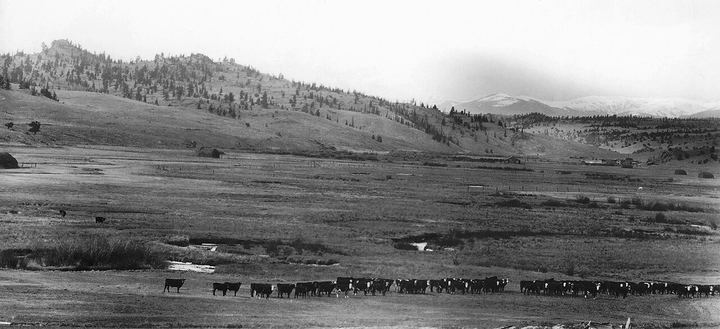
The book records ranch life on the edge of Denver in the first decade of the twentieth century, when irrigation ditches decided which farms could survive, horses were still the main power, and the first automobiles were appearing on Colorado roads. Families from the East often moved west hoping a dry climate would help weak lungs. The financial panic of 1907 also touched the Moodys, who were paid partly in goods and labor when cash was scarce.
Composition
Moody, a businessman in his fifties, began writing in a class around 1950 and turned his childhood memories into this first book, subtitled Father and I Were Ranchers. W. W. Norton published it on 14 August 1950, illustrated by Edward Shenton.
Reception
Kirkus Reviews praised its plain, direct telling of a sometimes harsh but always understanding relationship between father and son. It began a series of eight or more autobiographical books following the family, starting with Man of the Family (1951). Disney's 1970 film The Wild Country drew on it, and the book has stayed popular with families and schools.
Comparisons
- farmer-boy
Wilder's Almanzo and Moody's Ralph are both boys proving themselves at farm work under a firm, admired father; Almanzo's New York farm is prosperous where the Moodys' ranch is always at the edge of failure.
- little-house-on-the-prairie
Both follow an Eastern family moving west in search of a better life, with a father whose courage and judgment hold the household together.
- shane
A boy on a western homestead admires a skilled horseman who becomes his model of manhood: Bob Starrett has Shane, Ralph has Hi Beckman. Both books also involve disputes among neighbors over the land.
- my-antonia
Cather's narrator also recalls a western childhood among homesteaders, and both books treat a father's death as the turning point of a young person's life.
- carry-on-mr-bowditch
Nat Bowditch and Ralph Moody both lose childhood early to family need and earn adult standing through steady work and integrity.
Quotes
“A man's character is like his house.”
For Students
A reading companion for classical Christian high school students. See the student guide.
Reading Guide
Watch for
- The irrigation ditch: who gets the water, who goes without, and how Father responds first by talking and later in court.
- Every horse in the book, from Bill and Fanny to Sky High and Babe, and what each one teaches Ralph or costs the family.
- The pheasant and the chocolate, and the conversation that turns punishment into partnership.
- Hi Beckman's lessons in horsemanship and how Ralph earns a cowboy's respect at Mr. Cooper's ranch.
- Father's words to Ralph in Littleton and Mother's signal at the supper table in the last scene.
Key terms and names
- Little Britches
- The nickname Hi Beckman gives Ralph, a small boy determined to do a man's work on horseback.
- Irrigation ditch
- The channel carrying mountain water to the ranches. The Moodys are at its end, so upstream users can leave them dry.
- Water rights
- The legal claims that decide who may take water from a ditch or stream; Father goes to court to defend his family's share.
- Roundup
- A gathering of cattle and cowboys; the Labor Day roundup includes the riding contest Ralph and Hi win.
- Threshing
- Separating grain or beans from stalks and pods, one of the winter jobs Ralph helps with.
- Partner
- What Father offers to make Ralph after the chocolate theft: an equal sharer in the family's work, on condition of honesty.
Seminar Questions
- Comprehension Why does the Moody family leave New Hampshire for Colorado, and what condition is the ranch in when they arrive?
- Comprehension What does Ralph do when Bill falls sick, and who helps him?
- Comprehension How does Father learn about the pheasant, and what does he require Ralph to do?
- Interpretation Father says he will not spank Ralph for one lie, but later does spank him for stealing. Why the difference, and why does he then call Ralph his partner?
- Interpretation Fred Aultland thinks Father is too proud to accept help. Is Father's pride a strength, a weakness, or both?
- Interpretation Why does Moody end the book with Mother nodding to Ralph to say grace rather than with Father's funeral?
- Big Question What makes a boy a man: age, strength, work, honesty, or being trusted with responsibility?
Faith Connections
- Proverbs 22:1 (Scripture)
A good name is rather to be chosen than great riches. Father would rather lose money than his reputation, and he teaches Ralph that a lie damages a name more than any thrashing could hurt a body.
- Ephesians 4:28 (Scripture)
Let him that stole steal no more, but rather let him labour. After the stolen chocolate, Father turns Ralph from taking toward working beside him as a partner.
- Hebrews 12:11 (Scripture)
No chastening seems joyous for the present, but afterward it yields the peaceable fruit of righteousness. Ralph resents his punishments at the time and later sees them as the making of his character.
- 1 Corinthians 13:11 (Scripture)
When I became a man, I put away childish things. The last scene, when Ralph says grace as head of the family at eleven, marks that passage.
Logic and Rhetoric
Central argument: Father brings his family west to save his health and teaches his son by example and by firm correction that honesty, hard work and fairness to neighbors are what make a man. Ralph, tested by work, temptation, accidents and the loss of horses and land, learns these lessons and is finally called a man by his father. Therefore when Father dies, the boy is ready, though only eleven, to take his place.
Rhetorical device: retrospective first-person narration. The adult Moody tells the story through the eyes of the boy he was, so that Father's punishments are felt with a child's resentment while the reader, like the older narrator, can see their purpose.
Debate: Resolved: that Father was right to make Ralph confess the pheasant to the sheriff.
Writing Prompts
Essay: Trace Ralph's relationship with Father from the first lie through the partnership and the Littleton chicken coop to the last scene, and argue what single lesson Father most wanted him to learn.
Comparison with Farmer Boy: Almanzo Wilder and Ralph Moody both want to be trusted with a man's work. Compare how each father teaches his son, and argue which boy is given the harder road to manhood.
Medical Lens
The family's move west is driven by Father's chronic cough, which the book attributes to work in a New Hampshire mill; a Littleton local-history biography says the move was made for his tuberculosis in hope of relief in Colorado's dry climate, a common reason for migration to Colorado in that period. Any identification of his illness should be treated as uncertain from the memoir alone. In the final chapters a fall from a horse is followed by the return of the cough and a diagnosis of pneumonia, and Father keeps working against the doctor's orders before he dies, at a time before antibiotics. The book also records frontier injuries such as Ralph's nine broken toes and a near drowning, and a sick horse treated by Two Dog.
- Opening chapters
Father's persistent mill cough and the family's hope that ranch life in Colorado will restore his health.
- Middle chapters
Ralph breaks nine toes when he loses control of the horses Bill and Nig.
- Final chapter
Father is thrown from Babe, his cough returns, a doctor diagnoses pneumonia and orders bed rest, and he dies; the family mourns.
Creative Prompts
- Classroom
Draw a map of the irrigation ditch showing the upstream ranches and the Moody place at the end, and explain why a dry summer hurts the last ranch first.
- Essay
Retell the pheasant episode and Father's response, and argue whether his way of punishing a lie was wise.
- Fiction
Write the Labor Day roundup trick-riding contest from Hi Beckman's point of view.
- Dialogue
Write the conversation in which Father asks Ralph to be his partner.
Further Reading
- Man of the Family, Ralph Moody
The sequel, following the family after Father's death.
- The Home Ranch, Ralph Moody
- Mary Emma & Company, Ralph Moody
Verification notes
Publication (W. W. Norton, 14 August 1950), Edward Shenton's illustrations, the 1906-1910 span, the move from East Rochester, and the 1970 Disney film The Wild Country were checked at en.wikipedia.org/wiki/Little_Britches_(book); the Kirkus review (kirkusreviews.com/book-reviews/a/ralph-moody/little-britches) was checked for its publication date and wording. Episode sequence and names (Fred Aultland, Hiram Beckman, Mrs. Corcoran, Cousin Phil, Two Dog, Mr. Thompson, Freddie Sprague, Mr. Cooper, horses Bill, Nig, Fanny, Babe and Sky High) follow the LitCharts summary and character list (litcharts.com/lit/little-britches). Biographical facts come from the Littleton Museum biography (museum.littletonco.gov) and Wikipedia's article on Ralph Moody. Sources disagree on Father's illness: Wikipedia's book article says mining, LitCharts a mill cough, and the Littleton Museum tuberculosis; the record follows the book's mill cough and hedges the diagnosis. The Littleton Museum describes the father's death in March 1910 as following a horse-and-automobile accident; the book's account is of a fall from the mare Babe followed by pneumonia. The opening words of Father's lesson were checked against https://www.acultureofreading.com/little-britches/ and other reproductions of the chapter; only the first sentence is quoted because longer versions vary in punctuation.
- Text is under copyright; check quotations against an authorized edition before publication.
- Number of chapters (31 per LitCharts).
- Whether Father's mill work was in a textile or other mill, and the nature of his lung illness.
- Circumstances of Father's fall from Babe (the Littleton Museum mentions an automobile).
- Names and number of the younger Moody children as they appear in this volume.