Work record
Lowe v. SEC
1985 · Postwar Contemporary · Court Decision · English
Abstract
Question Presented. May federal regulators forbid a man stripped of his adviser license from selling subscription newsletters that comment on markets and name stocks to buy, on the ground that he is running an unregistered advisory business?
Arguments. Lowe called the requested order a licensing scheme for the press of the kind American courts have long rejected. Agency lawyers pointed to statutory text covering advice given through writings and warned that someone banished for misconduct could otherwise simply put his tips in the mail.
Holding. Eight justices voted to reverse, with Powell absent. Writing for five, Stevens concluded that the 1940 statute aims at counselors who know their clients personally; general letters sold openly are genuine publications exempt from registration, whatever their author's past. Three others accepted the outcome only on free-press grounds, insisting that Lowe fit the statutory definition.
Significance. The opinion still marks the boundary between regulated advisers and the financial press.
Why it matters for advisers. Lowe holds that publishers of impersonal, genuine and regularly circulated financial publications fall within the Advisers Act's exclusion and need not register, while advice tailored to particular clients remains regulated; advisers and Series 65 candidates meet it in the definition of who counts as an investment adviser.
Text. The majority appears complete and White's opinion in part.
Key figures
- Christopher Lowe: Barred former adviser who kept publishing market letters
- Securities and Exchange Commission: Agency seeking to halt unregistered newsletters
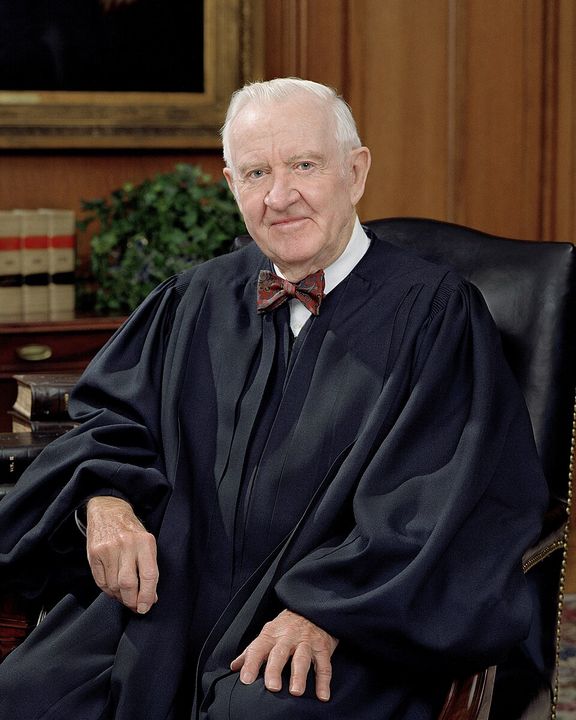
- John Paul Stevens: Read the publisher's exclusion in light of press freedom
- Byron R. White: Would have rested the result on the First Amendment

Summary
Christopher Lowe was president and principal shareholder of Lowe Management Corporation, a registered investment adviser from 1974 to 1981. During those years he was convicted of misappropriating a client's funds, acting as an adviser without registering in New York, tampering with evidence to cover up a fraud on a client, and stealing from a bank. In May 1981 the Securities and Exchange Commission revoked the firm's registration and barred Lowe from associating with any investment adviser. Lowe and his companies then turned to publishing. The Lowe Investment and Financial Letter offered market commentary, reviews of indicators and specific buy, sell and hold recommendations to between three thousand and nineteen thousand subscribers, and there was a second newsletter and a chart service. No evidence showed that the publications contained false information or that Lowe traded in the securities he discussed. The Commission sued in federal court in Brooklyn, seeking to stop the newsletters as the business of an unregistered investment adviser. The District Court refused most of that relief, and a divided Second Circuit panel reversed, holding that the newsletters were advisory business and that the First Amendment did not bar the injunction. Lowe argued that a ban on publishing truthful commentary was a prior restraint on the press. The Commission answered that the Act plainly covers anyone who advises others through publications or writings for pay, and that a person barred for fraud should not evade the bar by mailing his advice. On 10 June 1985 the Court reversed, 8–0, with Justice Powell taking no part, but on statutory rather than constitutional grounds. Justice Stevens read the Act's exclusion for the publisher of any bona fide newspaper, news magazine or business or financial publication of general and regular circulation in light of its history. Congress had legislated against the background of Near v. Minnesota and Lovell v. City of Griffin, and the Commission's own study had described investment counsel as a personal-service profession built on a close relationship with each client. A newsletter offering impersonal advice to the public at large does not have that personalized character. The words bona fide describe the publication, not the publisher, so Lowe's record did not disqualify his letters, and they were regular in the sense that mattered, since they were not timed to market events. Because the newsletters fell within the exclusion, the Court did not reach the First Amendment. Justice White, joined by Chief Justice Burger and Justice Rehnquist, concurred only in the result. He believed Lowe was an investment adviser under the statute's plain terms and the Commission's long interpretation, warned that the Court was redrafting the Act to avoid a constitutional question, and would have held that forbidding Lowe to publish at all violated the First Amendment. The library text gives the majority opinion and the opening portion of White's concurrence; it contains no notes. Lowe remains the leading authority on the publisher's exclusion, and lower courts have carried its test into newer media.
Virtues in this work
- Justice: Stevens judges the newsletters by what they were rather than by their author's past wrongs, refusing to punish speech for the speaker's history.
- Prudence: The majority resolves the case on the narrowest available ground, leaving a constitutional question undecided.
- Humility: White cautions judges against redrafting a statute to suit their own views, arguing that deference to Congress sometimes requires facing the constitutional issue squarely.
Plot or Argument
- A barred adviser turns publisher
Stevens recounts Lowe's convictions, the 1981 revocation order, the newsletters and chart service, and the trial evidence: irregular publication but no proof of false content or trading on the recommendations.
- The question avoided
Though review was granted on the First Amendment issue, Stevens explains that the Court must first decide how far the Act was meant to reach publications at all.
- The history of investment counsel
Part II surveys the Commission's study and the 1940 hearings: counselors described a personal, confidential relationship with clients and distinguished themselves from tipsters, and the Commission flagged constitutional difficulties in regulating publications.
- Near, Lovell and the publisher's exclusion
Part III reads the bona fide publication exclusion broadly in light of two press-freedom decisions Congress knew about, and rejects the Second Circuit's narrower tests as recasting the statute without capturing its purpose.
- Impersonal, genuine and regular
Lowe's letters offered no individualized advice, were genuine publications rather than personal communications in disguise, and were not timed to market activity, so they fall within the exclusion and cannot be enjoined.
- White's concurrence in the result
White argues that the statute and the Commission's contemporaneous reading cover newsletter publishers, that constitutional avoidance has limits, and that the injunction should instead be held a prior restraint forbidden by the First Amendment.
Characters
- Christopher Lowe, petitioner
Former registered adviser barred by the Commission after criminal convictions, who continued to publish investment newsletters.
- Lowe Management Corporation, petitioner
Lowe's firm, whose adviser registration was revoked in 1981; it and two other Lowe corporations were named in the suit.
- Securities and Exchange Commission, respondent
Sought a permanent injunction against the unregistered newsletters.
- Justice John Paul Stevens, author of the opinion of the Court
Held that impersonal newsletters fall within the bona fide publication exclusion.
- Justice Byron R. White, concurring in the result
Read the Act to cover Lowe but would have barred the injunction under the First Amendment.
- Justice Lewis F. Powell Jr., did not participate
Took no part in the consideration or decision of the case.
Lessons
Personal advice versus publication
The opinion rests on a distinction the investment counselors themselves drew in 1940: an adviser who knows a client's circumstances stands in a relationship of trust, while a writer addressing the public does not. Stevens treated that personalized relationship as the core of what the Act regulates.
- What features of the 1940 testimony led Stevens to describe investment counsel as a personal-service profession?
- Why does advice about specific securities not, by itself, make a newsletter personalized?
- Should the law treat a written recommendation to thousands differently from a recommendation to one client?
Judging the work, not the author
Lowe's record was poor, yet the Court held that the words bona fide describe the publication rather than the publisher. The ruling separates the question of a person's past conduct from the question of whether a particular writing is genuine and lawful.
- How does Stevens interpret the phrase bona fide?
- Why did Lowe's criminal history not decide the case?
- Is it wise to judge speech by its content rather than by the character of the speaker?
Avoiding a constitutional question
Courts often prefer to decide cases on statutory grounds when a constitutional ruling can be avoided. White agreed with the principle but argued that the Court had stretched the statute beyond what Congress wrote, and that deciding the First Amendment question honestly would have shown more respect for the legislature.
- Why did the Court not reach the First Amendment question it granted review to decide?
- What limits does White place on the practice of constitutional avoidance?
Prior restraint and the financial press
Both opinions agreed that Lowe could not be silenced altogether, though for different reasons. Behind the case stands the long Anglo-American suspicion of licensing the press, which Stevens traced through Near v. Minnesota and Lovell v. City of Griffin.
- What did Lovell say about pamphlets and leaflets, and why did it matter here?
- Could the Commission still act against a newsletter that published false information or scalped its readers?
- Where should the line fall between protecting investors and protecting the press?
Context
Investment newsletters multiplied in the 1970s and early 1980s as inflation, volatile markets and the gold boom drew individual investors toward market commentary. The Commission had long treated newsletter publishers as investment advisers required to register, and in SEC v. Capital Gains Research Bureau (1963) the Court had upheld its power to require disclosure from a newsletter that traded on its own recommendations. Meanwhile the Court's commercial speech decisions of the 1970s had begun to extend First Amendment protection to speech proposing economic transactions.
Composition
The Commission sued in the Eastern District of New York in 1982, a little over a year after its order against Lowe. The District Court ruled largely for Lowe in 1983, the Second Circuit reversed in 1984 with each panel member writing separately, and the Court granted review on the constitutional question. The decision came near the end of the October 1984 term.
Reception
The ruling settled that impersonal publications offered to the general public fall outside the Advisers Act, though the Commission retains antifraud tools against publishers who deceive readers. Commentators have debated whether the Court read the exclusion too broadly, as White argued, and how its reasoning applies to telephone hotlines, electronic newsletters, websites and software that generate recommendations.
Comparisons
- sec-v-capital-gains-research-bureau
Capital Gains held a newsletter publisher to a fiduciary duty of disclosure; Lowe, relying on the same legislative history, held that a genuinely impersonal newsletter is not an adviser at all, and White's concurrence cites Capital Gains to show why the Commission wanted publishers covered.
- near-v-minnesota
Stevens cites the 1931 decision striking down a law allowing newspapers to be enjoined as a nuisance, reasoning that Congress knew of it when it drafted the publisher's exclusion in 1940.
- transamerica-mortgage-advisors-v-lewis
Both decisions turn on close reading of the Advisers Act's text and history to define the limits of the statute, one for who is an adviser and the other for who may sue.
- on-liberty
Mill's defense of open discussion as a check on error frames the majority's description of the newsletter market as a public forum in which anyone may express views.
- new-york-times-v-sullivan
Two decades earlier the Court had held that the press needs breathing space even when it errs, a backdrop for both opinions' unwillingness to let the Commission silence Lowe entirely.
Quotes
Frequently cited
“The Act was designed to apply to those persons engaged in the investment-advisory profession—those who provide personalized advice attuned to a client's concerns, whether by written or verbal communication.”
“The mere fact that a publication contains advice and comment about specific securities does not give it the personalized character that identifies a professional investment adviser.”
“On the contrary, they circulate for sale to the public at large in a free, open market—a public forum in which typically anyone may express his views.”
“Notably, however, those words describe the publication rather than the character of the publisher; hence Lowe's unsavory history does not prevent his newsletters from being "bona fide."”
“In my view, petitioner is an investment adviser subject to regulation and sanction under the Act. I concur in the judgment, however, because to prevent petitioner from publishing at all is inconsistent with the First Amendment.”
“The courts should not lightly take it upon themselves to state that the path chosen by Congress is an impermissible one; but neither are the courts free to redraft statutory schemes in ways not anticipated by Congress solely to avoid constitutional difficulties.”
For Students
A reading companion for classical Christian high school students. See the student guide.
Reading Guide
Watch for
- The facts of Lowe's convictions and the 1981 order against him.
- The counselors' 1940 testimony describing a close personal relationship with clients.
- How Stevens uses Near v. Minnesota and Lovell v. City of Griffin.
- The three requirements of the bona fide publication exclusion.
- White's argument about the limits of constitutional avoidance.
Key terms and names
- Bona fide publication exclusion
- The Advisers Act provision excluding publishers of genuine newspapers, news magazines and business or financial publications of general and regular circulation from the definition of investment adviser.
- Prior restraint
- A government order forbidding speech or publication in advance, traditionally viewed with special suspicion under the First Amendment.
- Constitutional avoidance
- The practice of interpreting a statute, where fairly possible, so as to avoid deciding a constitutional question.
- Registration
- Filing with the Commission, which the Act requires of investment advisers unless an exemption or exclusion applies.
- Concurring in the result
- Agreeing with the Court's judgment while rejecting its reasoning.
- Impersonal advice
- Recommendations addressed to a general audience rather than tailored to a particular client's portfolio or needs.
Seminar Questions
- Comprehension Why had the Commission barred Lowe from associating with investment advisers, and what did he do afterward?
- Comprehension What were the three requirements of the publisher's exclusion, and how did Lowe's newsletters meet them?
- Interpretation Why does Stevens give so much weight to the investment counselors' testimony in 1940?
- Interpretation How does White's reading of the statute differ from Stevens's, and why does he still agree with the result?
- Interpretation What does Stevens mean by saying the publications were regular in the sense important to the securities market?
- Big Question Should a person who has broken trust with clients still be free to publish his opinions about investments to anyone who will buy them?
Faith Connections
- 1 Thessalonians 5:21 (Scripture)
Test everything; hold fast what is good, a counsel to readers of any published advice to weigh it for themselves.
- James 3:1 (Scripture)
Not many should become teachers, for those who teach will be judged more strictly, a reminder of the weight carried by anyone who instructs others.
Logic and Rhetoric
Central argument: Stevens reasons that the Act targets the personal advisory relationship described in its legislative history, that Congress wrote the publisher's exclusion with press-freedom decisions in mind, and that Lowe's impersonal, genuine, regularly circulated newsletters therefore fall within it; White replies that the statute's text and the Commission's long practice plainly cover Lowe, so the Court should have decided the First Amendment question directly.
Rhetorical device: distinction. Stevens separates the publication from the publisher (quote 3) and personalized advice from comment to the public at large (quotes 1 and 2), resolving the case through careful definitions.
Debate: Resolved: that the Commission should be able to require anyone who sells investment recommendations to register as an adviser.
Memory Work
The Act was designed to apply to those persons engaged in the investment-advisory profession—those who provide personalized advice attuned to a client's concerns, whether by written or verbal communication.
Notably, however, those words describe the publication rather than the character of the publisher; hence Lowe's unsavory history does not prevent his newsletters from being "bona fide."
Writing Prompts
Essay: Explain how Stevens and White read the publisher's exclusion differently, and evaluate which approach better respects both Congress and the First Amendment.
Comparison with Near v. Minnesota: Compare the 1931 newspaper injunction struck down in Near with the injunction against Lowe's newsletters, and explain how the earlier case shaped the later Court's reading of a securities statute.
Medical Lens
A case about investment newsletters and the definition of an adviser; nothing in it touches medicine or mental health.
Creative Prompts
- Classroom
Argue the case twice before the same student bench: first on the First Amendment question the Court agreed to hear, then on the statutory question it actually decided, and discuss which argument the bench found easier to resolve.
- Essay
Apply Lowe's three markers (impersonal, genuine, of general and regular circulation) to a modern financial podcast, a paid stock-alert text service and a personalized robo-adviser, and explain which would likely fall within the exclusion.
- Dialogue
Write a conversation in 1982 between a Commission lawyer and a newsletter subscriber who values Lowe's letters, each explaining what the injunction would accomplish.
- Essay
Write the First Amendment opinion White would have preferred, drawing on Near v. Minnesota and Lovell v. City of Griffin.
Further Reading
- Fundamentals of Securities Regulation, Louis Loss and Joel Seligman
Treatise discussion of the definition of investment adviser and the publisher's exclusion.
- The Transformation of Wall Street: A History of the Securities and Exchange Commission and Modern Corporate Finance, Joel Seligman
History of the Commission that sets the newsletter cases in the context of its enforcement priorities.
Verification notes
All six quotations, four from Stevens and two from White, were found by Grep as exact substrings of content/texts/lowe-v-sec.txt. White's concurrence in the stored text is an excerpt that ends partway through his statutory analysis, before his First Amendment discussion; the First Amendment ground is stated in his opening paragraph. The 8–0 vote with Powell not participating follows the task brief. The reason given for Powell's absence (recovery from surgery in early 1985) comes from general accounts and is flagged below. The meta file gives no text path, so fullText.path points to the stored text file.
- Confirm that Justice Powell's non-participation resulted from his absence after surgery in early 1985.
- Confirm the argument date (January 1985).
- Confirm that lower courts have applied Lowe to electronic and online publications.