Work record
Patriarcha
c. 1630s (published 1680) · Renaissance Early Modern · Political Theory · English
Abstract
Background. A Kentish knight wrote this tract while Charles I quarrelled with Parliament over taxes and the Petition of Right, yet left it unprinted. Tory publishers issued it in 1680, when Whig members sought to keep James, Duke of York, off the throne.
Argument. Filmer denies that people are born free to choose rulers. God made Adam lord over his offspring and the earth; the patriarchs inherited that lordship; after Babel each nation formed under its own father; and every monarch now reigns as heir to such a father. Consent by a whole multitude is impossible, Scripture shows no nation electing a king, and popular regimes in Rome and Athens proved violent.
Law and Parliament. The final chapter places monarchs above statutes, presents the prerogative as a protection for subjects, and gathers medieval English precedents from rolls, statutes and lawbooks to show that kings make law in Parliament, summon and dissolve it, and grant its liberties.
Significance. The tract provoked Tyrrell, Sidney and above all Locke, whose First Treatise refutes it point by point. For centuries remembered mainly through those rebuttals, it has been studied since Laslett's 1949 edition as a coherent expression of a once common view that domestic and civil authority share one source.
Key figures
- Sir Robert Filmer: Kentish landowner and royalist writer arguing for kingship by paternal right
- Peter Heylyn: Clergyman who contributes a eulogistic letter to the author's son
- Robert Bellarmine: Jesuit cardinal whose theory of popular power is the main target
- Francisco Suarez: Jesuit theologian who separated domestic from civil authority
- Adam: First man, treated as the first monarch of mankind
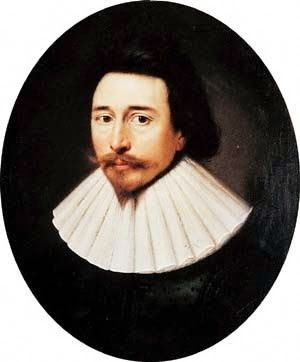

Summary
Patriarcha: or the Natural Power of Kings is Sir Robert Filmer's defence of royal authority as the natural continuation of the authority of fathers. Written in manuscript during the reign of Charles I and circulated privately, it was printed in London in 1680, almost thirty years after Filmer's death, when supporters of the crown were resisting attempts in Parliament to bar the Catholic Duke of York from the succession. The library text is that first edition, complete, keyboarded by the Text Creation Partnership. It opens with a letter by the clergyman and historian Peter Heylyn to Filmer's son, Sir Edward Filmer, praising the author's learning, his conversation and his devotion to the Church, followed by a table of contents and three chapters divided into numbered sections. Chapter I, 'That the first Kings were Fathers of Families', begins with the opinion Filmer means to overturn: that mankind is naturally born free from all subjection and may choose its own form of government. He traces this view to the scholastic divines and to Jesuit writers, notes that some Reformed writers share it, and warns that Robert Parsons and George Buchanan drew from it a right of the people to depose kings. Against Cardinal Bellarmine he argues that God gave Adam dominion over his children and the world, that this dominion passed to the patriarchs, and that after Babel the nations were divided by families under fathers who were kings. Every king is therefore either a father of his people, the heir of such a father, or a usurper of a father's right, and the duty of a king is summed up as a universal fatherly care of his people. The commandment to honour one's father, he observes, is the law that also requires obedience to rulers. Chapter II, 'It is unnatural for the People to Govern, or Chose Governours', answers Aristotle, Suarez and Bellarmine on the family and the city, asks how a whole people could ever consent to anything, finds no example in Scripture of a people choosing its king, and surveys Roman and Athenian history to argue that popular government was unstable and bloody and that mixed government is impossible. Chapter III, 'Positive Laws do not infringe the Natural and Fatherly Power of Kings', reads Samuel's description of a king, Christ's answer about tribute and Paul's teaching on rulers, and argues that kings existed before laws, keep the laws by choice, and stand above them through the prerogative. It closes with a long survey of English records to show that the king makes law in Parliament and that the liberties of Parliament flow from royal grace. John Locke's First Treatise of Government answers Patriarcha section by section, and Algernon Sidney and James Tyrrell also wrote replies.
Virtues in this work
- Piety: Filmer grounds obedience to rulers in the commandment to honour one's father and in God's grant of dominion to Adam.
- Charity: He sums up every duty of a king as a universal fatherly care to preserve, feed, clothe, instruct and defend his people.
- Humility: Chapter I teaches that subjects must leave the judgment of wicked princes to God rather than execute it without commission.
Plot or Argument
- Heylyn's letter and the contents
Peter Heylyn writes to Sir Edward Filmer of his grief at the death of his friend, praises Filmer's conversation, judgment and love of the Church, mentions his writings on Aristotle, Grotius, Hunton and Hobbes, and wishes Patriarcha had been published in Filmer's lifetime. A table of contents then summarizes every numbered section of the three chapters.
- Chapter I, sections 1–3: the opinion of natural liberty examined
Filmer states the common opinion that mankind is born free and may choose its government, calls it new, plausible and dangerous, and says it is found neither in the Fathers of the early Church nor in Scripture. He notes that writers such as Parsons and Buchanan concluded from it that a people may punish or depose its prince, and he turns Bellarmine's own words, that men created together would each have been princes over their posterity, against Bellarmine's conclusion.
- Chapter I, sections 4–8: Adam, the patriarchs and the first kingdoms
Adam's dominion over his children and the world was as ample as any monarch's: the patriarchs judged capital crimes, made war and made peace. After the flood and the confusion of Babel, nations were divided by families under their fathers, which explains the many small kingdoms found in early Greece, Gaul and Kent. Israel's government by Moses, Joshua, the judges and the kings preserved the same right of fatherhood, and present kings are the heirs of those first fathers.
- Chapter I, sections 9–10: providence and the fatherly duty of kings
When God allows a prince to be removed, his judgment is just, but men who carry out such judgments without commission sin. Whoever holds supreme power, by whatever means, holds the natural authority of a supreme father. The Fifth Commandment grounds obedience to rulers in honour to parents, and the rights and duties of a king are those of a father extended over many families.
- Chapter II, sections 1–4: Aristotle, Suarez and the definition of a family
Filmer argues that Aristotle offers little support for the natural liberty of the multitude and that Plato rightly called a commonwealth a large family. He disputes Suarez's claim that Adam held only household, not political, power, and compares definitions of the family in Aristotle and Bodin, citing the Roman power of fathers under the Twelve Tables.
- Chapter II, sections 5–9: election, consent and Scripture
If power belonged to the whole people, it could never be transferred without the consent of every person, including infants and the absent; majority vote, proxy and silent acceptance are themselves conventions without natural warrant. Scripture records no people choosing its king: God chose and the people only acknowledged, as Filmer reads Deuteronomy and a passage from Hooker's eighth book. God always governed his people by monarchy.
- Chapter II, sections 10–18: monarchy, democracy and mixed government
Monarchy offers the best order, strength and stability. Filmer surveys the changing magistracies of the Roman republic, argues that Rome won its empire under kings and perfected it under emperors, quotes ancient historians on the disorders of popular states, and claims that popular government sheds more blood than tyranny. A government mixed of king and people is impossible, the people may not judge their king, and England has had no tyrants since the Conquest.
- Chapter III, sections 1–8: kings, laws and the prerogative
Kings existed before laws and were not bound by them. Samuel's description of a king shows the extent of royal right; Christ and Paul command tribute without asking about consent. Laws were made to keep the multitude in order, not to bridle kings, and a king keeps them by choice and by his coronation oath while remaining above them. The prerogative, including equity in Chancery and pardons, exists for the good of subjects.
- Chapter III, sections 9–18: the king in his courts and in Parliament
Citing Bracton, statutes and medieval records, Filmer presents the king as author, interpreter and corrector of the common law and judge in all causes, with his council sitting in the Star Chamber. Parliaments grew from the Saxon assembly of the wise; the king summons and dissolves them, makes the laws at their petition, and directs both Houses by himself, his council and his judges. The book ends with legal precedents on the imprisonment of a Speaker of the Commons and writs of error.
Characters
- Sir Robert Filmer, author
Kentish gentleman and royalist who argues that political power is fatherly power descended from Adam.
- Peter Heylyn, author of the prefatory letter
Royalist clergyman and historian who writes to Filmer's son in praise of the author and his political writings.
- Cardinal Robert Bellarmine, principal opponent
Jesuit theologian whose argument from natural equality to the people's original power Filmer examines and turns against him.
- Francisco Suarez, opponent
Spanish Jesuit who held that Adam had household power but not political power, a distinction Filmer rejects.
- Adam, first father and king
In Filmer's argument, created with dominion over his children and the world, the source from which all royal right descends.
- Aristotle, authority disputed
Whose distinction between household and political rule Filmer questions while drawing on his praise of monarchy.
- Richard Hooker, authority cited
Anglican divine whose Laws of Ecclesiastical Polity Filmer respects but disputes on natural liberty, and quotes on the people's role in coronation.
Lessons
The family as the pattern of the state
Filmer's central claim is that the city is a large family and the king a father. Authority is not invented by human agreement; it is given by God in the order of creation, first to Adam over his children, and it carries the father's duty to preserve, feed, instruct and defend those in his care.
- What evidence from Genesis does Filmer use to show that the patriarchs held royal power?
- How does Filmer describe the duties of a king, and how do they compare with a father's duties?
- Is a nation more like a family or more like a voluntary association? What follows from each answer?
Can a whole people consent?
Filmer presses a hard question on the theory of popular consent. If power first belonged to all, then every person, including women, children and those absent, would have to agree to transfer it, and majority rule and representation are themselves human arrangements that need some prior authority.
- Why does Filmer think that majority vote cannot be derived from natural liberty?
- How did Locke and later writers answer the problem of tacit consent that Filmer raises?
- Does any real government rest on the consent of every person it governs?
Order and the danger of rebellion
Writing after decades of religious wars in Europe, Filmer feared doctrines that allowed subjects to depose their rulers. He holds that God may remove a wicked king, but that private men who take that judgment into their own hands commit sin.
- Which writers does Filmer name as teaching that a people may depose its prince, and why does he find their conclusion dangerous?
- How does Filmer distinguish God's judgment on a ruler from human rebellion?
- What arguments from Roman and Athenian history does he use against popular government?
Law, prerogative and the king's conscience
In Chapter III Filmer argues that law is the instrument of the ruler, as a rule is the carpenter's tool. The king ordinarily keeps the laws and swears to do so, but he must be able to act above them, through equity, pardons and emergency measures, for the good of those who live under them.
- What does Filmer mean by comparing law to a carpenter's rule?
- Why does he say the prerogative exists to defend the people's liberties?
- How would a common lawyer such as Coke or a Parliamentarian of 1628 have answered him?
Context
Filmer wrote during the reign of Charles I, when disputes between king and Parliament over taxation, imprisonment and the Petition of Right of 1628 raised the question of whether royal power was limited by law and consent. He was answering a long European debate in which Catholic writers such as Bellarmine and Suarez, and Protestant writers such as George Buchanan, taught that political power came from God through the people, and in which some drew a right of resistance from that doctrine. Filmer's reply joined Scripture, the English legal record and classical history in support of a monarchy founded on fatherly right.
Composition
Patriarcha circulated in manuscript and was never published by Filmer. Its reference to the king's speech after the answer to the Petition of Right shows that at least part was written after 1628; scholars date composition variously between the late 1620s and the early 1640s. It was first printed in London in 1680 by Walter Davis, with Peter Heylyn's letter, during the Exclusion Crisis. Modern editions by Peter Laslett (1949) and Johann Sommerville (1991) follow a manuscript text that differs in arrangement from the 1680 edition used here.
Reception
The 1680 printing made Filmer the leading authority for Tory defenders of hereditary succession and drew immediate replies: James Tyrrell's Patriarcha non Monarcha (1681), Algernon Sidney's Discourses Concerning Government (written in the early 1680s and published in 1698), and John Locke's Two Treatises of Government (1689), whose First Treatise is a point-by-point refutation. Because Locke's reply became more widely read, Filmer was long known chiefly through his critics. Twentieth-century scholarship, beginning with Laslett, restored him as a serious thinker whose view of the family as the source of authority expressed assumptions widely shared in seventeenth-century England.
Comparisons
- second-treatise-of-government
Locke's First Treatise answers Patriarcha section by section, and the Second Treatise builds the alternative Filmer rejected: free and equal men in a state of nature who create government by consent for limited ends.
- leviathan
Hobbes, whom Filmer criticized in his Observations of 1652, also defended undivided sovereignty but founded it on a covenant among individuals, the very starting point Filmer denied; Filmer welcomed the conclusion and rejected the premise.
- politics
Aristotle distinguishes the rule of a household from the rule of a city; Filmer's second chapter argues against that distinction and sides with the view Aristotle attributes to Plato, that a city is a large family.
- hooker-laws-of-ecclesiastical-polity
Filmer says he reverences Hooker's judgment in most things but rejects his account of government arising from the consent of men; he nonetheless quotes Hooker's eighth book on the people's part in a coronation.
- de-regno
Aquinas also argues that monarchy is the best government by comparing the realm to a household and the ruler to the soul in the body, but he allows that a tyrant may be resisted by public authority, a conclusion Filmer denies.
Quotes
“Mankind is naturally endowed and born with Freedom from all Subjection, and at liberty to choose what Form of Government it please”
“That the desire of Liberty was the first Cause of the Fall of Adam.”
“This Lordship which Adam by Command had over the whole World, and by Right descending from him the Patriarchs did enjoy, was as large and ample as the Absolutest Dominion of any Monarch which hath been since the Creation”
“the Ministry of men who execute God's Judgments without Commission, is sinful and damnable.”
“all the Duties of a King are summed up in an Universal Fatherly Care of his People.”
“the Original of Laws was for the keeping of the Multitude in Order”
“the Prerogative of a King is to be above all Laws, for the good only of them that are under the Laws, and to defend the Peoples Liberties”
For Students
A reading companion for classical Christian high school students. See the student guide.
Reading Guide
Watch for
- The opinion stated at the start of Chapter I, which Filmer quotes in order to refute; do not mistake it for his own view.
- How Filmer uses Bellarmine's own words against Bellarmine's conclusion in Chapter I, section 3.
- The examples from Genesis (Judah, Abraham, Esau) offered as proof that the patriarchs held royal power.
- The problem of consent in Chapter II: who would have to agree, and how could they?
- The comparison of law to a carpenter's rule in Chapter III, and the claim that the prerogative serves the people's liberties.
Key terms and names
- Natural liberty
- The opinion, which Filmer attacks, that human beings are born free from subjection and may choose their form of government.
- Fatherly (paternal) power
- In Filmer's argument, the authority God gave Adam over his children, the original and pattern of all royal authority.
- Prerogative
- The powers belonging to the king alone, which Filmer holds to be above the ordinary laws and exercised for the good of subjects.
- Divine right of kings
- The doctrine that kings receive their authority from God and answer to him alone, not to their subjects.
- Exclusion Crisis
- The struggle of 1679-1681 over bills in Parliament to bar James, Duke of York, from the succession, during which Patriarcha was printed.
- Mixed government
- A constitution sharing power among king, nobles and people, which Filmer judges impossible because sovereignty cannot be divided.
Seminar Questions
- Comprehension What opinion does Filmer set out to refute at the beginning of Chapter I, and where does he say it came from?
- Comprehension According to Filmer, how did the division of nations after Babel produce the first kingdoms?
- Comprehension What reasons does Chapter III give for saying that kings existed before laws?
- Interpretation Why does Filmer think the Fifth Commandment supports obedience to kings?
- Interpretation How does Filmer argue that majority rule cannot be derived from natural liberty? Is the argument sound?
- Interpretation Filmer says the king keeps the laws though he is not bound by them. What does he mean, and how does the coronation oath fit his view?
- Big Question Is political authority more like the authority of a parent, or more like a trust given by those governed?
- Big Question If authority comes from God, does it follow that it cannot be resisted? What distinctions might a Christian draw?
Faith Connections
- Exodus 20:12 (Scripture)
Filmer observes that the law enjoining obedience to rulers is given in the Decalogue in the words 'Honour thy father', and the Westminster Larger Catechism likewise reads the Fifth Commandment as covering all superiors.
- 1 Samuel 8:10-18 (Scripture)
Samuel's warning about what a king will take is read in Chapter III as a description of royal right; readers of the period disagreed whether the passage describes a right or a danger.
- Romans 13:1-7 (Scripture)
Paul's teaching that the powers that be are ordained of God and that tribute is due to them is central to Filmer's case that rulers are God's ministers.
- Robert Bellarmine, De Laicis (Great Conversation)
Bellarmine taught that political power comes from God but resides first in the community, which transfers it to rulers; Filmer's whole first chapter is an argument with this position.
Logic and Rhetoric
Central argument: God gave Adam dominion over his children and the world, and that dominion was royal. It descended to the patriarchs and, after Babel, to the fathers of nations, from whom all kings derive their right. A people never possessed natural liberty to choose its government, since children are born subject to their parents. Therefore royal power is natural and fatherly, existed before laws, cannot be divided or judged by subjects, and is exercised for the care of the people as a father cares for his family.
Rhetorical device: turning the opponent's authority (retorsion). In Chapter I, section 3, Filmer quotes Bellarmine's statement that if many men had been created together each would have been prince over his posterity, and then argues that this concedes his own point: creation made man a prince over his descendants.
Debate: Resolved: That the family, not a contract, is the true model of political authority.
Memory Work
all the Duties of a King are summed up in an Universal Fatherly Care of his People.
Mankind is naturally endowed and born with Freedom from all Subjection, and at liberty to choose what Form of Government it please
Writing Prompts
Essay: Explain Filmer's argument from Adam to the kings of his own day. Then identify the step you think most open to challenge and explain how Filmer would defend it.
Comparison with Second Treatise of Government: Compare Filmer's account of the origin of political power with Locke's account of the state of nature. On what single question do they most fundamentally disagree?
Medical Lens
Patriarcha is a work of political and legal argument with no medical content. Filmer's separate tract An Advertisement to the Jury-Men of England Touching Witches (1653), not included here, bears on the history of witchcraft trials.
Creative Prompts
- Dialogue
Write a conversation in 1681 between a Tory squire who has just read Patriarcha and a young Whig who has heard Locke's arguments, each presenting the other side's strongest point fairly.
- Classroom
Divide the class into Filmer and Bellarmine. Each side must state the other's argument in its strongest form before answering it, using Chapter I, section 3.
- Essay
Filmer asks how a whole people could ever give its consent, since infants, the absent and the unwilling are part of it. Explain the problem and evaluate one answer to it.
- Fiction
Imagine Sir Edward Filmer deciding, in 1680, whether to let his father's manuscript be printed. Write the scene in his study at East Sutton.
Further Reading
- Patriarcha and Other Writings, Robert Filmer, ed. Johann P. Sommerville
The standard modern edition, with Filmer's other political tracts and an introduction.
- Two Treatises of Government, John Locke, ed. Peter Laslett
Laslett's edition reads the First Treatise as a direct answer to Filmer.
- Patriarchalism in Political Thought, Gordon J. Schochet
A study of the family as a source of political authority in seventeenth-century England.
- Royalists and Patriots: Politics and Ideology in England, 1603-1640, Johann P. Sommerville
- Patriarcha Non Monarcha, James Tyrrell
One of the first replies to the 1680 printing.
Verification notes
Biographical facts follow standard reference accounts. All seven quotations were found by search in the stored 1680 text (content/texts/patriarcha.txt) and copied with its spelling; chapter and section numbers follow the numbered sections of that edition. The dating of composition is disputed: the text's reference to the king's speech after the Petition of Right (1628) gives one fixed point, and the record reports the range of scholarly opinion without choosing. The relation of Heylyn's letter to his Certamen Epistolare (1659) rests on the note printed after the letter.
- The exact date of composition, which scholars place between the late 1620s and the early 1640s.
- The exact year in which Algernon Sidney's Discourses were composed.