Work record
Plyler v. Doe
1982 · Postwar Contemporary · Court Decision · English
Abstract
Question Presented. May Texas, without offending the Fourteenth Amendment's guarantee of equal protection, refuse state money for schooling children who lack lawful immigration status and let districts turn them away?
Arguments. Lawyers for the families said that these pupils lived under Texas law, had made no choice about crossing the border, and would carry the burden of illiteracy for life while the state gained nothing substantial. Texas answered that unlawful entrants stood outside its jurisdiction, that Rodriguez left schooling outside the Constitution's guarantees, and that reserving scarce funds for lawful residents was plainly rational.
Holding. Five justices affirmed the injunctions. Brennan agreed that immigration status creates no suspect class and that education is no federal right, yet held that withholding all schooling from blameless children demands proof of a substantial state interest; deterrence, school quality and residency did not supply it. Powell joined while sympathizing with frustrated Texas officials. Burger and three colleagues called the policy unwise but constitutional and left it to Congress and legislatures.
Significance. The ruling obliges public schools nationwide to enroll children regardless of status, and it has never been overruled; California's 1994 attempt to bar such pupils was blocked in federal court.
Text. Brennan's opinion is complete; Powell's and Burger's appear in part, and notes are dropped.
Key figures
- James L. Plyler: Tyler superintendent whose district charged tuition
- The Doe families: Smith County parents of Mexican origin suing for their children
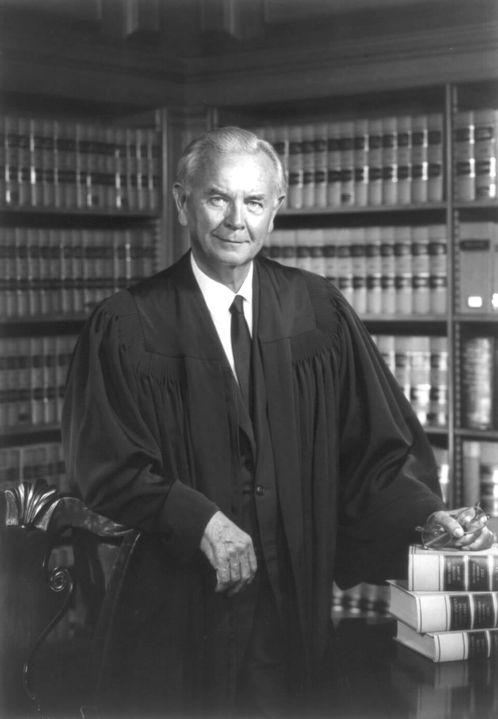
- William J. Brennan Jr.: Justice who demanded a substantial interest for the Texas law
- Lewis F. Powell Jr.: Rodriguez's author, concurring on the unique facts
- Warren E. Burger: Chief Justice who warned against judges acting as Platonic Guardians

Summary
In May 1975 the Texas Legislature amended Section 21.031 of its Education Code to withhold state funds for educating children who had not been legally admitted to the United States and to allow local districts to deny them enrollment. In 1977 the Tyler Independent School District in Smith County began charging such children tuition. A class action filed that September on behalf of school-age children of Mexican origin, identified in court by the pseudonym Doe, named Superintendent James Plyler and the board; Judge William Wayne Justice enjoined the policy, and the Fifth Circuit affirmed. A second set of suits from across the state was consolidated in Houston as In re Alien Children Education Litigation, where the law was again held invalid. The question was whether Texas could, consistent with the Equal Protection Clause, deny undocumented children the free public education it provided to citizens and lawfully admitted residents. The families argued that the children were persons within the state's jurisdiction, that they bore no responsibility for their status, and that denying them schooling would inflict lasting harm without serving any substantial purpose. Texas argued that persons who entered unlawfully were not within its jurisdiction for equal protection purposes, that education is not a fundamental right under San Antonio Independent School District v. Rodriguez (1973), and that the state could rationally preserve limited school funds for lawful residents. On 15 June 1982 the Court affirmed, five to four. Justice Brennan held first that undocumented aliens are persons within a state's jurisdiction and protected by the Equal Protection Clause. He agreed that they are not a suspect class and that education is not a constitutional right, but held that a law imposing a lifetime hardship on children not accountable for their status, by denying them basic education, must further a substantial state interest. Texas's interests in deterring immigration, protecting school quality and serving children likely to remain in the state were not shown to be furthered by the law. Justice Powell, concurring, stressed the unique combination of innocent children and the denial of education and acknowledged the exasperation of Texans facing problems the federal government had not solved. Chief Justice Burger, for four dissenters, wrote that he would not make Texas's choice as a legislator, but that the Court had created a novel standard to correct what was a policy question for Congress and the states. The library text contains Brennan's opinion with excerpts of the Powell concurrence and the Burger dissent; the separate concurrences of Justices Marshall and Blackmun are omitted, as are the notes. Plyler has not been overruled. In 1994 California voters approved Proposition 187, which included a provision barring undocumented children from public schools; a federal district court enjoined it as inconsistent with Plyler, and the state later abandoned its appeal.
Virtues in this work
- Charity: Brennan dwells on the lifelong cost to children who had no say in how they came to Texas.
- Humility: Burger declines to substitute his own view of good policy for the judgment of the Texas Legislature, even while saying he would have chosen differently.
- Justice: The Court insists that the protection of equal laws extends to every person within a state's jurisdiction.
Plot or Argument
- The Texas statute and two lawsuits
Brennan describes the 1975 amendment to Section 21.031, the Tyler district's tuition policy, Judge Justice's findings, and the statewide litigation consolidated in Houston.
- Persons within its jurisdiction
Drawing on Yick Wo, Wong Wing and the congressional debates over the Fourteenth Amendment, the Court holds that the Equal Protection Clause protects every person within a state's territory, whatever his immigration status.
- Innocent children and the importance of education
Brennan concedes that undocumented aliens are not a suspect class and that education is not a constitutional right, but stresses that the children are not responsible for their status and that illiteracy is an enduring disability.
- Federal immigration policy
The Court finds no indication that Congress meant to deny these children education, and notes that many may remain in the country lawfully in time.
- The state's justifications
Brennan examines the interests in deterring illegal entry, protecting educational quality and favoring children likely to remain in Texas, and finds none furthered by the statute on the district courts' records.
- Powell's concurrence
Powell joins the Court and compares the children's situation to cases involving children born outside marriage, while expressing sympathy for Texas officials facing federal inaction.
- Burger's dissent
Burger agrees that the clause covers aliens and that denying education may be unwise, but argues that the Court has stitched together a new level of scrutiny and that resource allocation is for legislatures and Congress.
Characters
- James L. Plyler, appellant
Superintendent of the Tyler Independent School District, which began charging tuition to children not legally admitted in 1977.
- The Doe families, appellees
Pseudonymous parents and children of Mexican origin in Smith County who brought the class action.
- Judge William Wayne Justice, federal district judge
Eastern District of Texas judge who first enjoined the Tyler policy after an evidentiary hearing.
- Justice William J. Brennan Jr., author of the opinion of the Court
Wrote that the statute imposed a lifetime hardship on children without furthering a substantial state interest.
- Justice Lewis F. Powell Jr., concurring
Author of Rodriguez, who joined the majority and emphasized the unique facts of the case.
- Chief Justice Warren E. Burger, dissenter
Wrote for four justices that the Court had taken a policymaking role belonging to the political branches.
Lessons
Who is a person within the jurisdiction?
Texas argued that people who entered unlawfully were not within its jurisdiction. Brennan answered from the text and history of the Fourteenth Amendment that the phrase covers everyone physically subject to a state's laws, and the dissent agreed on this point. The disagreement lay elsewhere, in how closely the Court should examine the law.
- What sources does Brennan use to interpret the phrase within its jurisdiction?
- Why did all nine justices accept that the Equal Protection Clause applies to these children?
- Does applying a constitutional protection to someone settle what that protection requires?
Responsibility and the children of lawbreakers
Brennan distinguished the children from their parents, who had chosen to enter unlawfully. Drawing on cases about children born outside marriage, he reasoned that penalizing children for their parents' conduct is contrary to basic ideas of individual responsibility. Burger replied that the children's status was not immutable and that the analogy was misleading.
- Why does Brennan say these children are not accountable for their status?
- How does Burger answer the comparison to cases about children born outside marriage?
- Should the law ever burden children for the choices of their parents?
A standard between the usual tests
After Rodriguez, education was not a fundamental right and undocumented status was not a suspect class, which would normally mean rational-basis review. Brennan nevertheless required that the law further a substantial state interest. Supporters saw a sensible response to an unusual combination of facts; Burger saw a new standard assembled for a single case.
- What two conclusions from earlier cases does Brennan accept before applying a stricter test?
- Why does Burger say the decision will likely stand for little beyond its own result?
- Is it better for courts to keep a few fixed standards or to adjust them to particular cases?
Policy and constitutional law
Burger wrote that he would not choose Texas's policy as a legislator, and Powell acknowledged the frustration of Texas officials. Both separated the wisdom of a law from its constitutionality, though they reached different results. The case invites students to notice when judges distinguish what they think best from what the Constitution requires.
- What policy reasons against the Texas law does Burger himself acknowledge?
- Why does Burger think the Court's ruling weakens the political process?
- When a law seems unwise, how should a judge decide whether it is also unconstitutional?
Context
Immigration from Mexico into Texas increased during the 1970s, and federal enforcement was widely regarded as inadequate. School districts along the border and in cities such as Houston faced rising enrollments and the costs of bilingual instruction. San Antonio Independent School District v. Rodriguez (1973) had held that education is not a fundamental right under the federal Constitution, and the Court had also decided several cases on state laws affecting lawfully resident aliens.
Composition
Texas amended Section 21.031 in 1975, and the Tyler district adopted its tuition policy in July 1977. Judge Justice held a hearing in December 1977 and ruled in 1978; Judge Woodrow Seals ruled in the consolidated Houston litigation in 1980. The Court heard the two sets of cases together on 1 December 1981. The Marshall, Blackmun and Powell concurrences each emphasized different aspects of the majority's reasoning.
Reception
The ruling required public schools across the country to enroll children regardless of immigration status, and the Department of Education and the Department of Justice later issued guidance on enrollment practices. Supporters praised the decision for protecting children and the future of their communities; critics argued that it extended equal protection review beyond its proper bounds and imposed unfunded costs on states. Proposition 187 in California (1994) sought to test the decision, and legal scholars continue to discuss whether Plyler's intermediate standard has wider application.
Comparisons
- san-antonio-isd-v-rodriguez
Brennan accepted Rodriguez's holding that education is not a fundamental right, while Burger's dissent argued that Rodriguez should have required ordinary rational-basis review.
- brown-v-board-of-education
Brennan quoted Brown's description of education as perhaps the most important function of state and local governments.
- wisconsin-v-yoder
Brennan borrowed from Yoder the observation that education prepares individuals to be self-reliant and self-sufficient participants in society.
- meyer-v-nebraska
Brennan cited Meyer among the cases recognizing the importance of education in American life, sixty years after the Court struck down Nebraska's foreign-language restrictions.
Quotes
Frequently cited
“Section 21.031 imposes a lifetime hardship on a discrete class of children not accountable for their disabling status.”
Frequently cited
“However, the Constitution does not constitute us as "Platonic Guardians" nor does it vest in this Court the authority to strike down laws because they do not meet our standards of desirable social policy, "wisdom," or "common sense."”
“By denying these children a basic education, we deny them the ability to live within the structure of our civic institutions, and foreclose any realistic possibility that they will contribute in even the smallest way to the progress of our Nation.”
“If the State is to deny a discrete group of innocent children the free public education that it offers to other children residing within its borders, that denial must be justified by a showing that it furthers some substantial state interest. No such showing was made here.”
“In reaching this conclusion, I am not unmindful of what must be the exasperation of responsible citizens and government authorities in Texas and other States similarly situated.”
“Denying a free education to illegal alien children is not a choice I would make were I a legislator. Apart from compassionate considerations, the long-range costs of excluding any children from the public schools may well outweigh the costs of educating them. But that is not the issue; the fact that there are sound policy arguments against the Texas Legislature's choice does not render that choice an unconstitutional one.”
For Students
A reading companion for classical Christian high school students. See the student guide.
Reading Guide
Watch for
- The congressional debate over the phrase within its jurisdiction in Part II.
- Brennan's description of a shadow population created by lax enforcement.
- The paragraph calling illiteracy an enduring disability, which quotes Wisconsin v. Yoder.
- Powell's comparison to cases about children born outside marriage.
- Burger's concession that he would not choose the Texas policy as a legislator.
Key terms and names
- Equal Protection Clause
- The Fourteenth Amendment's command that no state deny to any person within its jurisdiction the equal protection of the laws.
- Intermediate scrutiny
- A standard of review between rational basis and strict scrutiny, requiring that a law further a substantial or important state interest.
- Class action
- A lawsuit brought by representatives on behalf of a larger group with similar claims, here the school-age children in the district.
- Pseudonym
- A substitute name, such as Doe, used in court papers to protect the identity of parties.
- Section 21.031
- The Texas Education Code provision, amended in 1975, that the Court held unconstitutional.
Seminar Questions
- Comprehension What did the 1975 amendment to Section 21.031 do, and how did the Tyler district apply it?
- Comprehension What three state interests did Texas offer, and why did Brennan find each insufficient?
- Comprehension On what points do the majority and the dissent agree?
- Interpretation How does Brennan reconcile his holding with Rodriguez's statement that education is not a fundamental right?
- Interpretation Why does Burger argue that the decision rests on a unique confluence of theories?
- Big Question What does a community owe to children living within it whose parents broke its laws?
Faith Connections
- Ezekiel 18:20 (Scripture)
The prophet's teaching that the son shall not bear the iniquity of the father bears on Brennan's reasoning about children not accountable for their status.
- Romans 13:1-7 (Scripture)
Paul's teaching on the God-given authority of rulers is relevant to the dissent's emphasis on respecting the laws and lawmaking powers of civil government.
- Leviticus 19:33-34 (Scripture)
The command to treat the stranger who sojourns in the land as one born among you is often cited in Christian reflection on immigration.
Logic and Rhetoric
Central argument: Brennan reasons that the children are persons within Texas's jurisdiction, that they are not responsible for their status, that denying them basic education imposes a lifetime hardship, and that such a denial must therefore further a substantial state interest, which Texas did not show; Burger replies that once the Court concedes no suspect class and no fundamental right, only a rational basis is needed, and Texas's interest in conserving funds for lawful residents supplies it.
Rhetorical device: concession. Burger opens by granting that denying education to any child would be senseless as social policy before arguing that this is not the Court's question (quotes 4 and 5).
Debate: Resolved: that a state may limit free public education to children who are citizens or lawfully admitted residents.
Memory Work
Section 21.031 imposes a lifetime hardship on a discrete class of children not accountable for their disabling status.
Denying a free education to illegal alien children is not a choice I would make were I a legislator. Apart from compassionate considerations, the long-range costs of excluding any children from the public schools may well outweigh the costs of educating them. But that is not the issue; the fact that there are sound policy arguments against the Texas Legislature's choice does not render that choice an unconstitutional one.
Writing Prompts
Essay: Explain why Justice Powell, who wrote Rodriguez, joined the majority in Plyler, and evaluate whether the two decisions can be reconciled.
Comparison with San Antonio Independent School District v. Rodriguez: Compare the standards of review applied in Rodriguez and Plyler, and explain why the Court treated unequal school funding differently from a complete denial of schooling.
Medical Lens
The opinions concern school enrollment and state funding for children not legally admitted to the country, with no medical subject matter.
Creative Prompts
- Classroom
Reenact the December 1981 argument with counsel for the Tyler district, counsel for the Doe families, and a bench of nine students who must each state which standard of review they would apply.
- Essay
Write the memorandum a Texas school superintendent might have sent to the board in 1982 explaining what the decision requires of the district and why.
- Dialogue
Write a conversation between Justice Powell, author of Rodriguez, and Chief Justice Burger about why Powell joined the majority in Plyler.
- Essay
Explain the difference between saying a law is unwise and saying it is unconstitutional, using Burger's dissent as your main example.
Further Reading
- No Undocumented Child Left Behind: Plyler v. Doe and the Education of Undocumented Schoolchildren, Michael A. Olivas
Law professor's history of the Tyler litigation, the Supreme Court decision and later attempts to limit it.
- Justice Lewis F. Powell, Jr.: A Biography, John C. Jeffries Jr.
Explains how the author of Rodriguez came to cast the deciding vote for the children in Plyler.
Verification notes
Three quotations from Brennan, one from Powell and two from Burger were each found by Grep as exact substrings of content/texts/plyler-v-doe.txt; the opinions' own terms for immigration status appear only inside quotations. Part letters given in quote locations follow the structure of the stored text, which does not label every subpart clearly. Details about the Tyler tuition policy, Judge Seals and Proposition 187 come from secondary sources.
- Confirm that the Tyler district's tuition policy was adopted in July 1977 and set at $1,000 per year.
- Confirm that Judge Woodrow Seals decided In re Alien Children Education Litigation in 1980.
- Confirm the part designations used in the quote locations against the U.S. Reports.
- Confirm the procedural end of the Proposition 187 litigation (League of United Latin American Citizens v. Wilson).