Work record
Science and Hypothesis
1902 · Early 20th Century · Philosophy · French
Abstract
Background. Consistent alternatives to Euclid and rapid change in physical theory had led some French writers to doubt that science yields knowledge at all. One of Europe's foremost mathematicians answered for a general audience, collecting lectures and articles into a single volume.
Argument. Assumptions pervade every science, but they differ in status. Arithmetic draws its creative force from a principle of the intellect, not from logic. The postulates of geometry and the laws of mechanics are agreements adopted because they are simple and fit experience. Physics proper depends on observation, generalization and testable conjecture.
Key Concepts. Recurrence, the sensory versus mathematical continuum, geometric convention, the relativity of motion, the conservation of energy as a principle beyond refutation, the unity and simplicity of nature, probability in induction, and the persistence of equations when explanatory pictures are discarded.
Edition. The library offers the 1905 London translation with Larmor's introduction, transcribed by optical character recognition; symbols are sometimes garbled. Larmor praises the translation while warning that English cannot carry every nuance of the French.
Significance. Widely read across Europe, the volume shaped the young Einstein's circle and defined the position later called conventionalism. Its claim that discarded theories leave behind true structural relations still figures in arguments about realism.
Key figures
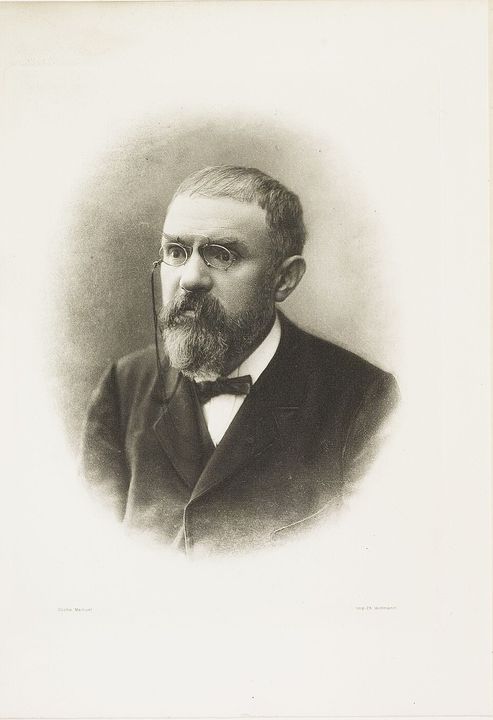
- Henri Poincaré: Mathematician and physicist at the University of Paris
- Joseph Larmor: Cambridge physicist who introduced the English version
- Nikolai Lobachevsky: Pioneer of a geometry with many parallels
- Augustin Fresnel: Optical theorist whose equations outlived his ether

Summary
Science and Hypothesis (La Science et l'hypothèse, Paris, 1902) is the first of Henri Poincaré's three books on the foundations of science, written by one of the leading mathematicians of his age for a general educated public. It asks how much of science is fact, how much is reasoning, and how much is choice. Poincaré answers that hypotheses are everywhere in science, but that they are of different kinds: some can be tested and become fruitful truths, some are useful for fixing ideas, and some are only definitions or conventions in disguise. The library text is the English translation by W. J. Greenstreet published in London in 1905, with an introduction by the Cambridge physicist Joseph Larmor. It is an OCR text, and some formulas and words are imperfectly reproduced. Part I, Number and Magnitude, argues that mathematical reasoning is not merely a chain of syllogisms. Its creative power comes from reasoning by recurrence (mathematical induction), which Poincaré treats as a synthetic judgment rooted in the mind itself. He then shows how the idea of a mathematical continuum is built beyond the rough 'physical continuum' of the senses, in which A may seem equal to B and B to C while A differs from C. Part II, Space, describes the non-Euclidean geometries of Lobachevsky and Riemann and asks what the axioms of geometry are. They cannot be truths imposed on us a priori, since consistent alternatives exist, nor experimental facts, since experiments deal with bodies rather than ideal lines. They are conventions, chosen freely but guided by experience, and Euclidean geometry remains the most convenient. Poincaré imagines beings in a heated sphere whose bodies shrink toward the edge, who would naturally adopt a non-Euclidean geometry, and he analyses how visual, tactile and motor sensations give rise to our idea of space. Part III, Force, treats classical mechanics, absolute and relative motion, and energy. The principles of inertia, acceleration and conservation of energy began as experimental laws but have been raised to the rank of principles that experiment can no longer refute. Part IV, Nature, turns to physics proper, where experiment is the source of truth and generalization and hypothesis are indispensable. Poincaré answers those who speak of the 'bankruptcy of science' because theories pass: Fresnel's theory of light was replaced by Maxwell's, yet its equations still state true relations. Chapters on probability, optics and electricity, and electrodynamics (Ampère, Helmholtz, Maxwell, Rowland's experiment) close the book.
Virtues in this work
- Prudence: The preface refuses both to doubt everything and to believe everything, and sets out to judge each hypothesis by its kind.
- Humility: Chapter X concedes that the real objects of nature remain hidden and that science attains only the relations between them.
- Industry: Poincaré works through arithmetic, geometry, mechanics, probability and electrodynamics in turn rather than settling the question by a general verdict.
Plot or Argument
- Larmor's introduction and the author's preface
Larmor commends the book to English readers as an antidote to scepticism about physical theory. Poincaré's preface rejects both the naive view that science is infallible and the sceptical view that it is all arbitrary, and promises to sort hypotheses into kinds; he concludes that science reaches the relations between things rather than things themselves.
- Chapter I: the nature of mathematical reasoning
If mathematics were purely deductive it would be a vast tautology. Its fruitfulness comes from reasoning by recurrence: if a property holds for 1, and holding for n implies it holds for n + 1, it holds for all whole numbers. This principle cannot be proved by logic or experience; it affirms the mind's power to conceive the indefinite repetition of an act.
- Chapter II: mathematical magnitude and experiment
Sensation gives a physical continuum in which nearby weights or lengths cannot be told apart, so that A = B and B = C while A < C. The mathematician removes this contradiction by constructing the continuum of real numbers, a framework of the mind fitted to experience by measurement.
- Chapters III-V: non-Euclidean geometry, space and experiment
Poincaré explains Lobachevsky's and Riemann's geometries and their consistency, then argues that geometrical axioms are neither synthetic a priori intuitions nor experimental facts but conventions. He distinguishes geometrical space from representative space built from sensation and movement, imagines a non-Euclidean world and a four-dimensional one, and argues that no experiment can force us to give up Euclidean geometry, since we can always alter our physical assumptions instead.
- Chapters VI-VIII: classical mechanics, relative motion, energy
The principle of inertia, the law of acceleration and the definition of force are examined: force is defined by mass times acceleration and mass by action and reaction, so the principles become partly conventional. Newton's argument for absolute rotation and the principle of relative motion are discussed, as are energetics and thermodynamics, where the principle of energy reduces to the assertion that something remains constant.
- Chapter IX: hypotheses in physics
Experiment is the sole source of truth, but facts must be chosen and generalized, and every generalization is a hypothesis. Belief in the unity and simplicity of nature guides generalization. Hypotheses are of three kinds: natural ones scarcely to be abandoned, indifferent ones useful for calculation, and genuine generalizations to be tested and dropped if they fail.
- Chapters X-XI: modern physical theories and probability
Theories that pass are not in vain: Fresnel aimed to predict optical phenomena, and his equations remain true though Maxwell's interpretation replaced his ether. Mechanical explanation is always possible in infinitely many ways once energy is conserved. The chapter on probability, from games of chance to the theory of errors, explains why every inductive inference relies on probable reasoning.
- Chapters XII-XIII: optics, electricity and electrodynamics
Poincaré compares Fresnel's and Maxwell's theories of light and electricity, then reviews Ampère's and Helmholtz's theories of currents and their difficulties, Rowland's experiment on moving charges and Maxwell's theory, showing how unconscious hypotheses shaped each.
Characters
- Henri Poincaré, author
French mathematician and physicist who examines the role of convention and hypothesis in each science.
- Joseph Larmor, introducer
Cambridge mathematical physicist whose introduction presents the 1905 English translation.
- Nikolai Lobachevsky, geometer discussed
Russian mathematician whose geometry, in which more than one parallel passes through a point, shows that Euclid's axioms are not forced on the mind.
- Bernhard Riemann, geometer discussed
German mathematician whose geometries of constant positive curvature Poincaré sets beside Euclid's and Lobachevsky's.
- Augustin Fresnel and James Clerk Maxwell, physicists discussed
Authors of successive theories of light whose relation Poincaré uses to show that discarded theories may keep true equations.
- Immanuel Kant, philosopher answered
Whose view that geometrical axioms are synthetic a priori intuitions Poincaré rejects for geometry while keeping something like it for mathematical induction.
Lessons
Neither credulous nor sceptical
Poincaré opens by setting aside two easy positions, that science is infallible and that it is a house of cards. Both spare us the work of thinking. The task is to sort hypotheses by kind and see which are tested truths, which are useful aids, and which are conventions.
- What two attitudes toward science does the preface reject, and why does Poincaré call them equally convenient?
- What are the three kinds of hypotheses the preface promises to distinguish?
- How might a student apply this caution to claims made in the name of science today?
Geometry as convention
Because consistent non-Euclidean geometries exist, Poincaré argues that Euclid's axioms cannot be necessary truths; because experiments concern physical bodies, not ideal lines, they cannot be experimental facts. They are conventions chosen for convenience, and Euclid's is the simplest and best suited to the behaviour of solid bodies.
- Why does the existence of non-Euclidean geometry count, for Poincaré, against Kant's view of geometry?
- What does Poincaré mean when he asks whether the metric system is true?
- If a convention is chosen, is it therefore arbitrary? How does Poincaré answer?
Facts and the house of science
Experiment is the only source of new truth, but a heap of facts is not a science. The scientist must choose which facts matter, generalize from them, and foresee. Generalization requires belief in the simplicity and unity of nature, held provisionally.
- What does Poincaré add to facts to make a science, according to his image of the house?
- Why does he say every generalization is a hypothesis?
- Is the belief that nature is simple a scientific result or a starting assumption?
What survives when theories change
Against talk of the 'bankruptcy of science', Poincaré argues that when one theory replaces another, its equations, which express relations, often remain true. Fresnel's ether was abandoned, but his predictions of optical phenomena still hold. What science knows are relations, not the hidden nature of things.
- What did Fresnel aim to do, according to Chapter X?
- What changes, and what stays the same, when Maxwell's theory replaces Fresnel's?
- Does Poincaré's view make science more modest or more secure?
Context
In the late nineteenth century the discovery of consistent non-Euclidean geometries by Lobachevsky, Bolyai and Riemann had unsettled the belief that Euclid's axioms were necessary truths. In physics, Maxwell's electromagnetic theory had replaced older theories of light, and debates over the ether, atoms and energetics led some writers in France to speak of a 'bankruptcy of science'. Philosophers such as Édouard Le Roy argued that scientific laws were largely creations of the scientist. Poincaré wrote as a working mathematician and physicist to give a more balanced account.
Composition
La Science et l'hypothèse was published in Paris by Flammarion in 1902 in its series of scientific philosophy. Several chapters drew on earlier articles and lectures, which Larmor notes are sometimes not fully up to date. The English translation by W. J. Greenstreet (signed W. J. G.) appeared in London from the Walter Scott Publishing Company in 1905 with Larmor's introduction. The library text is an OCR transcription of that edition, in four parts and thirteen chapters.
Reception
The book sold widely in France and abroad and was followed by The Value of Science (1905) and Science and Method (1908). Albert Einstein and his friends in the 'Olympia Academy' at Bern read it closely in the years before 1905. Poincaré's view of geometry, known as conventionalism, was developed by later philosophers and debated after Einstein's general theory of relativity used a non-Euclidean geometry for physical space; interpreters differ on whether that development refutes or vindicates Poincaré's position. His account of the survival of equations across theory change has been cited in later debates over scientific realism.
Comparisons
- euclid-elements-book-i
Poincaré treats the axioms of Euclid's Book I, and especially the parallel assumption, as conventions rather than self-evident truths, while still judging Euclid's geometry the most convenient.
- duhem-the-aim-and-structure-of-physical-theory
Duhem, Poincaré's French contemporary, likewise holds that physical theory aims at representing relations among laws rather than explaining hidden reality, and argues that experiments test whole groups of hypotheses together.
- einstein-relativity
Einstein read Science and Hypothesis before 1905; his popular account of relativity discusses the meaning of geometry and simultaneity in terms that respond to Poincaré's questions.
- mach-popular-scientific-lectures
Mach also stresses the economy of scientific thought and criticizes Newton's absolute space, topics Poincaré treats in Chapters VI and VII.
- whewell-novum-organon-renovatum
Whewell, writing half a century earlier, also insisted that the mind contributes ideas to scientific knowledge, but he regarded geometrical axioms as necessary truths rather than conventions.
Quotes
“To doubt everything or to believe everything are two equally convenient solutions ; both dispense with the necessity of reflection.”
“the aim of science is not things themselves, as the dogmatists in their simplicity imagine, but the relations between things; outside those relations there is no reality knowable.”
“Mathematical induction — i.e., proof by recurrence — is, on the contrary, necessarily imposed on us, because it is only the affirmation of a property of the mind itself.”
“One geometry cannot be more true than another; it can only be more convenient.”
“Principles are conventions and definitions in disguise.”
“Experiment is the sole source of truth. It alone can teach us something new ; it alone can give us certainty.”
“Science is built up of facts, as a house is built of stones ; but an accumulation of facts is no more a science than a heap of stones is a house.”
“The true relations between these real objects are the only reality we can attain”
For Students
A reading companion for classical Christian high school students. See the student guide.
Reading Guide
Watch for
- The three kinds of hypotheses announced in the preface, and where each appears in the book.
- Reasoning by recurrence in Chapter I and why Poincaré thinks it is not mere logic.
- The word 'convention' in Chapters III-VIII and how it differs from 'arbitrary'.
- The imagined non-Euclidean world in Chapter IV.
- The case of Fresnel and Maxwell in Chapter X.
Key terms and names
- Conventionalism
- The view, associated with Poincaré, that certain basic principles, such as the axioms of geometry, are adopted by agreement for convenience rather than discovered as facts.
- Reasoning by recurrence
- Mathematical induction: proving that a property holds for 1 and that if it holds for n it holds for n + 1, and concluding that it holds for all whole numbers.
- Non-Euclidean geometry
- A consistent geometry that rejects Euclid's parallel assumption, such as Lobachevsky's (many parallels) or Riemann's (none).
- Synthetic a priori
- Kant's term for judgments that add to our knowledge yet are known independently of experience.
- Physical continuum
- Poincaré's name for the continuum given by sensation, in which A may equal B and B equal C while A differs from C.
- Ether
- The medium once supposed to fill space and carry light waves, central to Fresnel's theory.
Seminar Questions
- Comprehension According to the preface, what are the three kinds of hypotheses?
- Comprehension Why does Poincaré say the axioms of geometry are neither a priori intuitions nor experimental facts?
- Comprehension What does Chapter X say Fresnel was trying to do, and what survived from his theory?
- Interpretation Why does Poincaré treat mathematical induction differently from the axioms of geometry?
- Interpretation How can a convention be free and yet not arbitrary?
- Interpretation What does the image of the house and the heap of stones say about the scientist's work?
- Big Question Does science tell us what the world is really like, or only how its parts are related?
- Big Question When a well-tested theory is replaced, has science failed or succeeded?
Faith Connections
- Proverbs 25:2 (Scripture)
'It is the glory of God to conceal a thing: but the honour of kings is to search out a matter.' Poincaré speaks of real objects that nature hides while science searches out their relations.
- 1 Corinthians 13:12 (Scripture)
'Now we see through a glass, darkly.' Paul's contrast between partial and full knowledge invites reflection on Poincaré's claim that science knows relations rather than things in themselves.
- Psalm 8:3-4 (Scripture)
The psalmist considers the heavens, the work of God's fingers, and asks what man is; Poincaré's book is an inquiry into what the human mind contributes to its knowledge of the heavens and the earth.
- Blaise Pascal, Pensées, on the spirit of geometry and the spirit of finesse (Great Conversation)
Pascal, another French mathematician, distinguished reasoning from defined principles from the intuitive grasp of many subtle principles at once, a contrast related to Poincaré's discussion of what logic alone cannot supply.
Logic and Rhetoric
Central argument: Science is neither infallible nor arbitrary. In mathematics, reasoning by recurrence is a genuine power of the mind. In geometry and mechanics, the basic principles are conventions, chosen freely but guided by experience and kept because they are convenient. In physics proper, experiment is the source of truth, but generalization and hypothesis are necessary, and theories that pass away leave behind equations that still express real relations. Science therefore gives true knowledge of relations, though not of the hidden nature of things.
Rhetorical device: thought experiment. In Chapter IV Poincaré imagines a world enclosed in a sphere whose temperature falls toward the edge, where all bodies shrink as they move outward, so that its inhabitants would find a non-Euclidean geometry the natural one.
Debate: Resolved: That the axioms of geometry are conventions rather than truths about space.
Memory Work
Science is built up of facts, as a house is built of stones ; but an accumulation of facts is no more a science than a heap of stones is a house.
To doubt everything or to believe everything are two equally convenient solutions ; both dispense with the necessity of reflection.
Writing Prompts
Essay: Explain what Poincaré means by calling the axioms of geometry conventions. Use the non-Euclidean geometries of Chapter III and the imagined world of Chapter IV, and say whether his view makes geometry less certain.
Comparison with Elements, Book I: Read Euclid's axioms and Proposition 29 in Book I, then Poincaré's Chapters III and V. How would Euclid's editor and Poincaré each describe the status of the parallel assumption?
Medical Lens
Not a medical work, but two chapters engage the psychology and physiology of sensation that interested late nineteenth-century psychiatry and psychophysics. Chapter II uses experiments in which weights or lengths that differ slightly cannot be told apart (drawn from the experiments behind Fechner's law, which he says point the opposite way) to describe the contradictory 'physical continuum' of sensation. Chapter IV builds the idea of space from visual sensations, the muscular sensations of eye movement and the tactile and motor sensations of the body, an analysis that belongs to the history of theories of perception.
- Part I, Ch. II, The Physical Continuum
Sensory thresholds in Fechner's experiments: weights of 10 and 11 grams, or 11 and 12, felt as equal though 10 and 12 are distinguished, and what this implies for the idea of magnitude.
- Part II, Ch. IV, Visual Space; Tactile and Motor Space
How retinal images, the muscular sensations of convergence and accommodation, and the body's movements together give rise to representative space.
Creative Prompts
- Fiction
Write a short story set in Poincaré's imagined heated sphere, where everything shrinks as it moves toward the cold edge, told by an inhabitant who has just worked out the geometry of the world.
- Classroom
Prove a simple formula, such as 1 + 2 + ... + n = n(n + 1)/2, by mathematical induction, then discuss Poincaré's claim that this kind of reasoning is a power of the mind, not a rule of logic.
- Dialogue
A sceptic tells Poincaré that science is bankrupt because every theory is eventually abandoned. Write Poincaré's reply, using the case of Fresnel and Maxwell.
- Essay
Is the choice of a geometry like the choice between the metric and imperial systems? Present Poincaré's argument and one objection to it.
Further Reading
- The Value of Science, Henri Poincaré
The 1905 sequel, including essays on intuition and logic and on the objectivity of science.
- Science and Method, Henri Poincaré
The 1908 volume, which includes Poincaré's account of mathematical discovery.
- Henri Poincaré: A Scientific Biography, Jeremy Gray
- Einstein's Clocks, Poincaré's Maps, Peter Galison
On Poincaré, Einstein and the synchronization of clocks.
Verification notes
Contents follow the stored OCR text of the 1905 English translation. All eight quotations were found by search in content/texts/poincare-science-and-hypothesis.txt and copied exactly, including the OCR text's spaces before semicolons. The manifest spells the author 'Henri Poincare' without the accent, and that spelling is kept in the author field; elsewhere the accented form is used. The Olympia Academy reading of the book is reported in Maurice Solovine's recollections and standard Einstein biographies. Biographical facts are standard.
- Whether the 1902 French first edition had the same chapter division as the 1905 translation (later French editions add material).
- The translator's identification as William John Greenstreet, from the initials W. J. G. in the 1905 edition.