Work record
Personal Knowledge
1958 · Postwar Contemporary · Philosophy · English
Abstract
Background. A Budapest-trained doctor who became a leading chemist in Berlin and Manchester delivered the Gifford Lectures at Aberdeen and expanded them over six years into this book, aimed against positivist ideals of detached knowledge and against political control of research. The work is protected by copyright; the library offers a guide only.
Argument. Knowing is an achievement of a skilled person. Scientists, artisans and clinicians rely on unspecifiable clues and capacities acquired by imitation of masters. Such participation does not spoil objectivity but makes it possible, since the knower aims at truth valid for all.
Key Concepts. Tacit knowing, focal versus subsidiary awareness, connoisseurship, intellectual passions, conviviality, the fiduciary grounding of knowledge, universal intent, and the irreducibility of living and mechanical systems to physics. Each is illustrated from laboratory, clinic or workshop.
Structure. Four movements proceed from the art of knowing, through the inarticulate roots of thought, to a justification of commitment, and finally to an account of life and the emergence of persons. Examples range from planetary astronomy and crystallography to riding, swimming and reading radiographs.
Significance. Influential among philosophers, theologians and educators, the volume introduced 'tacit knowledge' into wide use and is still drawn on in discussions of clinical judgment and expertise. Kuhn acknowledged its influence.
Key figures
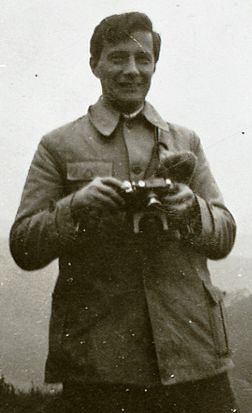
- Michael Polanyi: Hungarian-born physician and physical chemist turned philosopher
- Augustine of Hippo: Church father whose faith-before-understanding principle is revived
- Nicolaus Copernicus: Astronomer whose system exemplifies rational beauty in theory

Summary
Personal Knowledge: Towards a Post-Critical Philosophy was published in 1958 by Routledge and Kegan Paul in London and by the University of Chicago Press. Its author, Michael Polanyi, had been a physician and a distinguished physical chemist before turning to philosophy, and the book grew from his Gifford Lectures at the University of Aberdeen in 1951–52. It argues against the ideal of a wholly detached, impersonal knowledge, which Polanyi thought both impossible and destructive of intellectual freedom, and proposes instead that all knowing, including the most exact science, depends on the skilled, committed participation of the knower. The book remains under copyright, so the library provides a guide without a stored text. Part One, The Art of Knowing, begins with objectivity. Polanyi argues that Copernicus preferred the heliocentric system for its intellectual beauty and rationality, not because it fitted the data better, and that scientists accept theories for the order they reveal. Chapters on probability and order follow. The chapter on skills shows that a swimmer, a cyclist or a craftsman follows rules that he does not know as rules, and that connoisseurship, such as a physician's skill in diagnosis or a wine-taster's palate, can be passed on only by example within a tradition of apprenticeship. Part Two, The Tacit Component, develops the distinction between focal awareness, directed at what we attend to, and subsidiary awareness of the clues and tools we attend from, as when we feel the head of a nail through the hammer in our hand. Language, too, rests on tacit skill: a medical student learning to read chest X-rays at first sees only shadows and gradually comes to see what the radiologist describes. The chapter on intellectual passions treats the scientist's sense of beauty and value, the heuristic passion that drives discovery, and the persuasive passion that defends it in controversy between rival frameworks. The chapter on conviviality examines tradition, authority, the community of scientists and the conditions of a free society. Part Three, The Justification of Personal Knowledge, argues that belief is the source of all knowledge, recalling Augustine's teaching that we must believe in order to understand. Polanyi criticizes the attempt to found knowledge on universal doubt, and describes commitment: the knower submits to standards he takes to be universally valid while knowing he may be wrong. Part Four, Knowing and Being, argues that living things and machines must be understood through their operational principles, which physics and chemistry cannot supply, and closes with a picture of the rise of man through levels of emergence toward responsible persons in a society of explorers.
Virtues in this work
- Humility: Polanyi holds that a learner must submit to a master's example before he can acquire a skill such as diagnosis.
- Faith: Part Three revives Augustine's principle that belief comes before understanding and makes trust the ground of knowledge.
- Fortitude: The chapter on commitment asks the knower to state his findings and accept responsibility for them despite the risk of error.
Plot or Argument
- Preface: the personal coefficient
Polanyi states his aim: to replace the ideal of scientific detachment with an account of knowledge in which the knower's passionate participation is a necessary component rather than a defect.
- Part One, chapters 1-3: objectivity, probability, order
The Copernican revolution is presented as the triumph of a more rational and beautiful theory, and Polanyi argues that Einstein's relativity was not simply forced by experiment. He examines probability statements and the recognition of order, arguing that each requires a personal judgment that no formula supplies.
- Part One, chapter 4: skills
Skilful performance follows rules unknown to the performer, as in swimming and riding a bicycle. Connoisseurship in medicine, tasting or classification is learned only by apprenticeship to a master, which requires trust in authority and tradition.
- Part Two, chapter 5: articulation
Polanyi distinguishes focal from subsidiary awareness and shows how tools, probes and language become extensions of the body through which we attend to things. Learning a technical language, as in X-ray diagnosis, transforms what the learner can perceive.
- Part Two, chapters 6-7: intellectual passions and conviviality
Science is guided by passions for intellectual beauty and discovery, and rival frameworks such as Freud's psychoanalysis or Lysenko's genetics can be so different that argument between them becomes a matter of conversion. Knowledge is sustained by a community that shares standards and trusts its members, and Polanyi discusses authority, tradition and the place of the scientific community in a free society.
- Part Three, chapters 8-9: the logic of affirmation and the critique of doubt
All assertions carry a tacit act of accreditation by the speaker. Polanyi recalls Augustine's view that understanding begins in belief, and argues that systematic doubt cannot serve as the foundation of knowledge, since doubt itself rests on beliefs.
- Part Three, chapter 10: commitment
The knower holds beliefs with 'universal intent', believing them true for everyone while accepting the risk of error. Commitment is the framework in which personal judgment and responsibility to truth are joined, and Polanyi speaks of the knower's calling.
- Part Four, chapters 11-13: knowing and being
Machines and living things are defined by operational principles that set boundary conditions on physics and chemistry without being reducible to them. Knowing life requires recognizing achievement and failure, and knowing persons requires a reciprocal, convivial relation. The book ends with an account of evolution as the emergence of higher levels, culminating in responsible human persons.
Characters
- Michael Polanyi, author
Physician turned physical chemist turned philosopher, arguing that all knowledge has a personal and tacit component.
- Nicolaus Copernicus, example
Whose preference for the heliocentric system illustrates Polanyi's account of objectivity as the recognition of rational order.
- Augustine of Hippo, authority invoked
Whose teaching that belief precedes understanding Polanyi takes as the model of a post-critical philosophy.
- Albert Einstein, example
Whose path to relativity Polanyi presents as guided by rational intuition rather than compelled by experiment.
- Trofim Lysenko, example of a rival framework
Soviet agronomist whose environmental genetics Polanyi cites as a case where scientific authority and political power collided.
Lessons
We know more than we can say
Polanyi shows that much knowledge is tacit: the swimmer keeps afloat, the cyclist balances and the physician recognizes a symptom by skills they cannot fully state. Such knowledge is transmitted by example and practice rather than by written rules.
- What examples of skill does Polanyi give in Part One, and what do they have in common?
- Why can connoisseurship be taught only by example?
- What skill have you learned that you could not fully explain in words?
Attending from and attending to
In using a hammer or a probe we are subsidiarily aware of the tool and focally aware of the nail or the object probed. Polanyi extends this to language and theory, through which we attend to the world. If we shift attention to the clues themselves, the performance can collapse.
- What is the difference between focal and subsidiary awareness?
- What happens to the medical student in the X-ray course, and what does it show about learning?
- Why might a pianist stumble if he concentrates on his fingers?
Belief before understanding
Polanyi argues that the modern ideal of accepting nothing that cannot be proved leaves no foundation at all, since every inquiry depends on beliefs held in trust. He revives Augustine's principle that one must believe in order to understand, and treats commitment as responsible rather than arbitrary.
- What does Polanyi mean by calling belief the source of all knowledge?
- Why does he think universal doubt cannot found knowledge?
- How does Polanyi distinguish responsible commitment from mere subjective opinion?
The community of science
Science depends on a community of trust in which learners submit to masters, specialists rely on one another's judgment, and members share standards of value. Polanyi defended the freedom of this community against central planning and political control.
- Why must a young scientist trust authority before he can challenge it?
- What dangers does Polanyi see when political power decides scientific questions, as in the Lysenko case?
- How should a community of inquiry balance tradition and originality?
Context
In the decades after 1930 logical positivists and their successors held that meaningful knowledge must be either verifiable by experience or true by definition, and many thinkers of the period sought a fully impersonal account of science. At the same time Soviet planning of science and the Lysenko affair, and debates in Britain over whether research should be centrally directed, raised the question of who governs science. Polanyi, who had seen totalitarian regimes from Budapest and Berlin, wrote to defend both the freedom of science and the reality of personal judgment.
Composition
The book grew from Polanyi's Gifford Lectures delivered at the University of Aberdeen in 1951 and 1952, revised over several years with the help of his research assistant Marjorie Grene. It was published in 1958 in London by Routledge and Kegan Paul and in Chicago by the University of Chicago Press, in four parts and thirteen chapters. It is under copyright; the library stores no text.
Reception
Personal Knowledge was read by philosophers, theologians and educators as well as scientists. Thomas Kuhn's Structure of Scientific Revolutions (1962) shared its interest in tacit skill and scientific communities, and Kuhn acknowledged Polanyi's work. Theologians such as Thomas F. Torrance and Lesslie Newbigin drew on its account of belief and commitment. Critics in analytic philosophy questioned whether its appeal to personal judgment leaves enough room for public standards of evidence; defenders reply that Polanyi's 'universal intent' answers that charge. Discussion of tacit knowledge has since spread to studies of medicine, management and artificial intelligence.
Comparisons
- duhem-the-aim-and-structure-of-physical-theory
Duhem's appeal to the physicist's 'good sense' where logic leaves theory choice open anticipates Polanyi's account of personal judgment and tacit skill in science.
- kuhn-the-structure-of-scientific-revolutions
Kuhn's paradigms, learned through exemplars, and his account of conversion between frameworks parallel Polanyi's tacit knowledge and his discussion of controversy between rival conceptual frameworks.
- popper-the-logic-of-scientific-discovery
Popper stresses impersonal criticism and falsification; Polanyi stresses the commitment and trained judgment that criticism itself presupposes.
- lewis-the-abolition-of-man
Lewis and Polanyi both resist the reduction of value and judgment to subjective feeling, and both see that reduction as a threat to education and to a free society.
- confessions
Polanyi takes from Augustine the principle that understanding begins in belief; the Confessions show that pattern in Augustine's own life.
Quotes
“into every act of knowing there enters a passionate contribution of the person knowing what is being known”
“this personal coefficient, which shapes all factual knowledge, bridges in doing so the disjunction between subjectivity and objectivity.”
For Students
A reading companion for classical Christian high school students. See the student guide.
Reading Guide
Watch for
- The swimmer, the cyclist and the diagnostician in the chapter on skills.
- The distinction between focal and subsidiary awareness, illustrated by the hammer and the probe.
- The role of intellectual beauty in Polanyi's account of Copernicus and Einstein.
- The appeal to Augustine in Part Three.
- The phrase 'universal intent' in the chapter on commitment.
Key terms and names
- Tacit knowledge
- Knowledge we rely on in skilled performance and perception but cannot fully put into words.
- Focal and subsidiary awareness
- Attention directed at an object (focal) versus awareness of the clues, tools or parts through which we attend to it (subsidiary).
- Connoisseurship
- Expert discernment, as in medical diagnosis or wine-tasting, learned through example under a master.
- Personal coefficient
- Polanyi's name for the knower's contribution that enters every act of knowing.
- Universal intent
- The knower's claim that what he holds true is true for everyone, made while accepting the risk of error.
- Fiduciary programme
- Polanyi's project of recognizing belief and trust as the ground of knowledge.
Seminar Questions
- Comprehension What does Polanyi say about how a swimmer keeps afloat, and what point does the example make?
- Comprehension How does Polanyi explain the difference between attending to a nail and attending from the hammer?
- Comprehension What principle does Polanyi borrow from Augustine?
- Interpretation Why does Polanyi think the ideal of a completely detached science is impossible, and what does he think it threatens?
- Interpretation How can a belief be personal and yet held with universal intent?
- Interpretation Why does Polanyi say that a learner must first trust authority before he can criticize it?
- Big Question Is all knowledge ultimately grounded in trust?
- Big Question What can be taught by books, and what only by a master?
Faith Connections
- Isaiah 7:9 (Scripture)
In the Old Latin version Augustine knew, the verse read 'unless you believe, you will not understand', the source of the principle Polanyi revives.
- Hebrews 11:3 (Scripture)
'Through faith we understand that the worlds were framed by the word of God': understanding grounded in trust, a pattern Polanyi finds in all knowing.
- 2 Timothy 2:2 (Scripture)
Paul tells Timothy to commit what he has heard to faithful men who will teach others, a chain of personal transmission like the apprenticeship Polanyi describes.
- Augustine, Tractates on the Gospel of John 29.6 (Church Fathers)
Augustine's 'believe that you may understand' is the formula Polanyi cites as a model for a post-critical philosophy.
Logic and Rhetoric
Central argument: Every act of knowing, even in exact science, depends on skills and judgments that the knower cannot fully specify and must exercise personally. These tacit powers are learned by apprenticeship within a community that shares standards. Knowledge therefore rests on belief and commitment rather than on impersonal proof; yet it is not merely subjective, because the knower submits to standards he holds to be universally valid and accepts responsibility for his claims.
Rhetorical device: illustrative example. Polanyi repeatedly grounds abstract claims in concrete cases: the swimmer's breathing, the cyclist's balance, the hammer and nail, and the medical student slowly learning to read a chest X-ray.
Debate: Resolved: That scientific knowledge rests ultimately on trust rather than on proof.
Writing Prompts
Essay: Explain Polanyi's distinction between focal and subsidiary awareness, using his examples and one of your own, and show how it supports his claim that we know more than we can tell.
Comparison with The Structure of Scientific Revolutions: Polanyi and Kuhn both say scientists learn by example within a community. Compare Polanyi's tacit knowledge with Kuhn's exemplars, and explain how each accounts for the authority of scientific tradition.
Medical Lens
Polanyi trained and served as a physician, and medicine supplies several of his central examples. In the chapter on skills he treats medical diagnosis as connoisseurship, an art of knowing learned only through long experience under a master, where recognizing a single sign on auscultation matters more than reading descriptions of syndromes. In the chapter on articulation a medical student learning X-ray diagnosis of the lungs at first sees only shadows, then gradually learns to see what the radiologist sees as he masters the language. Elsewhere Polanyi cites Freud's psychoanalysis as an example of a self-contained conceptual framework, discusses the responsibility a physician feels in a difficult diagnosis, and considers the knowledge of persons and of mental illness. His account of tacit knowledge has since been widely applied in discussions of clinical judgment and medical education.
- Part One, ch. 4 (Skills), section on connoisseurship
Medical diagnosis as connoisseurship learned by apprenticeship; the example of recognizing an accentuated pulmonary second heart sound.
- Part Two, ch. 5 (Articulation)
A medical student in a course on X-ray diagnosis of pulmonary disease gradually learns to see what the radiologist describes.
Creative Prompts
- Classroom
Have students write step-by-step instructions for a physical skill such as tying a shoelace or riding a bicycle, then have a partner follow them exactly. Discuss what the instructions left out and what Polanyi would say about it.
- Essay
Polanyi says that the skill of a medical diagnostician can be learned only by example. Choose another field, such as music, sports or carpentry, and explain how apprenticeship transmits knowledge that books cannot.
- Dialogue
Write a conversation between Polanyi and a strict empiricist who insists that nothing should be believed unless it can be proved. Let each make his strongest case.
- Fiction
A first-year medical student sits in a darkened room before an X-ray screen and sees nothing the radiologist describes. Write the weeks in which she learns to see.
Further Reading
- The Tacit Dimension, Michael Polanyi
Polanyi's short 1966 lectures restating the theory of tacit knowing.
- Science, Faith and Society, Michael Polanyi
His 1946 Riddell Lectures on the community of science and its beliefs.
- Michael Polanyi: Scientist and Philosopher, William Taussig Scott and Martin X. Moleski
- Michael Polanyi, Mark T. Mitchell
A short introduction to his thought.
Verification notes
The book is under copyright and no text is stored. Structure (four parts, thirteen chapters) and the examples cited were checked against a scanned copy of the book's text available at https://martin.kcvs.ca/phil334/papers/polanyi-m-personal-knowledge-towards-a-post-critical-philosophy.pdf, against which both quotations were confirmed word for word; the first is a phrase from a longer preface sentence, quoted without alteration. The University of Chicago Press book page (https://www.press.uchicago.edu/ucp/books/book/chicago/P/bo19722848.html) was also consulted. Biographical facts are standard.
- Text is under copyright; check quotations against an authorized edition before publication.
- Page numbers for the two preface quotations in the 1958 first edition (the preface is usually cited as p. vii-viii).
- The exact section headings within chapters 4 and 5 for the medicalLens locators.