Work record
Rebecca of Sunnybrook Farm
1903 · Early 20th Century · Novel · English
Abstract
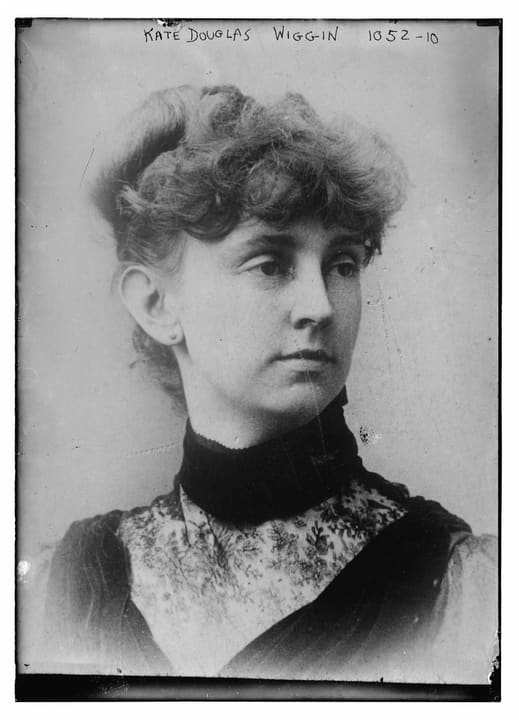
Background. Wiggin, a kindergarten pioneer raised in Hollis, Maine, set her heroine in a lightly disguised version of her own river villages and published the story through Houghton, Mifflin in Boston.
Plot. Because Sunnybrook Farm is poor and crowded, the second daughter is shipped by stage to two spinster aunts for schooling. Her chatter and fancy clash with Miranda's rigor, yet she wins over the driver and his wife, a teacher, the neighboring Simpson brood and a Boston gentleman who buys a mountain of soap. Episodes of a ruined dress, a near flight home, a baby sister's death and a public prayer lead to the seminary at Wareham, an essay prize and graduation. Two blows follow, a stroke and a fall, and with Miranda's death Rebecca inherits the house.
Themes. The training of a gifted child, gratitude toward difficult benefactors, the burdens of rural debt, friendship across generations, and the young conscience at prayer.
Style. Humorous narration mixes Yankee dialect, the heroine's extravagant vocabulary and chapter titles borrowed from Wordsworth and Bunyan.
Significance. A best-selling American children's book of its decade, it was staged, filmed with Mary Pickford in 1917, and stands beside Anne of Green Gables among classics of girls sent to live with stern relatives. Its title phrase passed into common speech.
Main characters
- Rebecca Rowena Randall: Lively, bookish farm girl sent away to be educated
- Miranda Sawyer: Her exacting maiden aunt and eventual benefactor
- Jane Sawyer: The milder aunt, a former army nurse
- Jeremiah and Sarah Cobb: Stage driver and wife, her steady village friends
- Adam Ladd: Generous young businessman she nicknames Mr. Aladdin
- Emma Jane Perkins: Devoted schoolmate
- Emily Maxwell: Seminary teacher who guides her writing
- Aurelia Randall: Rebecca's hard-pressed widowed mother

Summary
Rebecca of Sunnybrook Farm follows Rebecca Rowena Randall from the age of ten to seventeen. Her widowed mother, Aurelia, is struggling with seven children and a mortgage on Sunnybrook Farm near Temperance, Maine, so Rebecca is sent instead of her capable older sister Hannah to live with her mother's unmarried sisters, Miranda and Jane Sawyer, in the old brick house at Riverboro, where she is to be educated. The novel opens as she rides the stage coach with a pink parasol and a bunch of lilacs, talking so freely with the driver, Jeremiah Cobb, that uncle Jerry and his wife, aunt Sarah, become her lifelong friends. Aunt Miranda, stern, thrifty and disappointed that Hannah did not come, sees in Rebecca the dark looks and impractical ways of her late father, the handsome, unsuccessful Lorenzo de Medici Randall; aunt Jane, quieter, had nursed soldiers in the Civil War after her betrothed, Tom Carter, died of his wounds, and she softens the household. Rebecca goes to the district school under young Miss Dearborn, befriends Emma Jane Perkins and the ragged, cheerful children of the absent ne'er-do-well Abner Simpson, and writes compositions and verses. She wears her new pink gingham to a school exhibition, hears Miranda speak hard words about her father, and runs off to the Cobbs' meaning to go home, but uncle Jerry talks her back. Rebecca and Emma Jane sell soap to win a banquet lamp for the Simpsons; the young Boston businessman Adam Ladd buys three hundred cakes, earns the name Mr. Aladdin, and becomes her friend and patron, and the lamp lights the Simpsons' Thanksgiving. The baby Mira dies at Sunnybrook. Sent to represent the family at a missionary meeting, Rebecca plays the hymn tune on the melodeon and, asked unexpectedly, prays aloud, and the Reverend Amos Burch and his wife, returned from Syria, stay at the brick house. At the Wareham Female Seminary Rebecca finds a mentor in the teacher Emily Maxwell, edits the school paper, and wins Adam Ladd's essay prize, sending the money home to pay mortgage interest, while the aunts secretly lose part of their small income. On her graduation day Miranda has a paralytic stroke; soon afterward Aurelia breaks her knee falling from the haymow, and Rebecca nurses her at Sunnybrook. When Miranda dies, Rebecca learns that she has left her the brick house, and a railway company is buying land at Sunnybrook, freeing the family from want. The novel ends as Rebecca blesses her aunt and the brick house. Houghton Mifflin published it in Boston in 1903; it became a bestseller and was adapted for the stage and screen, most famously in a 1917 film starring Mary Pickford.
Virtues in this work
- Charity: Rebecca and Emma Jane sell soap door to door so that the poor Simpson children can have the banquet lamp for Thanksgiving.
- Piety: Sent to represent the family at the missionary meeting, Rebecca prays aloud when Mr. Burch calls on her, frightened as she is.
- Justice: She sends Adam Ladd's prize money home to pay the interest on the Sunnybrook mortgage instead of buying new clothes.
- Fortitude: After graduation she spends months nursing her injured mother and keeping house at Sunnybrook.
- Friendship: Her lifelong friendships with uncle Jerry and aunt Sarah Cobb begin with a single conversation on the stage box.
Plot or Argument
- Chapters I–II: The stage to Riverboro
Rebecca rides alone on Jeremiah Cobb's stage with her pink parasol, explains Sunnybrook Farm and her six brothers and sisters, and is delivered to the brick house; the narrator tells the history of the Sawyer sisters and of Aurelia's marriage to Lorenzo de Medici Randall.
- Chapters III–V: The brick house and the district school
Miranda and Jane take her in with very different hearts; Rebecca writes home, starts school under Miss Dearborn, is put in classes ranging from primer to grammar, and has her first scrapes with schoolmates and household rules.
- Chapters VI–VII: The Simpsons
Rebecca befriends the many children of the absent Abner Simpson and stands up for Clara Belle against the tattling Minnie Smellie.
- Chapters VIII–X: Color of rose, ashes of roses
Rebecca triumphs at the school exhibition in pink gingham, is scolded by Miranda, who speaks scornfully of her father, and climbs out of her window to the Cobbs' to run home; uncle Jerry quietly brings her back to begin again.
- Chapters XI–XII: Compositions and a pale martyr
She struggles to write compositions about nature and duty, ruins her best dress on a newly painted bridge rail, and invents a self-punishment that sends her pink parasol down the well.
- Chapters XIII–XV: Mr. Aladdin and the banquet lamp
Rebecca and Emma Jane sell Snow-White and Rose-Red soap to win a premium lamp for the Simpsons; Adam Ladd buys three hundred cakes, the lamp is lit at the Simpsons' Thanksgiving, and Rebecca learns her customer's name.
- Chapters XVI–XX: Growth, grief and the missionary meeting
The Simpson baby visits, little Mira dies at Sunnybrook, Mr. Ladd reappears, and Rebecca represents the family at a meeting where she plays and prays; the Burches stay at the brick house and the deacons see her grandfather in her.
- Chapters XXI–XXV: Wareham
At the Wareham seminary Rebecca aims to finish four years in three, gains the friendship of Miss Emily Maxwell, writes for the school paper, wins Adam Ladd's prize, and bears the aunts' hidden money trouble.
- Chapters XXVI–XXVIII: Over the teacups and graduation
Riverboro gossips weigh Rebecca's prize; on graduation day she is praised by Mr. Ladd, then learns that aunt Miranda has had a stroke and goes home to the brick house.
- Chapters XXIX–XXXI: Good-by, Sunnybrook
Aurelia breaks her knee and Rebecca nurses her for months; Miranda dies, leaving the brick house to Rebecca; surveyors mark a railway line across Sunnybrook, and Rebecca returns to Riverboro with uncle Jerry and gives thanks at the door.
Characters
- Rebecca Rowena Randall, protagonist
The second of seven children at Sunnybrook Farm, quick, talkative, imaginative and warm-hearted, who grows up in her aunts' brick house.
- Miranda Sawyer, elder aunt
A strict, thrifty spinster with a sharp tongue who disliked Rebecca's father and leaves Rebecca the brick house.
- Jane Sawyer, younger aunt
A gentler spinster who nursed her dying betrothed and other soldiers in the Civil War, and who quietly takes Rebecca's part.
- Aurelia Randall, Rebecca's mother
The widowed, overworked mistress of Sunnybrook Farm, burdened with debt and children.
- Jeremiah Cobb, uncle Jerry
The stage driver who carries Rebecca to Riverboro, befriends her, and talks her out of running away.
- Sarah Cobb, aunt Sarah
His kind wife, who shelters and encourages Rebecca.
- Emma Jane Perkins, best friend
Rebecca's loyal, less brilliant schoolmate and companion in soap selling and at Wareham.
- Adam Ladd, Mr. Aladdin
A wealthy young man who buys three hundred cakes of soap and becomes Rebecca's friend, patron and prize-giver.
- Miss Dearborn, teacher
The eighteen-year-old Riverboro schoolmistress who first teaches Rebecca.
- Emily Maxwell, teacher at Wareham
Rebecca's mentor and friend at the seminary.
- Clara Belle Simpson, neighbor
Eldest daughter of the impoverished Simpson family; the banquet lamp is won for her household.
- The Reverend Amos Burch, missionary
A missionary returned from Syria who asks Rebecca to lead in prayer and stays at the brick house with his wife.
Lessons
Living with a hard-tempered elder
Aunt Miranda scolds, compares Rebecca to her improvident father and rarely praises her, yet she pays for Rebecca's schooling and leaves her the brick house. Wiggin lets Rebecca learn that gratitude can be owed to someone who was hard to live with, and aunt Jane's last words about Miranda put both her faults and her goodness on the table.
- What does Miranda say about Rebecca's father, and how does Rebecca respond?
- What sacrifices did the aunts make for Rebecca's education that she did not know about?
- Why does Rebecca go into Miranda's room with a heart brimful of gratitude rather than bitterness?
Running away and starting again
After the scolding over the pink dress Rebecca climbs out her window to go home. Uncle Jerry does not lecture her; he lets her talk, reminds her of her mother's troubles, and tells her she has only come to consult him about running away. The scene teaches the worth of a patient older friend and of returning to begin again.
- Why does Rebecca decide to run away, and where does she go?
- How does uncle Jerry persuade her to go back without scolding her?
- Who are the older friends you could go to when you are upset?
Imagination put to work
Rebecca's quick fancy names a rich stranger Mr. Aladdin, turns a soap-selling chore into an adventure for the Simpsons, and later fills the Wareham school paper. Her gifts are not simply admired; she has to learn grammar, compositions and patience, and she spends her prize money on her family's mortgage.
- Why does Rebecca call Adam Ladd Mr. Aladdin?
- What do she and Emma Jane earn by selling soap, and who gets it?
- What does Rebecca do with the money from Adam Ladd's prize?
Called on to pray
At the missionary meeting Mr. Burch asks Rebecca, who is not yet a church member, to lead in prayer, and she does so trembling. Afterward she tells aunt Jane how frightening it was. Wiggin treats the moment seriously as a step in a young person's inner life rather than as a performance.
- Why is Rebecca afraid when she is asked to pray before the meeting?
- What do the Burches and Deacon Milliken see in Rebecca?
Context
The novel is set in the farm villages of the Saco River valley in southern Maine in the late nineteenth century, a world of stage coaches, district schools, church sewing circles, mortgaged farms and small female seminaries. Riverboro is generally taken to be drawn from Hollis, Maine, and its neighborhood, where Wiggin had grown up and where she later kept a summer home called Quillcote. The book reflects the period's interest in children's education, which Wiggin knew as a leader of the American kindergarten movement, and the memory of the Civil War in aunt Jane's story. The arrival of a railway line that raises the value of Sunnybrook's land belongs to the same years of New England change.
Composition
Wiggin wrote the book in the early 1900s, and Houghton, Mifflin and Company published it in Boston in 1903. A sequel collection of stories, New Chronicles of Rebecca, followed in 1907, filling in episodes from Rebecca's girlhood. Wiggin and Charlotte Thompson adapted the novel for the stage in 1909–1910.
Reception
The novel was a bestseller and has stayed in print as an American girls' classic beside Little Women, Anne of Green Gables (1908) and Pollyanna (1913). Mary Pickford starred in the 1917 silent film, and later films in 1932 and 1938 (the latter with Shirley Temple) used the title with freely altered stories. The phrase Rebecca of Sunnybrook Farm became a common byword for a cheerful country girl.
Comparisons
- anne-of-green-gables
Five years later L. M. Montgomery also sent a talkative, imaginative girl to live with an elderly unmarried pair in a strict rural house; Marilla Cuthbert and Miranda Sawyer make a close study in reserved affection.
- pollyanna
Both girls come to live with a stern aunt in a New England town and change the people around them, but Pollyanna does it by a deliberate game of gladness and Rebecca by her quick tongue and imagination.
- little-women
Rebecca's love of writing and her family's poverty recall Jo March; both novels treat duty to a struggling household as part of growing up.
- heidi
Both children are sent from a beloved home to stricter relatives, both soften a gruff elder, and both stories end with an inheritance of home rather than travel.
- understood-betsy
Dorothy Canfield Fisher's Betsy also goes to live with country relatives in New England and grows in a district school, though Betsy is shy where Rebecca is bold.
Quotes
Frequently cited
“God bless aunt Miranda; God bless the brick house that was; God bless the brick house that is to be!”
“it IS a journey when you carry a nightgown!”
“You see you ain't run away yet; you've only come over here to consult me 'bout runnin' away, an' we've concluded it ain't wuth the trouble.”
“We must remember that it is deficient, not excessive vitality, that makes the greatest trouble in this world”
“She was a good woman, Rebecca; she had a quick temper and a sharp tongue, but she wanted to do right, and she did it as near as she could.”
“God made you in the first place, and you've done considerable yourself to help Him along; but she gave you the wherewithal to work with, and that ain't to be despised”
For Students
A reading companion for classical Christian high school students. See the student guide.
Reading Guide
Watch for
- Rebecca's conversation with uncle Jerry on the stage in Chapter I, and how he remembers it later.
- The pink parasol: where it first appears, and how it ends up down the well.
- The soap-selling trip and the first meeting with the man Rebecca calls Mr. Aladdin.
- The missionary meeting where Rebecca is asked to pray.
- What aunt Jane says about Miranda in the last chapter, and what Rebecca inherits.
Key terms and names
- The brick house
- The Sawyer family home in Riverboro where Miranda and Jane live, and which Rebecca inherits at the end.
- Mortgage
- A debt on Sunnybrook Farm that the Randall family must keep paying; Rebecca sends her prize money for the interest.
- Mr. Aladdin
- Rebecca's name for Adam Ladd, from the Arabian Nights hero whose lamp brought wonders, because of the banquet lamp he helped her win.
- Banquet lamp
- The fancy kerosene lamp offered as a premium for selling soap, which the girls win for the Simpson family.
- Seminary
- A private secondary school; Rebecca attends the one at Wareham.
- Riverboro
- The Maine village on the river where the aunts live and Rebecca goes to the district school.
Seminar Questions
- Comprehension Why is Rebecca, and not her sister Hannah, sent to live with the aunts in Riverboro?
- Comprehension How do the aunts Miranda and Jane differ in the way they treat Rebecca?
- Comprehension How does selling soap lead to the banquet lamp and to Rebecca's friendship with Adam Ladd?
- Interpretation Why does Miranda keep comparing Rebecca to her father, and is the comparison fair?
- Interpretation What does uncle Jerry understand about Rebecca that Miranda does not?
- Interpretation Mr. Burch says lack of vitality causes more trouble than too much. How does the novel test that claim through Rebecca's mistakes?
- Big Question Do we owe gratitude to people who helped us but treated us harshly?
Faith Connections
- Exodus 20:12 (Scripture)
Rebecca honors her mother by sending home her prize money and nursing her after the fall, and honors the aunts who stand in a parent's place.
- Ephesians 4:31-32 (Scripture)
Put away bitterness and be kind, forgiving one another: aunt Jane asks Rebecca whether she feels any bitterness toward Miranda, and Rebecca answers with gratitude.
- Matthew 25:14-30 (Scripture)
The parable of the talents fits aunt Jane's last word that God made Rebecca, Rebecca has worked, and Miranda supplied the means to work with.
- John Bunyan, The Pilgrim's Progress (Great Conversation)
Chapter XXIII takes its title, The Hill Difficulty, from Bunyan's hill that Christian must climb; Wiggin uses it for the hard middle years of Rebecca's schooling.
Logic and Rhetoric
Central argument: A lively, imaginative child is not a problem to be suppressed but a gift to be trained; with patient friends, honest work and some discipline, such a child repays the household that receives her many times over.
Rhetorical device: allusion. Rebecca names Adam Ladd Mr. Aladdin after the Arabian Nights, and chapter titles borrow from Wordsworth (We Are Seven) and Bunyan (The Hill Difficulty), so that the girl's reading frames her life.
Debate: Resolved: that aunt Miranda's strictness did Rebecca more good than harm.
Memory Work
God bless aunt Miranda; God bless the brick house that was; God bless the brick house that is to be!
We must remember that it is deficient, not excessive vitality, that makes the greatest trouble in this world
Writing Prompts
Essay: Trace how Rebecca changes from the girl on the stage coach in Chapter I to the young woman at the brick house door in Chapter XXXI, using three episodes.
Comparison with Anne of Green Gables: Compare Miranda Sawyer and Marilla Cuthbert: how does each guardian show love without saying so, and how does each girl come to see it?
Medical Lens
Illness and nursing are part of the background of rural family life rather than the subject of the book. Aunt Jane's backstory records a Civil War gunshot death in a Southern hospital and her months of nursing other soldiers afterward, a common path for Northern women in that war. Late in the novel Miranda is described as paralyzed after a second stroke, though she keeps her speech, and she dies suddenly some months later; the doctor's uncertainty is reported plainly. Aurelia's fall from the haymow, attributed to giddiness, fractures her knee and injures her back, and Rebecca's long weeks of bandaging, rubbing, feeding and bathing her mother give a homely picture of domestic nursing before district nurses reached rural Maine. The death of the baby Mira is told briefly as a turning point in Rebecca's thoughts.
- Chapter III, A Difference in Hearts
The narrator tells how Jane went south when her betrothed was wounded, held his hand as he died, and nursed other soldiers for months.
- Chapter XVII, Gray Days and Gold
The death of Rebecca's baby sister Mira and Rebecca's visit home to the little grave under the willow.
- Chapters XXVIII–XXIX
Miranda's paralytic stroke; Aurelia's fractured knee and Rebecca's months of nursing her at Sunnybrook.
Creative Prompts
- Classroom
Draw a map of the stage road from Maplewood to Riverboro and mark the brick house, the Cobbs' house, the Simpsons', the bridge, the school and the road to Wareham, with a sentence for what happens at each.
- Fiction
Write the letter aunt Miranda might have written to Rebecca but never sent, using what aunt Jane says about her after her death.
- Essay
Is Rebecca's imagination a help or a hindrance in the brick house? Use the pink parasol, the soap selling and the Wareham chapters as evidence.
- Dialogue
Write the conversation between Rebecca and Adam Ladd on the day he buys three hundred cakes of soap, with Rebecca explaining why the Simpsons need a banquet lamp.
Further Reading
- New Chronicles of Rebecca, Kate Douglas Wiggin
Wiggin's 1907 sequel collection of further episodes from Rebecca's girlhood.
- My Garden of Memory, Kate Douglas Wiggin
Wiggin's autobiography, published in 1923.
- The Birds' Christmas Carol, Kate Douglas Wiggin
Her earlier short book for children, written to support her kindergarten work.
Verification notes
All six quotes were found by exact search in content/texts/rebecca-of-sunnybrook-farm.txt (Project Gutenberg #498), keeping the file's capitals and dialect spellings. Chapter numbers and titles follow the file's contents list. Plot details (the soap premium, the banquet lamp, Mira's death, the missionary meeting, Adam Ladd's prize sent for mortgage interest, Miranda's stroke and will, Aurelia's fall, the railway surveyors) were checked against the stored text. Publication facts (Houghton Mifflin, Boston, 1903; New Chronicles of Rebecca, 1907), Wiggin's kindergarten work and the 1917 Pickford film are standard reference facts not re-checked online during writing.
- Dates and co-author of the stage adaptation (usually given as Wiggin and Charlotte Thompson, 1909–1910).
- Whether Riverboro is modeled chiefly on Hollis, on Bar Mills, or on both, as local tradition holds.