Work record
Anne of Green Gables
1908 · Early 20th Century · Novel · English
Abstract
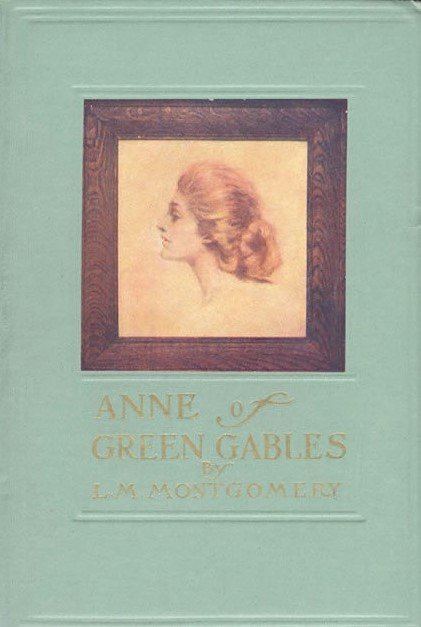
Background. Montgomery built the story from a notebook entry about an elderly couple who asked for an orphan boy and were sent a girl. After several publishers declined it, L. C. Page of Boston issued it in 1908, and it sold at once.
Narrative. Matthew Cuthbert drives to Bright River for a farm boy and comes home with eleven-year-old Anne Shirley; Marilla keeps her on trial rather than hand her to Mrs. Blewett. Anne's apology to Mrs. Lynde, her vow with Diana Barry, and disasters with currant wine, green hair dye, a liniment cake and a leaking boat fill the early chapters, while the slate she breaks over Gilbert Blythe's head starts years of rivalry. She saves Minnie May Barry from croup, studies under Miss Stacy, and wins the Avery scholarship at Queen's.
Resolution. Matthew dies of heart failure after the Abbey Bank collapses, and an oculist warns that Marilla may go blind. Anne gives up university to stay at Green Gables; Gilbert yields her the Avonlea school, and the two are reconciled.
Themes. A home made by choice rather than birth, imagination schooled by attention, and pride giving way to forgiveness.
Significance. The first of eight Anne books, the novel has been translated into dozens of languages, is especially loved in Japan, and still draws visitors to Cavendish.
Main characters
- Anne Shirley: Red-haired, talkative, imaginative orphan sent to Green Gables by mistake
- Marilla Cuthbert: Strict, dry-humoured guardian whose love shows late
- Matthew Cuthbert: Marilla's shy brother, devoted to Anne from the first drive home
- Diana Barry: Neighbour and Anne's sworn bosom friend
- Gilbert Blythe: Classmate whose 'Carrots' taunt begins a long rivalry
- Mrs. Rachel Lynde: Outspoken Avonlea neighbour whom Anne first insults, then wins over
- Miss Stacy: Teacher who prepares Anne's class for the Queen's examinations
- Mrs. Allan: Minister's young wife and a model of cheerful faith

Summary
Anne of Green Gables opens in Avonlea, a farming village on Prince Edward Island, where the elderly brother and sister Matthew and Marilla Cuthbert have arranged to adopt a boy from a Nova Scotia orphan asylum to help on their farm. Through a mistake the child sent is Anne Shirley, an eleven-year-old red-haired girl who talks without stopping, renames everything she loves and has survived a hard childhood by imagination. Shy Matthew is won over on the drive home; Marilla means to send her back but, faced with the alternative of a hard-driving Mrs. Blewett, decides to keep her. The novel then follows five years of Anne's growth under Marilla's plain discipline and Matthew's silent affection. She flies into a rage at the gossip Mrs. Rachel Lynde and then delivers an extravagant apology; she makes a solemn vow of friendship with Diana Barry, her bosom friend; and she suffers a series of scrapes that make the book's comedy: a false confession to losing Marilla's amethyst brooch, Diana made tipsy on currant wine mistaken for raspberry cordial, hair dyed green, a cake flavored with liniment, a broken ankle from walking a roof's ridgepole, and a sinking boat while playing the lily maid. At school Gilbert Blythe calls her Carrots and she breaks her slate over his head; her refusal to forgive him becomes a long rivalry for first place. Anne redeems herself with Mrs. Barry by nursing Diana's little sister through croup, and under the teacher Miss Stacy and the minister's wife Mrs. Allan she grows steadier and more thoughtful. She ties with Gilbert in the entrance examinations, wins honors at Queen's Academy in Charlottetown and the Avery scholarship for university. Then Matthew dies of a heart attack after the failure of the bank that held their savings, and Marilla learns she may go blind. Anne gives up the scholarship to stay with Marilla and teach nearby; Gilbert gives up the Avonlea school so that she can teach there, and they become friends at last. The book ends with Anne content that the path before her, though narrower, still has its bend in the road.
Virtues in this work
- Charity: Anne gives up the Avery scholarship to stay with Marilla after Matthew's death, and Gilbert yields her the Avonlea school.
- Hope: Anne finds delight in Octobers, new days and the bend in the road even after loss.
- Humility: Anne apologizes to Mrs. Lynde, confesses her faults to Marilla and finally ends her proud grudge against Gilbert.
- Industry: Anne studies to tie Gilbert for first place, wins the Avery scholarship and takes up teaching to support Green Gables.
- Friendship: Anne and Diana keep their vow of friendship through Mrs. Barry's ban and Anne's years at Queen's.
Plot or Argument
- The mistake (Ch. I-VIII)
Matthew brings Anne home from Bright River instead of a boy; Marilla nearly returns her to Mrs. Spencer, rejects the offer of Mrs. Blewett, and keeps her on trial.
- Temper and apology (Ch. IX-XII)
Anne shouts at Mrs. Rachel Lynde, apologizes with dramatic thoroughness, goes to Sunday school, and pledges friendship with Diana Barry.
- Scrapes and school (Ch. XIII-XVII)
The amethyst brooch, the slate broken over Gilbert Blythe's head for calling her Carrots, and Diana's accidental tipsiness on currant wine, which ends their friendship by Mrs. Barry's order.
- Croup and reconciliation (Ch. XVIII-XXII)
Anne saves Minnie May Barry from croup with ipecac, Mrs. Barry relents, and Anne's imagination produces the Haunted Wood and a liniment cake for the new minister's wife, Mrs. Allan.
- Growing up (Ch. XXIII-XXIX)
A broken ankle on a dare, the green hair dye, the sinking lily-maid boat and Gilbert's rescue, and Miss Stacy's Queen's class mark Anne's passage from child to young woman.
- Queen's (Ch. XXX-XXXVI)
Anne passes first with Gilbert in the entrance list, studies in Charlottetown, and wins the Avery scholarship.
- The bend in the road (Ch. XXXVII-XXXVIII)
Matthew dies after the failure of the Abbey Bank, Marilla's sight is threatened, and Anne gives up college to stay; Gilbert yields her the Avonlea school and their quarrel ends.
Characters
- Anne Shirley, protagonist
An imaginative, talkative, quick-tempered and warm-hearted orphan who grows into a thoughtful, capable young woman.
- Marilla Cuthbert, Anne's guardian
A strict, dry-humored, upright woman whose love for Anne grows behind her sternness and is spoken only late in the book.
- Matthew Cuthbert, Marilla's brother
A painfully shy farmer who loves Anne from the first drive home and indulges her, most famously with a dress with puffed sleeves.
- Diana Barry, bosom friend
Anne's loyal, good-natured neighbor and friend for life.
- Gilbert Blythe, rival and friend
A clever, good-humored classmate whose teasing starts a long rivalry and whose generosity ends it.
- Mrs. Rachel Lynde, neighbor
Avonlea's energetic busybody, whose blunt remarks provoke Anne and who becomes a friend of the household.
- Miss Stacy, teacher
An enthusiastic teacher who draws out Anne's gifts and prepares her for Queen's.
- Mrs. Allan, minister's wife
A kind young woman whose example shows Anne a cheerful, practical faith.
Lessons
Belonging is given and received
Anne is wanted by mistake and kept by choice. Marilla's decision, Matthew's quiet love and Anne's gratitude show adoption as a family built by commitment, and Anne's question of where she belongs is answered at Green Gables.
- Why does Marilla decide to keep Anne?
- What does Matthew mean when he says he would rather have Anne than a dozen boys?
- How does Anne repay the Cuthberts at the end?
Imagination needs discipline
Anne's imagination comforts her and fills the world with beauty, but it also produces the Haunted Wood terror, the liniment cake and the sinking boat. Montgomery shows imagination growing wiser rather than being crushed.
- Which of Anne's scrapes come from imagining instead of attending?
- How does the Haunted Wood cure Anne of one kind of imagining?
Temper, pride and forgiveness
Anne forgives Mrs. Lynde quickly but nurses her grudge against Gilbert for years. Her final reconciliation with him shows that pride costs friendship and humility restores it.
- Why is it harder for Anne to forgive Gilbert than Mrs. Lynde?
- What does Anne regret after refusing Gilbert at the pond?
Sacrifice chosen gladly
Anne gives up the Avery scholarship to stay with Marilla, and does it without bitterness. The narrower path still holds work, friendship and hope.
- Is Anne's choice a loss, a gift, or both?
- What does the bend in the road stand for?
Context
The novel is set in rural Prince Edward Island in the late nineteenth century, a Scottish Presbyterian farming society of close neighbors, district schools and church suppers, where orphan children were often placed with farm families as help. Its pictures of a one-room school, teacher's licenses earned at Queen's Academy, and the first scholarships for young women reflect Montgomery's own education and teaching.
Composition
Montgomery found a note in her notebook about an elderly couple who applied for an orphan boy and were sent a girl, and wrote the novel in 1904-1905. After several rejections it was published by L. C. Page of Boston in June 1908 and was an immediate best seller. Montgomery wrote seven further Anne books.
Reception
Mark Twain praised Anne as the dearest and most lovable child in fiction since Alice. The book has been translated into dozens of languages, is especially beloved in Japan, and draws visitors to Cavendish. It has been adapted many times for film, television and stage.
Comparisons
- little-women
Jo March and Anne are both bookish, impulsive heroines who learn to govern temper and finally choose duty and home over ambition.
- the-secret-garden
Both orphan stories bring a child to a new home where nature and affection heal; Anne is joyful from the start where Mary must learn joy.
- heidi
Heidi and Anne each bring delight to a reserved elder and are formed by a beloved landscape.
- david-copperfield
Dickens's orphan also suffers unkind households before finding a home; Montgomery's tone is gentler and comic.
Quotes
Frequently cited
“there is so little scope for the imagination in an asylum--only just in the other orphans”
Frequently cited
“I’m so glad I live in a world where there are Octobers”
Frequently cited
“Marilla, isn’t it nice to think that tomorrow is a new day with no mistakes in it yet”
Frequently cited
“Well now, I’d rather have you than a dozen boys, Anne”
“Isn’t it splendid to think of all the things there are to find out about? It just makes me feel glad to be alive--it’s such an interesting world”
“Dear old world,” she murmured, “you are very lovely, and I am glad to be alive in you”
“The joy of sincere work and worthy aspiration and congenial friendship were to be hers; nothing could rob her of her birthright of fancy or her ideal world of dreams. And there was always the bend in the road”
For Students
A reading companion for classical Christian high school students. See the student guide.
Reading Guide
Watch for
- Anne's first drive with Matthew and the names she gives the places they pass.
- Anne's apology to Mrs. Lynde in Chapter X: is it sincere, and does she enjoy it?
- The broken slate in Chapter XV and the long consequences of Anne's refusal to forgive Gilbert.
- Minnie May's croup in Chapter XVIII, where Anne's hard past suddenly becomes useful.
- Matthew's last words to Anne and her choice after his death.
Key terms and names
- Kindred spirit
- Anne's phrase for a person who understands her; she finds more of them than she expected.
- Bosom friend
- Anne's term for a closest friend, the role Diana Barry fills.
- Queen's
- Queen's Academy in Charlottetown, where students trained for teacher's licenses.
- Avery scholarship
- The prize for the best English student at Queen's, paying for four years at Redmond College.
- Croup
- A childhood illness with a barking cough and labored breathing; Anne treats it with ipecac to make the child vomit.
- Avonlea
- The fictional farming village on Prince Edward Island where Green Gables stands.
Seminar Questions
- Comprehension Why did the Cuthberts want a boy, and why do they keep Anne?
- Comprehension What does Anne do when Gilbert calls her Carrots, and how long does she hold the grudge?
- Comprehension Why does Anne give up the Avery scholarship?
- Interpretation Anne says it is easy to be wicked without knowing it. Which of her scrapes are faults, and which are simply mistakes?
- Interpretation Marilla rarely says she loves Anne. How does the book show her love before she says it?
- Interpretation Is the ending a loss of Anne's dreams or a fulfillment of them?
- Big Question Does a person become herself more by achieving her ambitions or by giving them up for someone she loves?
Faith Connections
- Psalm 68:6 (Scripture)
"God setteth the solitary in families." Anne, alone in the world, is placed in a home she did not expect, and the book treats that placing as a gift.
- Lamentations 3:22-23 (Scripture)
The Lord's mercies are new every morning. Anne's hope in a tomorrow with no mistakes in it echoes this daily renewal.
- John 15:13 (Scripture)
Greater love has no man than to lay down his life for his friends. Anne's surrender of college for Marilla is a small, real instance of self-giving love.
Logic and Rhetoric
Central argument: Anne arrives unwanted and is kept by choice. Under Marilla's discipline and Matthew's affection her imagination and temper are trained rather than crushed, and her mistakes teach her. When grief comes, she gives up her own prize to care for the one who raised her. Therefore the novel argues that a home is made by commitment and love, and that a life with duty and friendship at its center is rich even when it narrows.
Rhetorical device: comic contrast of voices. Anne's torrents of extravagant speech run against Marilla's dry one-liners, as when Anne hopes tomorrow has no mistakes in it and Marilla answers that she will make plenty.
Debate: Resolved: that Anne was right to refuse Gilbert's friendship at the pond.
Memory Work
Marilla, isn’t it nice to think that tomorrow is a new day with no mistakes in it yet
The joy of sincere work and worthy aspiration and congenial friendship were to be hers; nothing could rob her of her birthright of fancy or her ideal world of dreams. And there was always the bend in the road
Writing Prompts
Essay: Trace Anne's relationship with Gilbert Blythe from the broken slate to the walk home, and argue what Anne learns about pride and forgiveness.
Comparison with Little Women: Jo March and Anne Shirley both have tempers, love books and give up a dream. Compare one sacrifice from each novel and argue which heroine grows more through her choice.
Medical Lens
The novel touches medicine at several practical points in a rural community with few doctors: Anne's experience of caring for twins makes her able to treat croup with ipecac when the doctor is away, Diana's accidental intoxication shows period attitudes to alcohol, a doctor sets Anne's broken ankle, Matthew has a heart condition and dies suddenly on hearing bad news, and Marilla's failing sight brings an oculist's warning. The orphan asylum is a background institution Anne speaks of only lightly.
- Chapter II and V
Anne's account of the orphan asylum and her years as unpaid help in two households caring for children.
- Chapter XVI
Diana drinks three tumblers of what she takes for raspberry cordial but is Marilla's currant wine and goes home intoxicated.
- Chapter XVIII
With the doctor away, Anne treats Minnie May's croup with ipecac through the night; the doctor later says she saved the child's life.
- Chapter XXIII
Anne falls from the ridgepole of the Barrys' kitchen roof and breaks her ankle, which the doctor sets.
- Chapter XXXVII
Matthew, who has had heart trouble, collapses and dies after reading of the Abbey Bank's failure.
- Chapter XXXVIII
Marilla's headaches and failing eyes lead an oculist to warn of blindness unless she gives up reading and sewing.
Listen to the book
Public-domain audiobook from LibriVox, read by Woolly Bee. Recording: Anne of Green Gables (version 6) on LibriVox (Internet Archive).
LibriVox recordings are volunteer readings released into the public domain. The reading may follow a different edition from the text in this library.
Creative Prompts
- Classroom
List the places Anne renames (the White Way of Delight, the Lake of Shining Waters and others) and discuss what each name reveals about how she sees the world.
- Essay
Argue whether Marilla or Matthew does more to raise Anne, using one scene for each.
- Fiction
Write Marilla's diary entry the night she decides to keep Anne.
- Dialogue
Write the conversation between Anne and Gilbert on the walk home in Chapter XXXVIII.
Further Reading
- Anne of Avonlea, L. M. Montgomery
- Emily of New Moon, L. M. Montgomery
- Little Women, Louisa May Alcott
- Rebecca of Sunnybrook Farm, Kate Douglas Wiggin
Verification notes
Plot, chapter ranges and publication history are standard and checked against the attached text. Quotes are verified against the attached Gutenberg text.
No verification flags recorded.