Work record
Shearson/American Express Inc. v. McMahon
1987 · Postwar Contemporary · Court Decision · English
Abstract
Question Presented. If a brokerage customer signs an account agreement promising to arbitrate future disputes, must claims of securities fraud under the Exchange Act, and claims under the federal racketeering statute, go to arbitrators instead of a federal judge?
Arguments. The customers relied on the 1953 Wilko decision, on the Exchange Act's ban on waiving its requirements, and on the public importance of racketeering suits. The firm and the SEC answered that federal arbitration policy is strong, that choosing a forum gives up no substantive right, and that agency supervision of industry arbitration since 1975 cured the defects Wilko had identified.
Holding. Five justices sent the securities claims to arbitration, reading Wilko as resting on an outdated distrust of arbitrators. All nine agreed that the racketeering claim must also be arbitrated. Blackmun, Brennan and Marshall, and separately Stevens, would have kept the securities claims in court.
Why it matters for advisers. The decision made predispute arbitration clauses enforceable for federal securities claims, which is why disputes between customers and broker-dealers are now generally resolved in industry arbitration rather than court. Advisers' client agreements may also contain such clauses, subject to state law and regulatory limits.
Text. O'Connor's and Stevens's opinions appear in full alongside a portion of Blackmun's, with some appended notes from the source.
Key figures
- Eugene and Julia McMahon: Customers who accused their broker of churning and false advice
- Shearson/American Express Inc.: Brokerage seeking to enforce its arbitration clause
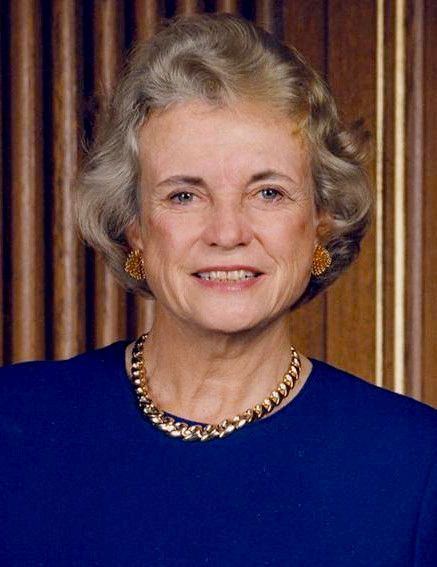
- Sandra Day O'Connor: Wrote that both federal claims belonged in arbitration
- Harry A. Blackmun: Partial dissenter defending Wilko's protection of investors
- John Paul Stevens: Partial dissenter urging deference to settled interpretation

Summary
From 1980 to 1982 Eugene and Julia McMahon, for themselves and as trustees of pension and profit-sharing plans, held accounts with the brokerage firm Shearson/American Express Inc. Julia McMahon signed two customer agreements providing that any controversy over the accounts would be settled by arbitration. In 1984 the McMahons sued Shearson and their registered representative, Mary Ann McNulty, in federal court, alleging fraudulent, excessive trading and misleading advice in violation of Section 10(b) and Rule 10b-5, a civil claim under the Racketeer Influenced and Corrupt Organizations Act (RICO), and state-law claims. Shearson moved to compel arbitration under the Federal Arbitration Act. The District Court sent the securities and state claims to arbitration but kept the RICO claim; the Second Circuit agreed on the state and RICO claims but held the Exchange Act claims could not be arbitrated, following Wilko v. Swan (1953), which had refused to compel arbitration of claims under the Securities Act of 1933. The questions were whether predispute agreements to arbitrate Section 10(b) claims and civil RICO claims are enforceable. The McMahons argued that the Exchange Act's antiwaiver provision, Section 29(a), voids any agreement giving up the federal courts' exclusive jurisdiction; that Wilko rested on the inadequacy of arbitration to protect investors and the inequality of bargaining power between brokers and customers; and that RICO's public purposes and its overlap with criminal law require a judicial forum. Shearson, supported by the SEC, argued that the Arbitration Act reflects a strong federal policy favoring arbitration, that Section 29(a) forbids waiving compliance with substantive duties, not choosing a forum, and that the SEC's oversight of industry arbitration since 1975 answered Wilko's concerns. On 8 June 1987 the Court reversed. Justice O'Connor held that the party opposing arbitration must show Congress intended to preclude waiver of a judicial forum. Section 29(a) bars waiving substantive obligations, and Wilko barred arbitration only because the Court then judged it inadequate to enforce the statute. Since the 1975 amendments, the SEC had broad authority over self-regulatory organizations' arbitration procedures, so arbitration was adequate and the Section 10(b) claims were arbitrable, by a vote of five to four. On RICO, all nine justices agreed: neither the statute's text nor its history excludes arbitration,, and Mitsubishi (1985) had already held complex antitrust claims arbitrable. Justice Blackmun, joined by Justices Brennan and Marshall, dissented on the Exchange Act claims, arguing that the Court had in effect overruled Wilko on the SEC's newly adopted view and that Congress had approved Wilko's extension in 1975. Justice Stevens, also dissenting on that point, wrote that eight circuits' consistent reading for thirty-two years should be changed only by Congress. The library text includes O'Connor's and Stevens's opinions and part of Blackmun's; it omits notes in principle, though some of the source's notes appear at the end. In Rodriguez de Quijas v. Shearson/American Express (1989) the Court overruled Wilko, and arbitration became the usual forum for customer disputes with brokers.
Virtues in this work
- Honor: The Court holds the parties to the arbitration bargain they made, treating a signed promise as binding.
- Justice: Blackmun insists that the securities laws were written to protect investors and that the forum for their claims should serve that end.
- Humility: Stevens would defer to decades of consistent interpretation by other courts rather than substitute the Court's fresh reading.
Plot or Argument
- The customer agreements and the suit
O'Connor quotes the arbitration clause, describes the McMahons' claims of excessive trading and misleading advice, and traces the split rulings below on the securities, state and RICO claims.
- The Arbitration Act's mandate
The Act establishes a federal policy favoring arbitration that applies to statutory claims. A party opposing arbitration must show that Congress intended to preclude waiver of a judicial forum, through the statute's text, history or an inherent conflict with its purposes.
- Section 29(a) and the meaning of Wilko
The antiwaiver provision forbids waiving compliance with substantive duties; the Exchange Act's jurisdiction provision imposes none. Wilko must be read as resting on the inadequacy of arbitration to protect statutory rights, as Scherk confirmed.
- Arbitration in 1987
The mistrust of arbitration in Wilko no longer fits the Court's later assessments, and since 1975 the SEC has had broad power to oversee and approve the procedures of the exchanges and the NASD, so arbitration can adequately enforce Exchange Act rights.
- Civil RICO claims
Nothing in RICO's text or history excludes arbitration. Following Mitsubishi, the Court finds that complexity, the overlap with criminal provisions and the private-attorney-general role do not create an irreconcilable conflict.
- Blackmun's partial dissent (excerpt)
Blackmun reviews how lower courts extended Wilko to the Exchange Act, argues that Congress accepted that extension in the 1975 amendments, and criticizes the Court for reviving a colorable argument and accepting the SEC's new position.
- Stevens's partial dissent
In a brief opinion Stevens argues that a statutory construction settled by eight circuits over thirty-two years acquires the clarity of legislation and should be changed by Congress.
Characters
- Eugene and Julia McMahon, respondents
Brokerage customers and plan trustees who alleged fraudulent, excessive trading in their accounts.
- Shearson/American Express Inc., petitioner
Brokerage firm whose customer agreements required arbitration of account disputes.
- Mary Ann McNulty, petitioner
Registered representative who handled the McMahons' accounts.
- Justice Sandra Day O'Connor, author of the opinion of the Court
Held that both Section 10(b) and civil RICO claims are arbitrable under a predispute agreement.
- Justice Harry A. Blackmun, concurring in part and dissenting in part
With Brennan and Marshall, agreed on RICO but would have kept Exchange Act claims in court under Wilko.
- Justice John Paul Stevens, concurring in part and dissenting in part
Would have left the settled lower-court reading of Wilko for Congress to change.
Lessons
Keeping a bargain
The Court held the McMahons to the arbitration clause they had signed. The opinion rests on the Federal Arbitration Act's command that arbitration agreements be enforced like other contracts, unless Congress has clearly provided otherwise for a particular kind of claim.
- What did the arbitration clause in the customer agreement provide?
- Who bears the burden of showing that Congress meant to exclude a claim from arbitration?
- Should a promise to arbitrate made before any dispute arises be enforced as strictly as one made afterward?
Reading an old precedent in a new setting
O'Connor read Wilko as depending on its 1953 judgment that arbitration could not protect investors, and found that judgment outdated given SEC oversight. Blackmun saw this as overruling Wilko in substance while claiming to follow it. The disagreement shows how the reasons behind a precedent can decide its reach.
- What does O'Connor say Wilko really held?
- Why does Blackmun think the Court effectively overruled Wilko?
- When the facts that supported a precedent change, should courts change the rule or wait for the legislature?
Fairness of the forum
The McMahons argued that brokerage customers sign standard agreements without real bargaining and that industry-sponsored arbitration may favor firms. The majority relied on the SEC's power to review and approve arbitration rules; the dissenters doubted that oversight was enough. The case raises enduring questions about where disputes between unequal parties should be heard.
- Why did the SEC's authority after 1975 matter to the majority?
- What concerns about industry arbitration does Blackmun raise?
Settled interpretation and the role of Congress
Stevens argued that a reading of a statute accepted by every circuit for decades becomes as clear as if Congress had written it, and that any error should be fixed by Congress. The majority treated the question as open because the Supreme Court itself had never decided it.
- What does Stevens mean by a judicial gloss?
- Should the Supreme Court defer to a long line of lower-court decisions it never reviewed?
Context
Congress passed the Federal Arbitration Act in 1925 to make written arbitration agreements enforceable in federal courts. In Wilko v. Swan (1953) the Court held that claims under the Securities Act of 1933 could not be forced into arbitration, and lower courts extended the rule to the Exchange Act. From the 1970s the Court grew more receptive to arbitration, upholding it for international securities and antitrust disputes in Scherk (1974) and Mitsubishi (1985). Meanwhile brokerage firms routinely included arbitration clauses in customer agreements, and civil RICO claims had become common in commercial litigation.
Composition
The McMahons filed their amended complaint in the Southern District of New York in October 1984. The Second Circuit ruled in 1986, and the circuits divided over both the Exchange Act and RICO questions. The SEC, which had earlier assumed Exchange Act claims were not arbitrable, filed an amicus brief supporting Shearson.
Reception
Two years later, in Rodriguez de Quijas v. Shearson/American Express (1989), the Court overruled Wilko for Securities Act claims as well. Arbitration through the self-regulatory organizations, later consolidated in the Financial Industry Regulatory Authority (2007), became the standard forum for disputes between customers and brokers. Commentators continue to debate whether mandatory predispute arbitration serves investors well, and Congress in the Dodd-Frank Act of 2010 gave the SEC authority to restrict such clauses.
Comparisons
- reves-v-ernst-and-young
In Reves Stevens quoted his own McMahon opinion to argue that a settled construction of the securities laws should stand until Congress changes it.
- ernst-and-ernst-v-hochfelder
Hochfelder narrowed what investors must prove under Section 10(b); McMahon changed where they must prove it, moving many such claims from courts to arbitration.
- basic-inc-v-levinson
Decided the following year, Basic eased class plaintiffs' proof of reliance in court, while McMahon sent individual customers' claims against brokers to arbitration.
- democracy-in-america
Tocqueville's praise of the jury and of the American habit of bringing disputes to courts offers a background for the dissenters' preference for a judicial forum.
Quotes
Frequently cited
“Thus, the mistrust of arbitration that formed the basis for the Wilko opinion in 1953 is difficult to square with the assessment of arbitration that has prevailed since that time.”
Frequently cited
“But after a statute has been construed, either by this Court or by a consistent course of decision by other federal judges and agencies, it acquires a meaning that should be as clear as if the judicial gloss had been drafted by the Congress itself.”
“The burden is on the party opposing arbitration, however, to show that Congress intended to preclude a waiver of judicial remedies for the statutory rights at issue.”
“Accordingly, the McMahons, "having made the bargain to arbitrate," will be held to their bargain.”
“Both the Securities Act of 1933 and the Securities Exchange Act of 1934 were enacted to protect investors from predatory behavior of securities industry personnel.”
“Yet, like a ghost reluctant to accept its eternal rest, the "colorable argument" surfaced again, this time in a concurring opinion.”
For Students
A reading companion for classical Christian high school students. See the student guide.
Reading Guide
Watch for
- The exact wording of the arbitration clause Julia McMahon signed.
- O'Connor's distinction between waiving compliance with a duty and waiving a judicial forum.
- The role of the 1975 amendments and SEC oversight in the majority's reasoning.
- The comparison between RICO and the antitrust laws drawn from Mitsubishi.
- Blackmun's image of a ghost and Stevens's appeal to settled interpretation.
Key terms and names
- Predispute arbitration agreement
- A contract clause, signed before any disagreement arises, requiring future disputes to be decided by arbitrators rather than courts.
- Federal Arbitration Act
- The 1925 statute making written arbitration agreements valid and enforceable.
- Antiwaiver provision
- Section 29(a) of the Exchange Act, which voids agreements to waive compliance with the Act.
- Self-regulatory organization
- An industry body, such as a stock exchange or the NASD, that makes and enforces rules for its members under SEC oversight.
- Churning
- Excessive trading in a customer's account to generate commissions, the kind of conduct the McMahons alleged.
- Civil RICO
- The private treble-damages remedy under the Racketeer Influenced and Corrupt Organizations Act.
Seminar Questions
- Comprehension What claims did the McMahons bring, and which of them did the lower courts send to arbitration?
- Comprehension On which question were all nine justices agreed, and on which did they divide five to four?
- Interpretation How does O'Connor reinterpret Wilko so that it does not control Exchange Act claims?
- Interpretation Why does the Court think RICO's links to criminal law do not prevent arbitration of civil claims?
- Interpretation How do Blackmun and Stevens differ in their reasons for dissenting on the Exchange Act claims?
- Big Question When a stronger party writes the terms of an agreement, how far should the law hold the weaker party to the promises it signed?
Faith Connections
- 1 Corinthians 6:1-5 (Scripture)
Paul urges the Corinthians to settle disputes among themselves before wise judges rather than going to law before unbelievers, an early argument for resolving quarrels outside the courts.
- Psalm 15:4 (Scripture)
The psalm praises one who sweareth to his own hurt, and changeth not, a description of keeping one's word even when it proves costly.
- Alexis de Tocqueville, Democracy in America, Volume I, Part II, Chapter 8 (Great Conversation)
Tocqueville describes the jury and the courts as schools of public life, a view that frames the question of what is lost or gained when disputes leave the courtroom.
Logic and Rhetoric
Central argument: O'Connor reasons that the Arbitration Act requires enforcement of arbitration agreements unless Congress intended otherwise, that the Exchange Act's antiwaiver clause concerns substantive duties rather than forum, and that Wilko's doubts about arbitration's adequacy no longer hold under SEC oversight; Blackmun and Stevens reply that Congress and the lower courts had long accepted Wilko's extension and only Congress should change it.
Rhetorical device: personification. Blackmun pictures the colorable argument as a ghost reluctant to accept its eternal rest (quote 4), casting the majority's reasoning as the return of an idea he believed buried.
Debate: Resolved: that brokerage customers should be able to bring securities fraud claims in court regardless of any arbitration agreement they signed.
Memory Work
But after a statute has been construed, either by this Court or by a consistent course of decision by other federal judges and agencies, it acquires a meaning that should be as clear as if the judicial gloss had been drafted by the Congress itself.
Accordingly, the McMahons, "having made the bargain to arbitrate," will be held to their bargain.
Writing Prompts
Essay: Evaluate O'Connor's argument that Wilko depended on a judgment about arbitration's adequacy, and decide whether Blackmun is right that the Court in effect overruled Wilko.
Comparison with Reves v. Ernst & Young: Compare Stevens's appeals to settled lower-court interpretation in McMahon and in Reves, explaining why the argument failed to carry the Court in the first case but supported the majority's result in the second.
Medical Lens
A dispute over arbitration of brokerage customers' securities and racketeering claims; the opinions raise no medical subject.
Creative Prompts
- Classroom
Stage two hearings on the same dispute over excessive trading: one before a three-member arbitration panel and one before a federal judge. Afterward, students list the differences in procedure, speed and appeal, and discuss which forum each side would prefer.
- Essay
Rewrite the McMahons' arbitration clause in plain English for a new brokerage customer, and add a short explanation of what the customer gives up and gains by signing it.
- Dialogue
Write a conversation in 1987 between Justice O'Connor's law clerk and Justice Blackmun's law clerk debating whether the SEC's oversight makes industry arbitration fair to customers.
- Essay
Explain Blackmun's image of the colorable argument as a ghost reluctant to rest, and discuss how judges use figurative language to criticize the reasoning of colleagues.
Further Reading
- The Transformation of Wall Street: A History of the Securities and Exchange Commission and Modern Corporate Finance, Joel Seligman
Its later editions discuss the SEC's oversight of self-regulatory organizations, including their arbitration programs.
- Fundamentals of Securities Regulation, Louis Loss and Joel Seligman
Treats the arbitrability of securities claims from Wilko through McMahon and Rodriguez de Quijas.
Verification notes
Six quotations (three from O'Connor, two from Blackmun, one from Stevens) were matched by Grep as exact substrings of content/texts/shearson-american-express-v-mcmahon.txt. The customer agreement's language, the McNulty allegations, the October 1984 complaint and the rulings below come from the stored opinion; some of the source's notes are appended after Stevens's opinion despite the header. The vote (5-4 on the Exchange Act claims, unanimous on RICO) is as given in the task. Later history (Rodriguez de Quijas 1989, FINRA 2007, Dodd-Frank 2010) is from general references.
- Confirm the decision date of 8 June 1987 and the argument date.
- Confirm that Rehnquist, White, Powell and Scalia joined O'Connor's opinion in full.
- Confirm the description of the Dodd-Frank Act's grant of authority over predispute arbitration clauses.