Work record
A Theologico-Political Treatise
1670 · Renaissance Early Modern · Philosophy · Latin
Abstract
Background. In the most tolerant republic of seventeenth-century Europe, where nonetheless Reformed preachers pressed magistrates to suppress heterodox books, a lens-grinder long banned by his synagogue wrote to protect philosophical liberty. He published it without his name and under a false foreign imprint.
Content. The first fifteen chapters examine the Hebrew Bible and the apostolic writings: what revelation was, why the Israelites were called, how ritual differs from universal moral law, what extraordinary events really are, how texts should be read, and who wrote the books. The remaining five build a political theory from natural power and consent and draw lessons from Israel's ancient constitution.
Key Concepts. Superstition born of fear; imagination as the vehicle of revelation; an unbreakable natural order; reading the Bible from its own language and history; piety measured by works; separate realms for theology and reason; liberty as government's purpose.
Significance. Condemned by synods and banned within four years, it became a landmark both for modern biblical scholarship and for arguments in favour of toleration and popular government, and it shaped later thinkers from the Enlightenment onward. Jewish and Christian critics, then and now, reject its premises about God, miracles and the inspiration of Scripture, and scholars still debate how much of its meaning Spinoza veiled for safety.
Key figures
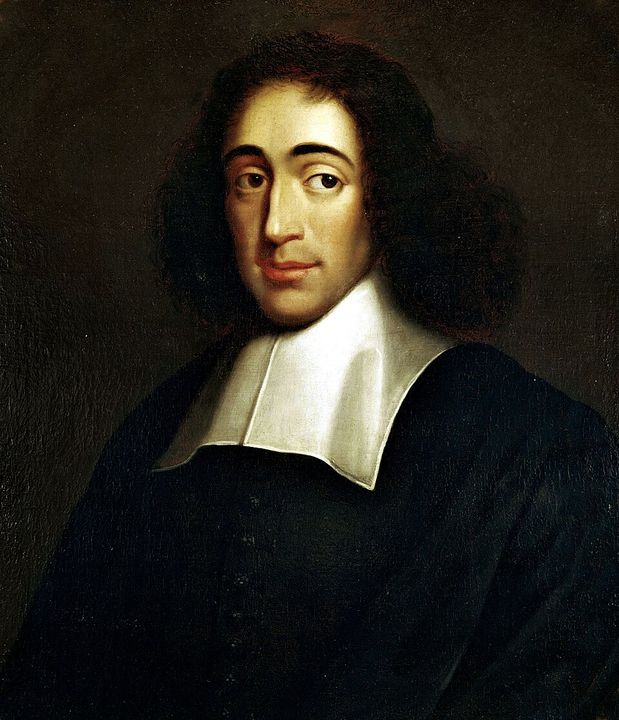
- Baruch Spinoza: Excommunicated Jewish philosopher writing anonymously
- Moses and the prophets: Figures whose revelations Spinoza reinterprets
- The sovereign: Civil authority whose powers over religion and speech are defined

Summary
A Theologico-Political Treatise (Tractatus Theologico-Politicus) was published anonymously in Latin in Amsterdam in 1670, under a false Hamburg imprint, by the Dutch philosopher Baruch Spinoza. Its title page announces its purpose: to show that freedom to philosophize can be granted without harm to piety or the peace of the commonwealth, and cannot be withheld without destroying both. The work has twenty chapters. The Preface argues that fear breeds superstition, that rulers and preachers can use religious passion to divide and govern a people, and that disputes over speculative doctrine have turned churches into scenes of quarrelling. Spinoza proposes to examine Scripture afresh, taking nothing from it that it does not plainly teach. Chapters I and II treat prophecy: the prophets, he argues, were distinguished by vivid imagination and moral seriousness rather than by superior knowledge of nature, and their revelations were adapted to their own temperaments and opinions. Chapter III holds that the election of the Hebrews concerned their social order and temporal prosperity, not a special intellectual or moral superiority. Chapters IV and V distinguish the divine law, the knowledge and love of God, from the ceremonial law, which he regards as given for the Hebrew state. Chapter VI argues that nature keeps a fixed and unchangeable order, so that miracles are events whose natural causes are unknown to us, and that God is better known from the order of nature than from exceptions to it. Chapter VII sets out a method of interpreting Scripture from Scripture itself, through its language, the history of its books and the circumstances of its authors, in the way one studies nature. Chapters VIII to XI apply the method to questions of authorship, arguing among other things that Moses did not write the whole Pentateuch and that the historical books were compiled later. Chapters XII to XV conclude that the Word of God taught in Scripture is simple, obedience to God through justice and charity; that faith requires pious dogmas that move the heart to obey; and that theology and philosophy have separate domains, neither serving the other. Chapters XVI to XX turn to politics. Natural right extends as far as power; people form a state by transferring their right to a sovereign for security, and democracy is the most natural form. Spinoza examines the Hebrew commonwealth as a historical example, argues that the sovereign holds authority over the outward practice of religion, and concludes in Chapter XX that in a free state every person may think what he likes and say what he thinks, since the true aim of government is liberty. The book was condemned by Reformed synods and banned by the States of Holland in 1674. The library text is R. H. M. Elwes's 1883 English translation.
Virtues in this work
- Justice: Spinoza insists that the faithful are known by their love of justice and charity and that a government must punish deeds, not opinions.
- Prudence: In Chapter XX he weighs the dangers of free speech against the greater dangers of suppressing it and sets limits on seditious acts.
- Fortitude: He wrote in defence of freedom of thought shortly after his friend Koerbagh died in prison for his writings.
Plot or Argument
- Preface: fear, superstition and the purpose of the work
Superstition arises from fear and is easily exploited by those who govern; religious controversy has turned into quarrels over speculation. Spinoza announces his aim of examining Scripture without prejudice and defending freedom of thought.
- Chapters I–III: prophecy, prophets and the election of the Hebrews
Prophecy came through imagination rather than intellect and was adapted to each prophet's character and opinions; the authority of the prophets lies in their moral teaching. The election of the Hebrews concerned their commonwealth and temporal welfare.
- Chapters IV–V: divine law and ceremonial law
The divine law, whose highest good is the knowledge and love of God, is universal; the ceremonies of the Mosaic law served the Hebrew state and contribute to blessedness only through the obedience they encouraged.
- Chapter VI: miracles
Nature preserves a fixed and immutable order because its laws follow from God's nature; a miracle is an event whose cause we do not understand, and God's existence and providence are better known from nature's order.
- Chapters VII–XI: the interpretation of Scripture and the authorship of its books
Scripture should be interpreted from itself by studying its language, the history of each book and its authors. Applying this method, Spinoza questions the Mosaic authorship of the whole Pentateuch, discusses the compilation of the historical books, and asks in what capacity the Apostles wrote their Epistles.
- Chapters XII–XV: the Word of God, faith and the separation of theology and philosophy
The Word of God is not a set of books but the simple teaching of obedience through justice and charity; faith requires dogmas that foster obedience; theology and reason each have their own domain, and neither should be made the servant of the other.
- Chapters XVI–XVII: natural right, the state and the Hebrew commonwealth
Natural right extends as far as power; people form a state by transferring their power to a sovereign, and democracy is the most natural form. No one can transfer all his rights, and the history of the Hebrew commonwealth shows the strengths and weaknesses of theocracy.
- Chapters XVIII–XX: religion, the sovereign and freedom of thought
Lessons from the Hebrew state: it is dangerous to give clergy civil power or to make speculative opinions matters of law. The sovereign holds right over outward religious practice, but cannot command thoughts, and the true aim of government is liberty; a free state allows each to think and speak as he judges.
Characters
- Baruch Spinoza, author
Philosopher of Amsterdam and The Hague, writing anonymously for the 'philosophical reader'.
- Moses and the Hebrew prophets, subjects of analysis
Figures whose revelations Spinoza examines, holding that each received prophecy according to his own imagination and understanding.
- The Apostles, subjects of analysis
Writers of the Epistles, who Spinoza argues wrote as teachers using their own reasoning rather than as prophets.
- Ezra, historical figure
The scribe whom Spinoza suggests as a possible compiler of the historical books from Genesis to Kings.
- The sovereign power, political figure
Whether a council or one person, the holder of authority whose rights and limits the last five chapters define.
Lessons
Freedom of thought and the peace of the state
Spinoza's central political claim is that a state is safest when it allows its citizens to think what they like and say what they think, punishing deeds rather than opinions. He argues that attempts to control thought teach people to dissemble, embitter honest people and strengthen faction. His defence of toleration belongs to the same century as Milton's Areopagitica and Locke's Letter Concerning Toleration, though it rests on different grounds.
- Why does Spinoza think a government cannot truly command people's thoughts?
- What limits does he place on freedom of speech in Chapter XX?
- How does his argument for toleration differ from Milton's or Locke's?
A method for reading Scripture
Spinoza proposes that Scripture be interpreted from its own text, language and history, rather than by reading philosophical doctrines into it or forcing it to agree with reason. His method influenced the later historical study of the Bible. Readers who reject his conclusions, including the denial of Mosaic authorship and of miracles as he defines them, can still examine how his method works and where its assumptions lie.
- What three things does Spinoza say an interpreter must know about each book of Scripture?
- How does he compare interpreting Scripture with interpreting nature?
- What assumptions about God and nature shape his conclusions about miracles, and how might a traditional Jewish or Christian reader respond?
The separation of faith and philosophy
Spinoza holds that Scripture's aim is not to teach philosophy but obedience, expressed in justice and charity, and that faith should be judged by works rather than by speculative opinion. Philosophy, in turn, seeks truth by reason alone. He intends this separation to end persecution over doctrine. His critics have argued that it reduces revealed religion to morality.
- What does Spinoza say is the simple teaching of Scripture?
- Why does he think separating theology from philosophy would reduce religious conflict?
- Does his account leave room for the doctrines that Christians have traditionally held essential?
Natural right and the origin of the state
In Chapter XVI Spinoza, like Hobbes, describes natural right as extending as far as power, and the state as formed when individuals transfer their power for the sake of security. Unlike Hobbes, he prefers democracy as the most natural form and insists that no one can transfer the right to judge for himself.
- What does Spinoza mean by saying that the big fish devour the small by sovereign natural right?
- Why does he call democracy the most natural form of government?
- What rights does he think can never be handed over to a sovereign?
Context
The Dutch Republic of the 1660s, governed by the States party under the Grand Pensionary Johan de Witt, was the most tolerant state in Europe and a centre of publishing, yet it was divided between the republicans and the supporters of the House of Orange, who were allied with the strict Reformed clergy. Debates over Cartesian philosophy in the universities and over the authority of the Reformed Church in civil matters were intense. In 1668–69 Spinoza's friend Adriaan Koerbagh was imprisoned for heterodox writings and died in prison, an episode often connected with the urgency of the Treatise.
Composition
In a letter to Henry Oldenburg in 1665 Spinoza said he was writing a treatise on Scripture to oppose the prejudices of theologians, to answer the charge of atheism made against him, and to defend the freedom to philosophize. The Latin text appeared in 1670 from the Amsterdam bookseller Jan Rieuwertsz, with a false imprint naming a Hamburg publisher and without the author's name, though Spinoza's authorship was soon widely known. R. H. M. Elwes translated it into English in 1883 as the first volume of The Chief Works of Benedict de Spinoza; the library text joins the four Project Gutenberg parts of that translation, including Spinoza's own endnotes.
Reception
The Treatise was condemned by Reformed synods and city councils almost at once, and the States of Holland banned it in 1674 together with Hobbes's Leviathan and other works. Jewish and Christian critics, including the Dutch physician Lambert van Velthuysen in a letter Spinoza answered, objected to its treatment of prophecy, miracles and the authority of Scripture. In later centuries it was read as a founding work of the historical study of the Bible and of the case for freedom of thought and democratic government, while many theologians have continued to dispute its premises about God, nature and revelation. Scholars also debate how far Spinoza wrote cautiously, given the dangers of his time.
Comparisons
- ethics
The Ethics sets out the metaphysics, God or Nature acting by necessity, that underlies the Treatise's account of miracles, prophecy and the divine law; the Treatise presents these conclusions to a wider audience in the language of Scripture.
- leviathan
Hobbes also grounds the state in a transfer of natural right and discusses Scripture, prophecy and miracles at length; Spinoza differs in preferring democracy and in holding that the right to think and judge cannot be surrendered.
- areopagitica
Milton's appeal against licensing the press (1644) defends free inquiry from a Puritan Protestant standpoint; Spinoza's Chapter XX defends freedom of speech as necessary for the peace and safety of the state.
- a-letter-concerning-toleration
Locke's Letter (1689), written in exile in the Dutch Republic, distinguishes the business of civil government from that of religion; Spinoza instead gives the sovereign authority over outward worship while leaving thought free.
- pensees
Pascal's Pensées, published the same year, defends the reasonableness of Christian faith, the evidence of prophecy and miracles, and the limits of reason, offering a sharply different seventeenth-century answer to the questions Spinoza raises.
Quotes
“allowing every man to think what he likes, and say what he thinks.”
“That nature cannot be contravened, but that she preserves a fixed and immutable order”
“the method of interpreting Scripture does not widely differ from the method of interpreting nature - in fact, it is almost the same.”
“whosoever loves justice and charity we know, by that very fact, to be faithful: whosoever persecutes the faithful, is an enemy to Christ.”
“We have shown that Scripture does not teach philosophy, but merely obedience, and that all it contains has been adapted to the understanding and established opinions of the multitude.”
“The most tyrannical governments are those which make crimes of opinions, for everyone has an inalienable right over his thoughts”
“In fact, the true aim of government is liberty.”
For Students
A reading companion for classical Christian high school students. See the student guide.
Reading Guide
Watch for
- The subtitle's claim that freedom to philosophize can be granted without harm to piety or public peace.
- Spinoza's account of the prophets as gifted in imagination rather than in knowledge of nature (Chapters I–II).
- His definition of a miracle in Chapter VI and the view of nature on which it rests.
- The rules for interpreting Scripture in Chapter VII.
- The argument in Chapter XX that a free state lets each person think what he likes and say what he thinks.
Key terms and names
- Freedom to philosophize (libertas philosophandi)
- The freedom to think and reason about any subject and to express one's conclusions, which the Treatise defends.
- Prophecy
- For Spinoza, certain knowledge revealed by God to a person through the imagination, adapted to that person's opinions and temperament.
- Miracle
- In Chapter VI, an event whose natural cause is unknown to us, not a breach of the order of nature.
- Divine law
- The law whose aim is the knowledge and love of God, which Spinoza distinguishes from the ceremonial law of the Hebrew state.
- Natural right
- In Chapter XVI, the right of each being to act according to its nature, extending as far as its power.
- Sovereign
- The person or body holding supreme authority in a state, which Spinoza says has right over outward religious practice but not over thought.
Seminar Questions
- Comprehension According to the Preface, what causes superstition, and how can rulers make use of it?
- Comprehension What does Spinoza say distinguished the prophets from other people?
- Comprehension What does Spinoza conclude is the simple teaching of Scripture?
- Interpretation How does Spinoza's view of nature in Chapter VI determine his account of miracles?
- Interpretation Why does Spinoza think freedom of speech makes a state more stable rather than less?
- Interpretation How does Spinoza's account of the social contract in Chapter XVI differ from Hobbes's?
- Big Question Can reason and revelation each have their own domain, or must one ultimately judge the other?
- Big Question Should a government ever punish people for their opinions, as distinct from their actions?
Faith Connections
- 2 Timothy 3:16-17 (Scripture)
Paul's statement that all Scripture is given by inspiration of God and is profitable for doctrine is the traditional Christian view of Scripture against which Spinoza's account of prophecy and authorship should be weighed.
- Micah 6:8 (Scripture)
'Do justly, love mercy, walk humbly with thy God': Spinoza claims that Scripture's core teaching is justice and charity, and students can compare this summary with the prophets' own.
- Augustine, De Genesi ad litteram I.19 (Church Fathers)
Augustine warns Christians not to make Scripture teach claims about nature that contradict what can be known by reason, while holding firmly to Scripture's authority, a different reconciliation of faith and reason from Spinoza's.
- Blaise Pascal, Pensées (Great Conversation)
Pascal, published the same year, defends the proofs from prophecy and miracles that Spinoza reinterprets, and argues that the heart has reasons reason does not know.
Logic and Rhetoric
Central argument: Scripture, read on its own terms, teaches not philosophy but obedience to God through justice and charity, and its prophecies were adapted to the understanding of their hearers. Therefore speculative doctrines are not matters of faith, and people who live justly are faithful whatever opinions they hold. Since the state is formed for security and no one can surrender the right to judge for himself, a government that punishes opinions only teaches people to say what they do not think and breeds faction. Therefore freedom of thought and speech can be granted without harm to piety or peace, and cannot be withheld without harm to both.
Rhetorical device: analogy. In Chapter VII Spinoza compares interpreting Scripture to interpreting nature: as the student of nature gathers its history and deduces definitions, the interpreter of Scripture gathers its history and deduces its meaning.
Debate: Resolved: A free state should allow every citizen to think what he likes and say what he thinks.
Memory Work
In fact, the true aim of government is liberty.
Writing Prompts
Essay: Spinoza argues that faith should be judged by works of justice and charity rather than by doctrine. Explain his reasons and evaluate whether this account does justice to the faith of the Bible.
Comparison with Leviathan: Hobbes and Spinoza both derive the state from a transfer of natural right and both give the sovereign authority over public religion. Compare their arguments and explain why Spinoza reaches a far stronger defence of freedom of thought.
Medical Lens
Not a medical work, but it contains early psychological observations of interest to the history of psychiatry: the Preface's account of how fear and uncertainty make people credulous and prone to superstition, and the account in Chapters I–II of prophecy as an activity of a vivid imagination varying with temperament (Spinoza notes that a cheerful prophet received revelations of victory and a melancholy one of evils). These are philosophical readings of the mind, not clinical descriptions. Spinoza's fuller theory of the passions appears in the Ethics.
- Preface
Fear and hope as the sources of superstition, and the exploitation of fearful minds by those in power.
- Chapter II, Of Prophets
Revelation varying with each prophet's imagination and temperament, cheerful or melancholy.
- Chapter I, Of Prophecy
Discussion of the phrase "spirit of the Lord" in Hebrew usage, including the melancholy of Saul, relieved by a musician, which Spinoza reads as a natural deep melancholy rather than something supernatural.
Creative Prompts
- Dialogue
Write a conversation in The Hague in 1670 between Spinoza and a Reformed minister who has just read the anonymous Treatise.
- Classroom
Make a two-column chart of Spinoza's claims about Scripture and the responses a traditional Jewish or Christian interpreter might give, citing a passage of Scripture for each response.
- Essay
Compare Spinoza's defence of freedom of speech in Chapter XX with Milton's in Areopagitica. Which argument rests more on religion, and which on the interests of the state?
Further Reading
- Ethics, Baruch Spinoza
- Political Treatise, Baruch Spinoza
His unfinished later work on the forms of government.
- Spinoza: A Life, Steven Nadler
- A Book Forged in Hell: Spinoza's Scandalous Treatise and the Birth of the Secular Age, Steven Nadler
Verification notes
Quotations are exact substrings of the Elwes translation in the stored Gutenberg text; the text includes inline section numbers, and no quotation crosses one. Chapter locations come from the chapter headings in the text. The remarks about cheerful and melancholy prophets (Chapter II) and Saul's melancholy (Chapter I) were checked in the stored text. Publication facts (Rieuwertsz, false Hamburg imprint, 1670; ban by the States of Holland, 1674), the 1665 letter to Oldenburg and the Koerbagh episode follow standard accounts. The description of Ezra as a possible compiler follows Chapters VIII–IX.
- Year of the States of Holland ban (1674) and the works banned with it.