Work record
The Story of My Boyhood and Youth
1913 · Early 20th Century · Memoir · English
Abstract
Background. Near the end of his life, and at the urging of the railroad magnate E. H. Harriman, the founder of the Sierra Club put his early years on record, beginning with recollections spoken aloud to a secretary in Oregon.
Scope. Eight chapters follow him from about the age of three in a Scottish harbor town, through the emigration of 1849 and twelve years of pioneer farming, to his departure from Madison in his mid-twenties.
Content. Episodes include schoolyard fights and castle climbs, the bur-oak shanty, a gallery of farm birds and beasts, prairie fires and passenger pigeons, field labor through sickness, a nearly fatal descent into a well, night hours spent building clocks and thermometers, a triumph at the state fair, and a fellow student's lesson on a flowering locust.
Method. Muir writes with humor and affection, pairing frank accounts of discipline and toil with lyrical passages on wild things, and illustrates the text with his own drawings of the farm and his machines.
Themes. Wonder before created things, the contest between drilled learning and freely chosen study, filial duty toward a severe but devout father, and the inventive mind's delight in time and measurement.
Significance. Issued months before his death, the memoir explains how a Wisconsin ploughboy became America's best-known naturalist and remains a valued source on frontier life in the upper Midwest.
Key figures
- John Muir: Narrator, naturalist recalling his youth from old age
- Daniel Muir: His devout, exacting father, who led the family to Wisconsin
- Ann Gilrye Muir: His mother
- David Gilrye: Grandfather in Dunbar who taught him his letters
- David Muir: Younger brother and fellow adventurer
- William Duncan: Neighboring stonemason who explained the danger of choke-damp
- Mr. Griswold: Fellow student who taught him his first botany

Summary
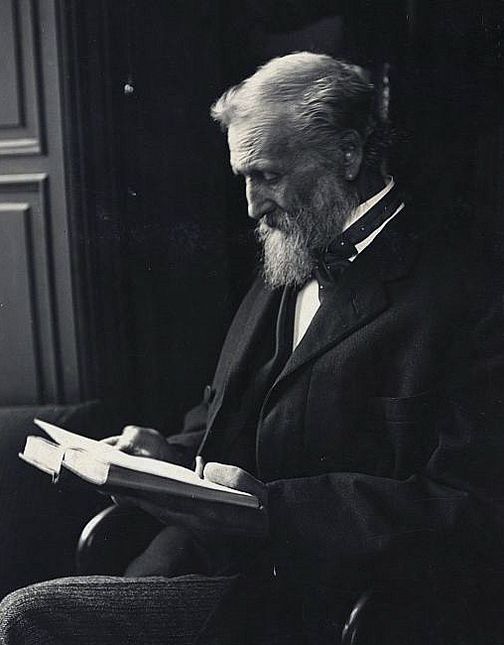
The Story of My Boyhood and Youth is John Muir's account of his first twenty-five years, from a Scottish seaside town to the edge of what he calls the University of the Wilderness. In the first chapter he remembers Dunbar on the stormy North Sea coast: rambles with his grandfather David Gilrye, who taught him his letters from shop signs, scrambles over the ruins of Dunbar Castle, fights and dares with schoolmates, the servant girls' terrifying tales of the Dandy Doctors who were said to steal children for the Edinburgh dissecting rooms, and a school where Mr. Lyon and his father together drilled grammar and Bible verses into him by memory and the rod. By eleven, he says, he could recite the New Testament from Matthew to Revelation. In 1849 his father, Daniel Muir, announces that the family is going to America, and John, his brother David and sister Sarah sail with him, the rest of the family following once a frame house is built. The second chapter describes the journey to Wisconsin and the boys' first spring at Fountain Lake, a plunge into wildness among bluebirds, bobolinks, frogs, flowers and the oak openings. Chapters on the farm, the birds and young hunters describe settlers, Native American neighbors passing through, passenger pigeons in vast flocks, prairie fires, and the animals of the farm, including the pony Jack and the mare Nob, whose death after overwork the boy grieves. The Ploughboy chapter turns to the hard labor of clearing and ploughing, of mowing and cradling grain from dawn to dark, of working through mumps and pneumonia with no physician called, and of digging a ninety-foot well through sandstone at the new Hickory Hill farm, where John is nearly killed by choke-damp. Hungry for knowledge, he teaches himself arithmetic, algebra and geometry, reads borrowed books in snatched minutes, and wins his father's grudging leave to rise early; he begins getting up at one in the morning to read and to invent in the cellar, building a self-setting sawmill, thermometers, a hygrometer, and clocks, one of which tips him out of bed. In 1860 he carries two clocks and a thermometer to the State Fair in Madison, where they draw crowds and a prize. After a stint in a machine shop at Prairie du Chien he enters the University of Wisconsin, works his way by teaching school, rigs his dormitory room with ingenious apparatus, and receives his first lesson in botany from a fellow student, Mr. Griswold, beneath a locust tree. The book ends as he looks back from a hill above Lake Mendota and leaves the university for the wilderness. Muir first dictated the material in 1908 at E. H. Harriman's lodge at Pelican Bay, Oregon; an abridged version ran in The Atlantic Monthly in 1912-13, and Houghton Mifflin published the book, with his own sketches, in March 1913.
Virtues in this work
- Industry: Muir rises at one in the morning all winter to teach himself mathematics and build clocks and a sawmill in the cellar.
- Fortitude: He goes back down the Hickory Hill well and finishes cutting through the sandstone after nearly dying of choke-damp.
- Humility: Warned by his father against praise, he refuses to read or keep the newspaper notices of his inventions at the State Fair.
- Piety: He learns from Griswold's lesson under the locust tree to see the Creator's single design in the pea vine and the tree.
Plot or Argument
- Chapter I: A Boyhood in Scotland
Dunbar, the sea, the castle ruins and the fields; walks with Grandfather Gilrye; the Dandy Doctor terror; Mr. Lyon's school and his father's Bible lessons; fights, dares and nests; the news that the family will go to America.
- Chapter II: A New World
The voyage in 1849 and the journey to Wisconsin; the bur-oak shanty at Fountain Lake; the boys' first spring and summer among birds, flowers, frogs, insects and storms.
- Chapter III: Life on a Wisconsin Farm
The frame house, the settlers and their ways, Native American neighbors, the farm animals and their characters, including the pony Jack and the mare Nob, and the lessons the boy draws from them.
- Chapters IV-V: A Paradise of Birds and Young Hunters
Close portraits of the birds of the farm, the passenger pigeons, prairie chickens, loons and owls, and the boys' hunting and trapping of muskrats, ducks and other game, with Muir's later regret at needless killing.
- Chapter VI: The Ploughboy
Clearing, breaking and ploughing; the long harvest days; illness without a doctor; the move to Hickory Hill; digging the well through sandstone and the near-fatal choke-damp; lining bees.
- Chapter VII: Knowledge and Inventions
Self-taught mathematics and borrowed books; permission to rise early and the joy of five hours won at one in the morning; the cellar workshop and its sawmill, clocks, thermometer, hygrometer and early-rising machine; a neighbor's advice to take the inventions to the fair.
- Chapter VIII: The World and the University
The 1860 State Fair in Madison; the machine shop at Prairie du Chien; entering the University of Wisconsin, teaching school, the inventions in his room, the botany lesson under the locust tree, and the farewell to Madison for the University of the Wilderness.
Characters
- John Muir, author and narrator
Wild, curious, inventive boy and youth who tells his story from old age with humor and wonder.
- Daniel Muir, father
Devout, stern and hard-working Scottish settler who drills Scripture into his children and drives the farm work.
- Ann Gilrye Muir, mother
Gentle mother who shares her son's love of the outdoors and quietly shields her children.
- David Gilrye, maternal grandfather
Dunbar grandfather who walks with John in the fields and teaches him his letters.
- David Muir, younger brother
John's companion in Dunbar mischief and in the first wild spring at Fountain Lake.
- Mr. Lyon, Dunbar schoolmaster
Able teacher and thrasher who drills grammars into his pupils.
- William Duncan, neighbor
Stonemason and miner who visits after the choke-damp accident and teaches Daniel how to clear the gas.
- Mr. Griswold, fellow student
University student who gives Muir his first lesson in botany beneath a locust tree.
Lessons
Wonder as a teacher
Muir says the first Wisconsin spring taught him more than the grammars beaten into him in Dunbar, because its lessons were charmed rather than whipped into him. The book treats attention to birds, frogs, flowers and storms as a real education, one that lasts a lifetime.
- What does Muir notice in his first days at Fountain Lake that a hurried visitor would miss?
- How does he compare the Dunbar school to the school of the Wisconsin woods?
- What in your own surroundings could you study as closely as Muir studies the bobolink or the loon?
Using stolen hours well
Forbidden to read late at night, Muir asks his father whether he may rise early, and is told he may get up as early as he likes. He wakes at one in the morning and spends the five hours on mathematics and inventions. The episode shows how a hungry mind turns a narrow permission into an opportunity.
- Why does Muir call the five frosty hours one of the greatest joys of his life?
- What did he build in the cellar during those hours?
- Is there something you would get up at one in the morning to do?
Honoring a hard father
Muir writes frankly of his father's severity: the thrashings, the long harvest days, the illnesses worked through, the well dug by hand. He also records his father's faith, his rescue at the well, and his permission to study and to leave for the fair. The book shows a son telling the truth about a parent while still giving him his due.
- How does Daniel Muir respond when John stops answering from the bottom of the well?
- Why do you think Muir includes both his father's strictness and his care?
- What does it mean to honor a parent whose ways you do not always share?
Seeing order in creation
Under the locust tree Mr. Griswold shows Muir that a tree and a pea vine share a family likeness, and argues that the Creator gave plants unity with variety. For Muir the moment opens botany as a lifelong study of harmony in nature.
- What features does Griswold point out to show that the locust belongs to the pea family?
- Why does this lesson make such a strong impression on Muir?
- How can studying the order of plants lead a person to think about their Maker?
Context
Muir's boyhood spans Scotland in the 1840s, when many Scottish families emigrated to North America, and the settlement of Wisconsin, which became a state in 1848, the year before the Muirs arrived. Settlers bought government land, cleared oak openings and broke prairie by ox-team, and the region still held passenger pigeons, prairie chickens and wolves. Daniel Muir belonged to the dissenting, Bible-centered Protestantism common among Scottish emigrants, and the book records the revival meetings and church life of the frontier. Muir's years in Madison coincided with the opening of the Civil War, though the book says little of it.
Composition
In August 1908, while Muir was a guest at E. H. Harriman's Pelican Bay Lodge on Upper Klamath Lake in Oregon, Harriman had his secretary take down Muir's recollections, and the typescript became the basis of this book. Muir revised it into eight chapters; an abridged version ran in The Atlantic Monthly across 1912 and 1913, and Houghton Mifflin published the book in Boston and New York in March 1913, with illustrations drawn from his sketches and drawings of his boyhood inventions. Muir changed a sentence about a blacksmith for later printings after the man's son objected.
Reception
Published the year before Muir's death, the book has been read as the prologue to his California writings and is often paired with My First Summer in the Sierra. It is valued for its portrait of Wisconsin pioneer life and for its scenes of the inventive farm boy, and the Fountain Lake farm site was later designated a National Historic Landmark. It remains one of the most widely read accounts of a naturalist's childhood.
Comparisons
- walden
Thoreau, whom Muir admired, also turns close observation of a lake, its birds and seasons into moral instruction; Thoreau writes as a chosen experiment in solitude near Concord, Muir as a boy set down on a working Wisconsin farm.
- franklin-autobiography-and-poor-richard
Both are stories of a self-taught youth who reads in stolen hours, builds devices and leaves home to make his way; Franklin turns his habits into rules of conduct, Muir into a life of exploration.
- up-from-slavery
Washington and Muir both tell of hard manual labor in youth, a hunger for books, and a walk away from home toward a school that changes everything.
- story-of-a-soul
Both books open with nineteenth-century childhoods shaped by devout parents, and both find God in flowers; Therese treats herself as a little flower in God's garden, while Muir studies real ones as signs of the Creator's order.
- life-on-the-mississippi
Twain's memoir of learning the river as a cub pilot is another American story of a young man's apprenticeship to a landscape.
Quotes
Frequently cited
“When I was a boy in Scotland I was fond of everything that was wild, and all my life I’ve been growing fonder and fonder of wild places and wild creatures.”
Frequently cited
“This sudden plash into pure wildness—baptism in Nature’s warm heart—how utterly happy it made us!”
Frequently cited
“But I was only leaving one University for another, the Wisconsin University for the University of the Wilderness.”
“Here without knowing it we still were at school; every wild lesson a love lesson, not whipped but charmed into us.”
“father was an enthusiast, and always said and believed that God and hard work were by far the best doctors.”
“I can hardly think of any other event in my life, any discovery I ever made that gave birth to joy so transportingly glorious as the possession of these five frosty hours.”
“Nature has attended to all that, giving essential unity with boundless variety, so that the botanist has only to examine plants to learn the harmony of their relations.”
“Thus I took Emerson’s advice and hitched my dumping-wagon bed to a star.”
For Students
A reading companion for classical Christian high school students. See the student guide.
Reading Guide
Watch for
- The contrast between the Dunbar school in Chapter I and the first Wisconsin spring in Chapter II.
- How Muir describes individual birds and animals in Chapters III-V as if they were persons with characters.
- The well-digging and the choke-damp accident in Chapter VI, and how his father and a neighbor respond.
- The bargain over rising early in Chapter VII and the inventions it makes possible.
- The botany lesson under the locust tree and the last view of Madison in Chapter VIII.
Key terms and names
- Dunbar
- The Scottish seaport town on the North Sea, east of Edinburgh, where Muir was born and spent his first eleven years.
- Fountain Lake
- The small lake beside the family's first Wisconsin farm, which Muir later called Muir's Lake.
- Hickory Hill
- The second family farm, where the house was built in 1857 and John dug the deep well.
- Choke-damp
- Miners' name for the suffocating gas, which Muir identifies as carbonic acid gas, that collected at the bottom of the well.
- Oak openings
- The open, park-like stands of oak with grass and flowers between them that covered much of the Wisconsin land the settlers cleared.
- Early-rising machine
- Muir's bed rigged to a clock so that at the set hour it tipped him onto his feet.
- University of the Wilderness
- Muir's name, in the book's last sentence, for the life of exploration and study of nature he chose instead of a degree.
Seminar Questions
- Comprehension How much of the Bible had Muir memorized by the age of eleven, and how did he learn it?
- Comprehension What happened to John at the bottom of the well, and what saved him?
- Comprehension What did Muir take to the State Fair in Madison, and how was it received?
- Interpretation Why does Muir call the first Wisconsin spring a baptism, and what does that word suggest about how he saw nature?
- Interpretation How does Muir present his father: as a villain, a hero, or something more complicated? Point to two scenes.
- Interpretation Why does Muir say his father had warned him to avoid praise, and how does that affect the way he treats the newspaper notices at the fair?
- Big Question Is a person educated more by schools and books or by close attention to the world around him?
- Big Question What does it mean to see God's handiwork in nature, as Griswold suggests under the locust tree?
Faith Connections
- Psalm 104 (Scripture)
The psalm praises God for springs, birds, trees and wild creatures, each in its place. Muir's chapters on the birds and animals of Fountain Lake read like a long boy's commentary on this psalm.
- Matthew 6:26-29 (Scripture)
Jesus tells his hearers to consider the birds of the air and the lilies of the field. Muir spends whole chapters doing just that, and Griswold's lesson on the locust flower turns considering into science.
- Ephesians 6:1-4 (Scripture)
Paul tells children to honor their parents and fathers not to provoke their children. Muir's account of Daniel Muir shows both commands at work in one hard-working, devout and severe household.
- Augustine, Confessions I (Great Conversation)
Augustine also remembers being beaten into his school lessons and asks what makes learning sweet. Muir's contrast between whipped and charmed lessons continues that old question.
Logic and Rhetoric
Central argument: A child's lasting education comes from wonder and work as much as from drill. Muir's Dunbar lessons, beaten in, were soon forgotten or resented, while the lessons of the Wisconsin woods and his own inventions, freely pursued, shaped his whole life. Therefore the wilderness itself is a school, and the best one he attended.
Rhetorical device: metaphor. Muir frames his life as schooling: the Wisconsin spring is a school of love lessons in Chapter II, and the last sentence of Chapter VIII leaves one university for the University of the Wilderness.
Debate: Resolved: that Muir learned more on his father's farm than at the University of Wisconsin.
Memory Work
When I was a boy in Scotland I was fond of everything that was wild, and all my life I’ve been growing fonder and fonder of wild places and wild creatures.
But I was only leaving one University for another, the Wisconsin University for the University of the Wilderness.
Writing Prompts
Essay: Muir's boyhood mixes hardship and joy. Choose one hardship and one joy from the book and explain how each helped make him the man who left Madison for the wilderness.
Comparison with Walden: Compare how Muir at Fountain Lake and Thoreau at Walden Pond describe the creatures of a lake. What does each man learn from watching them?
Medical Lens
The book is a useful lay record of frontier health. Muir says he worked the harvest with mumps, able to swallow only milk, and that when pneumonia struck him no physician was called, because his father held that God and hard work were the best doctors; the only medical help sent for, when the mare Nob fell ill with inflamed lungs after overwork, was a Methodist minister who also served as horse-doctor. Chapter VI describes near-asphyxiation by choke-damp, which Muir identifies as carbonic acid gas pooled at the bottom of the well, and the practical remedies a neighboring miner taught: throwing water down the shaft and lowering bundles of brush to stir the air. Chapter I preserves the Scottish children's terror of the Dandy Doctors, a folk memory of the body-snatching for Edinburgh's anatomy schools in the 1820s; Muir's version of the original story is garbled at second hand. His habit of sleeping from bedtime until one in the morning through a whole winter, which he says left him unwearied, is a striking record of self-imposed short sleep, offered as personal testimony rather than as advice.
- Chapter I
Servant girls' tales of the Dandy Doctors who prowl with sticking-plaster and carry children off to be dissected in Edinburgh.
- Chapter III
The mare Nob, overdriven to Portage on a hot day, sickens with inflamed lungs and is treated without success by a minister who doubles as horse-doctor.
- Chapter VI
Harvest work through mumps, pneumonia with no physician called, and the overwork common among the Scottish, English and Irish settlers.
- Chapter VI
The near-fatal choke-damp at the bottom of the Hickory Hill well and William Duncan's methods for clearing the gas.
- Chapter VII
Rising at one in the morning all winter to study and invent, and the early-rising machine that tips him out of bed.
Creative Prompts
- Classroom
Draw and label one of Muir's boyhood inventions from Chapter VII, explaining in your own words how it was meant to work.
- Essay
Muir calls the wilderness a university. Using Chapters II, IV and VIII, explain what he learned there that he could not have learned in school.
- Fiction
Write the scene at the State Fair in Madison from the point of view of a farmer who watches the boy in shirt-sleeves set up his clocks.
- Classroom
Keep a nature notebook for a week in the manner of Chapter IV, describing one bird or animal near your home as closely as Muir describes the bobolink or the loon.
- Dialogue
Write a conversation between John and his father the morning after John is pulled from the well.
Further Reading
- My First Summer in the Sierra, John Muir
Muir's journal of 1869 in the Sierra Nevada, the natural sequel.
- A Thousand-Mile Walk to the Gulf, John Muir
His walk of 1867 from Kentucky to Florida, published after his death.
- Son of the Wilderness: The Life of John Muir, Linnie Marsh Wolfe
- The Life and Letters of John Muir, William Frederic Badè
Verification notes
Chapter titles, names (David Gilrye, Mr. Lyon, William Duncan, Wiard, the Pelton family, Mr. Griswold), the 1849 emigration and the episodes cited were checked against the attached Gutenberg text, a later impression of the Houghton Mifflin edition. The 1908 dictation at Harriman's Pelican Bay Lodge, the abridged Atlantic Monthly serialization, the March 1913 publication and the later revision of the blacksmith sentence follow William and Maymie Kimes's Muir bibliography as summarized at https://scholarlycommons.pacific.edu/jmb/355 and the Sierra Club John Muir Exhibit; one Sierra Club page gives the Pelican Bay visit as 1907. Muir says he was four years at the university; biographers usually date his attendance from 1861 to 1863. The family members who sailed with Daniel Muir in 1849 are given as in the text. Quotes were checked against the attached text.
- Exact months of the Atlantic Monthly serialization.
- The years of Muir's attendance at the University of Wisconsin, which the book gives as four years and biographers usually give as about two and a half.
- Whether the State Fair visit was in September 1860, as usually given; the book does not state the year at that point.