Work record
The Old Regime and the Revolution
1856 · 19th Century · History · French
Abstract
Background. Retired from politics after the 1851 coup, the former foreign minister read through provincial records at Tours and the grievance books of 1789 to ask why France kept returning to concentrated rule.
Thesis. 1789 was less a rupture than a culmination. Bourbon administrators had already stripped nobles and towns of real authority, gathered decisions in Paris and the provincial bureaus, and made Frenchmen uniform yet estranged. Prosperity under Louis XVI and the crown's own improvements then made every surviving burden feel heavier.
Content. Chapters examine seigneurial dues, the royal council and its provincial agents, special courts for officials, the capital's dominance, the tax exemptions that set orders apart, village life under the taille and road labor, the rise of philosophes as opinion-makers, hostility to the clergy and the physiocratic program.
Sources. Unlike predecessors who relied on memoirs and speeches, Tocqueville cites correspondence between ministers and provincial administrators, parish petitions and cahiers, supplying the evidence in extensive notes and an appendix on Languedoc. This version follows Bonner's American rendering, scanned with some misread characters.
Significance. The continuity thesis shaped later historiography from Taine to Furet, and the observation that a faltering government is most vulnerable when it starts to mend its ways became a standard maxim of political analysis.
Key figures
- Louis XVI: Reforming king whose prosperous reign ended in upheaval
- Turgot: Provincial administrator and minister, a frequent witness
- John Law: Financier whose remark about provincial governors is repeated
- Edmund Burke: British critic whose diagnosis the author respects yet disputes
- Quesnay and the physiocrats: Reformers who trusted an enlightened central power

Summary
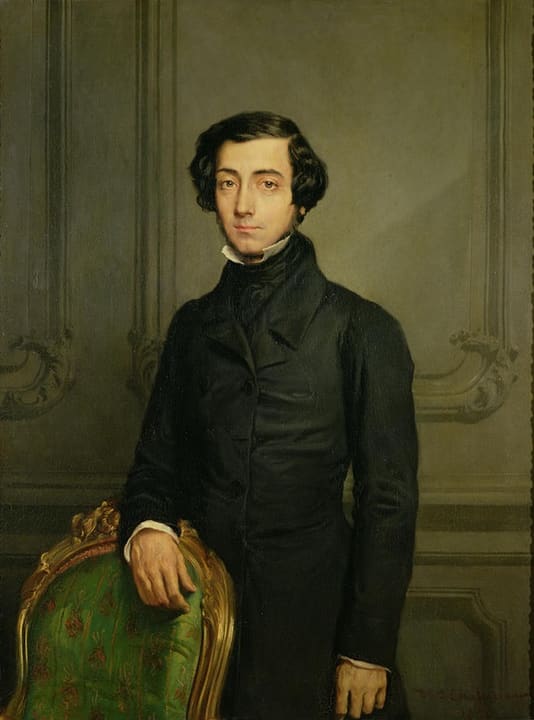
The Old Regime and the Revolution (L'Ancien Régime et la Révolution), published in Paris in June 1856, is Alexis de Tocqueville's study of France before 1789. Its argument is that the Revolution, which its makers believed had broken French history in two, in fact completed a work the monarchy had long been doing: the concentration of power in a central administration and the levelling of the French into similar, separated individuals. Tocqueville based the book on years of reading in the archives of the old intendancies, especially at Tours, and in the registers of grievances of 1789. The library text is John Bonner's translation, published in New York by Harper & Brothers in the same year, complete with appendix and notes but taken from a scanned copy in which scanning errors remain. Bonner arranges the work in two books, the second of twenty chapters, where the French editions have three. Book I clears the ground. Contemporaries saw the Revolution as monstrous or miraculous; its real aim was not to destroy religion or weaken authority but to abolish the remains of feudal institutions and establish a more uniform and powerful public order. It spread across borders like a religious revolution, preaching rights for all humanity, and it swept away institutions that were decaying everywhere in Europe. Book II explains why it happened in France. Feudal dues were hated most where they were lightest, because the French peasant already owned land but still paid dues to a lord who no longer governed him. Administrative centralization, usually credited to the Revolution and Napoleon, was the work of the old monarchy: the royal council, the controller-general and some thirty intendants, with their subdelegates, managed taxes, roads, poor relief and parish affairs, and officials could be tried only by administrative courts. Paris drew the life of the provinces to itself. The French had grown more alike in ideas and manners than any other people, yet were divided into small groups, nobles, bourgeois, peasants and guilds, each jealous of its own exemptions and indifferent to the rest; Tocqueville calls the loss of political liberty and this division the diseases of which the old regime died. Some liberty survived in the parlements, the clergy and the independence of officials, but the peasant was left isolated, burdened with the taille and the corvée and abandoned by the nobles who had moved to the towns. Men of letters, who had no experience of public business, became the country's political leaders and spread abstract, simple theories of society; irreligion became a general passion; and the Economists (the physiocrats) sought reform through an enlightened central power rather than through liberty. Under Louis XVI, the most prosperous era of the monarchy, the government's own attempts at reform and relief inflamed resentment, taught the people to expect everything from the state, and showed that grievances once relieved become harder to bear. The Revolution, Tocqueville concludes, sprang out of these facts. An appendix describes Languedoc, a province that kept its own estates.
Virtues in this work
- Prudence: Tocqueville warns that reforms undertaken without free institutions unsettle everything at once, as the provincial assembly changes of 1787 did.
- Justice: He records how the taille and the road corvée fell on peasants while nobles and officials enjoyed exemptions.
- Magnanimity: The appendix praises the estates of Languedoc, whose members undertook great public works for their province by their own effort.
- Humility: The preface admits that the revolutionaries, however bold, could not escape the habits their history had formed in them.
Plot or Argument
- Preface: an essay, not a history
Tocqueville explains that the French in 1789 tried to cut their history in two and failed: they kept the habits and ideas the old regime had taught them and built the new society out of its ruins. He describes his method of reading administrative archives and the registers of grievances, and states his belief that only liberty can draw men out of the isolation and love of gain to which a society of equals under a centralized power is prone.
- Book I: what the Revolution was
Chapters 1–5 survey the conflicting judgments of contemporaries, including Burke's, and argue that the Revolution did not aim to destroy religion or political authority. It proceeded like a religious revolution, addressing man in general and spreading by preaching across frontiers. The institutions it destroyed, inherited from the Middle Ages, had been similar across Europe and were everywhere decaying; what it achieved was the abolition of those institutions and a more uniform social order under a stronger central power.
- Book II, ch. 1: why feudal dues were hated most in France
Serfdom survived in much of Germany, yet the Revolution broke out in France, where the peasant was free and often a landowner. Tocqueville explains the paradox: the French lord had lost his governing functions but kept his dues, exemptions and tolls, so feudal rights seemed all burden and no service.
- Book II, chs. 2–7: centralization under the old monarchy
A single royal council, the controller-general and the intendants governed France; each intendant, with his subdelegates, directed taxes, militia, roads, poor relief and the affairs of every parish. Officials could be judged only by administrative tribunals, and the state acted as guardian of towns and villages, which could not repair a steeple without permission from Paris. Centralization grew up among the old authorities without abolishing them. Official manners, the dominance of Paris over the provinces, and the ruin of local life complete the picture.
- Book II, chs. 8–10: alike yet divided
The French of the 18th century had become more alike than any other people in education, ideas and manners, yet were split into nobles, bourgeois, guilds and peasants, each defending its own exemptions and indifferent to the others. Tax exemptions, especially from the taille, divided the nobility from the commons and the towns from the countryside. The destruction of political liberty and these class divisions were, in Tocqueville's image, the diseases of which the old regime died.
- Book II, chs. 11–12: liberty under the old regime and the peasant's condition
A disorderly, intermittent liberty survived in the independence of the courts, the clergy and the ownership of offices, and it kept alive a spirit of resistance the Revolution inherited. The peasant, however, was worse off in some respects than in the 13th century: abandoned by resident lords, burdened with the taille, the corvée for roads and the militia lottery, and left to the care of distant officials.
- Book II, chs. 13–15: men of letters, irreligion and the Economists
Writers with no share in public business became the political leaders of the nation and taught a taste for general theories and complete systems. Hostility to Christianity became a general passion, directed chiefly at the Church as a political institution, and unbelief left the minds of the French unsettled. The Economists, or physiocrats, sought sweeping reforms through an all-powerful enlightened state rather than through free institutions; the French wanted reforms before liberties.
- Book II, chs. 16–20: prosperity, reform and revolution
France under Louis XVI was more prosperous than ever, and the prosperity sharpened discontent. The government's efforts to relieve the poor publicized their sufferings; its reforms unsettled every institution at once; its practices taught the people to expect everything from the state and to disregard rights. The administrative changes of 1787, especially the new provincial assemblies, overturned local government before the political revolution began. The Revolution sprang from these causes, combining the love of equality with a brief, sincere passion for liberty.
- Appendix and notes
The appendix describes the pays d'états, provinces that kept their own estates, and especially Languedoc, whose assembly built roads and canals and kept its finances in order, as an example of what local self-government might have achieved. The notes give archival evidence for the chapters.
Characters
- Louis XVI, historical subject
King of France from 1774, whose reign Tocqueville calls the most prosperous of the monarchy and whose well-meant reforms hastened its fall.
- Anne-Robert-Jacques Turgot, historical subject
Intendant of Limousin and controller-general from 1774, quoted throughout on the state of the provinces and the peasantry.
- John Law, historical witness
Scottish financier and controller-general, quoted through the Marquis d'Argenson as saying that France was governed by thirty intendants.
- Edmund Burke, contemporary interpreter
Cited in Book I and later chapters for his reading of the Revolution, which Tocqueville respects but judges mistaken about its causes.
- The intendants, royal officials
The roughly thirty provincial administrators, chosen from the masters of requests, through whom the royal council governed France.
- The Economists (physiocrats), school of thinkers
Quesnay, the Abbé Baudeau and their circle, who sought reform through a powerful enlightened state rather than through liberty.
Lessons
Revolutions inherit more than they destroy
The men of 1789 believed they were making a clean break. Tocqueville shows that centralization, the habit of looking to the state for everything, and the separation of classes all came from the old monarchy and passed intact into the new order. A people cannot easily escape its own history.
- What institutions did the Revolution claim to create that Tocqueville finds already in the old regime?
- Why were the French less successful than they believed in separating their future from their past?
- What do you think a reformer should learn from the claim that a nation builds its new society from the ruins of the old?
Grievances grow sharper as they lighten
Tocqueville observes that the Revolution broke out where feudal burdens were lightest and in the most prosperous reign of the monarchy. Evils endured as inevitable become intolerable once escape seems possible, and partial relief makes the remaining burdens more keenly felt.
- Why were feudal dues more resented in France than in Germany, where serfdom still existed?
- How did the government's own efforts at relief, in Book II, ch. 17, provoke anger?
- Does this pattern mean reform is dangerous, or that reform must be done in a particular way?
Equality without liberty isolates
The French had become alike in manners and ideas but had lost the habits of acting together. Each class guarded its own exemptions, and every local question went to an official. Tocqueville argues that only free institutions, in which citizens manage common affairs, can draw people out of this isolation.
- What does Tocqueville mean by calling the French both alike and divided?
- How did tax exemptions keep nobles and commoners apart?
- What part does local self-government, such as the estates of Languedoc in the appendix, play in his argument?
Ideas without experience
The men of letters who led French opinion had no share in public business and therefore preferred simple, general systems to the complicated practice of law and custom. Tocqueville thought this made the Revolution bold in theory and careless of the traditions that might have restrained it.
- How did English writers differ from French men of letters, according to ch. 13?
- Why did the Economists prefer an all-powerful state to free institutions?
- Why does Tocqueville connect the spread of irreligion with the political situation of the Church rather than with its faults?
Context
Tocqueville wrote under the Second Empire of Napoleon III, which had ended the parliamentary liberty he had served as deputy and minister. He wanted to understand why the French, after sixty years of revolutions, kept returning to centralized government. Unlike earlier historians of the Revolution, who worked from memoirs and debates, he read the records of the old administration in the archives of the intendancy of Tours and elsewhere, together with the cahiers de doléances of 1789. He also drew on his earlier study of America and on his knowledge of English and German institutions.
Composition
Tocqueville worked on the book from 1852 to 1856, partly at his estate in Normandy and partly in Tours, and published it with Michel Lévy in Paris in June 1856. It was the first part of a larger work on the Revolution and the Empire; notes for later volumes survived him. Two English translations appeared the same year: Henry Reeve's in London and John Bonner's in New York (Harper & Brothers). The library text is Bonner's, from an Internet Archive scan whose OCR errors remain; its two-book arrangement differs from the three-book division of the French editions.
Reception
The book was widely read and quickly translated, and it established the thesis of continuity between the old monarchy and revolutionary France that later historians, among them Hippolyte Taine and François Furet, took up in different ways. Historians have since refined many details, including the condition of the peasantry and the extent of centralization, and debate how far Tocqueville's sources support his general claims. Its observation that the most dangerous moment for a bad government is when it begins to reform has become one of the most quoted maxims in political science.
Comparisons
- democracy-in-america
Tocqueville's earlier book found in New England townships the local self-government that the old regime destroyed; The Old Regime examines the opposite case, equality joined to centralization.
- reflections-on-the-revolution-in-france
Burke in 1790 saw the Revolution as a sudden break with inherited institutions; Tocqueville, who cites Burke, argues that the break was smaller than both its friends and its enemies supposed.
- burke-paine-debate
Paine praised the Revolution as the triumph of universal rights and Burke condemned its abstractions; Tocqueville's chapters on men of letters and on the Revolution's religious character explain where the universal language came from.
- the-spirit-of-the-laws
Montesquieu praised intermediate bodies (nobility, parlements, towns) as barriers against despotism; Tocqueville shows those same bodies hollowed out by the intendants a generation later.
- a-tale-of-two-cities
Dickens's Monseigneur and his country estate give a novelist's picture of an absentee lord collecting dues from starving villagers, the condition Tocqueville analyzes in Book II, chs. 1 and 12.
- the-social-contract
Rousseau is among the men of letters whose general theories, Tocqueville argues in ch. 13, took the place of political experience in shaping French opinion.
Quotes
“they used its ruins as materials for the construction of their new society.”
“On the other hand, liberty alone can combat the vices which are natural to this class of societies, and arrest their downward progress.”
“it created, far above particular nationalities, an intellectual country that was common to all, and in which every human creature could obtain rights of citizenship.”
“whence it would follow that their yoke was the most intolerable where it was in fact lightest.”
“Let me tell you that this kingdom of France is governed by thirty intendants.”
“They took no part in public business, as English authors did; on the contrary, they had never lived so much out of the world.”
“if the pain be less, the patient's sensibility is greater.”
“Never had the feudal system seemed so hateful to the French as at the moment of its proximate destruction.”
For Students
A reading companion for classical Christian high school students. See the student guide.
Reading Guide
Watch for
- The preface's claim that the revolutionaries built their new society from the ruins of the old.
- Book I, ch. 3, where Tocqueville compares the Revolution to a religious revolution that preached to all mankind.
- The paradox at the opening of Book II about feudal dues being hated most where they were lightest.
- John Law's remark about thirty intendants in Book II, ch. 2, and the examples of parish business sent to Paris.
- Ch. 16's argument about prosperity and reform, which ends with the image of the patient.
Key terms and names
- Old regime (ancien régime)
- The social and political order of France before 1789; Tocqueville's book helped make the term standard.
- Intendant
- A royal official, about thirty in all, who governed a province (généralité) on behalf of the royal council, directing taxes, roads, relief and local affairs.
- Centralization
- The gathering of administrative power in the capital and its agents; Tocqueville argues the old monarchy, not the Revolution, created it.
- Taille
- The principal direct tax of the old regime, paid by commoners and especially peasants, from which nobles and many officials were exempt.
- Corvée
- Forced unpaid labor on the royal roads, demanded of peasants under the old regime.
- Pays d'états
- Provinces, such as Languedoc, that kept their own estates to vote taxes and manage public works, described in the appendix.
- Economists
- The physiocrats, French reformers who wanted an enlightened central power to remake society by rational principles.
Seminar Questions
- Comprehension What does Tocqueville say the Revolution really achieved, according to Book I, ch. 5?
- Comprehension Why were feudal dues more resented in France than in parts of Germany where serfdom survived?
- Comprehension What powers did the intendants hold, and what did Law mean by saying France was governed by thirty of them?
- Interpretation Why does Tocqueville compare the French Revolution to a religious revolution rather than to other political revolutions?
- Interpretation How could the French be more alike than any other people and also more divided?
- Interpretation Why did men of letters, who held no office, become the political leaders of France?
- Big Question Is it possible for a government to reform itself without unleashing demands it cannot meet?
- Big Question Can a people keep its liberty if it expects the state to manage all its common affairs?
Faith Connections
- 1 Kings 12:1-16 (Scripture)
When the people ask Rehoboam to lighten Solomon's yoke and he refuses, the kingdom divides; Tocqueville's chapters show the opposite case, a monarchy that lightened burdens and still fell, so the two stories together raise the question of what the people truly sought.
- Exodus 16:2-3 (Scripture)
The Israelites, freed from Egypt, long for its fleshpots; Tocqueville's preface makes a similar point about a people who carried the habits of their former condition into their new one.
- Edmund Burke, Reflections on the Revolution in France (Great Conversation)
Burke defended the Church and inherited institutions against the Revolution; Tocqueville, a Catholic by upbringing, argues in Book II, ch. 14 that French irreligion was aimed at the Church's political position more than at its doctrines, a judgment that converses with Burke's.
- Augustine, City of God IV.4 (Church Fathers)
Augustine asks what kingdoms are without justice; Tocqueville's account of an efficient administration that left citizens powerless and divided offers a later case study of order without shared civic life.
Logic and Rhetoric
Central argument: The French monarchy had already destroyed local liberty, concentrated power in a central administration, and left the classes alike yet separated by exemptions. Writers without political experience supplied abstract theories, and the government's own reforms made remaining grievances intolerable. Therefore the Revolution did not create a new France so much as complete the old one, which is why centralization survived it and why liberty remained hard to establish afterward.
Rhetorical device: paradox. Tocqueville opens Book II with the paradox that the yoke was most intolerable where it was lightest (quote 3), and returns to it in ch. 16 with the observation that the feudal system never seemed so hateful as at the moment of its destruction (quote 7).
Debate: Resolved: That the French Revolution completed the work of the old monarchy rather than overturning it.
Memory Work
if the pain be less, the patient's sensibility is greater.
they used its ruins as materials for the construction of their new society.
Writing Prompts
Essay: Tocqueville argues that administrative centralization was the work of the old regime, not of the Revolution. Using Book II, chs. 2–7, explain his evidence and argue whether his thesis changes how we should judge the Revolution's achievements.
Comparison with Reflections on the Revolution in France: Burke wrote in 1790 that the Revolution was a sudden break with France's inheritance; Tocqueville wrote in 1856 that it continued the old regime's work. Compare the two accounts and argue which better explains what followed.
Medical Lens
Tocqueville often reasons in medical images: Book II, ch. 10 speaks of the diseases of which the old regime died, and ch. 16 ends its argument about reform with the image of a patient whose pain is lessened but whose sensibility has grown. The image recalls the period's language of political pathology rather than any medical theory. The chapters on the peasantry and on the government's relief efforts (chs. 12 and 17) document dearth, begging and the charity workshops and distributions of corn and rice managed by the intendants, material useful for the history of poor relief and public assistance before the Revolution.
- Book II, ch. 16
Evils patiently endured become intolerable once escape seems possible; the pain lessened, the patient's sensibility greater.
- Book II, chs. 12 and 17
The peasant's condition in years of dearth, and the intendants' relief measures, which publicized the misery they meant to ease.
Creative Prompts
- Classroom
Using Book II, chs. 2–3, draw an organizational chart of how a French parish in 1780 obtained permission to repair its church steeple, from the parish assembly to the royal council and back.
- Essay
Tocqueville says the most dangerous moment for a bad government is when it begins to reform. Test the claim against one reform era in another country's history.
- Dialogue
Write a conversation in 1790 between an intendant who has just lost his post and a peasant who has just stopped paying feudal dues, in which each explains what the old regime meant to him.
- Fiction
Tell the story of a village in Limousin in the 1770s, when Turgot was intendant, through the eyes of a man drawn for the road corvée.
Further Reading
- The Old Regime and the Revolution, Volume One (ed. François Furet and Françoise Mélonio; trans. Alan S. Kahan), Alexis de Tocqueville
A modern translation with Tocqueville's notes and drafts.
- Interpreting the French Revolution, François Furet
Includes an influential essay on Tocqueville's interpretation.
- Tocqueville: A Biography, André Jardin
- Democracy in America, Alexis de Tocqueville
The earlier study that the Old Regime complements.
Verification notes
Publication facts (Michel Lévy, Paris, June 1856; Bonner's New York translation and Reeve's London translation the same year) and Tocqueville's biography are standard. The stored text is an OCR scan with errors; Bonner's two-book arrangement (Book I, five chapters; Book II, twenty chapters) is taken from the contents page of the stored text, and chapter locators follow it. All eight quotations were found by search in content/texts/tocqueville-old-regime.txt after collapsing line breaks, and were chosen from passages free of scanning errors and line-end hyphenation. The famous maxim on reform is paraphrased in the text fields because Bonner's wording in the stored scan is broken across a hyphenated line.
- Bonner's chapter numbers for the material on peasant relief (chs. 12 and 17) against a clean copy of the 1856 edition.
- The extent of Tocqueville's archival work in Tours and other intendancy archives, as described in his correspondence.