Work record
Lives of the Most Eminent Painters, Sculptors and Architects (Volume 1)
1550; 2nd ed. 1568 · Renaissance Early Modern · Biography · Italian
Abstract
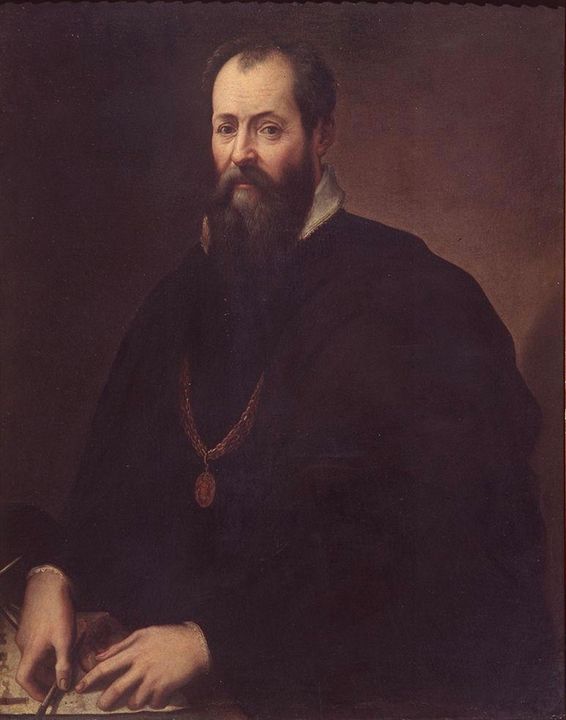
Background. A working painter and architect in Medici service, Vasari compiled the lives of Italian craftsmen to save their names from oblivion and to show Florence's leading part in reviving design. His enlarged edition of 1568 underlies this translation.
Scope. This first volume holds the general prefaces and twenty biographies of the earliest masters of the revival, from the thirteenth-century Florentine Cimabue to Agnolo Gaddi at the close of the fourteenth century.
Content. Prefaces debate whether sculpture or painting ranks higher and narrate the ancient flowering, collapse and Tuscan recovery of the visual arts. The biographies catalogue churches, panels, tombs and towers in many cities, enlivened by legends: a shepherd child sketching on rock, an insect painted so well a master tries to swat it, a freehand circle sent to a pope, a teacher frightened by candle-bearing beetles.
Method. Vasari draws on Ghiberti's commentaries, Dante, Boccaccio, Sacchetti, inscriptions and his own travels, judging style by closeness to nature and by distance from the flat Byzantine manner. He freely mixes documented facts, oral tradition and tales he openly marks with phrases such as it is said.
Significance. It is the founding text of European art history and the source of the enduring picture of a Renaissance, though many of its attributions and dates have since been revised.
Key figures
- Cimabue: Florentine painter who began to move beyond Byzantine conventions
- Giotto: Pupil of Cimabue, painter and designer of the cathedral bell tower
- Arnolfo di Lapo: Architect of Florence's cathedral and city walls
- Niccola and Giovanni Pisano: Father and son sculptors of Pisa
- Simone Martini: Sienese painter and friend of Petrarch
- Buffalmacco: Painter and joker of Florentine story
- Orcagna: Painter, sculptor and architect of Orsanmichele
- Cosimo I de' Medici: Duke of Florence, dedicatee of both editions

Summary
Giorgio Vasari's Lives of the Most Eminent Painters, Sculptors and Architects is a collection of biographies of Italian artists from the late thirteenth century to Vasari's own day, arranged to tell the story of how the arts of design, after their decline in late antiquity, were reborn in Tuscany and brought to perfection in the age of Michelangelo. The library text is the first of the ten volumes of Gaston du C. de Vere's English translation of the 1568 edition, published 1912-1915. It contains the translator's preface, Vasari's dedications to Duke Cosimo de' Medici from both editions, the imprimatur of Pope Pius V, the Preface to the Whole Work, the Preface to the Lives, and twenty lives running from Cimabue to Agnolo Gaddi; Vasari's technical introduction is omitted by the translator. In the Preface to the Whole Work Vasari defends his purpose of rescuing artists' names from time and weighs the old dispute over whether sculpture or painting is nobler, concluding that both are daughters of design. In the Preface to the Lives he sketches the history of art from Egypt and Greece through Rome, describes its ruin under invasions, the removal of the capital to Constantinople and the zeal that destroyed pagan images, and announces that he will trace its second birth, comparing the arts to human bodies that are born, grow, age and die. The lives begin with Giovanni Cimabue, who as a schoolboy watched Greek painters at work in Santa Maria Novella and whose great panel of the Virgin was carried in procession to that church, giving the Borgo Allegri its joyful name. The life of Giotto is the centre of the volume: the shepherd boy found by Cimabue drawing a sheep on a stone, the fly painted on his master's figure, the perfect circle drawn freehand for the pope's envoy that became a Tuscan proverb, the frescoes of Saint Francis at Assisi, the Navicella mosaic in Rome, work for King Robert in Naples with its witty exchanges, the design of the Florence campanile begun in 1334, and his death in 1336. Other lives include the architect Arnolfo di Lapo, the sculptors Niccola and Giovanni Pisano and Andrea Pisano, the Sienese masters Simone Martini and the Lorenzetti brothers, the prankster Buonamico Buffalmacco from Boccaccio's and Sacchetti's tales, Taddeo and Agnolo Gaddi, and Orcagna, painter of Last Judgment scenes and builder of the tabernacle of Orsanmichele. Vasari mixes anecdote, epitaphs, inventories of works and judgments of style, often citing Dante, Boccaccio, Ghiberti and Petrarch.
Virtues in this work
- Industry: The boy Giotto draws on stones, ground and sand while keeping his father's sheep, before anyone has taught him.
- Humility: Asked for a sample for the pope, Giotto sends only a freehand circle and lets the work speak for itself.
- Piety: Vasari credits Giotto's revival of painting to the gift of God, and the lives record works made for churches from Assisi to Saint Peter's.
- Friendship: Vasari presents Giotto and Dante as close friends, Giotto painting Dante's portrait in the Podestà chapel.
Plot or Argument
- Translator's preface, dedications and imprimatur
De Vere explains that he follows the 1568 text word for word and omits the Introduction on Technique; Vasari's two dedications to Cosimo de' Medici present the book as a service to the arts and to Florence.
- Preface to the Whole Work
Vasari states his aim of preserving artists' memory against the ravages of time and reviews the arguments of sculptors and painters for the precedence of their arts, judging them equal children of design.
- Preface to the Lives
A history of the arts from their ancient origins through their perfection in Greece and Rome, their ruin in the barbarian invasions and the early medieval centuries, and the first signs of recovery in Tuscany, introducing the idea of a second birth.
- Cimabue, Arnolfo di Lapo and the Pisani
Cimabue learns from Greek painters and begins to depart from their manner; Arnolfo designs Santa Maria del Fiore and other Florentine buildings; Niccola Pisano studies ancient sarcophagi at Pisa and carves the Pisa Baptistery pulpit, and his son Giovanni continues his work.
- Tafi, Gaddo Gaddi and Margaritone
Short lives of a mosaicist, a mosaic painter and Margaritone of Arezzo, who represent the older Greek manner and the beginnings of change.
- Life of Giotto
The longest life: Giotto's boyhood among the sheep, apprenticeship to Cimabue, works at Assisi, Rome, Padua, Avignon, Naples and Florence, the O drawn for the pope, his jests, his friendship with Dante, the campanile, his death in 1336, and the marble memorial with Poliziano's verses.
- Sienese masters and Andrea Pisano
Agostino and Agnolo of Siena, Stefano and Ugolino, Pietro Laurati (Lorenzetti), Ambrogio Lorenzetti and Simone Sanese (Martini), friend of Petrarch; Andrea Pisano casts the first bronze doors of the Florentine Baptistery.
- Buffalmacco, Cavallini and the Gaddi
Buffalmacco's practical jokes, including the cockroaches with candles on their backs that frighten his master; Pietro Cavallini of Rome; Taddeo Gaddi, Giotto's long-time pupil, and his son Agnolo.
- Orcagna, Giottino and Giovanni dal Ponte
Andrea Orcagna paints Paradise and Hell with portraits of friends and enemies and builds the Orsanmichele tabernacle; Giottino and Giovanni dal Ponte close the volume, followed by an index of craftsmen.
Characters
- Giorgio Vasari, author
Painter-architect and biographer who frames the lives as the story of the arts' rebirth.
- Giovanni Cimabue, subject
Florentine painter who begins to leave the Greek manner and discovers Giotto.
- Giotto di Bondone, subject
Shepherd boy turned painter and architect who restores drawing from nature.
- Arnolfo di Lapo, subject
Architect of Florentine churches and walls, including Santa Maria del Fiore.
- Niccola Pisano, subject
Sculptor who learns from ancient Roman sarcophagi and carves the Pisa pulpit.
- Andrea Pisano, subject
Sculptor of the bronze doors of the Florentine Baptistery.
- Simone Sanese (Simone Martini), subject
Sienese painter praised by Petrarch for a portrait of Laura.
- Buonamico Buffalmacco, subject
Painter remembered for his practical jokes in Boccaccio and Sacchetti.
- Taddeo Gaddi, subject
Pupil of Giotto for twenty-four years who carries on his manner.
- Andrea di Cione Orcagna, subject
Painter, sculptor and architect of the Orsanmichele tabernacle.
- Dante Alighieri, friend and witness
Giotto's friend whose lines on Cimabue and Giotto Vasari quotes.
Lessons
Learning from nature and from masters
Giotto is found drawing a sheep from life on a stone with no teacher but nature, and then, under Cimabue, surpasses his master. Vasari presents good art as the joining of a natural gift, close observation of the living world and patient training. The same pattern appears in Cimabue watching the Greek painters and Niccola Pisano studying ancient carvings.
- What does Cimabue see that makes him ask Bondone for his son?
- Why does Vasari keep praising work done from nature?
- How does Giotto both depend on Cimabue and leave him behind?
Mastery can be simple
Asked for a sample drawing for the pope, Giotto draws only a perfect circle freehand and sends it with confidence. The story teaches that true skill can show itself in the plainest form, and that an expert can recognize it where an untrained eye sees nothing. Vasari adds the proverb about being rounder than Giotto's O to show how the story entered common speech.
- Why does the envoy think he is being mocked?
- What does the pope's court recognize in the circle that the envoy does not?
- Can you think of other skills where a simple act reveals long training?
History as rise, fall and rebirth
In the Preface to the Lives Vasari compares the arts to human bodies that are born, grow old and die, and describes their second birth in Tuscany. This pattern shapes the whole work, which moves from rough beginnings to perfection. Readers can weigh both the power of this scheme and what it might leave out.
- What causes, according to Vasari, brought about the ruin of the ancient arts?
- Why does he call Cimabue the man who gave the first light to painting?
- What does a story of rebirth assume about the centuries in between?
Memory as a duty to the dead
Vasari opens by saying that time devours both works and names, and that only writers keep the names of artists alive. He collects epitaphs, inscriptions and memorials, including Poliziano's verses for Giotto's portrait in the cathedral. The book treats remembering excellent work as a form of justice and gratitude.
- What does Vasari fear will happen to artists' names without his book?
- Why does he record epitaphs and inscriptions so carefully?
- Whom should a community remember, and how?
Context
Vasari wrote at the court of Cosimo I de' Medici, Duke of Florence, in the generation after Raphael and in the lifetime of Michelangelo. Humanists since Petrarch had spoken of a revival of letters after long darkness, and Florentine writers such as Filippo Villani and Lorenzo Ghiberti had praised Giotto as the restorer of painting. Vasari gave this idea its lasting shape: three ages of art, beginning with Cimabue and Giotto, maturing with Brunelleschi, Donatello and Masaccio, and perfected by Leonardo, Raphael and above all Michelangelo. The first volume covers the first age, the thirteenth and fourteenth centuries.
Composition
The first edition was printed in Florence by Lorenzo Torrentino in 1550 and dedicated to Cosimo I; it included only one living artist, Michelangelo. The second edition, printed by the Giunti in 1568, was much enlarged with new lives, living artists, Vasari's own autobiography and woodcut portraits. Gaston du C. de Vere's translation of the 1568 text appeared in ten volumes from the Medici Society and Macmillan between 1912 and 1915; the library holds Volume 1 (Project Gutenberg #25326), which includes the prefaces and the lives from Cimabue to Agnolo Gaddi.
Reception
The Lives became the foundation of art history and shaped how later centuries spoke of a Renaissance. Many of its stories, such as Giotto's O, remain famous. Later scholars have corrected many of Vasari's attributions and dates, and have noted his preference for Florence over Siena and other cities; the panel he gives to Cimabue in Santa Maria Novella, for example, is now generally attributed to Duccio, and Giotto is usually thought to have been born about 1267 rather than in 1276. His vivid anecdotes are valued as evidence of how artists were remembered, even where they cannot be confirmed.
Comparisons
- autobiography-of-benvenuto-cellini
Cellini, a Florentine goldsmith and Vasari's contemporary, tells his own life where Vasari tells others'; both write from the world of Medici patronage and share an admiration for Michelangelo.
- plutarch-lives
Plutarch's parallel lives are the ancient model for biography as moral portrait; Vasari's lives likewise mix anecdote and character, but measure greatness by works of art rather than deeds of state.
- the-divine-comedy
Vasari quotes Purgatorio XI, where Dante says Cimabue thought to hold the field in painting but now Giotto has the cry; the poet and the painter appear in the Lives as friends.
- walton-lives
Walton's lives of seventeenth-century churchmen are another early collection of biographies, gentle and devotional where Vasari's are anecdotal and critical, but both write to preserve the memory of admired men.
- boswell-life-of-johnson
Boswell's single, minutely documented life shows how far biography moved from Vasari's gathering of anecdote, epitaph and tradition toward conversation recorded at first hand.
Quotes
Frequently cited
“they will now be able to recognize more easily the progress of her second birth and of that very perfection whereto she has risen again in our times.”
Frequently cited
“by the gift of God revived that art, which had come to a grievous pass, and brought it to such a form as could be called good.”
Frequently cited
“portraying a sheep from nature on a flat and polished slab, with a stone slightly pointed”
Frequently cited
“with a turn of the hand he made a circle, so true in proportion and circumference that to behold it was a marvel.”
Frequently cited
“painted a fly on the nose of a figure that Cimabue himself had made, so true to nature that his master, returning to continue the work, set himself more than once to drive it away with his hand”
“the ravening maw of time has not only diminished by a great amount their own works and the honourable testimonies of others”
“he passed to the other life in the year 1300, having little less than resurrected painting.”
For Students
A reading companion for classical Christian high school students. See the student guide.
Reading Guide
Watch for
- The comparison of the arts to human bodies near the end of the Preface to the Lives, and how it frames every life that follows.
- Each time Vasari says a work was made from nature or in the Greek manner, and what he means by each.
- The three anecdotes of Giotto's skill: the sheep on the stone, the fly on the nose, and the O for the pope.
- Vasari's quotation of Dante on Cimabue and Giotto at the end of the Life of Cimabue.
- The epitaphs and inscriptions Vasari copies, such as Poliziano's verses for Giotto's memorial.
Key terms and names
- Disegno (design)
- Drawing and the planning mind behind it; Vasari calls design the father of painting, sculpture and architecture alike.
- The Greek manner
- Vasari's name for the stiff, flat Byzantine style of the painters brought to Florence, which Cimabue and Giotto left behind.
- From nature
- Drawn or painted by looking at living things, the method Vasari credits Giotto with restoring.
- Fresco
- Painting in pigment on fresh, wet plaster, the technique of Giotto's wall cycles at Assisi and Florence.
- Campanile
- A bell tower; Giotto designed the campanile of Santa Maria del Fiore, begun in 1334.
- Navicella
- Giotto's mosaic of Christ and Peter walking on the water, made for the portico of old Saint Peter's in Rome.
- Giotto's O
- The freehand circle drawn for the pope's envoy, which gave Tuscany a proverb because tondo means both round and slow-witted.
Seminar Questions
- Comprehension How does Cimabue first come to study painting, and how does he meet Giotto?
- Comprehension What happens when the pope's envoy asks Giotto for a drawing?
- Comprehension According to the Preface to the Lives, what brought about the ruin of the ancient arts?
- Interpretation Why does Vasari open the Life of Giotto by speaking of the debt painters owe to nature?
- Interpretation What does Vasari gain by including jokes and tricks, like Buffalmacco's cockroaches, in a history of art?
- Interpretation How does Vasari use Dante's lines on Cimabue and Giotto to support his own story of progress?
- Big Question Is art best judged by how faithfully it imitates nature, or by some other measure?
- Big Question Does the idea of a rebirth help or hinder our understanding of the centuries before it?
Faith Connections
- Exodus 31:1-6 (Scripture)
God fills Bezalel with skill in every craft for the tabernacle. Vasari likewise speaks of Giotto's talent as a gift of God, and nearly all the works he describes were made for churches.
- Matthew 14:22-33 (Scripture)
Christ and Peter on the water is the subject of Giotto's Navicella mosaic at Saint Peter's, an image of the Church in the storm placed at the door of the pope's basilica.
- Gregory the Great, Letter to Serenus of Marseilles (Epistles XI.10) (Church Fathers)
Gregory defends pictures in churches as books for those who cannot read. The fresco cycles Vasari describes at Assisi and in Florence, telling the lives of Christ, the Virgin and Saint Francis, carry out that purpose.
Logic and Rhetoric
Central argument: The arts, like living bodies, are born, flourish, decay and die; in ancient times they reached perfection and then perished amid invasion and neglect. In Tuscany, beginning with Cimabue and Giotto, men returned to the study of nature and of ancient works. Therefore the arts underwent a second birth, which Vasari's lives trace step by step toward the perfection of his own age.
Rhetorical device: exemplum. Vasari proves Giotto's mastery by anecdote, especially the freehand circle drawn for the pope's envoy in the Life of Giotto, followed by the proverb it produced.
Debate: Resolved: that Vasari's story of a rebirth of the arts does more to illuminate than to distort the history of painting.
Memory Work
with a turn of the hand he made a circle, so true in proportion and circumference that to behold it was a marvel.
Writing Prompts
Essay: Vasari tells three stories of Giotto's skill: the sheep, the fly and the circle. Argue what each reveals about Vasari's idea of what makes a great artist.
Comparison with The Autobiography of Benvenuto Cellini: Compare how Vasari describes Giotto's talent with how Cellini describes his own. What changes when an artist tells his own story?
Medical Lens
The first volume of the Lives touches medicine only in passing. Orcagna's Paradise in Santa Maria Novella includes a portrait of the Florentine physician Dino del Garbo in the red bonnet lined with miniver that doctors then wore, a small record of medical dress. The Black Death appears indirectly: the offerings made to the Madonna of Orsanmichele during the mortality of 1348 pay for Orcagna's tabernacle, and several painters' careers end in that period. Vasari records deaths of artists from violent or malignant fevers without further detail. The Preface to the Lives compares the arts to human bodies that are born, grow, age and die, a common organic image of history. The anatomical study of the body that Vasari praises in later artists belongs to later volumes.
- Life of Andrea di Cione Orcagna
The physician Dino del Garbo portrayed among the blessed in physician's dress.
- Life of Andrea di Cione Orcagna
The Company of Orsanmichele builds a shrine with the gifts given to its Madonna during the mortality of 1348.
- Lives of Taddeo Gaddi and Agnolo Gaddi
Brief notices of painters carried off by violent or malignant fevers.
Creative Prompts
- Classroom
Find images of Cimabue's and Giotto's paintings of the Madonna and Child in the Uffizi and list differences in faces, bodies and space that match what Vasari says about leaving the Greek manner.
- Fiction
Write the scene of the pope's envoy arriving in Rome with Giotto's circle, from the envoy's point of view.
- Essay
Vasari tells the history of art as birth, death and rebirth. Explain the scheme from the Preface to the Lives and test it against two lives in this volume.
- Dialogue
Write a conversation between Giotto and Dante in Naples or Florence about how painting and poetry each imitate nature.
Further Reading
- The Divine Comedy: Purgatorio, Dante Alighieri
Canto XI contains the lines on Cimabue and Giotto.
- The Decameron, Giovanni Boccaccio
Day VI, story 5 tells of Giotto and Forese da Rabatta; Buffalmacco appears in Day VIII.
- Giorgio Vasari: Art and History, Patricia Lee Rubin
- Painting and Experience in Fifteenth-Century Italy, Michael Baxandall
Verification notes
Contents of the library volume, the translator's statements, and all quoted passages were checked against the stored Project Gutenberg #25326 text of de Vere's Volume 1. Vasari's dates for Cimabue (born 1240, died 1300) and Giotto (born 1276, died 1336) are given as he gives them; modern scholarship often places Giotto's birth about 1267 and his death in 1337. The attribution of the Rucellai Madonna to Duccio and the debate over Giotto's role at Assisi are standard in modern art history. Publication facts for 1550 (Torrentino) and 1568 (Giunti) and de Vere's 1912-1915 ten-volume edition are well established.
- The Decameron day and story numbers for the Buffalmacco tales (Calandrino stories, Day VIII and IX).
- Whether de Vere's Volume 1 was issued in 1912 by both the Medici Society and Macmillan, as usually stated.