Work record
The Theory of the Leisure Class
1899 · 19th Century · Essays · English
Abstract
Background. A little-known Chicago economist of Norwegian farm stock wrote this book in the decade of Newport mansions and society pages, drawing on evolutionary theory and ethnography rather than on the price theory of his colleagues.
Thesis. Honour once went to the warrior and hunter, and labour was left to women and captives. In settled modern economies the same impulse survives as rivalry in wealth, which must be advertised through idleness and expenditure. Waste, not utility, therefore governs much of what the well-to-do value.
Method. The argument proceeds by evolutionary stages and by a flat technical vocabulary whose neutrality the author insists on, while examples from etiquette, servants, pets and fashion carry the irony. Polynesian chiefs, feudal knights and a French king stand beside American hostesses as evidence.
Structure. Early chapters lay out emulation, display and the standard of living; middle ones apply them to taste and clothing; later ones treat conservatism, sport, gambling, worship, philanthropy and universities. The closing pages turn to academic ceremony, the prestige of Greek and Latin, and college athletics.
Significance. Founding text of American institutional economics, it supplied everyday language for status spending and still frames debates about fashion, advertising and luxury goods whose appeal rises with their price tag.

Summary
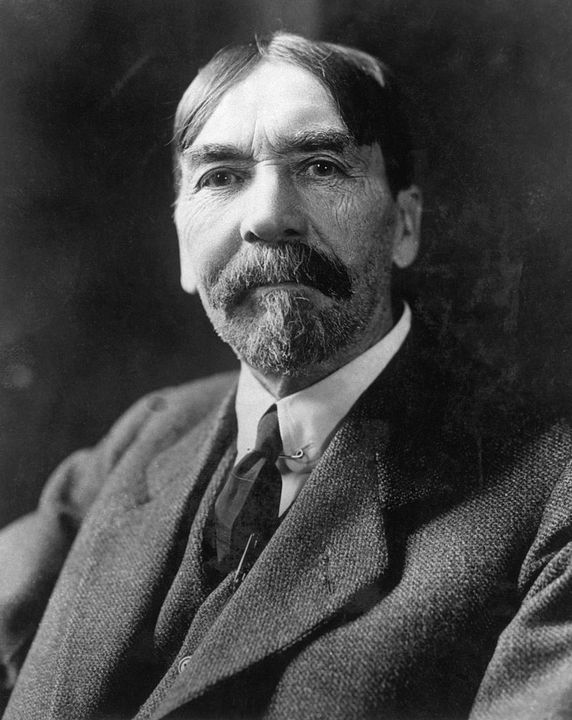
The Theory of the Leisure Class, published by Macmillan in New York in 1899, is Thorstein Veblen's study of how wealth, status and consumption shape economic life and taste. Written while he taught at the University of Chicago, during the Gilded Age of American fortunes, it treats the habits of the rich not as personal vices but as institutions with a long evolutionary history, and it describes them in a dry, ironic scientific vocabulary that made the book famous. Its fourteen chapters move from origins to modern survivals. The opening chapters trace the leisure class to the passage from a peaceable savage culture to a predatory barbarian one. Where men won honour through exploit, in war and hunting, productive work, or industry, became associated with weakness and was left to women and servants. Ownership began, Veblen argues, as the ownership of trophies and captives, and the dominant motive for accumulating wealth has always been emulation: the desire to stand well in comparison with others, which he calls invidious distinction. Because esteem is awarded only on evidence, wealth must be displayed. Chapter Three treats conspicuous leisure, the visible non-productive use of time, shown in manners, classical learning and the cultivation of useless accomplishments, and extended to wives and servants as vicarious leisure. Chapter Four introduces conspicuous consumption, the display of costly goods, feasts and gifts, which grows more important in large modern cities where neighbours do not know one another. Chapter Five argues that the standard of living is set by the class just above one's own. The middle chapters apply these principles to taste. In Pecuniary Canons of Taste, Veblen argues that costliness becomes confused with beauty: the hand-wrought silver spoon is preferred to an equally useful machine-made one, and the close-cropped lawn, expensive breeds of dogs and horses, and fashionable architecture are admired partly for their waste. Chapter Seven treats dress, whose expense, novelty and evidence that the wearer does no manual work explain the shifts of fashion, the high heel and the corset. The later chapters argue that the leisure class is conservative because it is sheltered from the pressure of industrial change, and that it preserves archaic traits of the predatory age: the love of sport, duelling and military display; the belief in luck that underlies gambling; and devout observances, which Veblen analyses in the same economic terms of ritual, vestments and consumption. A chapter on non-invidious interests discusses charity, settlement work and the impulse of workmanship. The last chapter treats the universities as an expression of pecuniary culture, citing caps and gowns, the prestige of the classics and the rise of athletics. The book was widely reviewed, praised by William Dean Howells, and gave English the phrase conspicuous consumption.
Virtues in this work
- Industry: Veblen's instinct of workmanship, which values useful effort and dislikes waste, is the standard against which he measures conspicuous leisure.
- Temperance: The analysis of feasts, stimulants and fashion in Chapters Four and Seven exposes how far consumption is driven by display rather than need.
- Humility: By showing how the desire for invidious distinction shapes taste, the book asks readers to examine their own wish to be admired for what they own.
Plot or Argument
- Chapter One: Introductory
The leisure class appears in its fullest form in feudal Europe and Japan. It arises with the predatory stage of culture, when exploit becomes honourable and industry is left to the lower classes and to women.
- Chapter Two: Pecuniary Emulation
Ownership begins with trophies and captives and grows from the desire for invidious distinction rather than from need. Each person compares himself with others, so no level of wealth can satisfy the motive of emulation.
- Chapter Three: Conspicuous Leisure
Abstention from labour becomes a mark of rank; manners, dead languages and other useless accomplishments prove a life spent outside productive work. Wives and liveried servants perform vicarious leisure on the master's behalf.
- Chapters Four and Five: Conspicuous Consumption and the Standard of Living
Costly food, drink, houses, entertainments and gifts display wealth to strangers; the standard of decent expenditure is set by the class just above, and once reached it is very hard to give up.
- Chapters Six and Seven: Taste and Dress
The canon of conspicuous waste shapes judgments of beauty in silver spoons, lawns, pets, buildings and especially dress, whose fashions change to prove the wearer can afford novelty and does no work.
- Chapters Eight and Nine: Conservatism and Archaic Traits
The leisure class, exempt from industrial pressure, resists change and preserves the habits of the predatory age; Veblen contrasts predatory temperaments with peaceable, industrious ones.
- Chapters Ten to Thirteen: Sports, Luck, Devotion and Non-Invidious Interests
Sports, the belief in luck, and ritual religious observance are analysed as survivals of archaic culture; other impulses, such as the instinct of workmanship and charitable work, run against the pecuniary scheme.
- Chapter Fourteen: The Higher Learning
Universities keep ceremonial forms, classical studies and athletics partly as marks of reputable leisure, while the sciences grow from the industrial side of life.
Lessons
Esteem needs evidence
Veblen's central observation is that wealth confers honour only when it can be seen. From this he derives conspicuous leisure, conspicuous consumption and the endless changes of fashion, and he applies it to goods most people think of as chosen simply for beauty or comfort.
- Why does Veblen think conspicuous consumption matters more in cities than in villages?
- What does the example of the hand-wrought silver spoon show about how we judge beauty?
- Which goods today are bought mainly to be seen?
Emulation without end
Because people measure themselves against their neighbours, Veblen argues, the desire for wealth can never be satisfied: each gain only resets the standard. The argument makes economic behaviour a matter of comparison rather than need.
- How does Veblen explain the origin of ownership in Chapter Two?
- Why is the standard of living set by the class just above one's own?
- Is comparison with others ever a healthy motive?
The instinct of workmanship
Against the honour paid to idleness Veblen sets an older and deeper human propensity, the instinct of workmanship, which values useful effort and dislikes waste. His irony depends on this standard of serviceability.
- Where does Veblen first introduce the instinct of workmanship, and what does it oppose?
- Does his preference for useful work leave room for beauty and leisure that are good in themselves?
- How might a craftsman and a collector disagree about the silver spoon?
Reading irony in a scientific voice
Veblen insists that words like waste and invidious are used without blame, yet his deadpan examples, from the French king who burned rather than move his own chair to the lawn as a cow pasture, are plainly comic. Readers must decide when he is describing and when he is mocking.
- What does Veblen say he means by invidious, and do you believe him?
- Find a passage where his neutral vocabulary makes a point sharper.
- Is satire a fair method for social science?
Context
Veblen wrote at the end of the Gilded Age, when industrial and railroad fortunes built mansions on Fifth Avenue and at Newport, society balls were reported in the press, and new universities were endowed by wealthy donors. He drew on Darwinian evolution, anthropological reports of tribal societies, and the German historical school of economics, and he wrote against the classical economists and the newer theorists of marginal utility who treated the consumer as a rational calculator of pleasure and pain.
Composition
The book grew from essays Veblen published in the late 1890s, including studies of the beginnings of ownership and of women's dress. Macmillan published it in New York in 1899 with the subtitle An Economic Study in the Evolution of Institutions; later editions changed the subtitle. Veblen was then a junior member of the economics faculty at the University of Chicago.
Reception
William Dean Howells gave the book an admiring two-part review in 1899, and it quickly found readers outside economics. Economists were divided: some valued it as the beginning of institutional economics, others thought it more satire than science. The phrases conspicuous consumption and conspicuous leisure passed into common use, and later writers on status, fashion and advertising, from sociologists to economists studying goods whose demand rises with their price, have returned to it.
Comparisons
- the-wealth-of-nations
Smith also saw that the rich seek wealth largely to be admired, but he expected commercial society to turn that vanity toward general prosperity; Veblen stresses the waste it produces.
- rousseau-discourse-on-inequality
Rousseau traces inequality to the desire for public esteem and to living in the opinion of others, a direct ancestor of Veblen's invidious comparison.
- democracy-in-america
Tocqueville observed Americans' restless love of material well-being in a democratic society; Veblen, sixty years later, describes a new plutocracy displaying its wealth.
- the-great-gatsby
Gatsby's shirts, parties and mansion are a novelist's portrait of conspicuous consumption in the 1920s.
- weber-the-protestant-ethic-and-the-spirit-of-capitalism
Weber explains capitalist accumulation by an ascetic ethic of saving and work, nearly the opposite of the display Veblen describes.
- walden
Thoreau's chapter Economy attacks fashion, fine houses and the cost of keeping up appearances from the side of a simple life.
Quotes
Frequently cited
“In order to gain and to hold the esteem of men it is not sufficient merely to possess wealth or power. The wealth or power must be put in evidence, for esteem is awarded only on evidence.”
Frequently cited
“Conspicuous consumption of valuable goods is a means of reputability to the gentleman of leisure.”
“The institution of a leisure class is found in its best development at the higher stages of the barbarian culture; as, for instance, in feudal Europe or feudal Japan.”
“Ownership began and grew into a human institution on grounds unrelated to the subsistence minimum.”
“Drunkenness and the other pathological consequences of the free use of stimulants therefore tend in their turn to become honorific, as being a mark, at the second remove, of the superior status of those who are able to afford the indulgence.”
“The corset is, in economic theory, substantially a mutilation, undergone for the purpose of lowering the subject's vitality and rendering her permanently and obviously unfit for work.”
“they are reputable because they are cumbrous and out of date, and therefore argue waste of time and exemption from the use and the need of direct and forcible speech.”
For Students
A reading companion for classical Christian high school students. See the student guide.
Reading Guide
Watch for
- Veblen's claim in Chapter Two that ownership began with trophies and captives rather than with need.
- The definition of leisure in Chapter Three as non-productive consumption of time, not idleness.
- Vicarious leisure and consumption performed by wives and servants.
- The hand-wrought silver spoon and the lawn in Chapter Six.
- The analysis of caps and gowns and the classics in the final chapter on the higher learning.
Key terms and names
- Conspicuous consumption
- Spending on costly goods and entertainments in order to display wealth and so win esteem.
- Conspicuous leisure
- The visible non-productive use of time, proved by manners, accomplishments and abstention from useful work.
- Invidious distinction
- A comparison of persons that rates them by relative worth; Veblen says he uses the word without blame.
- Pecuniary emulation
- The striving to equal or surpass others in wealth, which Veblen makes the main motive of accumulation.
- Vicarious leisure
- Leisure performed by dependants, such as a wife or liveried servants, to the credit of the master of the household.
- Instinct of workmanship
- A human propensity to value useful, efficient effort and to dislike waste, which Veblen sets against the honour paid to idleness.
Seminar Questions
- Comprehension How does Veblen say the leisure class arose in the passage from peaceable to predatory culture?
- Comprehension What is the difference between conspicuous leisure and conspicuous consumption?
- Comprehension Why, according to Chapter Seven, does fashion in dress keep changing?
- Interpretation Is Veblen describing human nature or the customs of one society at one time?
- Interpretation What does the story of the French king who would not move his own chair suggest about honour and leisure?
- Interpretation Does Veblen's analysis of devout observances in Chapter Twelve explain religious practice, or only some outward forms of it?
- Big Question Can beauty and costliness be separated, and should they be?
Faith Connections
- Matthew 6:1-4, 19-21 (Scripture)
Jesus warns against doing righteousness to be seen of men and laying up treasure on earth; Veblen's analysis of display gives a social account of the same temptation.
- James 2:1-4 (Scripture)
James rebukes the congregation that seats the man with a gold ring and fine clothing above the poor man, an early picture of the deference Veblen describes.
- 1 Timothy 2:9-10 (Scripture)
Paul urges modest dress and good works instead of costly array, a contrast to the dress Veblen analyses in Chapter Seven.
- John Chrysostom, Homilies on Matthew (Great Conversation)
Chrysostom preached repeatedly against the luxury of rich Christians in Antioch and Constantinople and urged that wealth be given to the poor; he shares Veblen's eye for waste but grounds his criticism in charity, where Veblen's chapter on devout observances treats religion itself in economic terms.
Logic and Rhetoric
Central argument: People seek esteem; esteem is awarded only on evidence of wealth and power; leisure and costly consumption are the most visible evidence; therefore waste of time and goods becomes honourable, and the canons of taste, dress, sport, learning and devotion come to reflect the requirement of conspicuous waste.
Rhetorical device: irony through technical diction. In Chapter Seven the corset is described in the language of economic theory as a mutilation that lowers the wearer's vitality, a flat scientific phrasing that sharpens the satire.
Debate: Resolved: that most consumer spending is driven more by status than by usefulness.
Memory Work
In order to gain and to hold the esteem of men it is not sufficient merely to possess wealth or power. The wealth or power must be put in evidence, for esteem is awarded only on evidence.
Writing Prompts
Essay: Veblen claims that costliness shapes what we find beautiful. Using his examples of the silver spoon and the lawn, evaluate whether this is true of some goods, all goods, or none.
Comparison with The Wealth of Nations: Compare Smith's and Veblen's accounts of why the rich seek wealth: does the desire for esteem lead to general prosperity or to waste?
Medical Lens
The book is economic and sociological, but two passages matter to a medical reader. In Chapter Four Veblen argues that costly stimulants and narcotics were reserved to men of rank, so that drunkenness and the diseases of over-indulgence could become marks of status; this is a sociological claim about the prestige of consumption rather than a clinical account. In Chapter Seven he treats the corset and similar contrivances as deliberate impairments of vitality that prove exemption from work, joining the late 19th-century dress-reform debate in which physicians took part.
- Chapter Four
Intoxicating beverages and narcotics as honorific goods; infirmities from over-indulgence regarded among some peoples as manly attributes.
- Chapter Seven
The corset, high heels and long skirts analysed as impairments that display the wearer's freedom from labour.
Creative Prompts
- Essay
Apply Veblen's idea of conspicuous consumption to one product or habit of your own time, and argue whether his theory explains it fully.
- Classroom
Bring in two objects that do the same job, one plain and one costly, and use Veblen's silver spoon argument in Chapter Six to discuss why one seems more beautiful.
- Dialogue
Write a conversation between Veblen and Adam Smith on whether the desire to be admired for wealth helps or harms a nation.
- Fiction
Describe a Gilded Age dinner party through the eyes of a servant who has read Chapter Three on vicarious leisure.
Further Reading
- The Instinct of Workmanship and the State of the Industrial Arts, Thorstein Veblen
Veblen's 1914 development of the counter-principle to pecuniary emulation.
- The Worldly Philosophers, Robert L. Heilbroner
Popular history of economic thought with a lively chapter on Veblen.
- The Theory of Moral Sentiments, Adam Smith
Smith's account of the desire for admiration and sympathy, an earlier treatment of the same passion.
- The Age of Innocence, Edith Wharton
Novel of the old New York society whose rules of display Veblen analyses.
Verification notes
All seven quotations were found verbatim with Grep in the stored Project Gutenberg #833 text; chapter titles follow that file. Publication by Macmillan in 1899 and Howells's review are well established. Veblen's biographical details (born 1857 in Wisconsin, Yale PhD 1884, Chicago, Stanford, Missouri, New School) are standard. The record avoids quoting Veblen's passages on racial temperament in Chapters Six and Nine, which reflect the anthropology of his day; they are part of the stored text.
- The exact original subtitle of the 1899 edition and when it was changed (An Economic Study of Institutions in later printings).
- Which of Veblen's 1890s journal essays (on ownership and on women's dress) were absorbed into the book.