Work record
Novum Organon Renovatum
1858 · 19th Century · Philosophy · English
Abstract
Background. After writing a history of every natural science, Whewell sought to extract from that record a method of discovery fit for the nineteenth century. This volume is the methodological portion of his larger Philosophy, reissued separately in its third edition. Its aphorisms follow the model of Francis Bacon.
Thesis. Knowing requires both sensation and thought. Observations stay isolated until an inventive mind brings a precise, suitable concept to unite them; that added element is what makes induction more than counting cases.
Key Concepts. Clarifying concepts and binding facts are the twin operations of discovery. Conjecture is indispensable, provided each guess faces strict comparison with evidence. Three signs mark a sound theory: it forecasts what has not yet been seen, it unexpectedly accounts for a different family of phenomena, and it becomes more economical over time. Particular techniques include graphing, averaging, least squares and analysis of leftover effects.
Language. A closing book on terminology defends systematic naming in botany and chemistry and coins the general term for practitioners of natural knowledge that English still uses.
Significance. The work provoked a long exchange with John Stuart Mill over the logic of inference. Overshadowed for decades, its stress on hypothesis, prediction and convergent evidence drew renewed attention from twentieth-century philosophers of science.
Key figures
- William Whewell: Master of Trinity and historian of the sciences
- Francis Bacon: Jacobean philosopher whose 1620 Organon is being renewed
- Johannes Kepler: Astronomer whose trials with Mars serve as the model discovery
- Isaac Newton: Natural philosopher whose gravitation exemplifies consilience

Summary
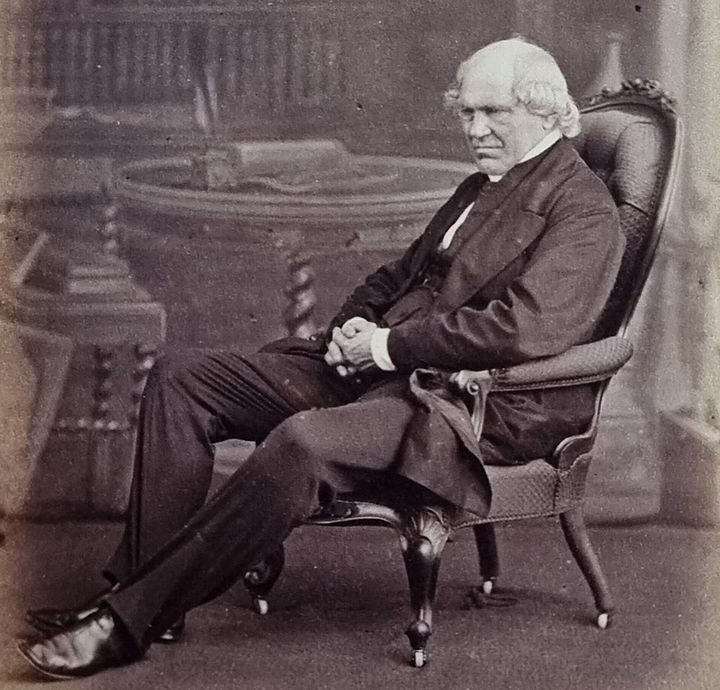
Novum Organon Renovatum ('The New Organon Renewed') was published in London in 1858 by William Whewell, Master of Trinity College, Cambridge. It is the revised second part of his Philosophy of the Inductive Sciences (1840; second edition 1847), which for its third edition he divided into three books: the History of Scientific Ideas (1858), this volume on method, and On the Philosophy of Discovery (1860). The title announces the aim. Francis Bacon's Novum Organum of 1620 had tried to give rules for discovering truth before modern science existed; Whewell, having written a history of the sciences from the Greeks to his own day, sets out to draw a method from what discoverers actually did. Like Bacon he gathers his conclusions into numbered aphorisms, each followed by argument. The library text is the complete third edition from Project Gutenberg. Book I collects aphorisms on the fundamental ideas of the sciences (space, time, number, cause, force, likeness, life and others) from the History of Scientific Ideas. Whewell holds that knowledge always has two elements, facts given by the senses and ideas supplied by the mind, and that science advances by joining them. Book II, Of the Construction of Science, describes two processes: the explication of conceptions, by which ideas are made clear and exact, and the colligation of facts, by which a scattered set of observations is bound together under a new conception. Kepler's ellipse for the orbit of Mars is the chief example: the facts were known, but the ellipse was a conception that Kepler 'superinduced' on them. Whewell defends bold hypotheses, tested rigorously, and names three marks of a true theory: it predicts unobserved phenomena, it shows a 'consilience of inductions' when it explains a class of facts it was never designed for, and it grows simpler as it develops. Later chapters give his inductive tables, the distinction between laws of phenomena and causes, the relation of art and science, and a classification of the sciences. Book III treats methods: observation and measurement, the education and discussion that clarify ideas, the steps of induction, and particular methods such as curves, means, least squares, residues, gradation and natural classification. Its last chapter, on the induction of causes, argues that the search for causes leads the mind toward a Supreme Cause. Book IV, Of the Language of Science, reviews technical vocabulary from ancient times through Linnaeus and modern chemistry and lays down rules for coining terms, among them the passage proposing the word 'scientist'.
Virtues in this work
- Humility: The Preface admits that no art of discovery is possible, since every advance needs invention and genius that no method can supply.
- Fortitude: Whewell praises Kepler for trying and rejecting hypothesis after hypothesis about Mars until the ellipse fitted the facts.
- Prudence: Aphorism X places the caution of science in rigorously comparing hypotheses with facts and resolutely rejecting those that fail.
- Piety: The last chapter of Book III follows the idea of causation to a Supreme Cause, recognized as maker and governor of the world.
Plot or Argument
- Preface: renewing Bacon
Bacon could only guess how sciences would be built; Whewell can trace in history how they were. He denies that there can be an art of discovery that works mechanically, since invention and sagacity are always needed, but holds that the history of science reveals common processes and particular methods worth teaching.
- Book I: aphorisms concerning ideas
One hundred and more aphorisms, drawn from the History of Scientific Ideas, state Whewell's view that the senses provide the characters of nature's book but the mind must supply the alphabet. Each science rests on a fundamental idea (space for geometry, cause for mechanics, likeness for classification, vital powers for biology) whose axioms are seen to be necessary once the idea is clear.
- Book II, chapters I-IV: explication and colligation
Science is constructed by making conceptions distinct and by binding facts together with them. Facts must be precise and observed with reference to clear ideas; colligation requires a conception that is both exact and appropriate, as Kepler's ellipse was for the motions of Mars.
- Book II, chapter V: the characteristics of induction
Induction is not the mere sum of particular cases: a new mental element is added. Hypotheses, even partly mistaken ones, are useful when rigorously compared with facts. True theories are marked by successful prediction, by the consilience of inductions (Newton's gravitation explaining both planetary orbits and the precession of the equinoxes; the wave theory of light explaining both fringes and the colours of thin plates), and by a tendency toward simplicity.
- Book II, chapters VI-IX: logic, causes, art, classification
Whewell offers inductive tables, pyramids of successive generalizations in astronomy and optics, as his logic of induction. He distinguishes laws of phenomena from causes, compares the practical arts with the sciences, and proposes a classification of the sciences by their fundamental ideas.
- Book III, chapters I-IV: observation and clear ideas
Methods of observation cover measurement of number, space, time and weight, the method of repetition and coincidences, and the education of the senses. Ideas are made clear by intellectual education (geometry, mechanics, natural history) and by discussion, so that controversies called metaphysical are part of scientific progress.
- Book III, chapters V-X: methods of induction and causes
Whewell analyses induction into selecting the idea, constructing the conception and determining magnitudes, then explains the methods of curves, means, least squares and residues, the law of continuity, the method of gradation and natural classification. He discusses applying inductive truths, verification by new cases, and the induction of causes, ending with the argument that the idea of causation leads toward a Supreme Cause who is maker and governor of the world.
- Book IV: the language of science
A historical survey of scientific terms is followed by aphorisms on coining them: terms should be built by analogy, fit systematic nomenclature such as Linnaeus's binary names, and use regular endings. Here Whewell proposes 'physicist' and 'scientist'.
Characters
- William Whewell, author
Cambridge historian and philosopher of science who draws his method from the record of past discoveries.
- Francis Bacon, predecessor
Author of the Novum Organum (1620), whose aphoristic form and inductive ambition Whewell adopts and revises.
- Johannes Kepler, chief example
Astronomer whose many trial hypotheses and final ellipse illustrate both bold conjecture and colligation.
- Isaac Newton, example of consilience
Whose theory of universal gravitation joined Kepler's laws, lunar and planetary perturbations and the precession of the equinoxes.
- John Herschel, contemporary cited
Astronomer whose Preliminary Discourse on the Study of Natural Philosophy (1830) supplies the book's epigraph on Bacon.
Lessons
Facts need ideas
Whewell argues that observations alone are 'insulated and unconnected' until a discoverer supplies a conception that binds them. The planets' positions were known before Kepler, but the ellipse came from his mind. Knowledge is a union of what we receive and what we contribute.
- What does Whewell mean by saying the pearls will not hang together without a string?
- Why does he say the novelty of a conception is forgotten once it has been accepted?
- Can you think of an everyday example where a new idea made scattered facts suddenly make sense?
Guess boldly, test strictly
Against those who said science should avoid hypotheses, Whewell holds that discovery depends on many trial guesses, as Kepler's notebooks show. What makes a discoverer careful is not refusing to guess but comparing each guess rigorously with the facts and rejecting what fails.
- According to Aphorism X, where does the caution of science lie?
- Why can a hypothesis that contains errors still be useful, according to Aphorism XI?
- Is it a virtue or a vice to be willing to be wrong many times?
Consilience as a mark of truth
Whewell's strongest test of a theory is consilience: an explanation built for one class of facts turns out, unexpectedly, to explain a quite different class. He thought no false supposition could so 'leap to the same point' by accident.
- What two examples of consilience does Whewell give from astronomy and optics?
- Why does it matter that the second class of facts was not considered when the theory was framed?
- Is successful prediction or consilience the stronger evidence for a theory?
Words for new knowledge
Book IV shows Whewell's conviction that clear thought needs clear terms. He gives rules for coining scientific words and offers 'scientist' as a general name for those who cultivate science, on the analogy of 'artist'.
- Why, according to Whewell, could he not call a student of physics a 'physician'?
- What rule of word formation does the 'scientist' passage use?
- How does naming something change the way people think about it?
Context
By the 1830s the physical sciences had grown far beyond Bacon's day, and British men of science were organizing through bodies such as the British Association for the Advancement of Science, founded in 1831. Whewell, John Herschel and others asked what method had produced this progress. Kant's account of the mind's contribution to experience influenced Whewell's doctrine of fundamental ideas, though he drew his evidence from history rather than from Kant's system.
Composition
Whewell published the History of the Inductive Sciences in 1837 and the Philosophy of the Inductive Sciences, Founded upon Their History in 1840, with a second edition in 1847. For the third edition he split the Philosophy into three works; Novum Organon Renovatum (1858) contains the aphorisms and the books on the construction of science, its methods and its language, with large additions on the application of science and on scientific terminology. The library text is the complete 1858 third edition.
Reception
John Stuart Mill's System of Logic (1843) answered Whewell's account of induction, arguing that Kepler's ellipse was a description of observed facts rather than an inference adding a new element, and that knowledge rests on experience rather than on necessary ideas. Whewell replied in Of Induction, with Especial Reference to Mr. J. Stuart Mill's System of Logic (1849), and Mill responded in later editions. Mill's view was more widely followed in the later nineteenth century. Twentieth-century philosophers of science returned to Whewell's emphasis on hypotheses, prediction and consilience, and historians have studied his role in shaping the Victorian scientific vocabulary; scholars still differ over how far his ideas anticipate later hypothetico-deductive accounts.
Comparisons
- novum-organum
Bacon's 1620 aphorisms promised a method by which ordinary minds could discover truth through careful induction; Whewell keeps the aphoristic form and the inductive aim but denies that any mechanical art of discovery is possible.
- mill-system-of-logic-book-iii
The other side of the Whewell-Mill debate: Mill treats induction as inference from observed particulars governed by the methods of agreement and difference, while Whewell stresses the conception the mind adds and the tests of prediction and consilience.
- kepler-new-astronomy-and-harmony-of-the-world
Kepler's own record of his trials with Mars is the case history on which Whewell builds his account of hypothesis and colligation.
- principia
Newton's theory of gravitation is Whewell's chief example of consilience, explaining classes of facts it was not framed to explain.
- poincare-science-and-hypothesis
Both writers insist that hypotheses are necessary and that the mind contributes to scientific knowledge; Poincare, unlike Whewell, treats some fundamental principles as conventions rather than necessary truths.
- on-the-origin-of-species
Darwin, who knew Whewell at Cambridge, placed a passage from Whewell's Bridgewater Treatise on general laws opposite the title page of the Origin and argued for his theory by showing that it joined many different classes of facts.
Quotes
“MAN is the Interpreter of Nature, Science the right interpretation.”
“For an Art of Discovery is not possible.”
“The process of scientific discovery is cautious and rigorous, not by abstaining from hypotheses, but by rigorously comparing hypotheses with facts, and by resolutely rejecting all which the comparison does not confirm.”
“It is a test of true theories not only to account for, but to predict phenomena.”
“The pearls are there, but they will not hang together till some one provides the String.”
“To try wrong guesses is, with most persons, the only way to hit upon right ones.”
“That rules springing from remote and unconnected quarters should thus leap to the same point”
“We need very much a name to describe a cultivator of science in general.”
For Students
A reading companion for classical Christian high school students. See the student guide.
Reading Guide
Watch for
- The pairing of facts and ideas, which runs through every part of the book.
- The difference between explication of conceptions and colligation of facts in Book II.
- Kepler, who appears again and again as Whewell's model discoverer.
- The three tests of hypotheses in Book II, chapter V: prediction, consilience and simplicity.
- The rules for coining words in Book IV.
Key terms and names
- Colligation of facts
- Binding a set of observed facts together by means of an exact and appropriate conception, as the ellipse binds the observed positions of Mars.
- Explication of conceptions
- The process of making a scientific idea clear and precise, often through discussion and controversy.
- Superinduction
- Whewell's word for the mind's adding a new conception to the facts in every true induction.
- Consilience of inductions
- The agreement of inductions drawn from different classes of facts, which Whewell treats as a strong test of truth.
- Fundamental idea
- A basic form of thought, such as space, cause or likeness, on which a science rests and from which its axioms follow.
- Method of residues
- Subtracting the effects of known causes from observations so that the remaining quantity can be studied for a new law.
Seminar Questions
- Comprehension What did Whewell hope to do that Bacon could not, according to the Preface?
- Comprehension What are the two processes by which, in Book II, science is constructed?
- Comprehension What examples does Whewell give of the consilience of inductions?
- Interpretation Why does Whewell insist that an induction is not the mere sum of the facts?
- Interpretation How can Whewell both praise bold hypotheses and call science cautious and rigorous?
- Interpretation Why does the chapter on the induction of causes end by speaking of a Supreme Cause, and how does Whewell mark that he is passing beyond physical science?
- Big Question Does the mind discover order in nature, or impose it?
- Big Question Can there be a method for having good ideas?
Faith Connections
- Psalm 111:2 (Scripture)
'The works of the LORD are great, sought out of all them that have pleasure therein': a text later carved over the door of the Cavendish Laboratory at Cambridge and close to Whewell's view of science as the interpretation of God's works.
- Romans 1:20 (Scripture)
Paul says the invisible things of God are understood by the things that are made; Whewell's final chapter of Book III argues from the idea of causation toward a Supreme Cause.
- Genesis 2:19-20 (Scripture)
Adam names the creatures; Book IV treats the naming of things as a serious part of knowing them.
- Francis Bacon, Novum Organum I.1 (Great Conversation)
Bacon's 'Man, being the servant and interpreter of Nature' is the source of Whewell's first aphorism.
Logic and Rhetoric
Central argument: All knowledge joins facts received through the senses with ideas supplied by the mind. The history of science shows that discoveries were made when clear and appropriate conceptions were applied to precise facts. Since such conceptions are invented, discovery requires bold hypotheses; since many are false, they must be tested by their power to predict, to unite different classes of facts and to grow simpler. These processes, though they cannot be reduced to a mechanical art, can be described and taught.
Rhetorical device: aphorism. Following Bacon, Whewell compresses each conclusion into a short italicized statement, such as Aphorism XII's 'It is a test of true theories not only to account for, but to predict phenomena,' and then supports it with argument and historical example.
Debate: Resolved: That scientific discovery depends more on the ideas of the discoverer than on the accumulation of observations.
Memory Work
The process of scientific discovery is cautious and rigorous, not by abstaining from hypotheses, but by rigorously comparing hypotheses with facts, and by resolutely rejecting all which the comparison does not confirm.
The pearls are there, but they will not hang together till some one provides the String.
Writing Prompts
Essay: Explain Whewell's account of Kepler's discovery of the elliptical orbit of Mars. What did Kepler contribute that the observations did not contain, and why does Whewell think this shows induction is more than generalization?
Comparison with A System of Logic, Book III: Of Induction: Whewell and Mill disagreed about whether Kepler's ellipse was an inference or a description. Present each side's strongest case and explain what the disagreement shows about the nature of induction.
Medical Lens
Whewell's subject is method in the physical sciences, but Book I includes aphorisms on biology that bear on the history of physiology and medicine. He argues that life cannot be reduced to mechanical or chemical forces, treats vital powers as a fundamental idea, distinguishes voluntary, reflex and instinctive motions, and holds that the very idea of disease presupposes final causes in organization, since disease is a state in which vital forces fail of their proper ends. These are statements of a mid-Victorian vitalist position that later physiology, notably Claude Bernard's, approached differently. His methods of natural classification and of means also bear on later nosology and medical statistics, though he does not apply them to medicine.
- Book I, Aphorisms CI-CIII
Life as a system of vital forces, irreducible to mechanical or chemical forces; digestion and the motion of the blood as examples.
- Book I, Aphorism CIV
Distinction between voluntary, reflex and instinctive motions in terms of sensations, ideas and actions.
- Book I, Aphorisms CV-CVI
Final causes in organized bodies, and disease as a state in which the vital forces do not attain their proper ends.
Creative Prompts
- Dialogue
Stage a debate between Whewell and John Stuart Mill over Kepler's ellipse: was it a new conception added to the facts, or simply a summary of what the observations already contained?
- Classroom
Give the class a table of planetary distances and periods without telling them Kepler's third law. Have groups look for a pattern, then discuss what Whewell would say happened in their minds when they found it.
- Essay
Choose a scientific theory you have studied and test it by Whewell's three marks: prediction, consilience and growing simplicity.
- Fiction
At the 1833 meeting of the British Association, members discuss what to call themselves. Write the scene in which the word 'scientist' is first proposed and the objections it meets.
Further Reading
- Novum Organum, Francis Bacon
The 1620 work Whewell set out to renew.
- Of Induction, with Especial Reference to Mr. J. Stuart Mill's System of Logic, William Whewell
Whewell's 1849 reply to Mill, reprinted in On the Philosophy of Discovery.
- The Philosophical Breakfast Club, Laura J. Snyder
A group biography of Whewell, Herschel, Babbage and Richard Jones.
- Reforming Philosophy: A Victorian Debate on Science and Society, Laura J. Snyder
A study of the Whewell-Mill debate.
Verification notes
Structure and contents follow the stored Project Gutenberg text of the 1858 third edition. All eight quotations were found by search in content/texts/whewell-novum-organon-renovatum.txt and copied exactly; where the printed text italicizes words with underscores, the quotations stop short of them. Whewell first proposed 'scientist' in print in an 1834 review of Mary Somerville's On the Connexion of the Physical Sciences and used it in the Philosophy of the Inductive Sciences in 1840; the passage quoted here is the 1858 version. The account of the Mill debate follows standard histories. The Darwin epigraph is from the Origin's first edition.
- The exact number of aphorisms in Book I in this edition.
- Whether the 1858 edition's Book IV aphorism numbering matches the 1847 edition.