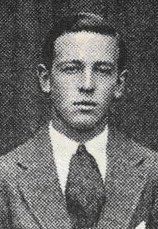
Clive Staples Lewis (1898–1963), born in Belfast, was wounded in the First World War and taught English at Magdalen College, Oxford, from 1925 and at Magdalene College, Cambridge, from 1954. After returning to Christian faith around 1931 he became a widely read lay apologist through his wartime BBC talks, later gathered as Mere Christianity, and through The Screwtape Letters. He also wrote the Chronicles of Narnia, the Ransom space trilogy and major studies of medieval and Renaissance literature.
The Screwtape Letters is a book of thirty-one letters written by Screwtape, a senior devil in the bureaucracy of Hell, to his nephew Wormwood, a junior tempter on his first assignment. Wormwood's charge is a young Englishman, never named and called only the patient, who lives with his mother at the outbreak of the Second World War.
The Abolition of Man is the text of three lectures C. S. Lewis gave as the Riddell Memorial Lectures at King's College, Newcastle upon Tyne, then part of the University of Durham, in February 1943, and published that year by Oxford University Press with the subtitle Reflections on Education with Special Reference to the Teaching of English in the Upper Forms of Schools. The first lecture, Men without Chests, begins with a small English textbook for schoolchildren, which Lewis calls The Green Book and whose authors he names Gaius and Titius out of courtesy.
That Hideous Strength, subtitled A Modern Fairy-Tale for Grown-Ups, completes the trilogy that began with Out of the Silent Planet and Perelandra, though it moves the action from other planets to an English university town. Mark Studdock, a young sociologist and fellow of Bracton College in Edgestow, longs to belong to the inner circle of the college's Progressive Element.
The Lion, the Witch and the Wardrobe opens during the Second World War, when Peter, Susan, Edmund and Lucy Pevensie are sent away from London because of the air raids to stay in the great country house of an old Professor. On a rainy day of hide-and-seek, Lucy, the youngest, climbs into a wardrobe in an empty room and comes out in a snowy wood beside a lamp-post.
Prince Caspian begins a year after The Lion, the Witch and the Wardrobe. Peter, Susan, Edmund and Lucy Pevensie are waiting on a railway platform on their way back to school when they are pulled out of England and set down on a wooded island beside a ruined castle.
Mere Christianity is C. S. Lewis's case for, and plain explanation of, the beliefs held in common by Christians of most denominations. In the preface Lewis borrows the phrase "mere Christianity" from the Puritan writer Richard Baxter and compares the shared faith to a hall from which doors open into the rooms of the separate churches; he says he is describing the hall, not recommending a room, and that people must eventually live in a room rather than in the hall.
The Voyage of the Dawn Treader is the third Chronicle of Narnia to be published. Edmund and Lucy Pevensie are spending the summer holidays with their aunt and uncle in Cambridge, where their cousin Eustace Clarence Scrubb, a priggish, bullying boy raised on modern notions, makes them miserable.
The Silver Chair begins behind the gym at Experiment House, a muddled modern boarding school where bullies rule. Jill Pole is crying there when Eustace Scrubb, much changed since his voyage on the Dawn Treader, tells her about Narnia.
The Horse and His Boy takes place during the golden age of Narnia, while the four Pevensie children reign at Cair Paravel, and it happens mostly in Calormen, the hot, crowded empire far to the south. Shasta, a boy of about eleven, lives in a fishing village with Arsheesh, a hard man who works him like a servant.
Surprised by Joy is C. S. Lewis's account of his life from early childhood to his acceptance of Christianity in 1931. Lewis says in his preface that the book is not a full autobiography but the story of his conversion, and that it follows one thread: his experience of what he calls Joy, a sudden, piercing longing for something unnamed that is itself more desirable than any ordinary satisfaction.
The Magician's Nephew is the story of how Narnia began and how a wardrobe came to lead into it. In London around 1900, Digory Kirke has been sent to live with his Uncle Andrew and Aunt Letty because his father is in India and his mother is gravely ill.
The Last Battle tells of the end of Narnia, some two hundred years after the reign of Caspian X. Beside Caldron Pool, under the great waterfall in the far west, lives Shift, a clever, ugly old Ape, with his simple friend Puzzle the Donkey, whom he bullies. When a lion's skin washes down the falls, Shift sews it into a coat for Puzzle and, showing him by firelight in a stable on a hill, announces to the Narnians that Aslan has returned.
Till We Have Faces, subtitled A Myth Retold, rewrites the story of Cupid and Psyche from Apuleius's Golden Ass, told by one of Psyche's elder sisters. Orual, now an old queen of Glome, a small barbarian kingdom on the edge of the Greek world, writes her book as a formal accusation against the gods.