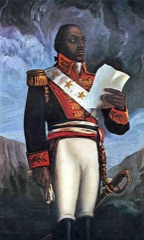
Toussaint Louverture
c. 1743–1803 · Leader of the Haitian Revolution, the only successful large-scale revolt of enslaved people.
Toussaint Louverture was born into slavery on a plantation in Saint-Domingue, the French colony that is now Haiti, then the world's richest sugar colony, where hundreds of thousands of enslaved Africans worked under brutal conditions. He learned to read, became a coachman and steward, and was freed in the 1770s. In 1791 the enslaved people of the northern plain rose in revolt, and Toussaint soon became its most skilled leader. After France abolished slavery in 1794, he fought for the French Republic, defeating Spanish and British invaders, and by 1801 he governed the whole island and issued a constitution naming himself governor for life. He was a devout Catholic and tried to restore the plantation economy with paid but strictly controlled labor. Napoleon, who meant to restore slavery, sent a large army in 1802. Toussaint was invited to a meeting, seized, and shipped to France, where he died in a cold prison in the Jura mountains in 1803. Haiti declared independence the next year.
Faith: A Catholic who identified as a loyal Christian and made Catholicism Saint-Domingue's only publicly professed faith. Source: Wikipedia

Key dates
- 1791 Revolt begins in Saint-Domingue
- 1794 France abolishes slavery
- 1801 Issues a constitution as governor
- 1802 Seized and deported to France
- 1803 Dies at Fort de Joux
- 1804 Haiti declares independence
Fun facts
- As a small, thin youth he was nicknamed Fatras-Bâton, 'sickly stick', though he later became known for his stamina and riding skill. (Source: Toussaint Louverture (Wikipedia))
More lives
John Adams · Samuel Adams · Josiah Bartlett · Carter Braxton · Edmund Burke · Charles Carroll of Carrollton
Notes: Birth year is uncertain.