Virtues · A collection
Virtue in Stone
These monuments are not trophies of easy victory. Each one remembers people — and, in one case, a small and faithful dog — who kept a hard duty: a post, a city, a promise, a conscience. The notes below are for students. The facts and inscriptions are taken from official sites, museums, and heritage listings. Where a person honored here has a Great Lives page, or where the sculptor does, the name is linked.
10 monuments, from the Rome of Marcus Aurelius to a London memorial of 1920. Each entry names the sculptor, records a verified inscription where there is one, and points to related lives and library works.
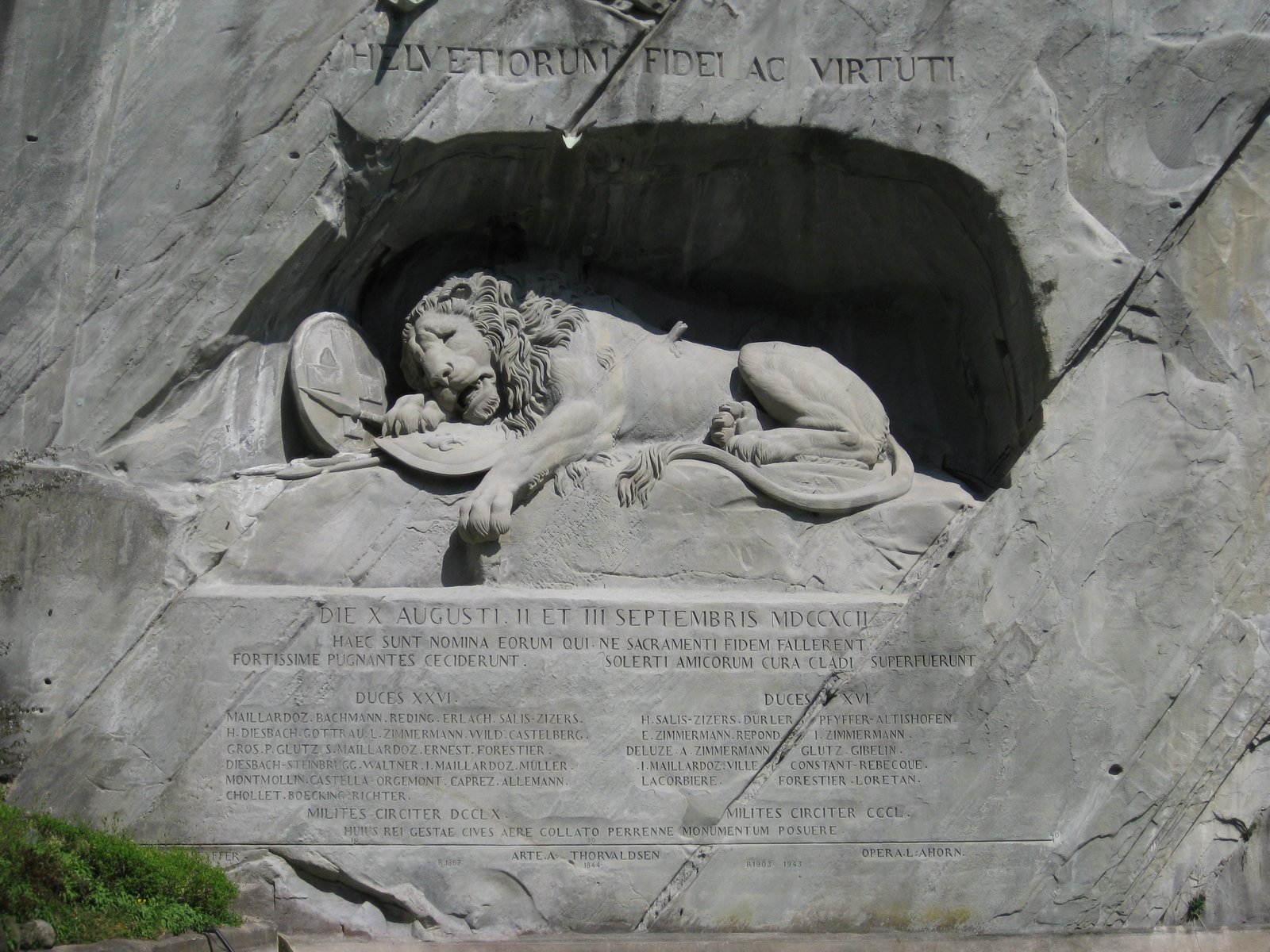

Lucerne, Switzerland · Dedicated 10 August 1821
The Lion of Lucerne
In a former quarry in Lucerne, a dying lion is carved into the sandstone cliff. It commemorates the Swiss Guards who were killed defending the Tuileries Palace in Paris on 10 August 1792, during the French Revolution. The monument was designed by the Danish sculptor Bertel Thorvaldsen, carved by Lukas Ahorn, and dedicated on 10 August 1821, the anniversary of the massacre.
The lion shows what loyalty and courage look like when they cost something: these men kept the oath they had sworn, even when keeping it meant death. The memorial does not celebrate a victory. It honors soldiers who would not abandon their post.
HELVETIORUM FIDEI AC VIRTUTI
To the loyalty and bravery of the Swiss.
Mark Twain, in A Tramp Abroad (chapter XXVI), called it “the most mournful and moving piece of stone in the world.” Read the chapter in the library. Project Gutenberg source.
In this library: A Tramp Abroad · A Tale of Two Cities · Reflections on the Revolution in France · The French Revolution: A History.
Official site: Lion Monument, Lucerne Tourism.
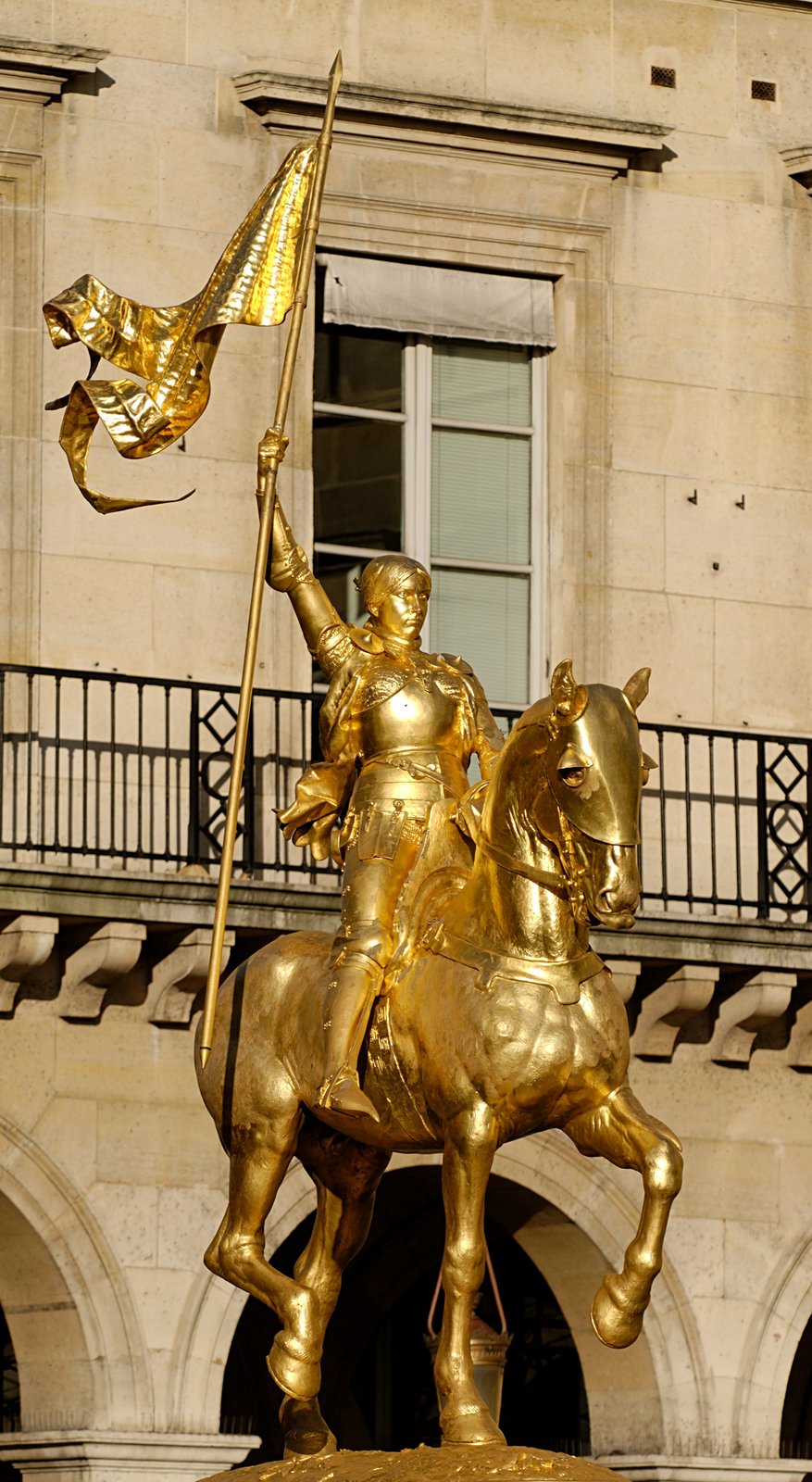

Paris, France · Inaugurated 1874; present figure 1899
Joan of Arc, Place des Pyramides
Frémiet’s gilded bronze equestrian statue of Joan of Arc stands in the Place des Pyramides, near the rue de Rivoli in Paris. It was inaugurated in 1874. Frémiet later revised the figure, and the statue now on the square dates from 1899. Joan is shown in armor, on horseback, holding her banner. The monument is a protected historic work (Mérimée PA00086007).
Joan was a peasant girl who believed she was called by God to help France in a desperate war. Courage here is not loudness; it is obedience to a vocation that led her to the field and, at last, to the stake. The gilded figure keeps both the soldier and the saint in view.
JEANNE D'ARC
In this library: The Trial of Joan of Arc · Saint Joan.
Official site: Jeanne d’Arc, Place des Pyramides (Mérimée PA00086007), French Ministry of Culture.
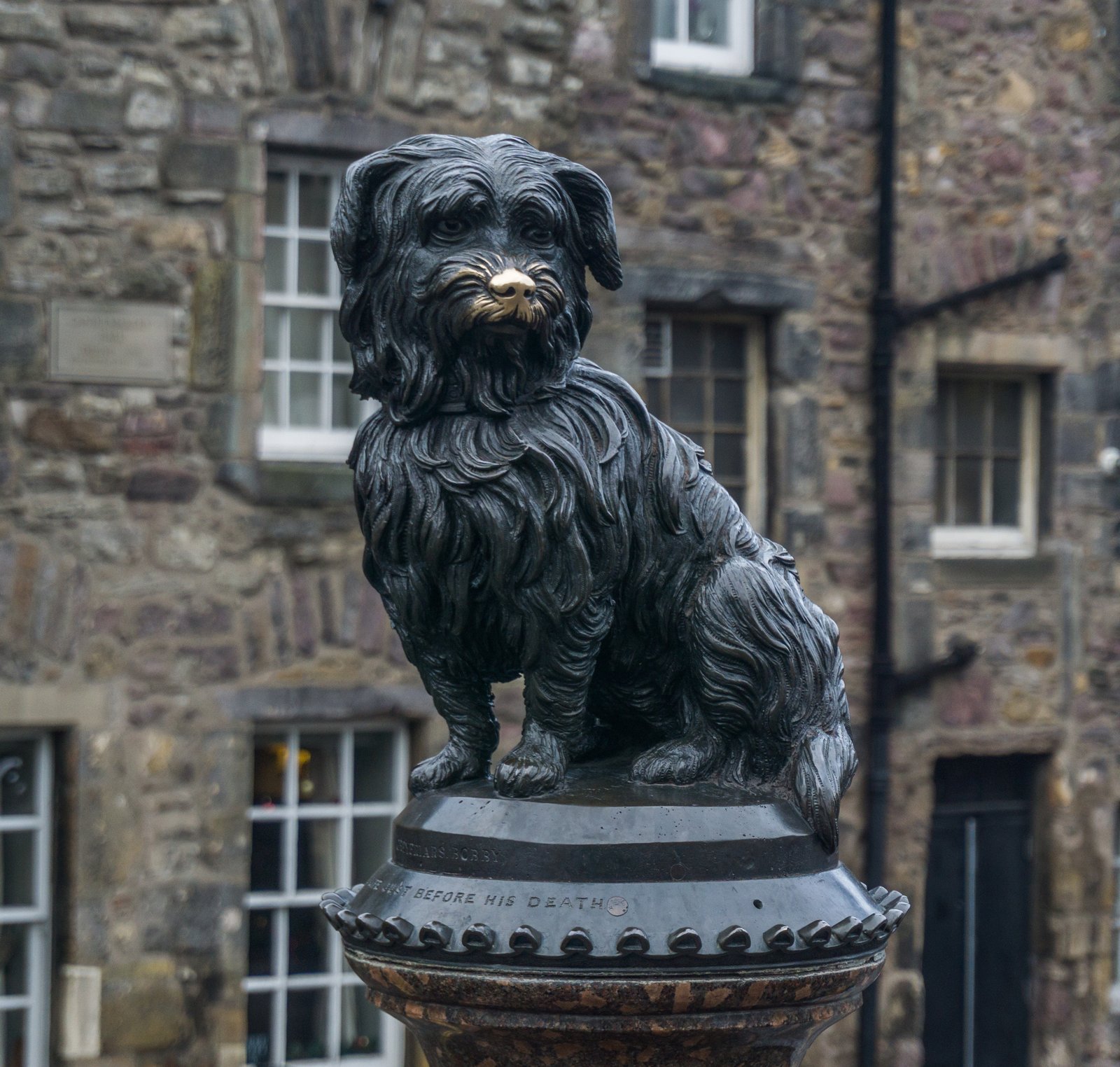

Edinburgh, Scotland · Unveiled 14 November 1873 · Good for younger students
Greyfriars Bobby
This small bronze dog sits on a granite fountain at the top of Candlemaker Row, beside Greyfriars Kirkyard in Edinburgh. It was sculpted by William Brodie and unveiled on 14 November 1873. The monument remembers a Skye terrier who, according to the story long told in the city, kept watch at his master’s grave in Greyfriars for years after the man died. The fountain is a listed historic monument (LB27899).
Younger students often meet loyalty first in a story like this: a creature who will not leave. Whether every detail of Bobby’s life can be proved, the city chose to honor faithful affection, and the statue still asks a simple question — what does it mean to keep watch for someone you love?
A tribute to the affectionate fidelity of Greyfriars Bobby.
Official site: Greyfriars Bobby Fountain, listed building LB27899, Historic Environment Scotland.
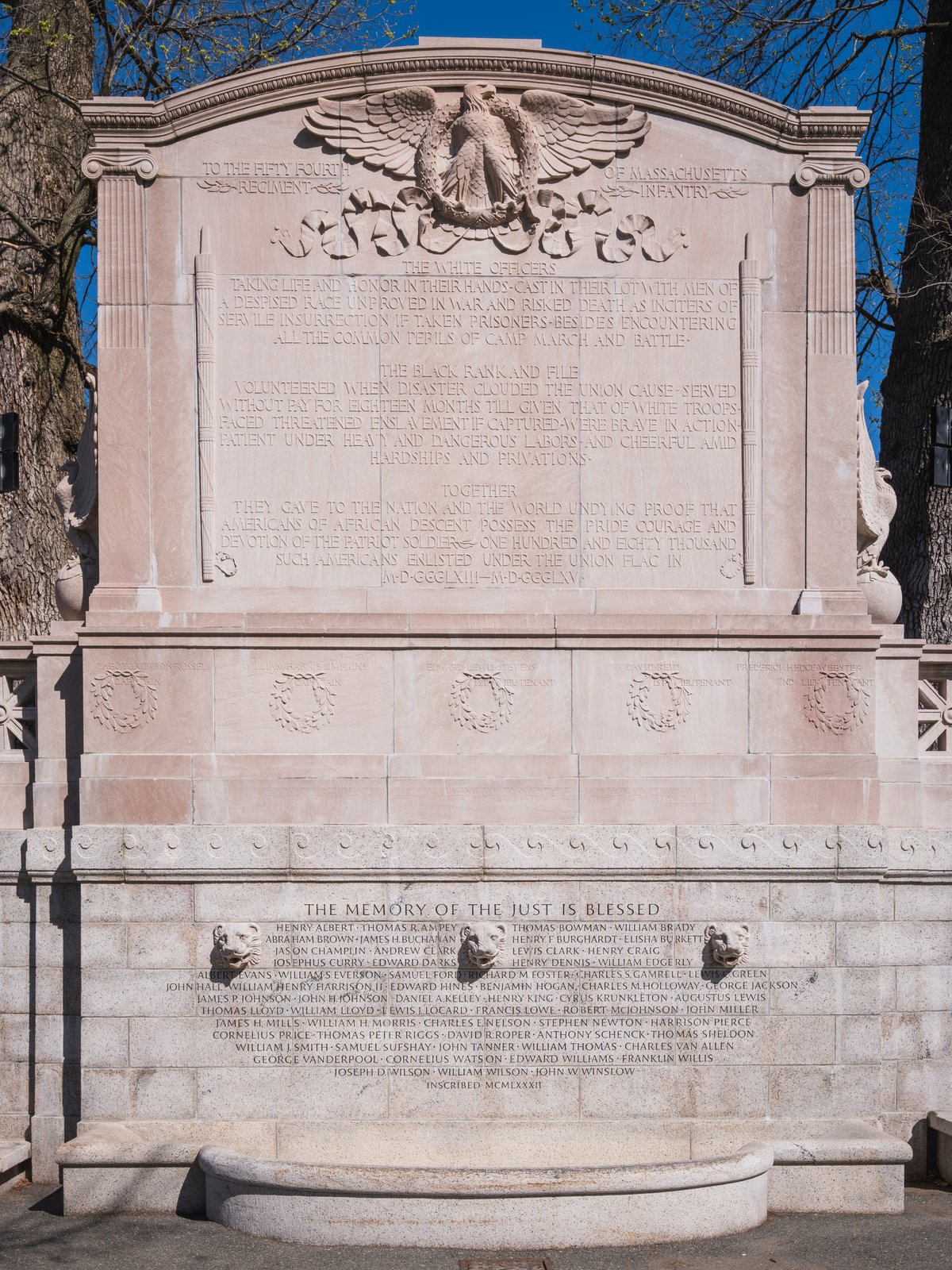

Boston Common, Boston, Massachusetts · Dedicated 1897
Robert Gould Shaw and the 54th Massachusetts Memorial
On Boston Common, Saint-Gaudens shows Colonel Robert Gould Shaw on horseback beside the marching men of the 54th Massachusetts Infantry, one of the first official Black regiments in the Union Army. Bostonians commissioned the memorial after the regiment’s assault on Fort Wagner, South Carolina, on 18 July 1863, in which Shaw was killed. The National Park Service records that the memorial was dedicated in 1897 and ranks it among the finest works of American public art.
The bronze is not only a portrait of one colonel. It is a picture of a shared command and a shared risk: officers and enlisted men moving forward together in a war that would decide whether the Union would live and whether slavery would end. Courage here is bound to justice.
OMNIA RELINQUIT SERVARE REMPUBLICAM
He relinquished everything to serve the republic. (The motto of the Society of the Cincinnati, used by the Shaw family.)
In this library: Narrative of the Life and What to the Slave Is the Fourth of July? · The Gettysburg Address.
Official site: Robert Gould Shaw and Massachusetts 54th Regiment Memorial, National Park Service.
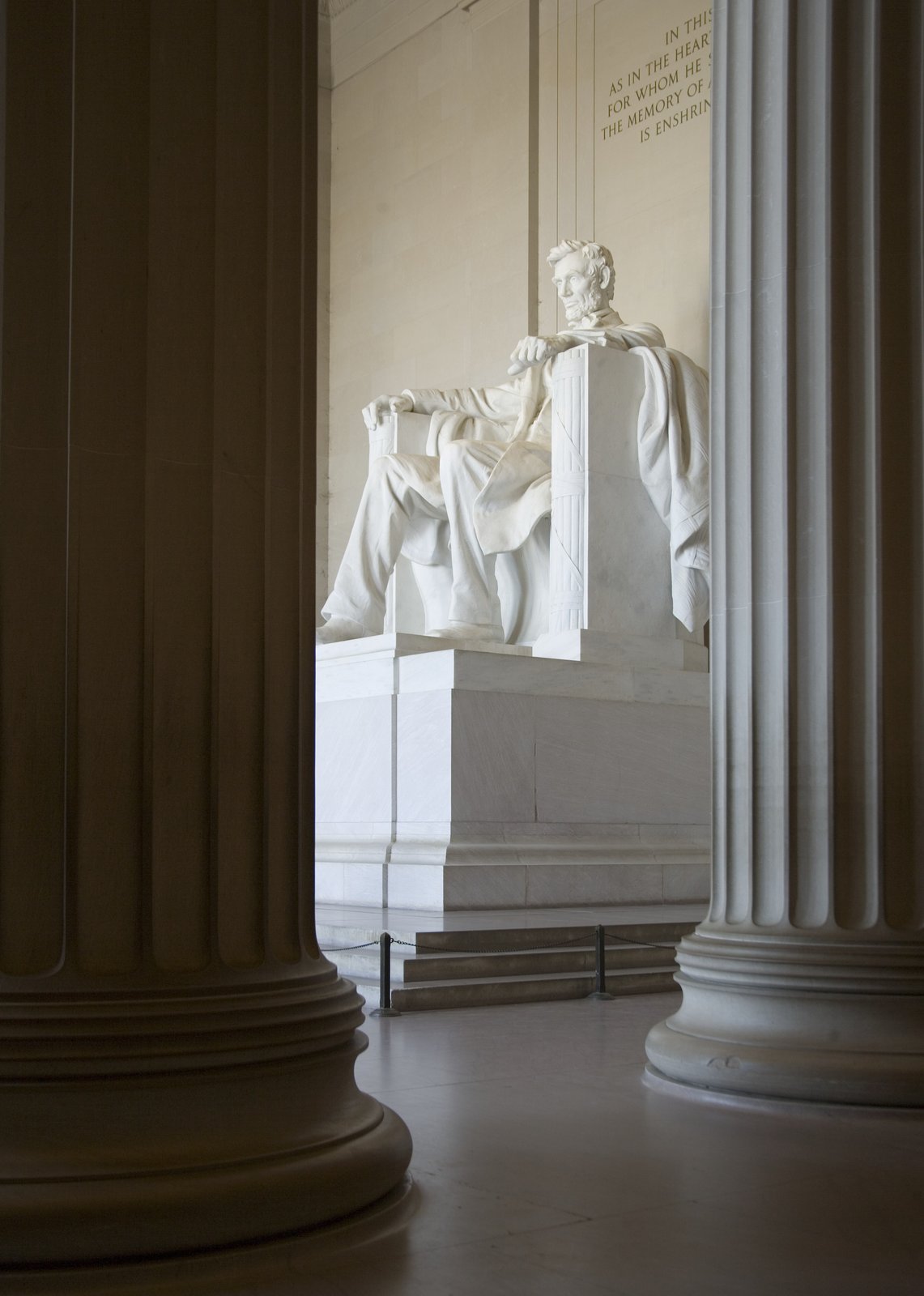
Washington, D.C. · Dedicated 30 May 1922
The Lincoln Memorial
The Lincoln Memorial was dedicated on 30 May 1922. Henry Bacon modeled the building on the Parthenon. Inside, Daniel Chester French’s 19-foot seated statue of Lincoln is the centerpiece. On the south wall is the Gettysburg Address; on the north wall is the Second Inaugural Address; behind the statue is the memorial’s own inscription, quoted above. All three texts are recorded by the National Park Service.
The memorial asks visitors to remember a president who held the Union together and helped end slavery, and then, in the Second Inaugural, called the country to finish the work “with malice toward none, with charity for all.” Justice without prudence becomes vengeance; prudence without justice becomes mere management. Lincoln held both together.
IN THIS TEMPLE AS IN THE HEARTS OF THE PEOPLE FOR WHOM HE SAVED THE UNION THE MEMORY OF ABRAHAM LINCOLN IS ENSHRINED FOREVER
In this library: The Gettysburg Address · Second Inaugural Address · First Inaugural Address.
Official site: Lincoln Memorial inscriptions, National Park Service.
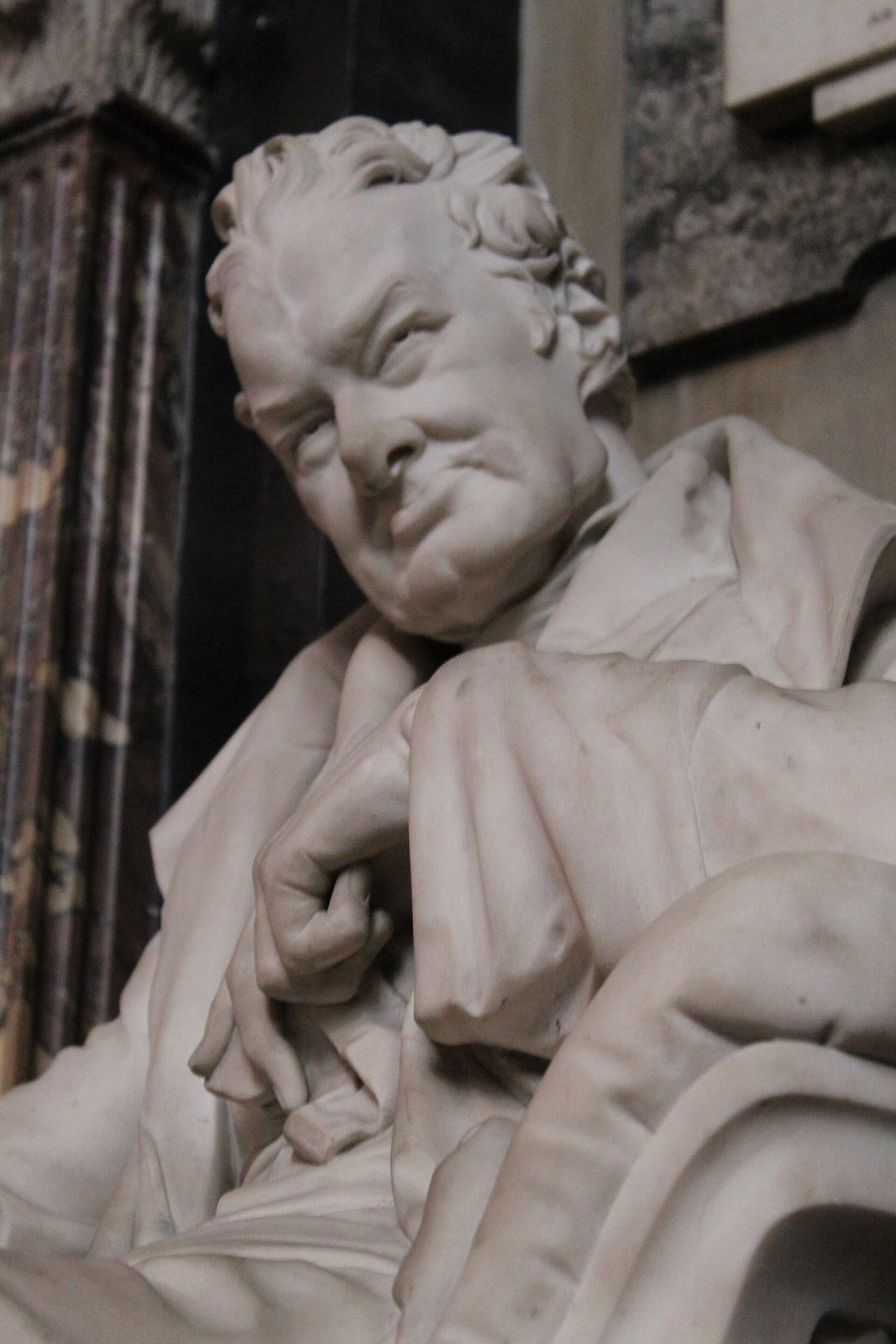

Westminster Abbey, London · Statue set up in 1840
William Wilberforce, Westminster Abbey
William Wilberforce, the Yorkshire member of Parliament who led the long campaign against the British slave trade, died on 29 July 1833 and was buried in the north transept of Westminster Abbey on 3 August. In 1840 a seated statue by Samuel Joseph was set up nearby in the north choir aisle. The Abbey publishes the full inscription, which praises his public labor and his Christian life, and which specially identifies him with the end of the slave trade and the coming abolition of slavery in the colonies.
Wilberforce’s work took decades and met great opposition. The inscription does not treat abolition as a merely political success; it speaks of removing guilt, and of a man who “relied, not in vain, on God.” Justice here is slow, costly, and bound to faith.
HIS NAME WILL EVER BE SPECIALLY IDENTIFIED WITH THOSE EXERTIONS WHICH, BY THE BLESSING OF GOD, REMOVED FROM ENGLAND THE GUILT OF THE AFRICAN SLAVE TRADE, AND PREPARED THE WAY FOR THE ABOLITION OF SLAVERY IN EVERY COLONY OF THE EMPIRE.
Excerpt from the long inscription on the statue, recorded in full by Westminster Abbey. Wilberforce is buried in the north transept; the seated statue stands in the north choir aisle.
In this library: Narrative of the Life and What to the Slave Is the Fourth of July? · 12 Years a Slave · Incidents in the Life of a Slave Girl.
Official site: William Wilberforce & family, Westminster Abbey.
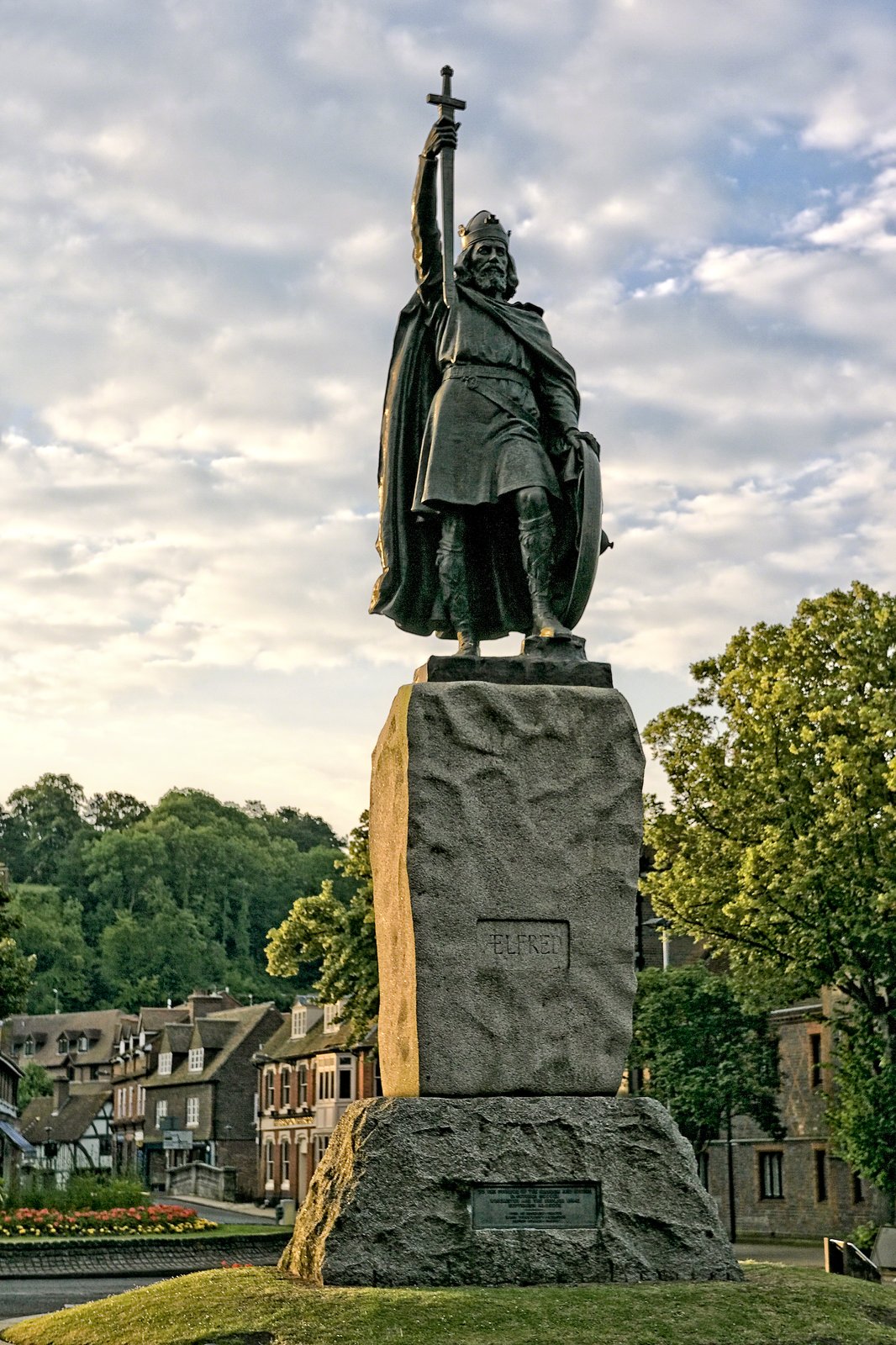

The Broadway, Winchester, England · 1901
Alfred the Great, Winchester
A standing bronze of King Alfred, by Hamo Thornycroft, stands on a rough granite base in The Broadway, Winchester, the ancient West Saxon capital. The statue was made for the 1901 millenary commemoration and is a Grade II listed building (list entry 1167789). Alfred is shown as a bearded warrior-king, cloaked, with a cross-hilted sword held as if it were also a cross.
Alfred is remembered not only for defending his people against invasion, but for law, learning, and the care of the church. The pedestal calls him “founder of the kingdom and nation.” Prudence and justice here mean more than winning battles: they mean building a people who can read, pray, and live under law.
ÆLFRED TO THE FOUNDER OF THE KINGDOM AND NATION D. OCTOBER DCCCCI.
The pedestal, recorded by Art UK, also commemorates Winchester’s millenary celebration in September 1901. It gives Alfred’s death as October 901, the traditional date; modern scholarship places his death in 899.
Official site: Statue of Alfred the Great, Historic England list entry 1167789.
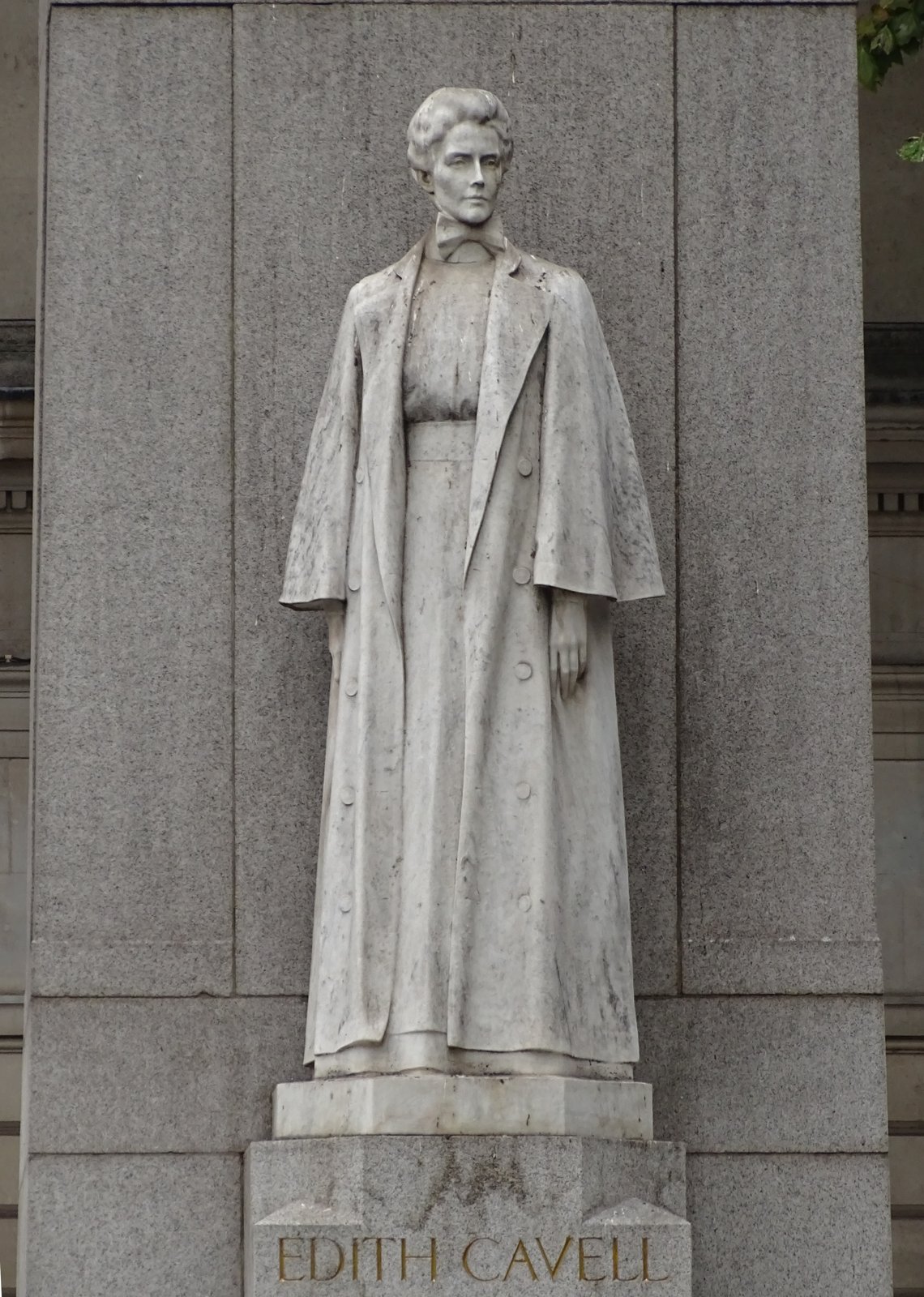

St Martin’s Place, London · Unveiled 17 March 1920
Edith Cavell Memorial
Sir George Frampton’s memorial to the nurse Edith Cavell stands in St Martin’s Place, just north of Trafalgar Square. A marble figure of Cavell in her nurse’s cloak stands against a tall granite pylon. Queen Alexandra unveiled it on 17 March 1920. In 1924 her well-known last testimony was cut into the stone beneath the figure, after public debate about its first omission.
Cavell stayed at her post, treated the wounded of both sides, and helped men escape, knowing the risk. The later inscription keeps a harder virtue in view than wartime glory: she would not let even a just love of country turn into hatred. Fortitude is joined to charity.
PATRIOTISM IS NOT ENOUGH / I MUST HAVE NO HATRED OR / BITTERNESS FOR ANYONE.
Added to the plinth in 1924. The memorial also bears the words HUMANITY, SACRIFICE, DEVOTION, and FORTITUDE, together with FOR KING AND COUNTRY, FAITHFUL UNTO DEATH, and EDITH CAVELL / BRUSSELS / DAWN / OCTOBER 12TH / 1915. English Heritage records the inscriptions and the 17 March 1920 unveiling by Queen Alexandra.
Official site: Edith Cavell Memorial, English Heritage.
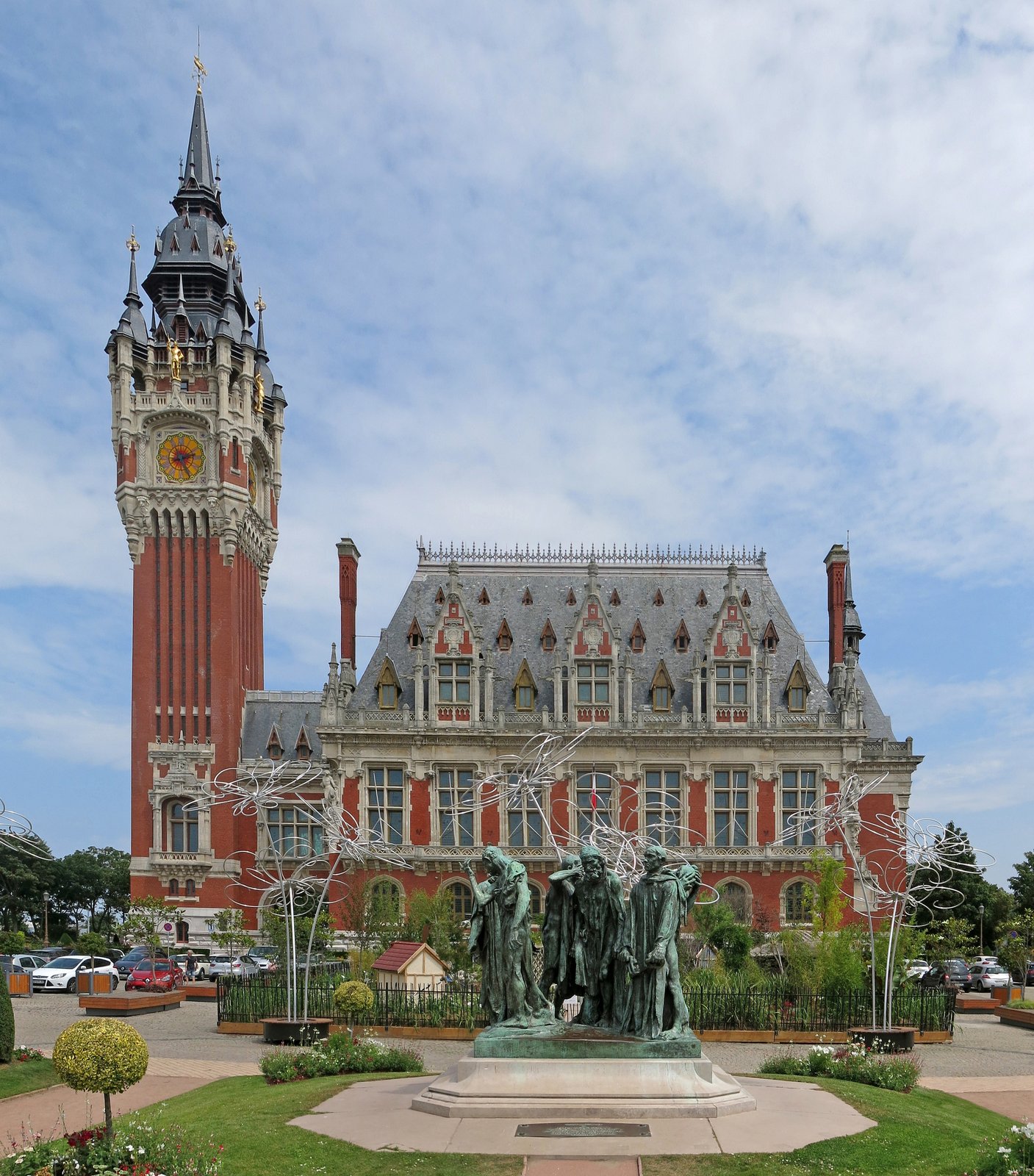

Calais, France · Final version 1889; unveiled in Calais 3 June 1895
The Burghers of Calais
Rodin’s monument remembers an episode of the Hundred Years’ War. In 1347, after a long siege, six citizens of Calais offered themselves as hostages to the English king in order to save the city: Eustache de Saint-Pierre, Jean d’Aire, Pierre and Jacques de Wissant, Andrieu d’Andres, and Jean de Fiennes. The Musée Rodin records that Rodin completed the final version in 1889 and that the group was unveiled in Calais on 3 June 1895. He showed the six men not as one triumphant hero but as a company walking forward together, each facing the cost in his own way.
The virtue here is civic: men who give themselves so that their city may live. Rodin does not hide fear or grief. Courage is not the absence of those things; it is the decision to walk out of the gates anyway, for the sake of others.
Official site: Monument to the Burghers of Calais, Musée Rodin.
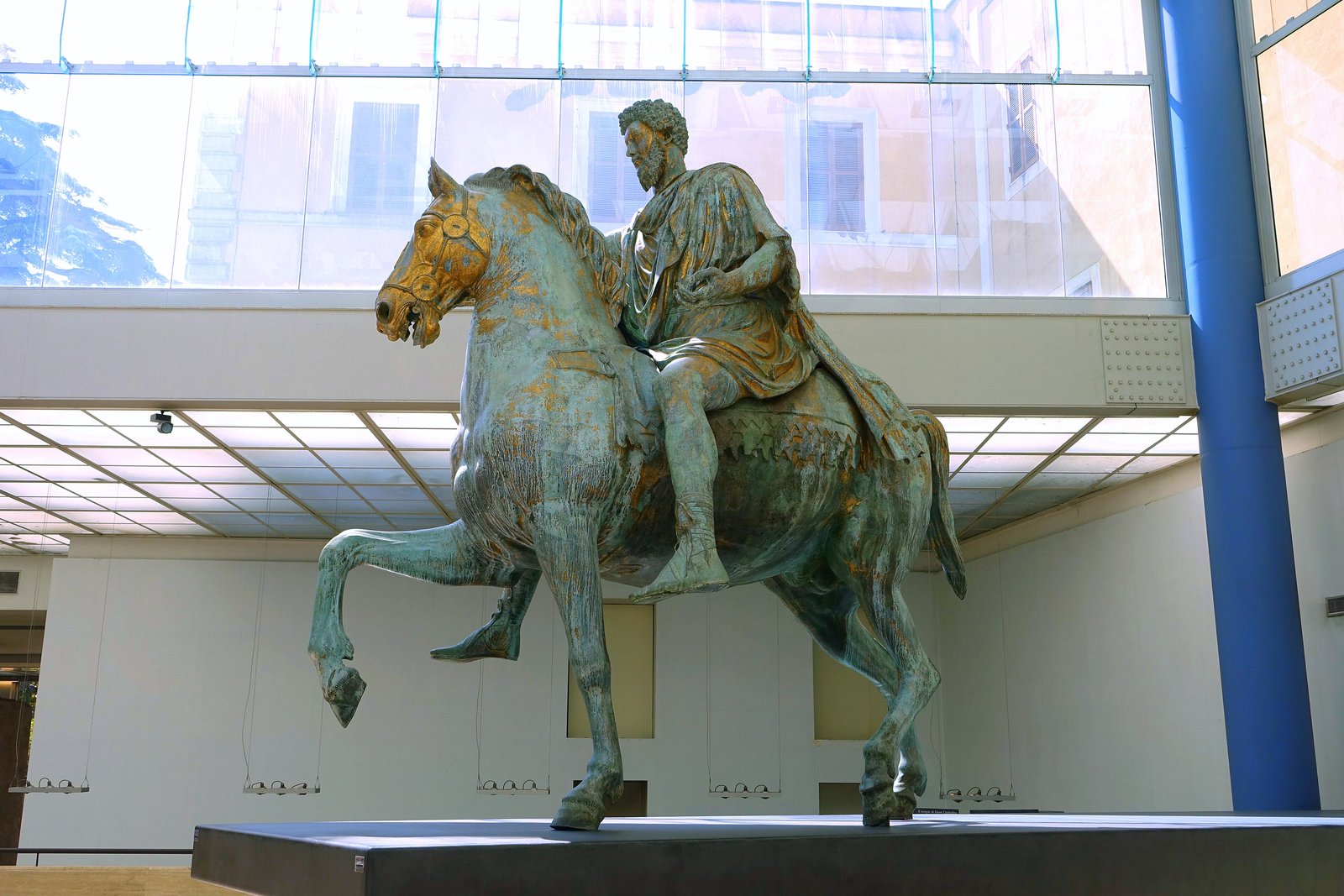

Capitoline Museums, Rome · Roman bronze, 161–180 AD (perhaps 176 or 180)
Equestrian Statue of Marcus Aurelius
This gilded bronze equestrian statue is the only surviving ancient Roman monument of its type on this scale. The Musei Capitolini date it to 161–180 AD and suggest it was most likely set up in 176, at Marcus Aurelius’s triumph over the Germanic tribes, or in 180, soon after his death. There is no ancient literary mention of the statue, and the museum cites no ancient inscription. It was later moved to the Capitoline Hill, where Michelangelo made it the center of the Campidoglio. The original now stands in the glass exedra of the Palazzo dei Conservatori; the photograph here shows that ancient bronze, not the outdoor copy.
The emperor sits quietly on a powerful horse, his hand extended, not striking a blow. In his Meditations, Marcus Aurelius practiced self-rule: watch your impressions, do the work that is yours, do not be mastered by anger or fear. The bronze is an image of authority; the book is a school of temperance and prudence.
In this library: Meditations.
Official site: Equestrian statue of Marcus Aurelius, Musei Capitolini.
Sources, licenses, and what we left out
A few well-known monuments were left out because the sculptures are still in copyright, so we could not host a photograph: the modern Leonidas monument at Thermopylae (1955), the Hachikō statue in Shibuya (1948), Christ of the Abyss, and the Marine Corps War Memorial (Iwo Jima). The Scottish National War Memorial was not selected because it is a building complex rather than a single monument. Groups such as the Swiss Guards and the burghers of Calais do not have individual Great Lives pages, and Greyfriars Bobby, a dog, does not either.
A machine-readable list of claims, official pages, and image licenses is in the sources manifest (also kept in the repository as docs/virtue-in-stone-sources.json). See also the virtue index and Great Lives.