Work record
Apologia Pro Vita Sua
1864 · 19th Century · Memoir · English
Abstract
Background. Publicly accused in a monthly magazine of teaching that lying could be justified, Newman, then living quietly as an Oratorian in Birmingham, decided that his reputation could be cleared only by showing how his convictions had actually formed.
Scope. After two chapters on his accuser's tactics, the narrative follows one theme, his religious opinions, from schoolboy faith in 1816 through Oriel friendships and the Tractarian campaign to the autumn day in 1845 when he joined the Roman communion.
Content. Letters, memoranda and recollections document a near-fatal illness abroad, a hymn written at sea, the principles of 1833, the collapse of an Anglican middle way under patristic study, a censured tract, years of retirement at Littlemore and a final farewell to Oxford.
Argument. The closing general reply defends the Church's teaching authority, explains how a believer can feel difficulties without doubting, and contests the claim that Catholic priests are indifferent to truthfulness.
Perspectives. Anglican readers have valued it as an insider's record of the Tractarian revival while defending the via media he abandoned; Catholic readers treat it as a classic account of reasoned conversion.
Significance. Written in a few weeks, it restored its author's standing in Victorian England, remains a chief source for the Oxford Movement, and is read by Anglicans and Catholics alike as one of the great English autobiographies.
Key figures
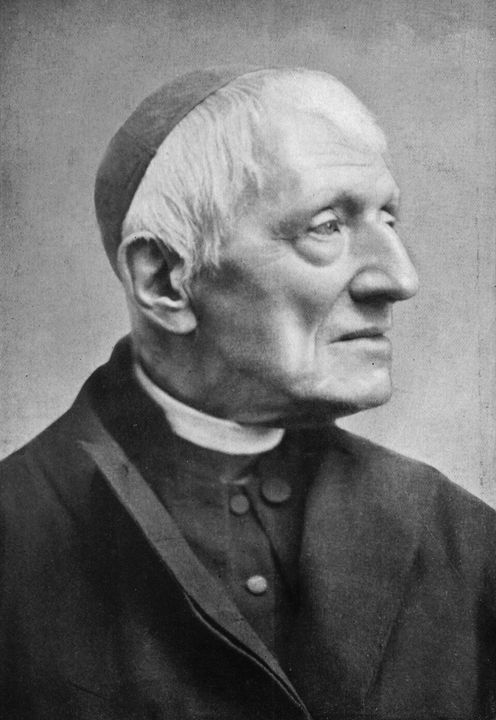
- John Henry Newman: Narrator; Anglican leader turned Catholic priest
- Charles Kingsley: Clergyman-novelist whose accusation prompted the book
- John Keble: Poet and preacher of the 1833 assize sermon
- Richard Hurrell Froude: Newman's closest Oriel friend
- Edward Bouverie Pusey: Tractarian ally who remained Anglican
- Richard Whately: Oriel mentor in logic
- Nicholas Wiseman: Catholic bishop and controversialist
- Dominic Barberi: Passionist who received Newman in 1845
- Ambrose St. John: Lifelong companion and dedicatee

Summary
Apologia Pro Vita Sua is John Henry Newman's defence of his honesty, written in 1864 in reply to the novelist and clergyman Charles Kingsley, who had written in Macmillan's Magazine that truth for its own sake had never been a virtue with the Roman clergy and that Father Newman taught it need not be. After an exchange of letters and a pamphlet by Kingsley, Newman decided that the only adequate answer was a history of his own mind. Parts I and II, kept in the library text, examine Kingsley's method of argument and explain why Newman will answer by narrative rather than by rebuttal. Part III traces his religious opinions to 1833: a London boyhood of Bible reading and imaginative fancies, an evangelical conversion at fifteen in 1816 that left him resting in the thought of two self-evident beings, himself and his Creator, and the influence at Oriel College of Richard Whately, Edward Hawkins, John Keble, the Christian Year and Joseph Butler's Analogy, along with his close friendship with Richard Hurrell Froude. He travels in the Mediterranean in 1832-33, nearly dies of fever in Sicily, tells his servant that he has a work to do in England, and writes Lead, Kindly Light while becalmed in the Straits of Bonifacio. Part IV covers 1833 to 1839, when Keble's sermon on National Apostasy starts the Oxford Movement and Newman writes Tracts for the Times defending dogma, a visible Church and the apostolical succession, and develops the theory of the Anglican via media between Rome and popular Protestantism. Part V, 1839 to 1841, describes his study of the Monophysite controversy, the shock of reading Augustine's phrase securus judicat orbis terrarum in an article by Nicholas Wiseman, and the storm over Tract 90, in which he argued that the Thirty-Nine Articles could bear a Catholic interpretation and which the bishops censured. Part VI, 1841 to 1845, recounts the Jerusalem bishopric scheme, his retirement to Littlemore with a few friends, his resignation of St. Mary's in 1843, his retraction of earlier attacks on Rome, his work on the development of doctrine, and his reception into the Catholic Church by the Passionist Father Dominic Barberi on 9 October 1845, followed by his departure from Oxford in February 1846. Part VII, a general answer to Kingsley, describes the perfect peace he has felt since, explains how difficulties differ from doubts, and sets out his view of the Church's infallibility as a power given to withstand the wild living intellect of man. An appendix answers Kingsley's charges one by one, and the volume closes with a dedication to the fathers of the Birmingham Oratory, especially Ambrose St. John, and a letter of support from Bishop William Ullathorne. The work appeared in weekly parts from April to June 1864 and was revised in 1865 as History of My Religious Opinions.
Virtues in this work
- Honor: He answers Kingsley's charge of dishonesty by laying open the whole history of his opinions for public judgement.
- Prudence: He spends six years, from 1839 to 1845, testing his doubts about the via media before acting on them.
- Fortitude: He resigns St. Mary's and leaves Oxford, his friends and his career for the sake of conscience.
- Friendship: He dedicates the book to the Oratory fathers and Ambrose St. John and speaks warmly of the Anglican friends he left.
- Faith: In Part VII he says that since his conversion he has never had one doubt, despite feeling every difficulty.
Plot or Argument
- Part I: Mr. Kingsley's Method of Disputation
Newman reviews Kingsley's charge, the correspondence that followed, and Kingsley's pamphlet, arguing that Kingsley poisons the wells by making every denial from Newman count as further evidence of dishonesty.
- Part II: True Mode of Meeting Mr. Kingsley
He resolves to answer not by disputing sentences but by showing the whole course of his thought, so that readers can judge whether he has been a deceiver or an honest man.
- Part III: History of My Religious Opinions up to 1833
Childhood, the evangelical conversion of 1816, Oriel College and the influence of Whately, Hawkins, Keble, Butler and Hurrell Froude, the Mediterranean voyage, fever in Sicily, Lead, Kindly Light, and the return to England in July 1833.
- Part IV: 1833 to 1839
The Oxford Movement begins with Keble's assize sermon; Newman sets out his three principles of dogma, a visible Church with sacraments and bishops, and opposition to Rome, and builds the via media through the Tracts and his lectures on the prophetical office.
- Part V: 1839 to 1841
Reading the history of the Monophysites he sees himself in the heretics' position; Augustine's words quoted by Wiseman shake the via media; Tract 90 on the Thirty-Nine Articles provokes official censure.
- Part VI: 1841 to 1845
The Jerusalem bishopric, three blows that he calls the beginning of the end, retirement to Littlemore, resignation of St. Mary's, the theory of development, reception by Father Dominic in October 1845, and farewell to Oxford in 1846.
- Part VII: General Answer to Mr. Kingsley
Since his conversion he has had no doubts; he distinguishes difficulty from doubt, defends the infallibility of the Church as a check on unrestrained reason, and answers Kingsley's claims about Catholic attitudes to truth and the clergy.
- Appendix, dedication and Ullathorne letter
A detailed reply to each of Kingsley's accusations, a dedication to the priests of the Birmingham Oratory and Ambrose St. John, and Bishop Ullathorne's letter describing Newman's work as a Catholic priest.
Characters
- John Henry Newman, author and narrator
Oxford don, Anglican vicar and leader of the Oxford Movement who becomes a Catholic priest and Oratorian.
- Charles Kingsley, accuser
Anglican clergyman, novelist and Cambridge professor whose charge of dishonesty occasioned the book.
- John Keble, friend and leader
Author of The Christian Year whose 1833 sermon Newman counts as the start of the Oxford Movement.
- Richard Hurrell Froude, closest friend
Oriel fellow whose bold High Church opinions shaped Newman; died in 1836.
- Edward Bouverie Pusey, ally
Regius Professor of Hebrew who joined the Movement and remained an Anglican.
- Richard Whately, early mentor
Oriel logician who taught Newman to think and to see the Church as a body.
- Nicholas Wiseman, Catholic bishop
Whose article on the Donatists led Newman to Augustine's decisive words, and who received him at Oscott.
- Father Dominic Barberi, Passionist priest
Italian missionary who received Newman into the Catholic Church at Littlemore.
- Ambrose St. John, friend and fellow Oratorian
Newman's companion from Littlemore onward, to whom he dedicates the book.
- William Bernard Ullathorne, Catholic bishop
Bishop of Birmingham whose letter of support closes the volume.
Lessons
Answering a charge with a whole life
Accused of indifference to truth, Newman decides that only the full history of his opinions will show what he is. He sets aside point-by-point rebuttal in favour of narrative, on the conviction that a reader who sees the whole person can judge his sincerity. The Apologia is thus a model of answering an attack on character with candour rather than counter-attack.
- What exactly did Kingsley accuse Newman of, according to Part I?
- Why does Newman think a history of his opinions answers the charge better than an argument?
- Can a person's account of his own motives ever be fully trusted?
Difficulty is not doubt
In Part VII Newman says that he feels the intellectual difficulties of the Creed as keenly as anyone, but that ten thousand difficulties do not make one doubt. A person can be unable to solve a problem without doubting that it has an answer. The distinction gives students a way to hold faith honestly while facing hard questions.
- What comparison to mathematics does Newman use to explain his distinction?
- Do you agree that difficulty and doubt are different things?
- How did Newman's own journey from 1839 to 1845 involve both difficulties and doubts?
Following conscience at great cost
Newman's conversion cost him his Oxford fellowship, his pulpit at St. Mary's, many friendships and his standing in English public life. He describes leaving Littlemore and never seeing Oxford again except its spires from the railway. The book shows a man acting on conviction slowly and carefully, while his Anglican friends Keble and Pusey, acting on their own convictions, stayed where they were.
- What did Newman lose by becoming a Catholic, according to Part VI?
- Why did he take six years, from 1839 to 1845, to decide?
- How does Newman describe the friends who did not follow him?
The Church and the meaning of tradition
Newman's via media held that the Church of England kept the faith of the early Church between Rome and popular Protestantism. Studying the Monophysites and Augustine's judgement on the Donatists, he came to believe that the whole Church's settled judgement decides disputes. Anglican readers continued to defend the via media as a coherent position; the Apologia lets students follow the argument as Newman lived it.
- What were the three principles Newman held in 1833, according to Part IV?
- Why did the words securus judicat orbis terrarum strike him so powerfully?
- How would Keble or Pusey have answered Newman's reasons for leaving?
Context
In the 1820s and 1830s the Church of England faced Catholic Emancipation (1829), the Reform Act (1832) and Parliament's suppression of Irish bishoprics (1833), which High Churchmen saw as state interference in the Church. The Oxford Movement, or Tractarianism, led by Keble, Newman, Froude and Pusey, recalled Anglicans to the Church Fathers, apostolic succession and the sacraments. Its critics, evangelical and liberal, suspected it of leading toward Rome, and Newman's conversion in 1845, followed by others, seemed to confirm their fears. The restoration of the Catholic hierarchy in England in 1850 renewed public anti-Catholic feeling.
Composition
In January 1864 Charles Kingsley, reviewing J. A. Froude's History of England in Macmillan's Magazine, accused Newman and the Catholic clergy of indifference to truth. Newman protested; their correspondence was published, and Kingsley replied with the pamphlet What, Then, Does Dr. Newman Mean? Newman wrote the Apologia at great speed, issuing it in seven weekly parts with an appendix between April and June 1864. In 1865 he reissued it without the two opening parts on Kingsley, under the title History of My Religious Opinions. The library text, an early twentieth-century Dent edition, includes the parts addressed to Kingsley and Bishop Ullathorne's letter.
Reception
The book won Newman wide sympathy among English readers of all churches and restored his public reputation, and many judged that he had the better of the exchange, though Kingsley's admirers continued to defend his concern about clerical candour. It has remained a classic of spiritual autobiography and English prose, read by Anglicans as a history of the Oxford Movement from one of its leaders and by Catholics as the account of a conversion. Newman was made a cardinal in 1879, beatified in 2010 and canonized in 2019.
Comparisons
- confessions
Newman cites Augustine's tolle, lege and his judgement on the Donatists as turning points; both books trace a mind's movement into the Catholic Church, though Newman writes about opinions and Augustine about the whole heart before God.
- grace-abounding
Bunyan's spiritual autobiography records an evangelical conversion through terrors and texts; Newman, converted at fifteen under Calvinist books, describes the same experience and then moves away from that tradition by reasoning about the Church.
- surprised-by-joy
C. S. Lewis, an Oxford don of the next century, also wrote a history of his mind's conversion; he came to the Church of England and stayed there, which makes his book a natural Anglican counterpart to Newman's.
- early-christian-creeds
Newman's first book was on the Arians of the fourth century, and the Nicene and Chalcedonian definitions that he studied lie at the heart of Parts IV and V.
- calvin-institutes
Newman says his first religious books were all of the school of Calvin and that he held the doctrine of final perseverance until twenty-one; Calvin's Institutes sets out the Reformed teaching he later left.
Quotes
Frequently cited
“two and two only supreme and luminously self-evident beings, myself and my Creator”
Frequently cited
“I have a work to do in England.”
Frequently cited
“He who has seen a ghost, cannot be as if he had never seen it. The heavens had opened and closed again.”
Frequently cited
“I have never seen Oxford since, excepting its spires, as they are seen from the railway.”
Frequently cited
“it was like coming into port after a rough sea”
Frequently cited
“Ten thousand difficulties do not make one doubt, as I understand the subject; difficulty and doubt are incommensurate.”
“I fell under the influences of a definite creed, and received into my intellect impressions of dogma, which, through God's mercy, have never been effaced or obscured.”
“By those great words of the ancient Father, the theory of the _Via Media_ was absolutely pulverised.”
For Students
A reading companion for classical Christian high school students. See the student guide.
Reading Guide
Watch for
- Kingsley's accusation and Newman's reasons in Parts I and II for answering with a life story instead of a debate.
- The boyhood conversion of 1816 in Part III and the two self-evident beings it left him with.
- The Mediterranean journey of 1833: the fever in Sicily, the words to his servant, and the writing of Lead, Kindly Light.
- The moments in Part V when the via media begins to fail: the Monophysites, Augustine's words, and the ghost.
- The last pages of Part VI, where Newman leaves Littlemore and Oxford.
Key terms and names
- Apologia
- Greek for a defence or reasoned answer, as in Plato's Apology; Newman's title means a defence of his life.
- Oxford Movement
- The High Church revival in the Church of England begun in 1833 by Keble, Newman, Froude and Pusey, also called Tractarianism.
- Tracts for the Times
- The series of pamphlets, 1833-1841, in which the Oxford Movement set out its teaching; Newman wrote many of them.
- Via media
- The middle way: Newman's theory that the Church of England held the faith of the early Church between Rome and popular Protestantism.
- Tract 90
- Newman's 1841 tract arguing that the Thirty-Nine Articles could be read in a Catholic sense; it was censured by the Oxford heads of houses and bishops.
- Securus judicat orbis terrarum
- Augustine's Latin phrase, meaning the whole world judges securely, which convinced Newman that the universal Church's verdict settles disputes.
- Littlemore
- The village near Oxford where Newman lived in semi-monastic retirement from 1842 and was received into the Catholic Church.
- Oratory
- A community of priests following St. Philip Neri, which Newman established in Birmingham after his conversion.
Seminar Questions
- Comprehension What did Kingsley accuse Newman of, and how did Newman decide to answer?
- Comprehension What were the three principles Newman held when the Oxford Movement began in 1833?
- Comprehension What happened to Newman between 1841 and October 1845, according to Part VI?
- Interpretation Why does Newman think the Monophysite controversy described his own position in 1839?
- Interpretation What does Newman mean when he says that one who has seen a ghost cannot be as if he had never seen it?
- Interpretation How fairly does Newman describe the Anglican friends, such as Keble and Pusey, who did not follow him?
- Big Question Is it possible to remain loyal to friends and to a former community while leaving it for conscience' sake?
- Big Question Can unresolved difficulties coexist with firm faith, as Newman claims?
Faith Connections
- 1 Peter 3:15 (Scripture)
Peter tells Christians to be ready to give a defence, in Greek an apologia, for the hope within them, with gentleness and reverence. Newman's book is such a defence, offered under public attack.
- Psalm 45:10 (Scripture)
Newman quotes the Latin of this verse, forget thine own people and thy father's house, in his letter of January 1846 as he prepares to leave Littlemore.
- Augustine, Contra epistolam Parmeniani III.4 (Church Fathers)
The source of securus judicat orbis terrarum, Augustine's argument against the Donatists that the judgement of the whole Church outweighs a separated part, which Newman applied to his own case.
- Joseph Butler, The Analogy of Religion (1736) (Great Conversation)
Newman names Butler's Analogy among the books that formed him at Oriel, teaching him that probability is the guide of life, a principle behind his later reasoning toward conviction.
Logic and Rhetoric
Central argument: Kingsley charges that Newman does not care for truth. A man's honesty is best judged by seeing the whole consistent course of his thought and conduct over many years. Newman's history shows each change of opinion reached slowly, openly and at great cost. Therefore the charge of deceit is false, and the reader can see that he followed truth as he understood it.
Rhetorical device: metaphor. In Part V Newman says he had seen the shadow of a hand upon the wall and that the heavens had opened and closed again, picturing a sudden insight that could not be unseen; in Part VII he compares his conversion to coming into port after a rough sea.
Debate: Resolved: that Newman's narrative method was a more effective answer to Kingsley than a point-by-point rebuttal would have been.
Memory Work
Ten thousand difficulties do not make one doubt, as I understand the subject; difficulty and doubt are incommensurate.
I have a work to do in England.
Writing Prompts
Essay: Newman says that ten thousand difficulties do not make one doubt. Using Parts V, VI and VII, explain what he means and show how his own path from 1839 to 1845 tests the distinction.
Comparison with Surprised by Joy: The Shape of My Early Life: Compare how Newman and C. S. Lewis, both Oxford men, describe the turning points of their conversions, and explain why one became a Catholic and the other remained an Anglican.
Medical Lens
The Apologia is a history of opinions, and its medical content is incidental. In Part III Newman describes falling dangerously ill with fever at Leonforte in Sicily in 1833, being nursed by his servant, who thought he would die, and sobbing on his recovery with the conviction that he had a work to do; the illness is usually identified by biographers as typhoid or a related fever, which the book itself does not name. He was again laid up from exhaustion at Lyons on the way home. Part VII refers to the fever that swept Irish emigrants in England, and Bishop Ullathorne's closing letter recalls Newman and Ambrose St. John nursing cholera victims at Bilston, an example of nineteenth-century clergy serving in epidemics. The narrative of 1841-1845 also records the strain and sorrow of prolonged religious uncertainty and the loss of friends, described as spiritual trial rather than illness.
- Part III
Fever at Leonforte in Sicily in 1833, his servant's nursing, and his recovery with a sense of mission.
- Part III
Exhaustion on the journey home and several days laid up at Lyons.
- Part VII
Mention of the Irish fever that cut off emigrants between Liverpool and Leeds, in a passage on Catholic clergy.
- Ullathorne letter (end of volume)
Newman and Ambrose St. John go to Bilston to minister during a cholera outbreak in place of other priests.
Creative Prompts
- Classroom
Draw a timeline of Newman's opinions from 1816 to 1845, marking each turning point named in Parts III to VI and the book or event that caused it.
- Dialogue
Write a conversation at Littlemore in 1844 between Newman and Pusey, each explaining honestly why he believes he must stay in or leave the Church of England.
- Essay
Newman chose to answer an attack on his honesty by writing a history of his mind. Evaluate whether this was the best defence, using Parts I, II and VII.
- Poetry
Newman wrote Lead, Kindly Light becalmed in the Straits of Bonifacio. Write a poem about waiting for direction at a moment of uncertainty, using an image from the sea.
Further Reading
- An Essay on the Development of Christian Doctrine, John Henry Newman
The book he was writing at Littlemore when he decided to become a Catholic.
- The Idea of a University, John Henry Newman
- The Oxford Movement: Twelve Years, 1833-1845, R. W. Church
An Anglican participant's history of the Movement.
- John Henry Newman: A Biography, Ian Ker
- The Christian Year, John Keble
Verification notes
The structure (seven parts and appendix), the conversion at fifteen in 1816, the Sicilian fever and Bonifacio, the assize sermon of 14 July 1833, Wiseman's article and Augustine's words, the ghost passage, Father Dominic's arrival on 8-9 October 1845, departure from Oxford on 23 February 1846, the dedication to the Oratory fathers and Ullathorne's letter, and Kingsley's later admissions quoted in Part I were checked against the attached Gutenberg text. The library text follows the 1864 arrangement, including Parts I and II on Kingsley that Newman dropped in 1865; the meta file's description of it as a revised edition refers to the twentieth-century Dent reprint. The details of the Macmillan's Magazine review, the pamphlet title and the weekly serial dates are standard but were not checked against a primary source. The identification of the Sicilian fever is a biographers' reading. Quotes were checked against the attached text.
- Exact dates of the seven weekly parts and appendix (usually given as 21 April to 2 June 1864, with the appendix later in June).
- Wording of Kingsley's original sentence in Macmillan's Magazine, January 1864.
- Which edition (1864 text with later additions) the Dent reprint follows for the Ullathorne letter.