Work record
The Aim and Structure of Physical Theory
1906 · Early 20th Century · Philosophy · French
Abstract
Background. Physicists around 1900 disagreed over whether science should picture hidden mechanisms or merely describe regularities. A thermodynamicist working in provincial France, who also studied the medieval roots of mechanics, wrote this account of what theory can and cannot claim.
Argument. Theory does not disclose the ultimate constitution of things; that is the business of metaphysics. Its task is to summarize observed regularities in a compact mathematical scheme. The better that scheme becomes, the more it seems to mirror nature's real arrangement, though physics alone cannot establish this.
Key Concepts. Experimental reports are already shaped by theory. A failed prediction impugns a whole bundle of assumptions, so no lone conjecture is ever refuted and no single trial can decide between rivals. Where formal logic falls silent, a cultivated judgment and knowledge of the discipline's past must guide revision.
Edition. The library offers a guide only. Duhem's French is in the public domain, but the standard English version of 1954 remains protected, and no English text could be checked for quotation. The summary and study questions are paraphrase throughout.
Significance. The holistic account of testing, later joined with Quine's name, became a fixture of twentieth-century philosophy of science, and the book's separation of physics from metaphysics shaped later discussion of science and religion.
Key figures
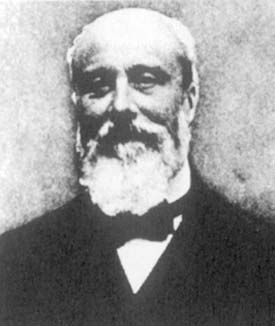
- Pierre Duhem: Bordeaux theoretical physicist and historian of medieval science
- Blaise Pascal: Seventeenth-century thinker whose kinds of mind Duhem adapts
- Léon Foucault: Experimenter on light's speed in water
- Claude Bernard: Physiologist whose experimental rules Duhem examines

Summary
The Aim and Structure of Physical Theory (La Théorie physique: son objet et sa structure) was published in Paris in 1906 by Pierre Duhem, professor of theoretical physics at Bordeaux, after appearing as a series of articles in the Revue de philosophie. A second edition (1914) added two essays, 'The Physics of a Believer' and 'The Value of Physical Theory'. The French original is in the public domain, but the standard English translation, by Philip P. Wiener (Princeton, 1954, with a foreword by Louis de Broglie), is still under copyright, so the library provides this guide without a stored text and without quotations. Part I asks what a physical theory is for. Duhem rejects the view that physics explains, that is, strips away appearances to reveal the underlying reality of matter. If physics aimed at explanation, it would depend on metaphysics and share its disputes, since Aristotelians, atomists and Cartesians each explain differently. A physical theory is instead a system of mathematical propositions, deduced from a few principles, that represents a body of experimental laws as simply, completely and exactly as possible. Such a theory economizes thought and orders laws, and as it grows more perfect it tends toward a 'natural classification' that reflects, without proving, a real order in things. Duhem contrasts the 'abstract' theories favoured by continental physicists with the mechanical models favoured by British physicists such as Kelvin and Oliver Lodge, and links the contrast to Pascal's distinction between minds that are strong but narrow and minds that are ample but weak. Part II examines the structure of theory. Physics turns qualities into quantities by measurement; mathematical deduction must allow for approximation, since a deduction that is exact for ideal data may be useless for real ones, as Hadamard's study of paths on a curved surface showed. An experiment in physics is not simply the observation of facts but their interpretation by means of theory, so that the report of an experiment is already theoretical. Physical laws are symbolic, approximate and provisional. From this follows Duhem's best-known argument: an experiment can never condemn a single hypothesis in isolation, but only a whole group of hypotheses taken together, and the physicist must decide by 'good sense' which to change. For the same reason a 'crucial experiment' that settles between two rival hypotheses, such as Foucault's measurement of the speed of light in water, is impossible in physics. The last chapter argues that hypotheses should be chosen with the history of physics in view, and traces the long development of the theory of universal gravitation.
Virtues in this work
- Humility: Duhem limits physical theory to representing laws and refuses to claim that it reveals the ultimate nature of matter.
- Prudence: Where logic cannot say which hypothesis a failed experiment condemns, Duhem entrusts the decision to the physicist's trained good sense.
- Justice: In tracing the history of gravitation he gives credit to ancient and medieval thinkers whom earlier histories had passed over.
Plot or Argument
- Part I, chapter 1: physical theory and metaphysical explanation
If the aim of physics were to explain the nature of matter, physics would be subordinate to metaphysics and to its rival schools. Duhem defines a physical theory instead as a system of mathematical propositions representing experimental laws, independent of any metaphysical system.
- Part I, chapters 2-3: natural classification and representative theories
A theory economizes thought and classifies laws. The more complete a theory becomes, the more the physicist suspects that its order mirrors a real order in nature, a 'natural classification'. History shows that explanatory parts of theories fall away while their representative parts survive into later theories.
- Part I, chapter 4: abstract theories and mechanical models
Duhem contrasts continental physicists, who build abstract and logically ordered theories, with British physicists who prefer visualizable mechanical models, and discusses the place of models in discovery and in teaching.
- Part II, chapters 1-3: quantity, quality and mathematical deduction
Measurement turns qualities into numbers that can enter theory. Because physical data are only approximate, a mathematical deduction is useful to physics only if small changes in the data produce small changes in the result; Duhem cites Hadamard's geodesics as a case where exact deduction is physically useless.
- Part II, chapters 4-5: experiment and physical law
An experiment in physics joins precise observation to an interpretation that replaces concrete facts with abstract symbols supplied by theory. Physical laws are therefore symbolic, approximate and provisional, neither simply true nor false.
- Part II, chapter 6: physical theory and experiment
A physicist testing a hypothesis must rely on a whole set of accepted theories, so a failed prediction shows only that something in the set is wrong. A crucial experiment is impossible, as the case of Foucault's experiment on light shows, and purely inductive Newtonian method cannot be followed in physics. The choice of what to revise belongs to the physicist's good sense.
- Part II, chapter 7: the choice of hypotheses
Logic leaves the physicist almost free in choosing hypotheses, but history guides the choice. Duhem traces the idea of universal gravitation from ancient and medieval thinkers through Copernicus, Kepler and Newton to show theory developing by continuous tradition.
- Appendix essays (1914 edition)
In 'The Physics of a Believer' Duhem answers the charge that his philosophy of physics served his Catholic faith: since physics does not reach metaphysical explanation, it can neither prove nor refute religious doctrine. 'The Value of Physical Theory' defends the reality of the natural classification theory approaches.
Characters
- Pierre Duhem, author
Bordeaux physicist and historian of science who defines physical theory as representation rather than explanation.
- Blaise Pascal, authority cited
Whose distinction between the geometrical spirit and the spirit of finesse frames Duhem's contrast of national styles in physics and his appeal to good sense.
- Lord Kelvin and Oliver Lodge, British physicists discussed
Builders of mechanical models whose style of theory Duhem contrasts with the abstract continental style.
- Léon Foucault, experimenter discussed
Whose 1850 measurement of the speed of light in water was taken as a crucial experiment against the emission theory of light.
- Isaac Newton, methodologist criticized
Whose claim to deduce laws from phenomena without hypotheses Duhem argues cannot be carried out in physics.
Lessons
Representation, not explanation
Duhem separates physics from metaphysics. A physical theory summarizes and orders experimental laws in mathematical form; it does not claim to reveal what matter ultimately is. This keeps physics free of the disputes among philosophical schools and keeps metaphysics free of the changing fashions of physics.
- Why does Duhem think a physics that aimed at explanation would depend on metaphysics?
- What does he mean by calling a theory a natural classification?
- Is it a loss or a gain for physics to give up the claim to explain?
Hypotheses are tested in groups
Every experiment in physics relies on theories of the instruments and on many auxiliary assumptions. When a prediction fails, logic shows only that some member of the group is false, not which one. This is the thesis later called the Duhem thesis, or, in a broadened form, the Duhem-Quine thesis.
- What other theories must a physicist accept in order to read a thermometer or a galvanometer?
- Why, according to Duhem, can an experiment not condemn an isolated hypothesis?
- How is the physicist's situation different from that of a watchmaker who can take a watch apart piece by piece, Duhem's own comparison?
No crucial experiment
Foucault's experiment was hailed as deciding between the emission and wave theories of light. Duhem argues that it refuted the whole system of assumptions surrounding the emission theory, not one hypothesis, and that a crucial experiment would require listing every possible hypothesis, which cannot be done.
- What did Foucault measure, and what conclusion was drawn from it?
- Why does Duhem compare the physicist to a doctor diagnosing a whole organism rather than a mechanic fixing a single part?
- Can you think of a case in another field where one test was taken as decisive?
Good sense and tradition
Since logic alone does not tell the physicist which hypothesis to give up, Duhem appeals to good sense, a trained judgment that weighs reasons logic cannot formalize, and to the history of science, which shows how theories grow by continuity rather than sudden invention.
- What does Duhem mean by good sense, and what are its limits?
- Why does he think teaching physics through its history helps students understand it?
- Is a judgment that cannot be fully formalized still rational?
Context
Around 1900 physics was divided between those who sought mechanical explanations in atoms and the ether and those, like Ernst Mach and the 'energeticists' Wilhelm Ostwald and Georg Helm, who wanted physics to describe laws without hypotheses about hidden mechanisms. In France, Henri Poincaré and Édouard Le Roy debated whether scientific laws were conventions. Duhem, a specialist in thermodynamics and a Catholic in the strongly secular academic world of the Third Republic, offered an account in which physics was autonomous from metaphysics but aimed at a real, if partial, order.
Composition
The chapters first appeared in the Revue de philosophie in 1904 and 1905 and were collected as La Théorie physique: son objet et sa structure (Paris: Chevalier et Rivière, 1906). The second edition (1914) added 'Physique de croyant' (1905), Duhem's reply to Abel Rey's description of his work as the physics of a believer, and 'La valeur de la théorie physique' (1908). Philip P. Wiener's English translation (Princeton University Press, 1954) includes both essays. The library does not store a text: the French original is in the public domain but no public-domain English translation exists, and quotations are not given because none can be checked word for word against a public-domain English source.
Reception
The book was read by physicists and philosophers in France and Germany and influenced the Vienna Circle; Otto Neurath and Philipp Frank cited Duhem's account of testing. W. V. O. Quine's 'Two Dogmas of Empiricism' (1951) extended the holistic view of testing to all knowledge, so that later writers speak of the Duhem-Quine thesis, though scholars note that Duhem limited his claim to physics and relied on good sense where Quine relied on pragmatic choice. Some readers have classed Duhem as an instrumentalist; others stress his belief in natural classification and treat him as a moderate realist. His histories of medieval science opened a field of study that later historians have revised and extended.
Comparisons
- poincare-science-and-hypothesis
Poincaré also limits physical theory to relations and argues that some principles of mechanics are conventions; Duhem adds that experiments test groups of hypotheses and that no single hypothesis can be refuted alone.
- bernard-introduction-to-experimental-medicine
Duhem discusses Claude Bernard's method of testing a single idea by experiment and argues that physiology allows a simplicity of testing that theoretical physics does not.
- popper-the-logic-of-scientific-discovery
Popper's falsificationism holds that theories are tested by attempts at refutation; Duhem's argument that refutation strikes a whole group of hypotheses is a central problem Popper's account must answer.
- kuhn-the-structure-of-scientific-revolutions
Kuhn, like Duhem, stresses the role of judgment and of the history of science in theory choice, though Duhem emphasized continuity where Kuhn emphasized revolutions.
- mach-popular-scientific-lectures
Mach's idea of science as economy of thought is close to Duhem's account of theory as an economical representation of laws, though Duhem added the idea of a natural classification.
- principia
Duhem argues that Newton's rule of deducing laws from phenomena without hypotheses cannot be followed in physics, and uses the history of universal gravitation to show how Newton's theory grew from earlier ideas.
Quotes
For Students
A reading companion for classical Christian high school students. See the student guide.
Reading Guide
Watch for
- The difference between explaining and representing, set out in the first chapter.
- The idea of a natural classification, Duhem's answer to the charge that his view is merely practical.
- The contrast between abstract theories and mechanical models in Part I, chapter 4.
- The claim in Part II, chapter 6 that experiments test groups of hypotheses.
- The role Duhem gives to good sense and to the history of physics.
Key terms and names
- Physical theory
- For Duhem, a system of mathematical propositions deduced from a few principles that represents a set of experimental laws simply, completely and exactly.
- Natural classification
- The order a mature theory gives to laws, which the physicist believes corresponds to a real order in nature though physics cannot prove it.
- Holism of testing (Duhem thesis)
- The view that an experiment tests a whole group of hypotheses together, so a failed prediction does not show which one is false.
- Crucial experiment
- An experiment supposed to decide between two rival hypotheses by refuting one and so proving the other, which Duhem argues is impossible in physics.
- Good sense (bon sens)
- Trained judgment that guides the physicist where logic leaves the choice open.
- Instrumentalism
- The view that theories are tools for prediction rather than descriptions of reality; scholars debate how far Duhem held it.
Seminar Questions
- Comprehension What two possible aims of physical theory does Duhem distinguish, and which does he accept?
- Comprehension Why, according to Duhem, does an experiment in physics involve theory from the start?
- Comprehension What was Foucault's experiment, and why does Duhem deny that it was crucial?
- Interpretation How does the idea of natural classification keep Duhem from saying that theories are mere tools?
- Interpretation Why does Duhem think physiology can test single ideas more easily than physics?
- Interpretation How does Duhem's separation of physics from metaphysics shape his answer to the charge that his was a 'believer's physics'?
- Big Question If no single experiment can refute a single hypothesis, how should we decide what to believe?
- Big Question Should science and faith be kept in separate domains, or must they speak to each other?
Faith Connections
- Proverbs 2:1-6 (Scripture)
Wisdom is sought like hidden treasure and given by the Lord; Duhem's 'good sense', a trained judgment beyond formal rules, resembles the biblical picture of wisdom as more than technique.
- 1 Thessalonians 5:21 (Scripture)
'Prove all things; hold fast that which is good.' Duhem's account of testing asks what it means to prove a hypothesis when many are tested together.
- Augustine, The Literal Meaning of Genesis I.19 (Church Fathers)
Augustine warns Christians against making rash claims about the natural world in the name of Scripture; Duhem's 'Physics of a Believer' likewise keeps physical theory and doctrine in distinct domains.
- Blaise Pascal, Pensées, on the spirit of geometry and the spirit of finesse (Great Conversation)
Duhem borrows Pascal's distinction to describe different habits of scientific mind and to explain the good sense that guides theory choice.
Logic and Rhetoric
Central argument: If physical theory aimed to explain the hidden nature of matter it would depend on disputed metaphysics; so its aim must be to represent experimental laws in an economical mathematical system that tends toward a natural classification. Because experiments in physics are interpreted through theory, and because any prediction relies on many hypotheses at once, an experiment can refute only a group of hypotheses, never one alone, and no crucial experiment is possible. The physicist must therefore rely on good sense and on the history of the science in choosing which hypotheses to keep.
Rhetorical device: analogy. Duhem compares the physicist not to a watchmaker who can remove and test each part of a broken watch, but to a physician who must judge the health of the whole body from its symptoms.
Debate: Resolved: That no single experiment can ever refute a single scientific hypothesis.
Writing Prompts
Essay: Explain Duhem's argument that experiments test groups of hypotheses rather than single ones. Illustrate it with an example of your own and say what role he gives to good sense in deciding what to revise.
Comparison with Science and Hypothesis: Poincaré and Duhem both limit what physical theory can know. Compare Poincaré's conventions with Duhem's natural classification, and explain which leaves more room for scientific realism.
Medical Lens
A work on the philosophy of physics, but Part II, chapter 6 compares testing in physics with testing in physiology and medicine. Duhem discusses Claude Bernard's rules for the experimental method and argues that a physiologist can often test one idea at a time, while a physicist's instruments and interpretations already involve whole theories. He compares the physicist to a physician who must diagnose an illness from the state of the whole body, rather than to a watchmaker who can take apart a mechanism. These passages bear on the history of medical method and on later discussion of how clinical hypotheses are tested together with background assumptions.
- Part II, ch. 6, opening sections
Duhem contrasts Claude Bernard's account of experiment in physiology with the logical situation of experiment in theoretical physics.
- Part II, ch. 6, on the impossibility of isolating a hypothesis
The comparison of the physicist with a physician who diagnoses the whole organism rather than a watchmaker who dismantles a watch.
Creative Prompts
- Classroom
Give students a simple experiment whose result disagrees with a prediction, such as a pendulum period that does not match the formula. Have them list every assumption that could be at fault, then discuss how they would decide which to revise.
- Dialogue
Write a conversation between Duhem and Claude Bernard about whether a single experiment can refute a single idea, in physiology and in physics.
- Essay
Explain Duhem's argument that a crucial experiment is impossible in physics, using Foucault's experiment, and consider whether it applies to other sciences.
- Fiction
A young physicist in 1906 Bordeaux is sure her experiment has disproved a theory. Write the scene in which her professor shows her what else might have gone wrong.
Further Reading
- To Save the Phenomena: An Essay on the Idea of Physical Theory from Plato to Galileo, Pierre Duhem
Duhem's 1908 historical essay on the representative view of astronomical theory.
- Two Dogmas of Empiricism, W. V. O. Quine
The 1951 essay that extended Duhem's holism of testing.
- Uneasy Genius: The Life and Work of Pierre Duhem, Stanley L. Jaki
- Pierre Duhem: Historian and Philosopher of Science, Roger Ariew and Peter Barker (eds.)
A collection of studies of Duhem's philosophy and history.
Verification notes
This is a guide only. Per the manifest's quoteNote, no public-domain English translation is stored, the 1954 Wiener translation is copyrighted, and nothing is quoted. The structure (two parts, four and seven chapters, two appendix essays from 1914) and arguments follow standard accounts of the book and of Wiener's translation; all wording here is a paraphrase. Biographical facts are standard.
- The exact years of serialization in the Revue de philosophie (usually given as 1904-1905).
- The section headings and order within Part II, chapter 6 in the Wiener translation, for the medicalLens locators.
- The publisher of the 1906 first edition (Chevalier et Rivière).