Work record
Household Stories (Grimm's Fairy Tales)
1812–1857 · 19th Century · Short Stories · German
Abstract
Background. Two young Hessian scholars, inspired by Romantic interest in a native heritage during the Napoleonic era, wrote down stories from neighbors and friends and issued them in two volumes. Wilhelm polished the prose over four decades. A Victorian translator, sister of a celebrated illustrator, later turned a selection into English for British families.
Contents. The volume ranges from the great wonder tales of persecuted girls, enchanted princes and wicked stepmothers to short beast fables, nonsense pieces and jokes about fools. A tailor bluffs his way to a throne, a flounder grants a wife's escalating demands, a sister keeps six silent years to free her swan-brothers, and a cook eats the fowls meant for her master's guest.
Form. Stories open with a formula, move through repeated trials and rhymed refrains, and close swiftly with marriage or punishment.
Themes. Kindness and diligence rewarded; envy, greed and laziness punished; faith amid hunger and abandonment; the humble raised up; loyalty between brothers and sisters tested by long trials.
Significance. The Kinder- und Hausmärchen became a model for folklore collection worldwide and a cornerstone of Western childhood, and Crane's rendering remained a standard English version for decades. Its stories have since been retold in countless picture books, plays, operas and films, from Humperdinck's Hansel and Gretel onward.
Main characters
- Hansel and Grethel: Abandoned siblings who defeat a witch
- Aschenputtel: Cinder-girl aided from her mother's grave
- Snow-white: Princess hunted by an envious stepmother
- Rumpelstiltskin: Gold-spinning dwarf whose name is his secret
- Little Red-cap: Girl who strays from the path to grandmother's
- The Simpleton: Generous youngest son of The Golden Goose

Summary
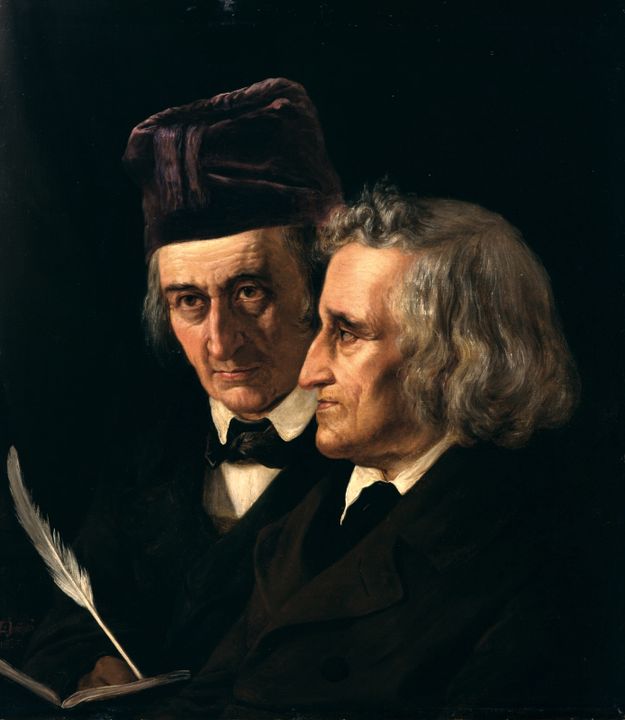
Household Stories is Lucy Crane's English translation of fifty-two tales chosen from the Brothers Grimm's Kinder- und Hausmärchen, first published in London by Macmillan in 1882 with pictures by her brother Walter Crane; the library text follows a later reprint and omits the illustrations. The selection mixes the most famous wonder tales with comic stories, animal fables and short nursery pieces. Hansel and Grethel are abandoned in the forest by their poor father and his wife during a famine, find their way home once by white pebbles but not by bread crumbs, discover a house made of bread and cake, and escape when Grethel pushes the witch into her own oven. Aschenputtel, the Grimms' Cinderella, plants a hazel twig on her mother's grave, and the white bird in its branches gives her the dresses and slippers with which she wins the prince; her stepsisters cut their feet to fit the golden shoe. Snow-white flees her stepmother's magic looking-glass to the seven dwarfs, survives the laces and the poisoned comb, is laid in a glass coffin after the poisoned apple, and wakes when the bite is jolted from her throat. Rapunzel lets down her hair from the tower; the miller's daughter in Rumpelstiltskin spins straw into gold and must guess the little man's name; Little Red-cap meets the wolf; the fisherman's wife wishes herself from a hovel to a palace and becomes emperor and pope, then demands power over the sun and moon, and loses everything. Other favorites include The Frog Prince, The Wolf and the Seven Kids, The Bremen Town Musicians, The Gallant Tailor who kills seven flies at one blow, The Elves who make shoes for a poor shoemaker, The Sleeping Beauty, King Thrushbeard, The Goose Girl, Mother Hulda who rewards the industrious daughter with a shower of gold and the lazy one with pitch, The Six Swans and The Twelve Brothers with their faithful silent sisters, and The Golden Goose, in which the despised Simpleton shares his cake with a little grey man and wins a princess. Comic tales of foolish people, such as Hans in Luck, Clever Else, Prudent Hans and Fred and Kate, sit beside darker ones like The Robber Bridegroom and The Almond Tree. The Grimms first published their collection in two volumes in 1812 and 1815 and revised it through seven editions to 1857, when it contained more than two hundred tales.
Virtues in this work
- Charity: The Simpleton shares his poor cake and sour beer with the little grey man, who in return gives him the golden goose and helps him win the princess.
- Industry: The diligent daughter in Mother Hulda shakes the feather bed so the snow flies and is rewarded with a shower of gold.
- Faith: Hansel comforts Grethel on the night of their abandonment, telling her that God will not forsake them.
- Fortitude: The sister in The Six Swans keeps silence for six years, even under accusation, to free her brothers.
- Piety: Aschenputtel visits her mother's grave every day and stays pious and good as her mother asked.
Plot or Argument
- Tales of abandoned and persecuted children
Hansel and Grethel, The Brother and Sister, The Three Little Men in the Wood and Aschenputtel follow children threatened by hunger or a cruel stepmother who are rescued by courage, piety and help from nature or the dead mother's blessing.
- Princesses, curses and enchanted sleep
Snow-white, The Sleeping Beauty, Rapunzel, The Frog Prince, The Goose Girl and King Thrushbeard turn on spells, disguises and true identities revealed, and end in marriage and the punishment of the wicked.
- Faithful brothers and sisters
In The Twelve Brothers and The Six Swans a sister keeps years of silence and sews shirts of aster-flowers to free brothers turned into birds; in Faithful John a servant risks being turned to stone for his king.
- Bargains, names and wishes
Rumpelstiltskin, The Fisherman and his Wife, The Table, the Ass, and the Stick and The Knapsack, the Hat, and the Horn explore rash promises, magic gifts and greed that overreaches itself.
- Kindness rewarded
Mother Hulda, The Golden Goose, The Queen Bee, The White Snake and The Elves reward hard work, sharing and mercy to small creatures, while the lazy and selfish receive their due.
- Clever heroes and tricksters
The Gallant Tailor, Tom Thumb, Six Soldiers of Fortune, The Little Farmer and Clever Grethel show small or humble people winning by wit and bluff.
- Animal tales and fables
The Wolf and the Seven Kids, The Bremen Town Musicians, Cat and Mouse in Partnership, Old Sultan, The Dog and the Sparrow and The Straw, the Coal, and the Bean give animals and objects human speech and plain morals.
- Comic fools and darker tales
Hans in Luck, Clever Else, Prudent Hans and Fred and Kate laugh at simpletons, while The Robber Bridegroom, Mr. Korbes and The Almond Tree preserve the older, grimmer side of the folk tradition.
Characters
- Hansel and Grethel, woodcutter's children
A brother and sister abandoned in the forest; Hansel trusts that God will not forsake them, and Grethel outwits the witch.
- Aschenputtel, Cinderella heroine
A pious girl mistreated by her stepmother and stepsisters, helped by the bird in the hazel tree on her mother's grave.
- Snow-white, persecuted princess
A king's daughter whose beauty provokes her stepmother's murderous envy and who is sheltered by seven dwarfs.
- The Queen with the looking-glass, villain of Snow-white
A proud stepmother who asks her mirror daily who is fairest and tries three times to kill Snow-white.
- Rumpelstiltskin, magical helper and creditor
A little man who spins straw into gold in exchange for the miller's daughter's firstborn, unless she can guess his name.
- Little Red-cap, heroine
A little girl who strays from the path on her way to her grandmother and is rescued from the wolf by a huntsman.
- The fisherman's wife, overreacher
A woman who, through the enchanted flounder, demands ever greater power until she is returned to her hovel.
- The Gallant Tailor, trickster hero
A boastful little tailor who kills seven flies at one blow and wins a kingdom by wit and nerve.
- Mother Hulda, otherworld judge
An old woman beneath the well who rewards diligent service with gold and laziness with pitch.
- The Simpleton, youngest son in The Golden Goose
A despised boy whose generosity to a little grey man brings him a golden goose and a princess.
Lessons
Kindness to the small
Again and again the hero who shares bread with an old man, spares the ants, ducks and bees, or serves an old woman faithfully is the one who succeeds. The Simpleton in The Golden Goose wins because he shares a poor cake; Mother Hulda rewards the girl who shakes the bed well. The tales teach children that humble acts of kindness and diligence matter.
- Why does the little grey man help the Simpleton and not his older brothers?
- What does the hard-working girl do at Mother Hulda's house, and what does the lazy girl do?
- In The Queen Bee, how do the animals the youngest brother protected help him later?
Trust in God in dark woods
Hansel comforts his sister that God will not forsake them, and Aschenputtel's dying mother tells her to be pious and good. Many tales show children facing hunger and danger with faith and courage, and the wicked come to grief by their own devices.
- What does Hansel say to Grethel on the night he gathers the white pebbles?
- How does Aschenputtel keep her mother's words after her mother dies?
Greed never says enough
The fisherman's wife moves from hovel to cottage to castle, then wishes to be king, emperor and pope, and finally to make the sun and moon rise at her command; the sea grows blacker with every wish until she is back in her hovel. The tale shows children how discontent grows when it is fed.
- How does the sea change each time the fisherman goes back to the flounder?
- Why do you think the fisherman keeps asking, even when he feels it is wrong?
- What does the wife's last wish show about her heart?
Faithful silence and the power of a promise
The sister in The Six Swans keeps silent for six years, even when she is accused and about to be burned, to free her brothers. The miller's daughter in Rumpelstiltskin learns that a rash promise must be paid. The tales take promises and loyalty very seriously.
- Why does the sister in The Six Swans not speak to defend herself?
- Was it fair for the queen to have to keep her promise to Rumpelstiltskin?
Context
In the years of the Napoleonic wars, when the German-speaking lands were divided and partly under French rule, Romantic writers such as Clemens Brentano and Achim von Arnim looked for a shared national heritage in folk songs and tales. The Brothers Grimm, then young scholars in Kassel, gathered tales from storytellers they knew, many of them educated young women of middle-class families such as Dortchen Wild and the Hassenpflug sisters, and from the tailor's widow Dorothea Viehmann of Niederzwehren, whom they praised as a model narrator. They regarded the tales as remnants of an ancient Germanic oral tradition.
Composition
The first volume of Kinder- und Hausmärchen appeared in 1812 and the second in 1815. Wilhelm Grimm revised the stories through seven editions of the full collection (the last in 1857, with 200 tales and ten children's legends), smoothing the style, adding proverbial and Christian touches, and in several tales, including Hansel and Grethel and Snow-white, making the persecuting mother a stepmother. A shorter Small Edition of fifty tales (1825) became the family favorite. The first English selection, Edgar Taylor's German Popular Stories with George Cruikshank's etchings, appeared in 1823. Lucy Crane's translation of fifty-two tales, Household Stories, was published by Macmillan in 1882 with illustrations by Walter Crane; the library text is from a later reprint of that edition.
Reception
The Grimms' collection became, after the Bible, one of the most widely read and translated books of German origin, and it set the pattern for folk-tale collecting across Europe and beyond. Nineteenth-century educators debated whether the tales were fit for children; the Grimms defended them as wholesome and moral, while softening some details over the editions. Twentieth-century scholars have studied the brothers' editorial changes and their informants, and debated how far the tales are folk tradition and how far the brothers' own literary creation; both views have serious advocates.
Comparisons
- andersen-fairy-tales
Andersen began by retelling Danish folk tales but soon invented his own literary fairy tales, often sadder and more personal; the Grimms present their stories as gathered tradition with brisk endings of reward and punishment.
- aesops-fables
The Grimms' animal tales, such as Cat and Mouse in Partnership and The Dog and the Sparrow, share the fable's talking beasts and plain moral, though they are told as longer stories.
- the-arabian-nights
Both collections gather tales of magic objects, clever heroes and sudden reversals of fortune, and both reached English children in selected and retold editions.
- fairy-and-folk-tales-of-the-irish-peasantry
Yeats's 1888 anthology does for Irish lore what the Grimms did for German, collecting changelings, merrows and banshees from earlier recorders as a national inheritance.
- on-fairy-stories
Tolkien's essay uses the Grimms' tales, including The Juniper Tree (here The Almond Tree), to argue that fairy stories offer recovery, escape and consolation, and that their happy endings echo the Gospel.
Quotes
Frequently cited
“Nibble, nibble, like a mouse, Who is nibbling at my house?”
Frequently cited
“Looking-glass upon the wall, Who is fairest of us all?”
“Be easy, dear little sister, and go to sleep quietly; God will not forsake us”
“Dear child, be pious and good, and God will always take care of you, and I will look down upon you from heaven, and will be with you.”
“I am the luckiest man under the sun.”
“That is the reward for your service,”
“I have eaten for you, and I have drunk for you, I will also give you the ship; and all because you were kind to me at the first.”
For Students
A reading companion for classical Christian high school students. See the student guide.
Reading Guide
Watch for
- Things that happen in threes: three brothers, three tries, three visits to the mirror.
- Who is kind to small creatures or strangers, and what happens to them later.
- Rhymes and sayings that are repeated, like the witch's question or the mirror's answer.
- Help that comes from a mother's grave, a bird, an animal or a little old man.
- How each tale ends: who is rewarded and who is punished.
Key terms and names
- Folk tale
- A story passed down by word of mouth among ordinary people before anyone wrote it down.
- Household
- A family and the people who live in their home; the Grimms meant these as stories told at home.
- Stepmother
- A woman who marries a child's father after the child's own mother has died.
- Rampion
- A garden plant whose leaves and roots were eaten as salad; in German it is called Rapunzel.
- Flounder
- A flat sea fish; in The Fisherman and his Wife it is really an enchanted prince.
- Simpleton
- A person thought to be foolish, like the youngest son in The Golden Goose.
Seminar Questions
- Comprehension How do Hansel and Grethel find their way home the first time, and why can't they the second time?
- Comprehension How does the queen in Rumpelstiltskin find out the little man's name?
- Comprehension What does the fisherman's wife wish for each time, from the beginning to the end?
- Interpretation Why do you think the youngest or smallest person so often wins in these stories?
- Interpretation Hans gives away all his gold and calls himself the luckiest man under the sun. Is he foolish, happy, or both?
- Big Question Why do you think people everywhere like stories where good is rewarded and wickedness is punished?
Faith Connections
- Hebrews 13:5 (Scripture)
The letter to the Hebrews repeats God's promise never to leave or forsake his people; Hansel, gathering pebbles by moonlight, comforts Grethel with that same confidence.
- Hebrews 13:2 (Scripture)
Hebrews urges hospitality to strangers, since some have entertained angels unawares; the Simpleton shares his ash-baked cake and sour beer with a little grey stranger and receives far more than he gave.
- Proverbs 16:18 (Scripture)
Solomon's proverb that pride comes before a fall fits both the fisherman's wife, who demands power over the sun and moon and is sent back to her hovel, and the vain queen in Snow-white, undone by her own envy.
- G. K. Chesterton, Orthodoxy, chapter 4, The Ethics of Elfland (Great Conversation)
Chesterton wrote that fairy tales taught him the doctrine of conditional joy, that happiness depends on keeping a command or a promise, as when Rumpelstiltskin's bargain must be honored.
Logic and Rhetoric
Central argument: In The Fisherman and his Wife each wish is granted, yet each makes the wife less content; the tale argues that a desire with no limit cannot be satisfied, so the one who wishes to rule the sun and moon ends with nothing.
Rhetorical device: repetition with variation (the rule of three). The queen asks her looking-glass the same question again and again, and each time the answer drives her to a new attempt on Snow-white's life.
Debate: Resolved: that the Gallant Tailor deserved to become king.
Memory Work
Be easy, dear little sister, and go to sleep quietly; God will not forsake us
Looking-glass upon the wall, Who is fairest of us all?
Writing Prompts
Essay: Choose two tales in which someone is rewarded for kindness, such as The Golden Goose, Mother Hulda or The Queen Bee. Tell what each character did and how they were rewarded, and say which tale you like better and why.
Comparison with Fairy Tales (Selection): Read The Six Swans from the Grimms and The Wild Swans from Hans Christian Andersen. Both tell of a sister who frees her brothers. How are the two stories alike, and what did Andersen add?
Medical Lens
The tales come out of a rural world where famine, death in childbirth and orphanhood were common, and these hard facts drive many plots. Hansel and Grethel begins with a dearth in which the woodcutter cannot feed his children, and the witch fattens Hansel while testing his finger. Snow-white's mother dies at her birth, as does Aschenputtel's mother at the start of her tale. Rapunzel's mother pines and grows pale with a pregnant craving for rampion, and the prince is blinded by thorns and healed by Rapunzel's tears. Poisons appear as a comb and an apple in Snow-white. These are folk motifs rather than medical observations, but they record common experiences of the early modern European household.
- Hansel and Grethel, opening
A great dearth leaves the woodcutter unable to earn daily bread, and his wife persuades him to abandon the children in the forest.
- Rapunzel
The expectant mother pines and grows pale with longing for rampion; later the prince loses his sight among thorns and recovers it when Rapunzel's tears touch his eyes.
- Snow-white
The queen dies when Snow-white is born; the stepmother tries poisoned laces, a poisoned comb and a half-poisoned apple.
- Aschenputtel, opening
The dying mother blesses her daughter, who weeps daily at the grave where the hazel tree grows.
Creative Prompts
- Classroom
Act out The Bremen Town Musicians with four children as the donkey, dog, cat and cock, and let the class decide how the robbers should describe what happened.
- Fiction
Write a new tale in the Grimm style about a youngest child who is kind to three small creatures and is helped by them later.
- Poetry
Write the rhymes the fisherman might say to the flounder if he went back one more time to ask for his old hovel.
- Dialogue
Write what Hansel and Grethel say to each other on the walk home after escaping from the witch.
Further Reading
- Grimms' Tales for Young and Old, Ralph Manheim (translator)
A complete modern English translation of the 1857 edition.
- The Uses of Enchantment, Bruno Bettelheim
- The Hard Facts of the Grimms' Fairy Tales, Maria Tatar
- The Brothers Grimm: From Enchanted Forests to the Modern World, Jack Zipes
Verification notes
The fifty-two tale titles and all quotations were checked by exact search against Project Gutenberg #19068, whose source is the Dover reprint of a Macmillan printing; Lucy Crane's translation was first published by Macmillan in 1882. Crane's Aschenputtel omits the doves' punishment of the stepsisters found in later German editions; her Snow-white keeps the red-hot iron shoes. Publication history of the Kinder- und Hausmärchen (1812, 1815, seven large editions to 1857, Small Edition 1825) and the informants named follow standard accounts.
- Confirm which German edition Lucy Crane translated from.