Work record
The Huxley-Wilberforce Debate
1860 · 19th Century · Oratory · English
Abstract
Background. Darwin's book of November 1859 had drawn reviews for and against by the summer. At the Oxford gathering, Huxley contradicted Owen on primate brain anatomy on the Thursday, so a sequel was widely anticipated when the zoology section met that weekend.
Content. Following Draper's lecture, the bishop disputed natural selection, citing the stability of domestic breeds and gaps among fossils, and closed by teasing Huxley about simian ancestry. Huxley answered that no fresh objection had been raised and rebuked the use of mockery on a grave question. Hooker added botanical arguments; FitzRoy, Bible raised, voiced his distress. Henslow closed the session without any vote or verdict.
Sources. Nobody took down the speeches. Brief press notices, private letters and memoirs printed decades later supply different wordings and verdicts, and each principal believed he had prevailed. Wilberforce's anonymous Quarterly essay, composed before the meeting, remains the surest guide to his reasoning. Since no reliable record of the spoken words survives, the library gives no quotations or stored text.
Significance. Biographies of Darwin and Huxley made the evening an emblem of science confronting the Church. Historians since 1979 have questioned that framing, pointing to late, partisan testimony and to believers on both sides, while acknowledging how it raised Huxley's reputation.
Key figures
- Samuel Wilberforce: Bishop of Oxford and reviewer of Darwin for the Quarterly
- Thomas Henry Huxley: Comparative anatomist and Darwin's most combative ally
- Joseph Dalton Hooker: Kew botanist who followed Huxley in reply
- John Stevens Henslow: Clergyman-botanist presiding over Section D
- John William Draper: American scientist whose lecture prompted the discussion
- Robert FitzRoy: Former Beagle commander who rose to object
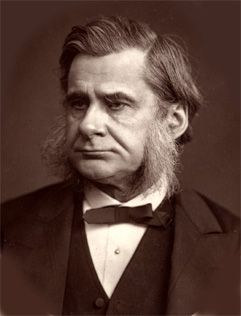

Summary
The Huxley-Wilberforce Debate is the name later given to an unscheduled exchange on Saturday, 30 June 1860, at the Oxford meeting of the British Association for the Advancement of Science, seven months after Charles Darwin published On the Origin of Species. It was not a formal debate with set speeches and a motion, and no transcript was taken. It took place in a crowded room of the newly built Oxford University Museum, in the zoology and botany section, after the American chemist and historian John William Draper read a long paper on the intellectual development of Europe in relation to Darwin's views. The chairman was the Cambridge botanist John Stevens Henslow, Darwin's former teacher. Darwin himself was absent, taking a water cure for his chronic illness. Two days earlier, on Thursday 28 June, Thomas Henry Huxley had clashed with the anatomist Richard Owen over whether the human brain differed in structure from the gorilla's, and many expected a further confrontation. After several other speakers, Samuel Wilberforce, Bishop of Oxford, spoke for about half an hour. By most accounts he criticized Darwin's theory on scientific grounds, arguing that the evidence for the transmutation of species was insufficient and that the fixity of species was better supported by observation, and he ended with a humorous question to Huxley about whether his descent from an ape was on his grandfather's or his grandmother's side. Huxley replied that he had heard nothing new against Darwin's theory, defended it as the best explanation available, and turned the bishop's question back on him, saying, in substance, that he would not be ashamed of an ape for an ancestor but would be ashamed of a man who used great gifts to obscure a serious scientific question with ridicule. Joseph Dalton Hooker then gave a botanist's defence of the theory, and Robert FitzRoy, Darwin's former captain on the Beagle, spoke against it, holding up a Bible. The exact words of every speaker are disputed. Contemporary newspaper reports were brief; the fuller and more dramatic versions come from letters written days or months later and from recollections published decades afterward, and they disagree about what was said and who had the better of it. Wilberforce believed he had done well, Hooker thought his own speech decisive, and Huxley's friends later remembered his reply as a triumph. Wilberforce's long review of the Origin, published anonymously in the Quarterly Review in July 1860, gives his considered scientific objections, and Darwin called it uncommonly clever. Because the encounter survives only in conflicting accounts, the library offers no transcript or quotations.
Virtues in this work
- Fortitude: Huxley, a young lecturer, rose to answer the bishop of the diocese before a crowded Oxford audience in defence of a theory then under heavy criticism.
- Friendship: Huxley and Hooker spoke for the absent and ailing Darwin, and Hooker wrote to him within two days to tell him what had happened.
- Industry: Wilberforce prepared a long, detailed review of the Origin for the Quarterly Review, engaging Darwin's evidence chapter by chapter.
Plot or Argument
- Background: the Origin and its first reviews
On the Origin of Species appeared on 24 November 1859. Huxley reviewed it favourably in The Times; Richard Owen criticized it in the Edinburgh Review (April 1860); Wilberforce prepared his own critical review for the Quarterly Review.
- Thursday 28 June: Huxley and Owen
After a paper by Charles Daubeny on plant sexuality, Owen argued that the gorilla's brain differed more from man's than from the lowest primates'; Huxley flatly contradicted him and promised to justify his denial in print, which he later did.
- Saturday 30 June: Draper's paper
In a crowded room of the new University Museum, with Henslow in the chair, Draper read his paper on the intellectual development of Europe in relation to Darwin's views. Several speakers followed before the bishop rose.
- Wilberforce's speech
The bishop questioned the evidence for natural selection and the transmutation of species, appealed to the fixity of species in observation and breeding, and closed with a jesting question to Huxley about his ape ancestry; his actual words survive only in differing reports.
- Huxley's reply
Huxley defended Darwin's theory as the most reasonable explanation then available, said the bishop had added nothing new, and answered the jest by contrasting an ape ancestor with a man who used ridicule in a scientific discussion; the wording again varies by account.
- Hooker, FitzRoy and the close
Hooker answered the bishop on botanical points and claimed in a letter to Darwin that his own speech carried the day. FitzRoy lamented the book and held up a Bible. The meeting ended without any vote or verdict.
- Accounts and afterlife
Short reports in the Athenaeum and local papers were followed by private letters (Hooker to Darwin, Huxley to Frederick Dyster) and, decades later, by recollections in Macmillan's Magazine (1898) and the Life and Letters of Darwin (1887) and of Huxley (1900). These later versions shaped the episode's fame as a clash of science and religion, a reading many historians since the 1970s have questioned.
Characters
- Samuel Wilberforce, Bishop of Oxford, critic of the theory
Gifted speaker and amateur naturalist who criticized Darwin's evidence in the meeting and in the Quarterly Review.
- Thomas Henry Huxley, anatomist, defender of the theory
Thirty-five-year-old comparative anatomist who answered the bishop and became the theory's best-known public champion.
- Joseph Dalton Hooker, botanist, defender of the theory
Darwin's close friend, who spoke after Huxley and believed his own reply decisive.
- John Stevens Henslow, chairman
Cambridge botanist and Darwin's former teacher, who presided over the session.
- John William Draper, speaker of the paper
New York chemist and historian whose paper on European intellectual development opened the discussion.
- Robert FitzRoy, speaker
Former captain of HMS Beagle, who spoke against the book that grew from the voyage he commanded.
- Richard Owen, anatomist
Leading comparative anatomist who had disputed with Huxley on Thursday and is often said to have advised Wilberforce.
- Charles Darwin, absent author
Author of the Origin, who was away taking a water cure and followed events through friends' letters.
Lessons
History and legend
No transcript of the exchange exists, and the best-known versions were written down years or decades later by people who wanted to remember it a certain way. The episode is a lesson in how to weigh witnesses, dates and motives before repeating a famous story.
- Why should a historian give more weight to a letter written two days after the meeting than to a memoir written thirty-eight years later?
- Huxley, Hooker and Wilberforce each believed they had done well. What does this suggest about how participants remember a debate?
- Why might a story about this meeting have become more dramatic over time?
Scientific objection in its own terms
Wilberforce's Quarterly Review essay argued on scientific grounds: the fixity of species in breeding, gaps in the fossil record and the limits of variation. Darwin took the review seriously and called it uncommonly clever, and some of its questions were ones the theory's defenders were still working to answer.
- Which of Wilberforce's objections were scientific, and which were theological?
- Why would Darwin praise a review that rejected his theory?
Ridicule and reasoned answer
Both principal speakers are remembered for a clever turn as much as for an argument. The bishop's jest and Huxley's reply show the power and the risk of wit in a public exchange about a serious question.
- Is humour a fair weapon in a debate about truth? When does it help and when does it hinder?
- If the reports are accurate, which speaker used wit more effectively, and why?
Science and faith: conflict or conversation?
The meeting was later used to illustrate an inevitable war between science and religion, notably after Draper's own History of the Conflict between Religion and Science (1874). Many historians now argue that the participants' relations were more varied: there were clergy who accepted evolution and scientists who rejected it, and Christians in the audience on both sides.
- What evidence from the meeting itself supports, and what evidence complicates, the idea of a war between science and religion?
- How might the presence of Henslow, a clergyman and Darwin's teacher, in the chair affect how we read the event?
Context
The British Association for the Advancement of Science, founded in 1831, held an annual meeting in a different city each year, bringing together scientists, clergy and the educated public. The 1860 meeting in Oxford came seven months after the Origin and at the moment of the first major reviews. Oxford was then completing its new University Museum, a centre for teaching natural science, and the university was also absorbing the controversy over Essays and Reviews, a volume of liberal theology published in 1860.
Composition
The exchange was unscripted and unrecorded. The principal sources are short reports in the Athenaeum (7 July 1860) and Jackson's Oxford Journal; Hooker's letter to Darwin of 2 July 1860; Huxley's letter to Frederick Dyster of September 1860; later recollections, including Isabella Sidgwick's in Macmillan's Magazine (1898); and the accounts gathered in Francis Darwin's Life and Letters of Charles Darwin (1887) and Leonard Huxley's Life and Letters of Thomas Henry Huxley (1900). Wilberforce's Quarterly Review essay of July 1860, written before the meeting, gives his considered views.
Reception
At the time the exchange attracted modest press notice and contemporaries differed about who had the better of it. Its fame grew with the biographies of Darwin and Huxley and with later histories that told it as a defining victory of science over clerical authority. Since J. R. Lucas's 1979 article and later work by Frank James and others, historians have stressed how much the received account depends on late and partisan sources, while still recognizing the meeting as a moment that raised Huxley's public standing.
Comparisons
- on-the-origin-of-species
The book under discussion; its chapters on the imperfection of the geological record and on difficulties of the theory anticipate many of Wilberforce's objections.
- the-descent-of-man
Darwin's 1871 treatment of human origins takes up directly the question of human ancestry that the bishop's jest raised in 1860.
- novum-organum
Bacon's account of inductive method was the standard by which many Victorian critics, Wilberforce among them, judged whether Darwin's theory was proper science or speculative hypothesis.
- the-voyage-of-the-beagle
Darwin's account of the voyage commanded by Robert FitzRoy, who stood up at Oxford to oppose the theory that grew from it.
- lincoln-douglas-debates
A near-contemporary debate of 1858, much better recorded; comparing the two shows how much a transcript changes what later readers can know.
- leipzig-disputation
Another public debate whose outcome both sides claimed and whose meaning grew in later retelling.
Quotes
For Students
A reading companion for classical Christian high school students. See the student guide.
Reading Guide
Watch for
- That the exchange was a discussion after a paper, not a formal debate with a motion or a vote.
- The Thursday dispute between Huxley and Owen about ape and human brains, which set the stage for Saturday.
- How the bishop's scientific objections, as given in his Quarterly Review essay, differ from the single jest for which he is remembered.
- How each source's date and author shape its version of Huxley's reply.
- The roles of Hooker, Henslow and FitzRoy, which the popular story often leaves out.
Key terms and names
- British Association for the Advancement of Science
- A society founded in 1831 that held annual meetings in different cities, where scientific papers were read and discussed before a broad public audience.
- transmutation of species
- The older term for the change of one species into another over time, which Darwin explained by natural selection and Wilberforce held to be unproven.
- natural selection
- Darwin's proposed mechanism: variations that help organisms survive and reproduce accumulate over generations, producing new species.
- fixity of species
- The view that species are stable kinds that vary only within limits, which Wilberforce defended from evidence of breeding and observation.
- Quarterly Review
- A leading London journal in which Wilberforce published a long, unsigned critique of the Origin in July 1860.
- primary and secondary source
- A primary source comes from the time and the participants, such as a letter written days later; a secondary source interprets events afterward. The debate's fame rests largely on late recollections.
Seminar Questions
- Comprehension When, where and on what occasion did the exchange between Huxley and Wilberforce take place?
- Comprehension What were Wilberforce's main scientific objections to Darwin's theory, according to his Quarterly Review essay?
- Comprehension Which other speakers took part, and what did each contribute?
- Interpretation Why do the accounts of what Huxley and Wilberforce said differ so much, and which accounts deserve the most trust?
- Interpretation Why did Darwin call Wilberforce's review clever even though it rejected his theory?
- Interpretation How did later writers turn this meeting into a story of conflict between science and religion, and what does the presence of clergy and believers on both sides suggest?
- Big Question How should a Christian respond to a new scientific theory that seems to challenge long-held beliefs: with welcome, caution, opposition, or some combination?
Faith Connections
- Psalm 19:1-4 (Scripture)
The heavens declare the glory of God: the psalm's picture of creation as a witness is the background for the long Christian tradition of studying nature as a way of honouring its Maker, shared by many on both sides at Oxford.
- Proverbs 18:17 (Scripture)
The first to state his case seems right until another comes and examines him. The proverb fits a debate in which each speaker answered the last, and also the historian's task of cross-examining witnesses.
- Augustine, The Literal Meaning of Genesis I.19 (Church Fathers)
Augustine warns Christians not to speak carelessly about the natural world in ways that knowledgeable unbelievers can see are mistaken, lest Scripture be brought into disrepute. The passage is often cited in discussions of how faith should engage science.
- Francis Bacon, The Advancement of Learning, Book I (Great Conversation)
Bacon describes two books, the book of God's word and the book of God's works, and urges that both be studied. Many Victorian scientists and clergy, including Wilberforce, inherited this framework.
Logic and Rhetoric
Central argument: Wilberforce: the evidence of breeding and observation shows species varying only within limits, the fossil record does not show the gradual transitions the theory requires, and so natural selection is an unproven hypothesis that should not be accepted as fact. Huxley: Darwin's theory explains a wide range of facts better than any rival, the bishop offered no new scientific objection, and a serious scientific question should be settled by evidence, not by appeals to sentiment or ridicule.
Rhetorical device: retort (turning an opponent's jest back upon him). In the commonly told version, the bishop's question about ape ancestry is answered by Huxley's contrast between an ape ancestor and a gifted man who uses ridicule in a scientific discussion; the reported wording differs among the sources.
Debate: Resolved: that the popular account of the Huxley-Wilberforce debate tells us more about the 1890s than about 1860.
Writing Prompts
Essay: Using the differences among the sources for the Oxford meeting of 30 June 1860, write an essay on how historians decide what probably happened at an event that was never transcribed. Reach your own judgment about what can be known.
Comparison with On the Origin of Species: Read Darwin's chapter on the difficulties of his theory and compare it with Wilberforce's objections as summarized in his review. Which of the bishop's objections had Darwin already anticipated, and how does Darwin answer them?
Medical Lens
The debate touches the history of medicine indirectly. Huxley was a medically trained comparative anatomist who had served as a naval assistant surgeon, and the Thursday clash between Huxley and Owen concerned the comparative anatomy of the brain in apes and humans, specifically whether structures such as the hippocampus minor were unique to man. Darwin's absence was due to his long-standing illness, for which he was taking a hydropathic water cure; retrospective diagnoses of that illness are interpretive and disputed.
- Thursday 28 June 1860 (Section D)
Owen and Huxley dispute the comparative anatomy of the gorilla and human brain, a question Huxley later pursued in print and in Man's Place in Nature (1863).
- Background (Darwin's absence)
Darwin, ill, is away at a hydropathic establishment and learns of the meeting through letters from Hooker and others.
Creative Prompts
- Classroom
Give students short summaries of three sources (a newspaper report of July 1860, Hooker's letter to Darwin, and the 1898 recollection) and ask them to reconstruct the meeting, noting where the sources agree and disagree.
- Essay
Using Wilberforce's Quarterly Review essay and Darwin's response to it, write a fair summary of the bishop's scientific case against natural selection in 1860.
- Fiction
Write a letter from an undergraduate in the audience on 30 June 1860 to a sister at home, describing what she or he saw and heard, and admitting what could not be heard over the crowd.
- Dialogue
Imagine Huxley and Wilberforce meeting privately a year later. Write the conversation in which each restates his position calmly and without wit.
Further Reading
- Life and Letters of Thomas Henry Huxley, Leonard Huxley
Prints Huxley's own later recollection and other accounts (1900).
- The Life and Letters of Charles Darwin, Francis Darwin (ed.)
Includes letters from Hooker and others on the Oxford meeting (1887).
- Huxley: From Devil's Disciple to Evolution's High Priest, Adrian Desmond
- Lord Bishop: The Life of Samuel Wilberforce, 1805-1873, Standish Meacham
- Science and Religion: Some Historical Perspectives, John Hedley Brooke
Verification notes
The date, venue, occasion (Draper's paper), chairman and principal speakers are well documented; Darwin's 'uncommonly clever' remark on Wilberforce's review is from his letter to Hooker of July 1860. Everything said in the exchange is reported only in later and conflicting accounts, so the record describes the speeches in substance and gives no quotations, as the quoteNote requires. No transcript exists and no full text is stored. Audience size is variously estimated (from several hundred to about a thousand) and is not given.
- The room in the University Museum where the session took place (usually given as the library or west room).
- That Darwin was at Edward Lane's hydropathic establishment at Sudbrook Park, Richmond, at the time of the meeting.
- The claim that Richard Owen briefed Wilberforce before the meeting; it is widely repeated but rests on later testimony.
- Dates of Huxley's letter to Frederick Dyster (September 1860) and of the Athenaeum report (7 July 1860).