Work record
Lectures on Calvinism
1898 · 19th Century · Essays · English
Abstract
Background. Invited to give a seminary's annual lectureship during an American tour, a Dutch minister who had built a party, a daily paper and a university around Reformed principles explained his program to a New World audience. He wished to show that the faith of Geneva and the Dutch revolt was no relic but a living force fitted to answer the secular outlook descended from 1789.
Content. The series moves from history and religion to government, scholarship, the arts and prospects ahead. In each field Kuyper derives practical consequences from God's absolute rule: authority distributed among household, enterprise, academy, congregation and magistrate; learning freed from ecclesiastical oversight; beauty as something real that artists find; and a coming contest of principles with secular thought.
Key Concepts. Calvinism as a comprehensive outlook rather than a sect; three basic human relations; restraining grace extended to all people alongside saving grace; distinct authorities within society; two starting-points dividing modern scholarship; renewal as divine work.
Significance. The most widely read English statement of Kuyper's thought, the book shaped Reformed colleges, philosophers and political movements in North America and beyond, while historians discuss its links to the Dutch arrangement of parallel confessional institutions and question parts of its sweeping historical narrative.
Key figures
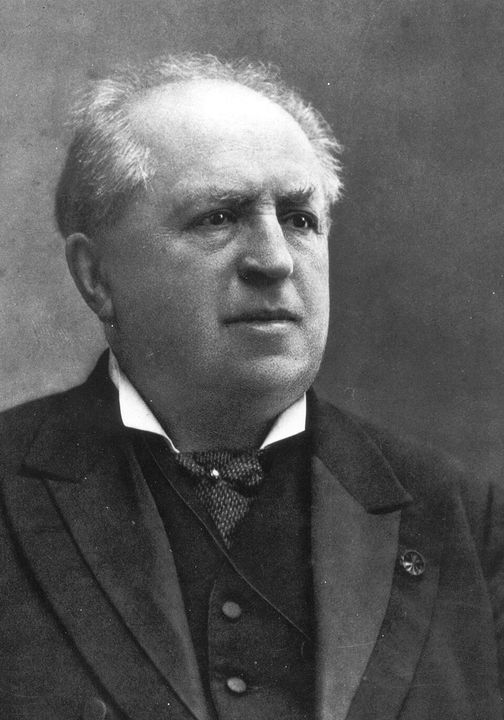
- Abraham Kuyper: Dutch theologian, editor and party leader, later prime minister
- John Calvin: Reformer whose name labels the movement Kuyper describes
- Dutch, English and American Calvinists: Historical bearers of the tradition in politics and learning

Summary
Lectures on Calvinism are the six Stone Lectures that the Dutch theologian and politician Abraham Kuyper delivered at Princeton Theological Seminary in October 1898, during a visit to the United States. Kuyper's aim was to present Calvinism not as a narrow church party or a set of doctrines about predestination but as a complete life-system, a view of the world able to shape every area of human life, comparable in scope to paganism, Islam, Roman Catholicism and the modernism that he saw spreading from the French Revolution of 1789. The first lecture, Calvinism in History, begins with a European traveller's impressions of the New World and argues that any true life-system must give its own account of three fundamental relations: to God, to other people and to the world. Calvinism answers with immediate fellowship between God and the believer apart from priest or church, the equal worth of every person as made in God's image, and a world in which God's common grace restrains the curse so that ordinary life may be honored. Kuyper traces this outlook through Geneva, the Netherlands, Scotland, England and America. The second lecture, Calvinism and Religion, describes religion as existing for God's sake, embracing the whole of life, and resting on the sovereignty of the Triune God; it also explains the Calvinist reserve toward cards, dancing and the theatre while affirming that imagination itself is a gift of God. The third lecture, Calvinism and Politics, is the most famous. Kuyper grounds all authority in the sovereignty of God, which he sees expressed in three spheres: the state, society and the church. Government exists because of sin and wields a mechanical power, but families, businesses, science, art and other social spheres possess their own God-given authority and do not derive their life from the state; this is his doctrine of sphere sovereignty. He also treats the church's freedom and liberty of conscience. The fourth lecture, Calvinism and Science, argues that belief in God's decree fostered love of learning, that common grace gave science its own domain free from church control, and that modern scholarship is divided between those who regard the present world as normal and those who regard it as fallen and needing redemption, each with its own science. The fifth lecture, Calvinism and Art, explains why Calvinism did not create a distinctive church architecture, yet holds that beauty is objective, that art is a gift of common grace, and that Calvinism freed art from church patronage, as Dutch painting shows. The sixth lecture, Calvinism and the Future, calls Christians to meet modern unbelief with a principled world-view of their own, while acknowledging that the renewal of life is the work of God. The lectures were printed in English in 1898–99 and have remained in print since.
Virtues in this work
- Piety: Kuyper describes religion as existing for God's sake and places the confession of God's sovereignty first in every area of life.
- Justice: In Lecture III he assigns the state the duty of protecting each sphere of society and the conscience of each person rather than absorbing them.
- Humility: He ends the series by insisting that the renewal of life is the prerogative of God, not the achievement of scholars or statesmen.
- Industry: Lecture IV honours the Dutch love of learning, from Leiden's scholars onward, as faithful work in a world that belongs to God.
Plot or Argument
- Lecture I: Calvinism in History
Kuyper defines Calvinism as a life-system with its own account of man's relation to God, to other people and to the world, contrasts it with paganism, Islam, Roman Catholicism and modernism, and traces its influence through the Reformed churches of Europe and America.
- Lecture II: Calvinism and Religion
Religion exists for God's sake, not man's; it touches the whole of life and rests on the sovereignty of the Triune God. Kuyper discusses the church, the Calvinist doctrine of election, and the movement's caution about certain amusements, while affirming the goodness of imagination.
- Lecture III: Calvinism and Politics
All authority comes from God. The state exists because of sin and must restrain it; society is composed of spheres such as family, business, science and art that have their own God-given sovereignty; the church must be free. Kuyper applies these principles to the magistrate, liberty of conscience and the history of the Dutch, English and American republics.
- Lecture IV: Calvinism and Science
Four points: Calvinism fostered love for science through faith in God's ordered decree; it restored science to its proper domain by teaching common grace; it won liberty for the universities; and it explains the modern conflict as a clash between two sciences, one assuming the world is normal and one recognizing it as fallen.
- Lecture V: Calvinism and Art
Calvinism did not produce its own architectural style because it sought spiritual worship, but it honored art as a gift of God, held that beauty has an objective existence in God's perfection, freed art from the church, and encouraged a painting of ordinary life in the Netherlands.
- Lecture VI: Calvinism and the Future
Kuyper reviews the series and calls for Calvinist principles to be studied and applied anew against modern unbelief, not by mere repetition of the past; he ends by insisting that the quickening of life comes from God alone.
Characters
- Abraham Kuyper, lecturer
Dutch pastor, newspaper editor, party leader and university founder addressing an American seminary audience.
- John Calvin, historical figure
The Genevan reformer whose name Kuyper uses for a broad religious and cultural movement rather than for one man's opinions.
- William the Silent and the Dutch Calvinists, historical figures
Leaders of the Dutch revolt against Spain, cited as examples of Calvinism's political influence.
- The Puritans and Pilgrim Fathers, historical figures
English and American Calvinists whom Kuyper credits with shaping constitutional liberty.
- The Normalists and Abnormalists, Kuyper's categories
His names in Lecture IV for those who treat the present world as normal and those who hold it to be fallen and in need of redemption.
Lessons
A world-view, not only a creed
Kuyper insists that every great movement in history rests on an account of three relations: to God, to neighbour and to the world. By describing Calvinism this way he invites students to ask what assumptions underlie any culture's politics, science and art, including their own.
- What three relations does Kuyper say every life-system must interpret?
- How does Kuyper answer each of the three for Calvinism?
- Why does he compare Calvinism with paganism, Islam, Roman Catholicism and modernism rather than only with other Protestant groups?
Sphere sovereignty
In Lecture III Kuyper argues that the family, the business, the school, science and art each have an authority given by God within their own bosom, which does not come from the state. Government has a real task, to restrain sin and protect the spheres, but it may not absorb them. The idea has shaped Christian political thought far beyond the Netherlands.
- What does Kuyper mean when he says the social spheres do not owe their existence to the state?
- Why, in Kuyper's view, does government exist at all?
- Give an example of a sphere of life that, on Kuyper's account, the state should protect but not direct.
Common grace and the goodness of ordinary life
Kuyper distinguishes the particular grace that saves from a common grace by which God restrains the curse on the world, so that science, art, government and the virtues of unbelievers can flourish. This allows him to honor the work of a scientist or painter as service to God without making it a church activity.
- How does Kuyper distinguish particular grace from common grace?
- How does common grace explain the good character Kuyper sees in many unbelievers?
- In Lecture IV, why does Kuyper say the world as well as the church belongs to God?
Two kinds of science
Kuyper argues that the deepest divide in modern scholarship is not between faith and reason but between two starting-points: one that treats the present world as normal and one that regards it as fallen. Each produces its own science, and he proposes that they be allowed to develop side by side in separate institutions.
- Who are the Normalists and Abnormalists, according to Lecture IV?
- Why does Kuyper think a single neutral science is impossible?
- What practical arrangement does he suggest for universities, and why?
Context
In the late nineteenth century the Netherlands, like much of Europe, was divided over the place of religion in public life, especially in schools. Kuyper, building on the work of Guillaume Groen van Prinsterer, organized orthodox Reformed Protestants into a political party, a newspaper and a university, and pressed for state support of religious schools on equal terms with public ones. His party, opposed to the principles of the French Revolution, called itself Anti-Revolutionary. In the same years Darwinian evolution and German critical theology were gaining ground in the universities, which Kuyper discusses throughout the lectures.
Composition
The L. P. Stone Lectures were founded at Princeton Theological Seminary in 1871. Kuyper delivered the six lectures there in October 1898 during a tour of the United States, and received an honorary doctorate from Princeton University the same autumn. He prepared the lectures in Dutch and they were rendered into English for delivery; the English text was printed in 1898–99, and the scanned copy behind the library text lacks its title page. The OCR contains some errors, and the library text reproduces it unchanged.
Reception
The lectures became Kuyper's best-known work in English and a founding text for later Reformed thought in North America, influencing theologians, philosophers and educators who developed his ideas of world-view, sphere sovereignty and common grace. Scholars have discussed how his principles shaped the Dutch system of separate religious and secular institutions known as pillarization, and readers have debated how far his idea of separate Christian scholarship should be pressed.
Comparisons
- calvin-institutes
Kuyper's lectures claim Calvin's theology as the root of a whole culture; the Institutes supply the doctrines of God's sovereignty, election and common grace that Kuyper develops for politics, science and art.
- democracy-in-america
Tocqueville, like Kuyper, attributes American liberty partly to its Puritan origins and stresses the importance of associations that stand between the individual and the state.
- reflections-on-the-revolution-in-france
Burke's defence of inherited institutions against the Revolution parallels Kuyper's opposition to the principles of 1789, though Kuyper grounds his in God's sovereignty rather than in prescription.
- chesterton-orthodoxy
Chesterton, writing a decade later from a different tradition, also presents Christianity as a comprehensive account of the world able to answer modern skepticism.
- lewis-the-abolition-of-man
Lewis's defence of objective value parallels Kuyper's claim in Lecture V that beauty has an objective existence as the expression of divine perfection.
- city-of-god
Augustine's two cities, each defined by its love, foreshadow Kuyper's account of two antithetical principles running through culture and scholarship.
Quotes
“For our relation to God: an immediate fellowship of man with the Eternal, independently of priest or church.”
“First stands the confession of the absolute sovereignty of the Triune God; for of Him, through Him, and unto Him are all things.”
“In itself there is nothing sinful in fiction;— the power of the imagination is a precious gift of God Himself.”
“the family, the business, science, art and so forth are all social spheres, which do not owe their existence to the State, and which do not derive the law of their life from the superiority of the state, but obey a high authority within their own bosom, which rules, by the grace of God, just as the sovereignty of the State does.”
“not only the church, but also the world belongs to God and in both has to be investigated the masterpiece of the supreme Architect and Artificer.”
“the beautiful is not the product of our own fantasy, nor of our subjective perception, but has an objective existence, being itself the expression of a Divine perfection.”
“the quickening of life comes not from men, it is the prerogative of God”
For Students
A reading companion for classical Christian high school students. See the student guide.
Reading Guide
Watch for
- The three fundamental relations (to God, to man, to the world) that frame Lecture I.
- Kuyper's distinction between particular grace and common grace, and where it reappears in later lectures.
- The three spheres of state, society and church in Lecture III, and the meaning of sphere sovereignty.
- The contrast between Normalists and Abnormalists in Lecture IV.
- Kuyper's explanation in Lecture V of why Calvinism developed no architectural style of its own.
Key terms and names
- Life-system
- Kuyper's term for a comprehensive view of the world, arising from one principle, that shapes every area of life.
- Sphere sovereignty
- The principle that family, business, science, art and other social spheres have their own God-given authority not derived from the state.
- Common grace
- God's goodness to all people, by which he restrains the curse of sin and sustains the life of the world, making culture possible.
- Particular grace
- The saving grace of God given to the elect, which Kuyper distinguishes from common grace.
- Modernism
- In Kuyper's usage, the outlook descended from the French Revolution and German philosophy that sets aside God as the starting-point of thought.
- Anti-Revolutionary
- The name of Kuyper's political party, expressing opposition to the principles of the French Revolution of 1789.
Seminar Questions
- Comprehension Where and when did Kuyper give these lectures, and what are the six subjects?
- Comprehension According to Lecture III, why does government exist?
- Comprehension What four points does Kuyper make about Calvinism and science in Lecture IV?
- Interpretation How does the idea of common grace allow Kuyper to value the work of unbelieving scientists and artists?
- Interpretation What does Kuyper mean by calling the state's power mechanical and the life of society organic?
- Interpretation Why does Kuyper think beauty must have an objective existence?
- Big Question Is there any area of human life that does not depend on some view of God, man and the world?
- Big Question How should the authority of parents, churches, schools and governments be related to one another?
Faith Connections
- Romans 11:36 (Scripture)
Kuyper quotes Paul's words 'of him, and through him, and to him, are all things' to express the sovereignty of God that underlies every lecture.
- Romans 13:1-4 (Scripture)
Paul's teaching that the powers that be are ordained of God and bear the sword against evil is the basis of Kuyper's account of the magistrate in Lecture III.
- Psalm 24:1 (Scripture)
'The earth is the Lord's, and the fulness thereof' expresses Kuyper's conviction in Lecture IV that the world as well as the church belongs to God and is worth studying.
- Exodus 31:1-6 (Scripture)
God fills Bezalel with his Spirit for artistic work on the tabernacle, a passage that supports Kuyper's view of artistic talent as a divine gift.
Logic and Rhetoric
Central argument: Every life-system rests on its interpretation of man's relation to God, to others and to the world. Calvinism interprets these as immediate fellowship with a sovereign God, the equal worth of all people as bearers of his image, and a world preserved by common grace. Since all authority derives from God, the state, society's spheres and the church each have their own sovereignty under him; since the world belongs to God, science and art are free callings. Therefore Calvinism is a comprehensive life-system able to meet modern unbelief in every field.
Rhetorical device: antithesis. Kuyper repeatedly sets two principles against each other: Calvinism against modernism, particular grace against common grace, Normalists against Abnormalists, Christianity against paganism.
Debate: Resolved: Families, churches and schools hold authority that does not come from the state.
Memory Work
the family, the business, science, art and so forth are all social spheres, which do not owe their existence to the State, and which do not derive the law of their life from the superiority of the state, but obey a high authority within their own bosom, which rules, by the grace of God, just as the sovereignty of the State does.
In itself there is nothing sinful in fiction;— the power of the imagination is a precious gift of God Himself.
Writing Prompts
Essay: Explain Kuyper's doctrine of sphere sovereignty in Lecture III and apply it to one question of your own day, such as who should direct a child's education.
Comparison with Democracy in America: Tocqueville and Kuyper both admired the role of associations and Puritan traditions in American life. Compare their reasons and explain how each understands the limits of government.
Medical Lens
A series of lectures on religion, politics, science and art. Lecture IV mentions the Leiden physician Herman Boerhaave among Dutch scholars and discusses evolutionary theories of heredity, but medicine is not a subject of the lectures.
Creative Prompts
- Classroom
Make a chart of the spheres Kuyper names in Lecture III (family, business, science, art, church, state) and, for each, write who holds authority in it and what the state's proper relation to it would be on his account.
- Dialogue
Write a conversation between Kuyper and a Princeton seminary student in 1898 about whether a Christian should study science in a separate Christian university.
- Essay
Explain Kuyper's distinction between particular grace and common grace, and show how he uses it in the lectures on science and art.
Further Reading
- Abraham Kuyper: A Centennial Reader, James D. Bratt (ed.)
Includes the 1880 address 'Sphere Sovereignty' and other key writings.
- Abraham Kuyper: Modern Calvinist, Christian Democrat, James D. Bratt
- Unbelief and Revolution, Guillaume Groen van Prinsterer
The lectures of Kuyper's predecessor that shaped the Anti-Revolutionary movement.
- Institutes of the Christian Religion, John Calvin
Verification notes
Quotations are exact substrings of the stored OCR text, chosen from clean passages; the quotation on fiction keeps the OCR's ';—' punctuation. Lecture assignments follow the line ranges of the lecture headings in the text. Biographical facts follow standard accounts. The famous sentence about 'every square inch' of creation comes from Kuyper's 1880 Free University address, not these lectures, and is not quoted here. Who rendered Kuyper's Dutch drafts into English for delivery was not checked, and the exact printing behind the scan (title page missing) is uncertain.
- Translators or revisers of the English text delivered in 1898.
- Exact date and publisher of the first English printing (1898 or 1899).
- The honorary degree Kuyper received from Princeton University in 1898.