Work record
Illustrations of the Logic of Science
1877-1878 · 19th Century · Philosophy · English
Abstract
Background. Popular Science Monthly, founded by Edward Youmans in 1872, invited working scientists to address a broad public. Peirce, then swinging pendulums to measure gravity for the Coast Survey and steeped in the history of logic from the medieval schoolmen onward, used the opportunity to explain how reasoning in the sciences actually proceeds and why it deserves trust.
Argument. Opinion, he holds, is fixed when doubt gives way to habit. Stubbornness, imposed creeds and congenial speculation all eventually break down; investigation guided by realities common to everyone alone converges. Meaning, likewise, lies in conceivable practical consequences.
Structure. The first pair concerns belief and clarity, the middle pair probability and induction, the fifth the question of design in nature, and the last the forms of inference.
Key Concepts. Doubt and belief as states of mind with effects on conduct; the four methods; the third grade of clearness; truth as the destined end of inquiry; probability as a long-run frequency; reasoning as dependent on loyalty to an unbounded community; rule, case and result; hypothesis as inference to an explanation.
Significance. James's 1898 Berkeley address hailed the second paper as the source of pragmatism. Philosophers of science now also prize the series for its fallibilism and its early analysis of explanatory inference, while debating how Peirce's later work revised its positions.
Key figures
- Charles Sanders Peirce: Coast Survey scientist and logician from Cambridge, Massachusetts
- René Descartes: Source of the clear-and-distinct standard Peirce sets out to surpass
- Gottfried Wilhelm Leibniz: Added distinctness by definition, which Peirce finds insufficient
- Charles Darwin: Model of statistical reasoning applied to living things
- Immanuel Kant: Posed the question about synthetic judgments that frames the induction essays
- Augustus De Morgan: English logician whose conceptualist account of probability Peirce answers
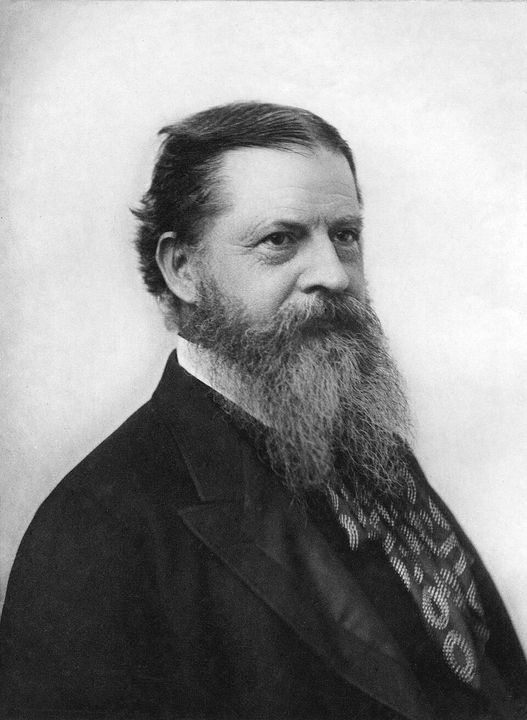

Summary
Illustrations of the Logic of Science is a series of six essays that Charles Sanders Peirce published in Popular Science Monthly between November 1877 and August 1878. Written for a general educated readership, they set out a theory of inquiry, a rule for clarifying the meaning of ideas, a frequency account of probability, and a three-part classification of inference. The library text is Part I of Chance, Love, and Logic, the 1923 collection edited by Morris R. Cohen. The Fixation of Belief begins by observing that everyone thinks himself a good reasoner. Peirce treats belief as a settled habit that guides action and doubt as a restless state that drives us to inquire until belief returns. He then compares four ways of settling opinion: tenacity, which clings to a belief and avoids contrary evidence; authority, by which a state or institution imposes belief; the a priori method, which accepts what seems agreeable to reason; and the method of science, which lets belief be determined by real things independent of what anyone thinks. Only the last, he argues, can correct itself. How to Make Our Ideas Clear criticizes Descartes's and Leibniz's tests of clear and distinct ideas and proposes a third grade of clearness: consider the practical effects we conceive an object to have, for our conception of those effects is the whole of our conception of it. Peirce applies the rule to hardness, weight, force and reality, and defines truth as the opinion investigators are destined to reach if inquiry continues long enough. The Doctrine of Chances defines probability as the ratio of true conclusions among arguments of a kind in the long run. Because a single person's life is finite, Peirce argues that sound reasoning requires identifying one's interests with an unlimited community of inquirers, and he likens the needed sentiments to St. Paul's faith, hope and charity. The Probability of Induction rejects the conceptualist view, expounded by Augustus De Morgan, that assigns probabilities to hypotheses without evidence, and rests induction on its self-correcting character. The Order of Nature asks whether the regularity of the world proves design and argues that even a chance world would show some order; it closes with reflections on science and religion. Deduction, Induction, and Hypothesis uses a bag of white beans to set out three forms of inference and connects them with attention, habit and feeling. William James's 1898 lecture crediting Peirce with the principle of pragmatism made the second essay famous.
Virtues in this work
- Humility: The method of science, as Peirce describes it in The Fixation of Belief, requires letting reality correct one's opinions rather than clinging to them.
- Charity: The Doctrine of Chances argues that sound reasoning requires identifying one's interests with an unlimited community rather than oneself.
- Hope: Peirce names hope in the unlimited continuance of inquiry as one of the sentiments logic presupposes.
Plot or Argument
- The Fixation of Belief (November 1877)
Belief is a habit that guides action; doubt is an irritation that prompts inquiry. Of the four methods of settling belief, tenacity, authority and the a priori method each fail because experience or other people unsettle them, while the method of science grounds belief in real things that affect every inquirer alike.
- How to Make Our Ideas Clear (January 1878)
Beyond familiarity and definition lies a third grade of clearness. The meaning of a concept is the sum of its conceivable practical effects; a diamond's hardness, for example, means that it will not be scratched by many other substances. Truth is the opinion that all who investigate are fated to agree on, and the real is what that opinion represents.
- The Doctrine of Chances (March 1878)
Probability belongs to kinds of argument, not single cases: it is the proportion of times a type of inference yields truth in the long run. Since no individual's run is endless, logic requires an interest in an indefinite community, a hope in the continuance of inquiry and a willingness to make that interest supreme.
- The Probability of Induction (April 1878)
Peirce distinguishes the conceptualist view of probability as a degree of belief from his own materialist or frequency view. He criticizes the practice of assigning equal prior probabilities to hypotheses in ignorance and argues that induction is trustworthy because, persisted in, it corrects its own errors.
- The Order of Nature (June 1878)
A world of chance would still exhibit uniformities, so the bare fact of order does not prove a designing mind. Peirce discusses the classification of characters, the principle that every event has a cause, and whether the universe is finite. He ends by reflecting that inquiry must follow the facts and that the aspiration toward the perfect at the heart of religion survives metaphysical disputes.
- Deduction, Induction, and Hypothesis (August 1878)
From a bag of white beans Peirce builds three forms of inference by rearranging rule, case and result. Hypothesis infers a case to explain a curious fact, as with fossil fish found far inland or the historical reality of Napoleon. He gives rules for sound induction and hypothesis, links the three forms to attention, habit and feeling, and classifies the sciences by their dominant mode of reasoning.
Characters
- Charles Sanders Peirce, author
Logician and working scientist writing for a popular magazine audience.
- René Descartes, authority criticized
His standard of clear and distinct ideas is the starting point Peirce wants to go beyond.
- Charles Darwin, example
Praised for applying the statistical method to biology.
- Johannes Kepler, example
Praised for trying to draw a curve through the observed places of Mars instead of choosing among systems of epicycles.
- Immanuel Kant, interlocutor
His question of how synthetic judgments a priori are possible frames Peirce's discussion of induction.
- St. Paul, authority
His triad of faith, hope and charity is compared with the sentiments Peirce finds necessary to logic.
Lessons
How beliefs get settled
Peirce observes that people settle their opinions in several ways: by holding on stubbornly, by deferring to authority, by accepting what seems reasonable, or by investigating. He grants the strengths of each but argues that only investigation lets the world itself correct us.
- Give an example of each of Peirce's four methods from history or ordinary life.
- What does Peirce admire in the method of tenacity, and why does he still reject it?
- Why does he think the method of science is the only one that can show we have gone wrong?
Meaning shows itself in consequences
Peirce's rule for clear ideas asks what difference a concept would make in conceivable experience. If two ideas make no conceivable difference, they are the same idea in different words. The rule exposes empty disputes and sharpens real ones.
- How does Peirce use the hardness of a diamond to illustrate his rule?
- Can you think of a dispute that disappears, or becomes clearer, when you apply his test?
Good reasoning is a shared enterprise
Because probability concerns the long run, and no single life is long enough, Peirce concludes that a reasoner must care about the whole community of inquirers, present and future. He finds in this a moral as well as a logical demand.
- Why does Peirce say that a selfish person is illogical in his inferences taken together?
- How do his three sentiments resemble faith, hope and charity, and where do they differ?
Three ways to reason
Deduction draws out what is contained in a rule; induction generalizes from samples; hypothesis guesses the case that would explain a surprising fact. Peirce's bean-bag example shows how these forms fit together in scientific work.
- Rewrite the bean-bag example for a detective story. Which step is the hypothesis?
- Why does Peirce say hypothesis is a weaker kind of inference than induction?
- Why can no science proceed by deduction alone?
Context
Peirce wrote in the decades after Darwin's Origin of Species, when statistical reasoning was transforming physics and biology and when American readers were debating the bearing of science on religion. Popular Science Monthly, founded in 1872 by Edward L. Youmans, carried essays by leading scientists for a general audience. Peirce brought to the series his work as a practising scientist with the Coast Survey, his studies in the history of logic, and discussions in the Cambridge Metaphysical Club earlier in the decade.
Composition
The six papers appeared in Popular Science Monthly in November 1877 and January, March, April, June and August 1878. French versions of the first two were published in the Revue Philosophique in 1878 and 1879. Peirce planned to revise the series as a book in later years but never completed it. Morris R. Cohen reprinted the six essays as Part I of Chance, Love, and Logic in 1923, the source of the library text; the bracketed comments and footnotes in that text include later annotations.
Reception
The essays drew modest attention at first. In his 1898 lecture Philosophical Conceptions and Practical Results, William James credited Peirce's How to Make Our Ideas Clear with the principle of pragmatism, which made the essay a founding text of American philosophy. Peirce later renamed his own version pragmaticism to distinguish it from the popular forms. Philosophers of science have since valued the series for its fallibilism, its frequency view of probability and its account of hypothesis, which Peirce later called abduction; scholars continue to debate how his views of truth and religion developed after 1878, including his 1908 essay A Neglected Argument for the Reality of God.
Comparisons
- discourse-on-method
Descartes makes clear and distinct ideas the mark of truth and begins philosophy with universal doubt; Peirce answers that real doubt must have a cause and that clearness requires tracing an idea's practical effects.
- mill-system-of-logic-book-iii
Mill grounds induction in the uniformity of nature and the law of causation; Peirce's Order of Nature and Probability of Induction instead rest induction on random sampling and long-run self-correction.
- the-varieties-of-religious-experience
William James, Peirce's lifelong friend, applied a pragmatic test of meaning and value to religious experience; reading him beside Peirce shows how differently the two men developed the principle James credited to Peirce.
- on-the-origin-of-species
Peirce opens The Fixation of Belief by calling the Darwinian controversy largely a question of logic and praising Darwin's statistical method.
- popper-the-logic-of-scientific-discovery
Popper, like Peirce, treats scientific knowledge as fallible and corrigible, but he rejects inductive probability, while Peirce makes long-run inductive self-correction central.
Quotes
“Few persons care to study logic, because everybody conceives himself to be proficient enough in the art of reasoning already.”
“The irritation of doubt causes a struggle to attain a state of belief.”
“To satisfy our doubts, therefore, it is necessary that a method should be found by which our beliefs may be caused by nothing human, but by some external permanency—by something upon which our thinking has no effect.”
“The genius of a man’s logical method should be loved and reverenced as his bride, whom he has chosen from all the world.”
“Consider what effects, which might conceivably have practical bearings, we conceive the object of our conception to have. Then, our conception of these effects is the whole of our conception of the object.”
“He who would not sacrifice his own soul to save the whole world, is, as it seems to me, illogical in all his inferences, collectively. Logic is rooted in the social principle.”
“Hypothesis is where we find some very curious circumstance, which would be explained by the supposition that it was a case of a certain general rule, and thereupon adopt that supposition.”
For Students
A reading companion for classical Christian high school students. See the student guide.
Reading Guide
Watch for
- The four methods of fixing belief in The Fixation of Belief, especially Peirce's description of what the method of authority will do to dissenters and the ostrich image for tenacity.
- The rule for the third grade of clearness in How to Make Our Ideas Clear and the test cases of the hard diamond, weight and force.
- The thought experiment with two packs of cards in The Doctrine of Chances and the comparison with St. Paul's faith, hope and charity.
- The bag of white beans in Deduction, Induction, and Hypothesis and the examples of fossil fish and Napoleon.
- The closing pages of The Order of Nature, where Peirce turns from logic to religion.
Key terms and names
- Belief
- For Peirce, a settled habit of mind that determines how we will act when the occasion arises.
- Doubt
- A restless, dissatisfied state that stimulates inquiry until belief is restored.
- Method of tenacity
- Settling belief by clinging to whatever one already holds and avoiding anything that might shake it.
- Method of science
- Settling belief by letting it be determined by real things whose effects every inquirer can in principle experience.
- Pragmatic maxim
- Peirce's rule that our idea of an object is the idea of its conceivable practical effects; the name came later, after William James popularized the principle.
- Hypothesis
- Inference from a surprising fact to the case that would explain it; Peirce later called it abduction or retroduction.
- Long run
- The indefinitely continued series of cases in which, on Peirce's view, a probability is realized as a ratio.
Seminar Questions
- Comprehension What are the four methods of fixing belief, and what weakness does Peirce find in each of the first three?
- Comprehension What does Peirce mean by the third grade of clearness, and how does he apply it to the word hard?
- Comprehension Using the bag of beans, explain how deduction, induction and hypothesis differ.
- Interpretation Peirce says that as soon as a firm belief is reached we are satisfied, whether it is true or false. How then can he still argue that the method of science is better than the others?
- Interpretation Why does the card-pack example in The Doctrine of Chances lead Peirce to talk about self-sacrifice and community? Is the step from probability to ethics convincing?
- Interpretation In The Order of Nature Peirce argues that order alone does not prove design. What kind of evidence would he accept, and how does his position compare with the design argument in Psalm 19?
- Big Question Is the meaning of an idea exhausted by its practical consequences, or do some truths matter even if they make no observable difference?
- Big Question Peirce praises authority as the method that will always govern most people. When is it reasonable to accept belief on authority, and when must one investigate for oneself?
Faith Connections
- 1 Corinthians 13:13 (Scripture)
Peirce compares the three sentiments he thinks logic requires, interest in an unlimited community, hope in the continuance of inquiry and the readiness to make that interest supreme, to Paul's faith, hope and charity, and calls the New Testament the highest authority on the dispositions of heart a man ought to have.
- Matthew 16:26 (Scripture)
Jesus asks what it profits a man to gain the whole world and lose his own soul. Peirce strikingly reverses the image, saying that one who would not sacrifice his own soul to save the whole world is illogical, to show that reasoning demands self-forgetfulness.
- Psalm 19:1-4 (Scripture)
The heavens declare the glory of God. The Order of Nature questions whether the bare regularity of nature can prove a designer, which gives students a chance to weigh what the psalmist claims and what kind of knowledge he means.
- Charles S. Peirce, A Neglected Argument for the Reality of God (1908) (Great Conversation)
Thirty years after these essays Peirce argued that unhindered contemplation of the universe naturally gives rise to the hypothesis of God, an argument built on the logic of hypothesis he first described here.
Logic and Rhetoric
Central argument: Inquiry is the struggle to pass from doubt to settled belief. Methods that settle belief without reference to real things (tenacity, authority, a priori preference) are eventually unsettled by experience or by other people. The method of science lets belief be fixed by realities that affect all inquirers alike, and so tends, if pursued long enough, toward a single opinion. Since that opinion concerns practical effects, clarifying ideas means tracing their conceivable consequences. Therefore scientific inquiry, carried on by a community in the long run, is the only reliable way to fix belief.
Rhetorical device: extended analogy. Peirce explains the logic of induction and hypothesis through a single homely example, a bag of white beans, rearranging rule, case and result in Deduction, Induction, and Hypothesis so that abstract forms become something a reader can picture and test.
Debate: Resolved: That an idea with no conceivable practical consequences has no meaning.
Memory Work
The irritation of doubt causes a struggle to attain a state of belief.
Consider what effects, which might conceivably have practical bearings, we conceive the object of our conception to have. Then, our conception of these effects is the whole of our conception of the object.
Writing Prompts
Essay: Peirce argues in The Fixation of Belief that only the method of science lets reality correct our opinions. Explain his four methods, present the strongest case he gives for authority and tenacity, and evaluate whether his preference for science is itself justified by his own standard.
Comparison with Discourse on Method: Descartes begins by doubting everything he can and accepts only clear and distinct ideas. Peirce argues that real doubt requires a reason and that clearness means tracing practical effects. Compare their starting points and argue which gives a better account of how inquiry actually begins.
Medical Lens
The essays are logic, not medicine, but Peirce's psychology of belief borrows from the physiology of his day. He compares doubt to the irritation of a nerve and belief to a nervous association, such as the smell of a peach making the mouth water, and treats belief as a habit of action. In the last essay he maps hypothesis, induction and deduction onto feeling, habit and attention, the last compared to nervous discharge. His frequency theory of probability and his insistence on random sampling are part of the background of later statistical method in medicine; with Joseph Jastrow he later ran a psychophysical experiment (published 1885) that historians of statistics often cite as an early use of randomization and blinding. These connections are conceptual and should not be overstated.
- The Fixation of Belief, III
Doubt is likened to the irritation of a nerve and reflex action, and belief to a nervous habit.
- How to Make Our Ideas Clear, I
An unclear idea in a young man's head is compared to an obstruction in an artery starving the brain.
- Deduction, Induction, and Hypothesis, V
Hypothesis is linked to emotion, induction to habit and deduction to attention and nervous discharge.
Creative Prompts
- Classroom
Bring a bag of white and coloured beans. Have students perform each of Peirce's three inferences with it, then invent a real-world mystery and identify the rule, case and result.
- Essay
Choose a contested word in current use and apply Peirce's rule from How to Make Our Ideas Clear to it. What practical effects does each side conceive it to have?
- Dialogue
Write a conversation among four townspeople, each settling a disputed question by one of Peirce's four methods.
Further Reading
- Chance, Love, and Logic, Charles S. Peirce, ed. Morris R. Cohen
The 1923 collection whose Part I is the library text.
- The Essential Peirce, Volume 1 (1867–1893), Charles S. Peirce, ed. Nathan Houser and Christian Kloesel
- Pragmatism, William James
James's 1907 lectures, which acknowledge Peirce's priority.
- Charles Sanders Peirce: A Life, Joseph Brent
- The Metaphysical Club, Louis Menand
Verification notes
All quotations were found by search in the stored text of the 1923 Cohen edition, which uses curly apostrophes; section numbers follow the Roman numerals in that text. The months of first publication in Popular Science Monthly are standard. The text contains bracketed later annotations and footnotes that are not part of the 1877-1878 magazine versions. The statement about the Peirce-Jastrow experiment is a widely repeated historical judgment, not a claim made in these essays.
- Confirm the dates of the French versions in the Revue Philosophique.
- Confirm which bracketed comments in the 1923 text are Peirce's later revisions and which are the editor's.