Work record
The Poetic Edda
c. 800–1100 (MS c. 1270) · Medieval · Poetry · Old Norse
Abstract
Background. These anonymous lays survived centuries of oral performance before an Icelandic scribe copied most of them around 1270; a handful come from other medieval and later manuscripts. Bellows's 1923 version, two volumes bound as one, supplies headnotes to every poem and line-by-line commentary on disputed readings and lost stanzas.
Content. The first half concerns gods: a seeress's vision of creation and catastrophe, Othin's gnomic counsel and rune-winning, riddle duels with giants and a dwarf, Thor's comic recovery of his hammer in bridal disguise, and Loki's insults at a feast. The second half follows heroes: a vengeful smith, two Helgis loved by Valkyries, and the long Volsung and Niflung tragedy of dragon-gold, broken oaths, the snake-pit and Guthrun's merciless retribution.
Form. Short stanzas built on alliterating half-lines alternate between narrative, dialogue, gnomic sayings and catalogue. Prose passages, probably added by the compiler, bridge gaps and explain the action, and a lost gathering of the manuscript leaves part of the Sigurth story known only from later prose.
Themes. Foreknowledge and doom, the worth of reputation, hospitality and its violation, kinship loyalty against marital loyalty, and gold that destroys its holders recur across both halves.
Significance. Alongside Snorri's prose handbook, this anthology is the primary witness to pre-Christian Scandinavian myth and the northern form of the Nibelung legend. It shaped Wagner's Ring, Morris's Sigurd the Volsung and Tolkien's Middle-earth.
Main characters
- Othin: the High One, questioner of seeresses and giants
- Thor: hammer-god in comic and heroic contests
- Loki: slanderer of the gods at Ægir's feast
- The Volva: seeress who foretells the world's end
- Völund: captive smith who escapes on forged wings
- Sigurth: Fafnir's slayer, betrayed through Brynhild's jealousy
- Brynhild: Valkyrie who dies upon Sigurth's pyre
- Guthrun: widow and avenger at the center of the last lays

Summary
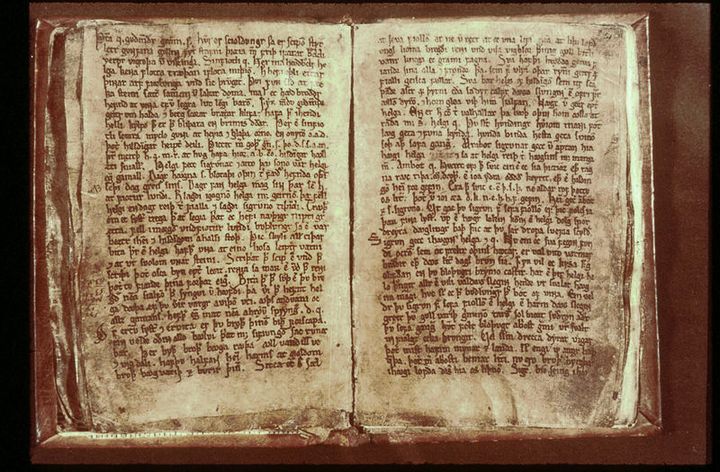
The Poetic Edda is the collection of anonymous Old Norse poems about the gods and heroes of the North, preserved chiefly in the Icelandic manuscript known as the Codex Regius, written about 1270. The library text is the complete translation by Henry Adams Bellows, published in 1923 by the American-Scandinavian Foundation, which renders thirty-five poems in alliterative verse and adds a general introduction, an introductory note to each poem and extensive notes. The Lays of the Gods open with Voluspo, the Prophecy of the Seeress, in which a wise woman summoned by Othin recounts the making of the world from the void, the ash tree Yggdrasil, the first war among the gods, the death of Baldr, the binding of Loki, and the last battle in which the sun turns black and the earth sinks in the sea, before a green earth rises again. Hovamol, the Ballad of the High One, gathers Othin's sayings on hospitality, moderation, friendship and fame, then tells how he hung nine nights on the windy tree to win the runes. In Vafthruthnismol Othin matches lore with a giant to the death; in Grimnismol, tormented between two fires by King Geirröth, he reveals the halls of the gods. Skirnismol tells of Freyr's longing for the giant-maiden Gerth; Harbarthsljoth is a boasting match between Thor and a ferryman who is Othin in disguise; Hymiskvitha sends Thor fishing for the World Serpent. In Lokasenna Loki insults every god at Ægir's feast until Thor drives him out. Thrymskvitha, the comic Lay of Thrym, has Thor dressed as the bride Freyja to win back his stolen hammer. Alvissmol, Baldrs Draumar, Rigsthula, Hyndluljoth and Svipdagsmol complete the mythological poems. The Lays of the Heroes begin with Völund the smith, lamed and imprisoned by King Nithuth, who takes revenge and flies away. Three Helgi lays tell of a hero and the Valkyrie Sigrun, who goes down to his burial mound after his death. The longest cycle follows the Volsungs and Niflungs: Gripir's prophecy to Sigurth, the cursed gold of Andvari, Sigurth's slaying of the dragon Fafnir, his waking of the Valkyrie Sigrdrifa and her rune-lore, his betrothal to Guthrun, his death through Brynhild's jealousy, and Brynhild's own death on his pyre. The Atli poems tell how Guthrun's brothers Gunnar and Hogni die at the court of her second husband Atli, Gunnar refusing to reveal the Rhine gold, and how Guthrun takes a terrible revenge. Guthrunarhvot and Hamthesmol close the cycle as her last sons ride to avenge their half-sister Svanhild, Sigurth's daughter, and fall.
Virtues in this work
- Temperance: Hovamol warns that the more a man drinks the less he masters his mind, and Othin offers his own drunkenness at Gunnloth's as the cautionary example.
- Fortitude: Hogni laughs as his heart is cut out at Atli's court, and Gunnar plays his harp in the snake-pit rather than yield the gold.
- Prudence: Hovamol counsels the guest to look about him warily before entering a strange hall and to speak little and listen well.
- Friendship: Hovamol 119 urges a man to visit a trusted friend often, for brambles and waving grass grow on the rarely trodden road.
Plot or Argument
- Voluspo: the seeress foretells the world's beginning and end
A volva summoned by Othin recalls the giants, the shaping of the world, the dwarfs, Yggdrasil and the Norns, the war of Æsir and Vanir, Othin's pledged eye and Baldr's death, then sees the binding of Loki, the breaking of the bonds, the last battle and a renewed green earth.
- Hovamol: the sayings and runes of the High One
Stanzas of practical wisdom on guests and hosts, ale, friendship, wealth and lasting fame; Othin's stories of winning the mead from Gunnloth; his self-sacrifice on the windy tree; and the eighteen charms he knows.
- Wisdom contests: Vafthruthnismol, Grimnismol and Alvissmol
Othin defeats the giant Vafthruthnir by asking what he whispered in Baldr's ear; bound between fires, Othin as Grimnir lists the dwellings of the gods to the boy Agnar; Thor keeps the dwarf Alvis answering about the names of things until sunrise turns him to stone.
- Comic and quarrelsome lays: Skirnismol, Harbarthsljoth, Hymiskvitha, Lokasenna, Thrymskvitha
Skirnir wins Gerth for Freyr by threats; Thor and the ferryman Harbarth trade boasts; Thor fetches a giant kettle and hooks the World Serpent; Loki shames the gods at Ægir's feast and is bound; Thor, veiled as Freyja, recovers his hammer from the giant Thrym.
- Lore and genealogy: Baldrs Draumar, Rigsthula, Hyndluljoth, Svipdagsmol
Othin rides to Hel to ask a dead seeress about Baldr's dreams; the god Rig fathers the classes of thrall, free farmer and noble; Freyja helps Ottar learn his ancestry; Svipdag raises his dead mother Groa for protective spells and wins the maiden Mengloth.
- Völund and the Helgi lays
The smith Völund, hamstrung by King Nithuth, takes revenge on the king's children and flies off on wings he has made. Helgi Hjorvarthsson and Helgi Hundingsbane win Valkyrie brides; Sigrun meets the dead Helgi in his mound.
- Sigurth: from Gripir's prophecy to the dragon and the Valkyrie
Gripir foretells Sigurth's life; Regin tells of Andvari's cursed gold; Sigurth kills Fafnir, tastes his heart's blood and understands the birds; he wakes Sigrdrifa, who teaches him runes and counsel.
- Sigurth's death and the laments of the women
Fragments and lays tell of Sigurth's murder at Brynhild's urging, Guthrun's grief over his body, Brynhild's death on the pyre and her ride to Hel, and the later laments of Guthrun and Oddrun.
- The Atli poems and the end of the line
Gunnar and Hogni ride to Atli's hall; Hogni's heart is cut out, Gunnar dies in the snake-pit still keeping the secret of the gold, and Guthrun avenges them. In the last two poems she sends her sons Hamther and Sorli against King Jormunrek, and they die at his hall.
Characters
- Othin, chief of the gods
Wanderer and seeker of wisdom who questions seeresses and giants, wins the mead of poetry and hangs on the tree for the runes.
- The Volva, seeress of Voluspo
An ancient wise woman of giant race who tells Othin of the world's beginning and its doom.
- Thor, thunder god
Hammer-wielding defender of gods and men, the butt of comedy in Harbarthsljoth and Thrymskvitha.
- Loki, trickster
Thor's companion in Thrymskvitha and the slanderer of the gods in Lokasenna, bound in the end.
- Baldr, slain god
Othin's son whose death, foreseen in dreams, marks the beginning of the gods' doom.
- Freyr, god of plenty
Lovesick for Gerth in Skirnismol; he gives away his sword to win her.
- Völund, master smith
Captured and lamed by King Nithuth, he forges his revenge and escapes on wings.
- Helgi Hundingsbane, hero
A young warrior beloved of the Valkyrie Sigrun, slain by her brother and visited by her in his mound.
- Sigurth, dragon-slayer
Son of Sigmund, slayer of Fafnir and winner of the gold; murdered through the jealousy of Brynhild.
- Brynhild, Valkyrie and queen
Deceived into marrying Gunnar, she brings about Sigurth's death and dies on his pyre.
- Guthrun, Sigurth's wife
Sister of Gunnar and Hogni, widowed by their plot, later wife of Atli, whose grief and vengeance dominate the last lays.
- Gunnar, king of the Gjukungs
Brynhild's husband, who dies in Atli's snake-pit rather than reveal where the gold lies.
- Hogni, Gunnar's brother
Laughs as his heart is cut out at Atli's court.
- Atli, king of the Huns
Guthrun's second husband, who kills her brothers for their gold and suffers her revenge.
- Fafnir, dragon
A man turned dragon to guard Andvari's gold; dying, he warns Sigurth that the treasure will be his bane.
Lessons
Fame that outlives the herd
Hovamol 77-78 sets the deaths of cattle, kinsmen and oneself against the one thing that does not die, a good name and the memory of a man's deeds. The heroic lays then test this ideal: Gunnar and Hogni die horribly but are remembered for their steadfastness. The poems teach what an honour culture hoped for in the face of death, and leave open whether fame is enough.
- In Hovamol 77-78, what is the difference between a noble name and the fame of a dead man's deeds?
- Why does Hogni laugh when his heart is cut out?
- Is a good name the only thing that survives death? How would a Christian reader answer the Hovamol?
Ordinary wisdom in the High One's sayings
Much of Hovamol is practical counsel: be wary entering a strange hall, drink ale in moderation, keep faith with friends, rise early if you have few workers, do not be ashamed of poor clothes. Its sayings resemble the wisdom literature of other peoples, rooted in the hard life of a Norse farmstead and its hospitality.
- Which of the Hovamol's sayings about guests and hosts would still make sense at a family dinner?
- What does the poem say ale does to a man's mind, and how does Othin admit his own drunkenness?
- Compare the Hovamol to the book of Proverbs. Where do they agree, and where do they part ways?
The seeress sees the end
Voluspo moves from creation through the gods' oath-breaking and Baldr's death to a final battle no god can prevent, and then to a renewed earth and a hall thatched with gold. The poem joins a strong sense of fate with moral cause: the gods' broken oaths and the brothers who kill each other help bring the end.
- What signs of moral decay does the seeress list before the world falls?
- Why does she keep asking Othin whether he would know yet more?
- Is the doom of Voluspo a punishment, a fate, or both?
The curse on Andvari's gold
From the otter's ransom onward, the dwarf Andvari's gold carries a curse that brings death to Hreithmar, Fafnir, Regin, Sigurth and the Gjukungs in turn. The Sigurth poems show how greed for a treasure can bind generations to violence, while Gunnar's refusal to surrender it becomes, oddly, an act of loyalty.
- Who owns the gold at each stage of the story, and what happens to each owner?
- Why does Fafnir warn Sigurth about the treasure, and why does Sigurth ignore him?
- Gunnar dies rather than tell Atli where the gold is hidden. Is this greed, honour, or something else?
Women's grief in the heroic lays
Guthrun cannot weep over Sigurth until his body is uncovered; Brynhild rides to Hel defending her deeds; Oddrun laments her love for Gunnar. These poems give the heroic legend through the voices of the women who survive it, and their sorrow carries much of the cycle's power.
- What finally brings Guthrun to weep in the First Lay of Guthrun?
- How does Brynhild justify herself to the giantess in Helreith Brynhildar?
- Why might the poets have told so much of this story through laments rather than battles?
Context
The Eddic poems belong to the oral culture of Viking-age and medieval Scandinavia. The mythological lays preserve beliefs about Othin, Thor and the giants that were still known after Iceland accepted Christianity around the year 1000, while the heroic lays reshape legends of the migration age, including memories of the Burgundian kingdom destroyed by the Huns in the fifth century and of Attila himself, into a northern tragedy of gold, oaths and revenge.
Composition
The dates and places of composition are uncertain and debated; most scholars place the poems between the ninth and the thirteenth centuries, some composed in Norway and many in Iceland. Most survive only in the Codex Regius, an Icelandic manuscript of about 1270 found by Bishop Brynjólfur Sveinsson in 1643; a few, such as Baldrs Draumar, Rigsthula, Hyndluljoth and Svipdagsmol, come from other manuscripts. Henry Adams Bellows published his complete annotated verse translation in 1923 as Scandinavian Classics volumes XXI and XXII, two volumes in one, with the American-Scandinavian Foundation.
Reception
The poems became widely known through seventeenth- and eighteenth-century Scandinavian scholarship and nineteenth-century Romanticism. The Brothers Grimm and Karl Simrock translated them into German, and Richard Wagner drew on the Sigurth and Brynhild poems and the Volsung saga for Der Ring des Nibelungen. William Morris translated Norse literature and retold the Sigurth story in verse, and J. R. R. Tolkien took the names of his dwarves and Gandalf from Voluspo and wrote his own Old Norse-style lays of Sigurd and Gudrún. The Codex Regius was returned from Copenhagen to Iceland in 1971.
Comparisons
- prose-edda
Snorri's handbook quotes Voluspo, Grimnismol and Vafthruthnismol and retells many of these myths in prose, sometimes filling in stories the poems only allude to; the two books explain each other.
- beowulf
Both preserve Germanic heroic legend in alliterative verse; the Sigemund episode sung in Beowulf is an English cousin of the Volsung story told in the Sigurth lays.
- the-iliad
Hogni's laugh at death and Gunnar's harp in the snake-pit belong to the same heroic code of fame won through death that drives Achilles; both traditions also give much of their grief to women's laments.
- the-hobbit
Tolkien took Thorin, Fili, Kili, Gandalf and other names from the dwarf-list in Voluspo, and Fafnir's hoard lies behind Smaug's gold and the dragon's conversation with Bilbo.
- the-song-of-roland
A Christian French epic of loyalty and doomed courage set beside the pagan Norse lays: Roland's refusal to sound the horn and Gunnar's refusal to reveal the gold are both proud choices that end in death.
- bulfinch-age-of-fable
Bulfinch's chapters on Northern mythology retell Voluspo's themes and the Thor stories for general readers, giving younger students an easier way into the poems.
Quotes
Frequently cited
“Hearing I ask | from the holy races, From Heimdall’s sons, | both high and low;”
Frequently cited
“Axe-time, sword-time, | shields are sundered, Wind-time, wolf-time, | ere the world falls;”
Frequently cited
“Cattle die, | and kinsmen die, And so one dies one’s self; But a noble name | will never die, If good renown one gets.”
Frequently cited
“I ween that I hung | on the windy tree, Hung there for nights full nine; With the spear I was wounded, | and offered I was To Othin, myself to myself,”
“An ash I know, | Yggdrasil its name, With water white | is the great tree wet;”
“Now do I see | the earth anew Rise all green | from the waves again;”
“Less good there lies | than most believe In ale for mortal men; For the more he drinks | the less does man Of his mind the mastery hold.”
“The lame rides a horse, | the handless is herdsman, The deaf in battle is bold; The blind man is better | than one that is burned, No good can come of a corpse.”
For Students
A reading companion for classical Christian high school students. See the student guide.
Reading Guide
Watch for
- The refrain in Voluspo asking whether Othin would know yet more, and where it begins to appear as the prophecy darkens.
- How Hovamol shifts from everyday advice about guests and ale to Othin's own stories and finally to his sacrifice on the windy tree.
- The final question in Vafthruthnismol, and why it ends the contest.
- Every time the gold of Andvari changes hands in the Sigurth poems, and what happens next to its owner.
- The women's laments in the later heroic lays: Guthrun, Brynhild and Oddrun.
Key terms and names
- Volva
- A seeress or wise woman; in Voluspo she is summoned by Othin and speaks of things before and after the world.
- Yggdrasil
- The world-ash tree; Bellows's note to Hovamol explains that its name means the Horse of Othin, from the story of his hanging.
- Valkyrie
- A chooser of the slain; in the heroic lays Sigrun, Sigrdrifa and Brynhild are Valkyries who love mortal heroes.
- Runes
- The letters of the old Germanic alphabet, believed to hold power; Othin wins them by his ordeal and Sigrdrifa teaches their uses.
- Codex Regius
- The Icelandic manuscript of about 1270 that preserves most of these poems, with a gap of several leaves in the Sigurth story.
- Niflungs (Gjukungs)
- The family of Gunnar, Hogni and Guthrun, children of Gjuki, who take Sigurth's gold and die for it at Atli's court.
- Ragnarok
- The doom of the gods foretold in Voluspo, when the wolf breaks loose and the world burns.
- Alliterative verse
- Lines of two half-lines linked by repeated initial sounds; Bellows keeps this pattern and marks the pause between halves.
Seminar Questions
- Comprehension What does the seeress of Voluspo see at the very end, after the world sinks in the sea?
- Comprehension How does Thor recover his hammer in Thrymskvitha, and what does Loki do to keep the disguise from failing?
- Comprehension What does Sigurth learn by tasting Fafnir's heart's blood, and what do the birds tell him?
- Interpretation Othin hangs on the windy tree, wounded by his own spear, offered to himself. What kind of sacrifice is this, and what does it win?
- Interpretation Lokasenna lets Loki accuse every god of a real fault. Does the poem mock the gods, or show them as a community that must expel the slanderer?
- Interpretation Is Brynhild a villain or a victim in the Sigurth poems? Use her own speech in Helreith Brynhildar.
- Big Question Hovamol says the fame of a dead man's deeds never dies. Is reputation a worthy thing to live for? What does it leave out?
- Big Question The gods of the Edda know their doom and fight anyway. What does courage look like when the ending is already known?
Faith Connections
- Proverbs 23:29-35 (Scripture)
Solomon's portrait of the drunkard who has woe, sorrow and red eyes can be read beside Hovamol 11-14, where Othin warns that ale robs a man of mastery of his mind. Both wisdom traditions treat drunkenness as folly, but Proverbs grounds wisdom in the fear of the Lord.
- Ecclesiastes 2:16 and Psalm 112:6 (Scripture)
The Preacher says the wise man is no more remembered than the fool, while the psalmist promises that the righteous will be in everlasting remembrance. These set up a conversation with Hovamol 77-78 about whether a good name survives death and who keeps the memory.
- The Dream of the Rood (Old English poem) (Great Conversation)
In this Anglo-Saxon poem the cross speaks of Christ as a young hero who mounts the tree willingly. Readers have long compared its imagery with Othin's hanging on the windy tree, while the difference is plain: Othin offers himself to himself for knowledge, while Christ gives himself for others.
- J. R. R. Tolkien, The Monsters and the Critics (1936) (Great Conversation)
Tolkien argued that the Northern imagination of gods fighting a losing war against chaos expresses a courage that Christian writers like the Beowulf poet could admire and transform, a lens that suits Voluspo's last battle.
Logic and Rhetoric
Central argument: In Hovamol's wisdom: all living things die; possessions and kin are lost; what endures is the memory of a man's deeds; therefore a man should act so that he earns good renown. The heroic lays test this premise by showing Gunnar, Hogni and Sigurth winning lasting fame at the cost of their lives.
Rhetorical device: Anaphora and refrain. Hovamol 77 and 78 both begin with the line Cattle die, and kinsmen die, then diverge in their closing lines; Voluspo repeats the seeress's question to Othin whether he would know yet more.
Debate: Resolved: Gunnar's refusal to reveal the gold to Atli is an act of honour rather than of greed.
Memory Work
Cattle die, | and kinsmen die, And so one dies one’s self; But a noble name | will never die, If good renown one gets.
Now do I see | the earth anew Rise all green | from the waves again;
Writing Prompts
Essay: Compare the prophecy of Voluspo with Othin's ride to Hel in Baldrs Draumar. What does each poem suggest about whether the gods can know or change their fate?
Comparison with Beowulf: Beowulf and the Sigurth poems both feature a dragon guarding cursed gold. Compare how each poet presents the dragon, the treasure and the hero's death.
Medical Lens
The poems are not medical, but they record how a pre-modern northern society spoke about drink, injury, childbirth and healing. Hovamol's warnings about ale, and Othin's admission that he was dead-drunk at Fjalar's, are among the earliest Germanic reflections on intoxication and loss of self-command. The same poem insists that the lame, the handless and the deaf still have their uses, a striking view of disability in a warrior culture. Healing is imagined through charms and runes: Othin knows a song for sorrow, pain and sickness and another for leechcraft (Hovamol 147-148), Sigrdrifa teaches birth-runes to help a mother in labour, and Svipdagsmol names a Hill of Healing for sick women. Baldr's ominous dreams and the laments of Guthrun belong to the history of dreams and grief. Bellows's notes are careful philology; medical interpretations of individual episodes remain speculative.
- Hovamol, stanzas 11-14
Warnings that ale weakens a man's mastery of his mind, followed by Othin's confession of drunkenness in Gunnloth's house and the heron of forgetfulness.
- Hovamol, stanzas 68-71
Sayings on health, sickness and the usefulness of the maimed: the lame man rides, the handless herds, the deaf fight.
- Hovamol, stanzas 147-148
Othin's first charms: one that helps in sorrow, pain and sickness, and one needed by those who practise leechcraft (the second stanza survives only in part).
- Sigrdrifumol, stanza 8
Sigrdrifa teaches birth-runes, written on the palms and around the joints, to help bring a child from its mother.
- Svipdagsmol (Fjolsvinnsmol), stanza 52
Lyfjaberg, the Hill of Healing, is said to cure any woman who climbs it, however long she has been sick.
- Baldrs Draumar
Baldr's evil dreams send Othin riding to Hel to wake a dead seeress and learn his son's fate.
- Guthrunarkvitha I
Guthrun sits dry-eyed beside Sigurth's body while other women tell their sorrows, until his face is uncovered and she weeps.
Creative Prompts
- Poetry
Write four stanzas of your own wisdom poem in the manner of Hovamol, with two half-lines per line linked by alliteration, giving advice about school, friendship or hospitality.
- Dialogue
Write a short wisdom contest like Vafthruthnismol between two characters from another book you have read, ending with a question only one of them can answer.
- Essay
Trace the cursed gold from Andvari to the Rhine in Reginsmol, Fafnismol and the Atli poems, and argue whether the poets treat the curse as the true cause of the deaths or as a picture of human greed.
- Adaptation
Retell Thrymskvitha as a short comic play for performance, keeping Loki's quick explanations of why the bride eats a whole ox and never sleeps.
Further Reading
- The Prose Edda, Snorri Sturluson; trans. Arthur Gilchrist Brodeur
Snorri's prose handbook of the myths, also in this library.
- The Saga of the Volsungs, Anonymous; trans. Jesse L. Byock
The prose saga that tells the Sigurth story continuously, including the parts lost in the gap in the Codex Regius.
- The Legend of Sigurd and Gudrún, J. R. R. Tolkien; ed. Christopher Tolkien
Tolkien's own English poems on the Volsung cycle in Eddic metre.
- Gods and Myths of Northern Europe, H. R. Ellis Davidson
- The Poetic Edda, trans. Carolyne Larrington
A modern Oxford World's Classics translation for comparison.
Verification notes
All quotations were checked by exact search against the stored Project Gutenberg text of Bellows's 1923 translation; the vertical bars mark the caesura between half-lines as the text prints it, and the curly apostrophes are copied as in the file. Stanza numbers are Bellows's. Dating and place of composition of the poems are disputed among scholars, and the record says so. Facts about the Codex Regius (c. 1270; found 1643 by Brynjólfur Sveinsson; returned to Iceland 1971) are standard.
- The composition dates in the manifest (c. 800-1100) are a broad convention; individual poems are dated very differently by different scholars.