Work record
The Practice of the Presence of God
1692 · Renaissance Early Modern · Memoir · French
Abstract
Background. A lame former soldier from Lorraine, long employed among the pans of a Paris friary, became known to clergy and devout laypeople for his serenity. After his death a churchman issued what he had said and written.
Audience. The talks answer a visiting priest's questions; the letters advise a reverend correspondent, a young nun about to make her profession, a family with a son at war, an elderly friend and an invalid, none of them named.
Content. The brother recalls a bare tree that turned him toward God, years of dread about his salvation, wine bought in Burgundy and meals cooked for the community. His letters press one counsel in many forms: speak to God briefly and often, let distractions go without alarm, and accept pain as a gift from a loving Father.
Teaching. Holiness here needs no learning or elaborate technique, only a heart that refers every act to God; love, not penance, is the measure of a deed, failures are confessed and left behind, and repeated small acts of attention make recollection natural.
Significance. Short, plain and free of controversy, the collection crossed confessional lines and became a favourite of English-speaking Protestants as well as Catholics, reprinted by evangelical publishers such as the Revell firm.
Key figures
- Brother Lawrence: Carmelite lay brother and cook, the speaker and writer
- Joseph de Beaufort: Vicar general of Paris, recorder of the conversations
- Cardinal de Noailles: Archbishop of Paris who recommended publication
- Unnamed correspondents: A nun, a soldier's family, an elderly friend and a sick woman who receive his letters

Summary
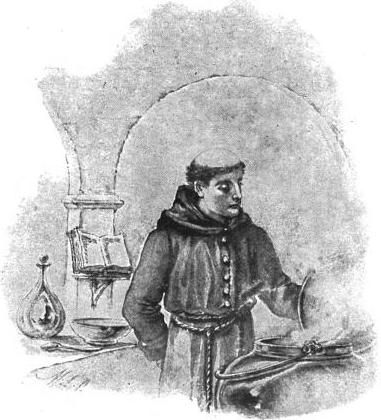
The Practice of the Presence of God gathers four conversations with, and fifteen letters by, Brother Lawrence, a lay brother of the Discalced Carmelites in Paris who spent his days in the friary kitchen. The conversations were written down by a visitor, traditionally identified as Joseph de Beaufort, who first met him on 3 August 1666. In the First Conversation Lawrence explains that at eighteen, seeing a tree stripped of its leaves in winter and thinking how spring would renew it, he received a lasting sense of God's providence and power. He had been a footman, a great awkward fellow who broke everything, and entered the monastery expecting to be punished for his clumsiness, but found only contentment. He urges his visitor to keep a sense of God's presence by continual conversation with him and to feed the soul with high thoughts of God. In the Second Conversation he describes four years in which he was troubled by the belief that he would be damned, until he resolved to love God whatever became of him and found peace. He tells of being sent to Burgundy to buy wine, though lame, rolling himself over the casks in the boat, and of fifteen years in a kitchen he naturally disliked, made easy by doing everything for the love of God. He holds that set times of prayer should not differ from other times, that wandering thoughts should be quietly dismissed, and that mortifications without love are useless. The Third and Fourth Conversations add that trust honours God, that little things done for love matter more than great works, and that faith, hope and charity are the whole substance of religion; the editor adds an account of how he worked, prayed before and after each task, and kept his calm amid the clatter of the kitchen. The fifteen letters, written to unnamed religious and lay correspondents, repeat the method in plain terms: a little lifting up of the heart, an oratory made in the heart, prayer like a beggar at a rich man's gate, patience with the mind's roving, and friendship with God. The last letters, written as he neared eighty, counsel a sick correspondent to accept suffering as coming from God's hand and to seek strength rather than relief; a note records that he took to his bed two days after the last letter and died within the week, in February 1691. Beaufort published the letters and maxims in 1692 and the conversations, with a life, soon after. The library text is the anonymous English translation issued by the Fleming H. Revell Company of New York, Chicago and Toronto.
Virtues in this work
- Humility: He calls himself a great awkward fellow who broke everything and entered religion expecting to be punished for his faults.
- Industry: He works fifteen years in the friary kitchen, doing each task in its season with prayer and composure.
- Faith: After four years of fearing damnation, he resolves to love God whatever becomes of him and finds peace.
- Fortitude: Near eighty and often close to death, he prays for strength to suffer with courage rather than for relief.
- Charity: He writes patient letters of counsel to a soldier's family, a young nun and a sick friend, and promises them his prayers.
Plot or Argument
- Preface (Revell edition)
The publisher introduces Nicholas Herman of Lorraine, footman and soldier turned Carmelite lay brother, his conversion at the sight of a leafless tree, and the attribution of the conversations to M. Beaufort, grand vicar to Cardinal de Noailles.
- First Conversation
The visitor's first meeting in August 1666: the tree in winter, Lawrence's awkwardness as a footman, his entry into religion, and his counsel to converse continually with God and to quicken faith rather than chase changing devotions.
- Second Conversation
Love as the end of all actions, the four-year fear of damnation and its resolution, the wine-buying journeys to Burgundy and Auvergne, fifteen years in the kitchen, and the uselessness of mortifications without love.
- Third Conversation
The foundation of his spiritual life in a high esteem of God; returning without self-reproach after forgetting him; finding in God, as in a mirror, what to do when the time comes; neither art nor science needed to go to God.
- Fourth Conversation and editor's account
One hearty renunciation of all that does not lead to God, doing common business for God's sake, faith, hope and charity as the substance of religion, and the editor's description of Lawrence's prayer before, during and after his kitchen work.
- Letters I-II: His method
To correspondents who ask how he came to his habitual sense of God's presence, he tells of renouncing everything that was not God, ten years of suffering and doubt, sudden peace, and his picture of himself as a sinner received at the King's table.
- Letters III-X: Counsel to others
Advice for a soldier at war, a nun preparing for profession, an elderly friend, and those troubled by wandering thoughts: brief inward acts, an oratory of the heart, patient recall of the mind, and love of friends ordered beneath love of God.
- Letters XI-XV: Suffering and the end
To a correspondent in long illness he counsels patience, seeing God as the physician of soul and body, praying for strength rather than relief; in the last letter he hopes to see God within a few days, and a note records his death within the week.
Characters
- Brother Lawrence (Nicholas Herman), speaker and letter-writer
Lame, unlearned Carmelite lay brother and cook whose whole method is constant, simple attention to God.
- Joseph de Beaufort (M. Beaufort), recorder and editor
Grand vicar to the Archbishop of Paris, traditionally credited with writing down the conversations.
- The Reverend ---- and other correspondents, recipients of the letters
Unnamed religious and lay friends, one of them seriously ill, to whom Lawrence writes counsel.
- Cardinal de Noailles, patron of publication
Archbishop of Paris, on whose recommendation the letters were first published.
Lessons
Holiness in ordinary work
Lawrence spent fifteen years in a kitchen he naturally disliked and found it easy once he did everything for the love of God. He insists that sanctification does not depend on changing our work but on doing for God what we usually do for ourselves. A pot, a straw picked up, or a wine-buying trip can become prayer.
- Why did Lawrence dislike the kitchen at first, and what changed?
- What does he say in the Fourth Conversation about doing little things for God?
- Which ordinary task in your own day could you do the way Lawrence did his cooking?
Prayer as conversation, not only set times
Lawrence says set times of prayer should not differ from other times, because he talks with God all day in simple words. He recommends a little lifting up of the heart, even on a march with a sword in hand, and an oratory made in the heart. Prayer becomes a habit of friendship rather than a special performance.
- What advice does Lawrence send to the soldier in the Third Letter?
- What does he mean by making an oratory of the heart?
- Is it possible to pray while doing something else? Why or why not?
Patience with a wandering mind
In the Eighth Letter Lawrence admits the mind is extremely roving and says that worrying about distractions only distracts us further. The will must bring the mind back calmly, and the best help is to keep the mind near God at other times too. He treats failure as an ordinary step, not a disaster.
- What image does Lawrence use for how to hold yourself in prayer?
- Why does he say that trouble and disquiet make wandering thoughts worse?
- How does Lawrence respond when he forgets God for a while?
Trust in suffering
Writing to a sick friend near the end of his life, Lawrence prays not for her relief but for strength to bear her pains. He believes God is sometimes nearer in sickness than in health and calls him the physician of soul and body. He speaks from his own experience of being near death and finding peace.
- What does Lawrence pray for when his friend is in pain?
- How does he describe his own feelings when he was near death?
- Can suffering bring a person closer to God? What examples can you think of?
Context
Lawrence lived in the France of Louis XIII and Louis XIV, after the devastations of the Thirty Years' War in Lorraine, in a Paris rich in Catholic reform and spiritual writing. The Discalced Carmelites, the reformed order of Teresa of Avila and John of the Cross, had come to France early in the seventeenth century. Lay brothers did manual work rather than study for the priesthood. In the 1690s French spirituality was shaken by the controversy over Quietism, involving Madame Guyon and Archbishop Fénelon, and writings that stressed simple resting in God came under suspicion.
Composition
Lawrence wrote no book. His letters, mostly from his last years, were collected after his death in February 1691 by Joseph de Beaufort, who published them with spiritual maxims in 1692 and then the conversations, with an account of Lawrence's life and character, soon afterward. The Revell preface in the library text says the conversations are supposed to have been written by Beaufort and that the letters were published on the recommendation of Cardinal de Noailles. The book reached English readers in several eighteenth- and nineteenth-century translations; the library text is the anonymous translation published by Fleming H. Revell in the 1890s.
Reception
Fénelon praised Lawrence's simplicity, but the Quietist controversy left the book little read in France for a time. It found a lasting audience among English-speaking Protestants as well as Catholics, and the Revell edition was issued by a firm that described itself as a publisher of evangelical literature. It remains one of the most widely read devotional classics, valued for its brevity and its focus on prayer in daily work.
Comparisons
- life-of-st-teresa-of-jesus
Teresa of Avila founded the Discalced Carmelite reform that Lawrence joined; she also wrote that God walks among the pots and pans, and her life shows the contemplative tradition that his kitchen practice simplifies.
- the-rule-of-st-benedict
Benedict joins prayer and manual labour in the monastic day and sets a cellarer and kitchen servers among the brothers; Lawrence goes further in making the work itself continuous prayer.
- story-of-a-soul
Thérèse of Lisieux, another French Carmelite, taught a little way of small acts done with love two centuries later; both find holiness in hidden, ordinary duties rather than great deeds.
- pensees
Pascal, writing in Paris in the 1650s and early 1660s, argues that human unhappiness comes from the inability to rest quietly in a room; Lawrence, a near contemporary in the same city, offers a practical answer in constant recollection of God.
- grace-abounding
Bunyan, a contemporary, records years of terror that he was damned before finding assurance; Lawrence describes four years of the same fear and his release through a resolve to love God regardless.
Quotes
Frequently cited
“in the noise and clatter of my kitchen, while several persons are at the same time calling for different things, I possess GOD in as great tranquility as if I were upon my knees at the blessed sacrament.”
Frequently cited
“we ought not to be weary of doing little things for the love of GOD, who regards not the greatness of the work, but the love with which it is performed.”
Frequently cited
“A little lifting up of the heart suffices.”
Frequently cited
“we may make an oratory of our heart wherein to retire from time to time to converse with Him in meekness, humility and love.”
“he was pleased when he could take up a straw from the ground for the love of GOD, seeking Him only, and nothing else, not even His gifts.”
“Hold yourself in prayer before GOD, like a dumb or paralytic beggar at a rich man's gate.”
“One does not become holy all at once.”
“We must _know_ before we can _love_.”
For Students
A reading companion for classical Christian high school students. See the student guide.
Reading Guide
Watch for
- The winter tree in the First Conversation and how it changed Lawrence's life at eighteen.
- Every mention of the kitchen and other ordinary work, and what Lawrence says to God while doing it.
- How Lawrence handles his own failures and wandering thoughts: he confesses, then goes back to God without fretting.
- The different people he writes to in the letters: a soldier, a nun, an elderly friend, a sick woman.
- The final note after the Fifteenth Letter and what it tells you about when the letters were written.
Key terms and names
- Lay brother
- A member of a religious order who does manual work for the community and is not studying to be a priest, as Lawrence was among the Carmelites.
- Discalced Carmelites
- The reformed, barefoot branch of the Carmelite order begun by Teresa of Avila; Lawrence lived in their house in Paris.
- Presence of God
- Lawrence's phrase for a steady awareness that God is with us, kept up by short inward words and turning the mind back to him.
- Oratory
- A small chapel or place of prayer; Lawrence says we can make one in our own heart.
- Mortification
- Self-denial such as fasting, which Lawrence says is useless unless it serves the love of God.
- Resignation
- Giving oneself up completely to God's will, in suffering or in comfort, which Lawrence calls a sure way to heaven.
Seminar Questions
- Comprehension What did Lawrence see at eighteen that made him think about God's power and providence?
- Comprehension What job did Lawrence do in the monastery, and how did he feel about it at first?
- Comprehension What does Lawrence tell the soldier to do in the Third Letter?
- Interpretation Why does Lawrence say that picking up a straw for the love of God can matter as much as a great work?
- Interpretation How did Lawrence get free of his fear that he would be damned, according to the Second Conversation?
- Interpretation Why does Lawrence compare a person praying to a beggar at a rich man's gate?
- Big Question Can any job, even one you dislike, become a way of loving God?
Faith Connections
- 1 Thessalonians 5:17 (Scripture)
Paul tells the Thessalonians to pray without ceasing. Lawrence's whole method is a practical attempt to obey this command in a busy kitchen.
- Colossians 3:23 (Scripture)
Paul says to do every task heartily, as to the Lord. Lawrence's fifteen years of cooking for God's sake are a living example of this verse.
- Psalm 16:8 (Scripture)
The psalmist says he has set the Lord always before him. Lawrence uses nearly the same words in the First Letter when he speaks of setting God always before us.
- Rule of St. Benedict, Chapter 35 (Church Fathers)
Benedict asks the brothers to take turns serving in the kitchen as an act of love and humility. Lawrence spent fifteen years doing just that and found God there.
Logic and Rhetoric
Central argument: God is always present with us, and he cares about the love behind an act more than its size. So any task, done for his sake and with a short word to him, becomes prayer. Therefore the surest way to holiness is to form a habit of turning to God all day long, in work as much as in church.
Rhetorical device: simile. In the Eighth Letter Lawrence tells his reader to hold himself in prayer like a dumb or paralytic beggar at a rich man's gate, picturing humble waiting instead of many words.
Debate: Resolved: that praying while working is as good as praying at set times.
Memory Work
A little lifting up of the heart suffices.
we ought not to be weary of doing little things for the love of GOD, who regards not the greatness of the work, but the love with which it is performed.
Writing Prompts
Essay: Brother Lawrence turned a kitchen he disliked into a place of prayer. Explain how he did it, using at least two conversations or letters, and describe one place in your own life where his method could work.
Comparison with The Rule of St Benedict: Benedict's Rule gives the monks set hours for prayer and for work. Compare Benedict's plan with Lawrence's claim that the time of business should not differ from the time of prayer.
Medical Lens
The book is devotional, not medical, but it touches several topics of interest to a psychiatric reader. Lawrence describes four years of persistent fear that he would be damned, which no one could argue him out of, ended not by reasoning but by a resolve to love God whatever his fate; in the language of his tradition this is spiritual trial or scruples, and any modern reading as anxiety or obsessional doubt is interpretive. His counsel on wandering thoughts, to recall the mind gently without disquiet because agitation only scatters it further, is a period account of attention training that modern readers sometimes compare with contemplative and mindfulness practices. He was lame from a war wound and worked in pain, rolling over wine casks in a boat. The last letters to a long-ill correspondent reflect a seventeenth-century Catholic view of sickness as God's visitation: he calls God the physician of soul and body, advises that confidence placed in physic rather than God may delay recovery, and in the Thirteenth Letter suggests leaving off human remedies after they have failed. These are spiritual counsels of their time, not medical teaching. The final note records his own death within a week of the last letter.
- Second Conversation
Four years of conviction that he would be damned, resolved by choosing to love God whatever became of him.
- Second Conversation
Sent to buy wine though lame, he moves about the boat by rolling over the casks.
- Eighth Letter
Counsel on wandering thoughts in prayer and calmly recalling the mind by the will.
- Eleventh to Thirteenth Letters
Advice to a long-ill correspondent on sickness, physic, and God as physician of body and soul.
- Fourteenth and Fifteenth Letters, final note
Lawrence, near eighty and often near death, anticipates seeing God; he takes to his bed two days after the last letter.
Creative Prompts
- Classroom
Make a picture or comic strip of a day in Brother Lawrence's kitchen, showing what he says to God before, during and after his work, using the editor's account in the Fourth Conversation.
- Fiction
Write a short story about a student who tries Lawrence's practice for one ordinary school day, from breakfast to homework.
- Essay
Lawrence says the set times of prayer should not differ from other times. Explain what he means and whether you agree, using two passages from the book.
- Poetry
Write a poem about the leafless winter tree that began Lawrence's conversion, moving from bare branches to spring.
Further Reading
- The Imitation of Christ, Thomas à Kempis
- Introduction to the Devout Life, Francis de Sales
Earlier seventeenth-century French guide to devotion for people living in the world.
- The Interior Castle, Teresa of Avila
- Abandonment to Divine Providence, Jean-Pierre de Caussade (attributed)
Verification notes
The contents, the date of the first conversation (3 August 1666), the details of the tree, the footman's post, the kitchen, the Burgundy journey and the final note were checked against the attached Gutenberg text. The Revell preface says Herman was admitted a lay brother in 1666, which conflicts with the usual dating of his entry to about 1640 and with the forty years of religious life mentioned in the letters; the record follows the letters and standard biographies and does not repeat the preface's date. The translator of the Revell edition is not named in the text. Biographical facts (birth c. 1614 at Hériménil, war wound, death 12 February 1691) and Beaufort's publications of 1692 and 1694 are standard but were not checked against a primary source. Quotes were checked against the attached text.
- Year of Lawrence's entry into the Carmelites (usually 1640) versus the Revell preface's 1666.
- Dates of the second to fourth conversations (often given as September and November 1666 and November 1667).
- Publication details: Maximes spirituelles with letters (1692) and Les Moeurs et entretiens du Frère Laurent (1694).
- Exact date of the Revell edition (c. 1895).