Work record
Sam the Minuteman
1969 · Postwar Contemporary · Novella · English
Abstract
Background. Benchley, a novelist and son of Robert Benchley, wrote this for Harper & Row's history line of beginning readers; Arnold Lobel drew the pictures shortly before Frog and Toad made his name.
Plot. Roused by the alarm, a farm boy shoulders his musket and follows his father to the common. After a long wait the regulars appear at daybreak; in the brief clash several Lexington men fall and his companion is wounded. Hours later the militia of the region ambush the returning column from walls and woods, and the boy takes part before walking home.
Form. Short chapters of simple vocabulary and brief sentences, with a drawing on nearly every page, let a child of six or seven read a battle narrative alone. Lobel's drawings carry much of the setting, from the Brown farmhouse to the long column of redcoats on the road.
Themes. Fear and courage, a son learning duty beside his father, and the human price of the first day of the war. The young hero is never shown as fearless; his bravery consists in staying when he would rather run.
Significance. Kept in print for over fifty years, it is one of the standard first books on Lexington and Concord, often taught with Longfellow and later paired with Benchley's British-side companion, George the Drummer Boy.
Main characters
- Sam Brown: Lexington farm boy who musters with the militia
- Mr. Brown: His father, a minuteman
- Mrs. Brown: His mother, left at the farm
- John: Sam's friend, hit in the leg on the green
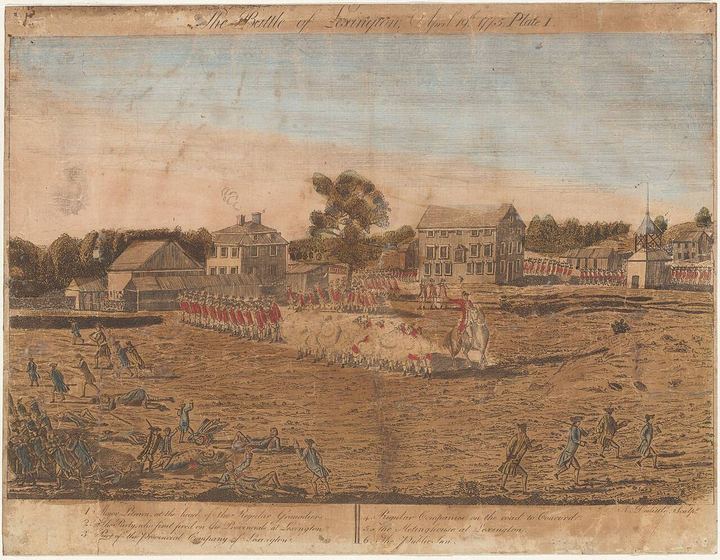

Summary
Sam the Minuteman is an easy-to-read story of the first battle of the American Revolution, told through a boy who lives through it. Sam Brown lives with his mother and father on a farm in Lexington, Massachusetts, in the spring of 1775. British soldiers are stationed in Boston, and the farmers of the countryside have formed companies of minutemen, men ready to turn out with their muskets at a minute's warning. Sam's father is one of them. One night Sam is woken by alarm bells and the sound of men running through the dark: the British are marching out of Boston. His father tells him to take his gun and come with him, and the two join the other minutemen gathering on the village green. They wait there through the cold hours of the night. At dawn the long red-coated column comes up the road, and the small company of farmers faces the trained soldiers across the green. Shots are fired, the British charge, and the minutemen break and scatter. Eight of them are killed, and Sam's friend John is shot in the leg; seeing his friend hurt, Sam learns how real and frightening war is. The British march on toward Concord, but the story does not end in defeat. Later that day, as the soldiers return along the road toward Boston, minutemen from many towns fire on them from behind stone walls, trees and buildings, and Sam joins the running fight that harries the column back toward the city. When it is over he goes home tired, but less afraid than when the bells first rang. Benchley's short, plain sentences are paired throughout with Arnold Lobel's drawings of farmhouses, the green at dawn, marching redcoats and the smoke of the skirmishes. Harper & Row published the book in 1969 as an I Can Read History Book, 62 pages long, for children reading on their own.
Virtues in this work
- Fortitude: Sam goes with his father to Lexington green and stays through the British attack although he is badly frightened.
- Piety: Sam obeys his father's call in the night and stands with him among the minutemen of their town.
- Friendship: Sam's grief and fear when his friend John is shot in the leg show how closely the boys of Lexington are bound together.
Plot or Argument
- The Brown farm in Lexington
Sam and his family live on their farm while trouble grows between the people of Massachusetts and the British soldiers in Boston; Sam's father is a minuteman.
- The alarm in the night
Bells ring and men run in the dark; Sam's father tells him to take his gun and come, and they go to the green to wait with the others.
- Dawn on Lexington green
The British column arrives, shots are fired, eight minutemen are killed, and Sam's friend John is wounded in the leg as the company scatters.
- The road back to Boston
As the British march back from Concord, minutemen fire on them from cover along the way, and Sam joins in driving them toward Boston.
- Home again
Sam returns home at the end of the long day, having faced his fear.
Characters
- Sam Brown, protagonist
Farm boy of Lexington who turns out with the minutemen and learns to face his fear.
- Mr. Brown, Sam's father
Minuteman who takes Sam with him to the green when the alarm sounds.
- Mrs. Brown, Sam's mother
Keeps the farm and sees her husband and son off into the night.
- John, Sam's friend
Young minuteman wounded in the leg in the fighting on the green.
- The British soldiers, redcoats
The column marching from Boston, met at Lexington and harried on the road back.
Lessons
Courage is not the same as not being afraid
Sam is frightened when the bells ring, frightened on the green at dawn, and frightened when John is hurt. He goes anyway, and keeps going. The book shows young readers that brave people feel fear but do what they ought to do in spite of it.
- When was Sam most afraid in the story?
- What did Sam do even though he was scared?
- Can you think of a time you did something hard while you felt afraid?
War is real and costly
The story does not make battle into a game. Eight men die on the green and Sam's own friend is shot. Benchley lets children see that the freedom Americans celebrate was won by ordinary farmers who were hurt and killed.
- How did Sam feel when he saw that John had been shot?
- Why do you think the author told us that some of the minutemen died?
Following a father's example
Sam's father does not leave his son behind or send him alone; he takes him and stands beside him. The book shows a boy learning duty by watching and joining his father.
- Why do you think Sam's father asked Sam to come with him?
- What did Sam learn from watching his father on the green?
- Who in your family shows you how to do brave or hard things?
Context
The story is set on 18-19 April 1775, when British regulars marched from Boston to seize militia stores at Concord. Riders including Paul Revere spread the alarm through the night, and at dawn the column met the Lexington militia company on the town green. Eight Lexington men were killed there. After the fight at Concord's North Bridge, the British retreat to Boston came under fire from militia companies from many towns along the road, and the day opened the War of Independence.
Composition
Benchley wrote the book for Harper & Row's I Can Read History series of easy readers, and it was illustrated by Arnold Lobel, who was then beginning his own Frog and Toad books. It was published in 1969. Benchley later wrote George the Drummer Boy, which tells the same events from the side of a young British drummer.
Reception
The book has stayed in print for decades as a beginning reader on the American Revolution and was named by The New York Times among the outstanding books of its year. It is often read in early grades alongside Longfellow's Paul Revere's Ride.
Comparisons
- paul-reveres-ride
Longfellow's poem tells the night ride that raised the alarm; Benchley's story begins where the ride ends, with a boy woken by the bells and sent to the Lexington green.
- johnny-tremain
Esther Forbes's older and longer novel also brings a boy to the morning of Lexington and Concord, seen from Boston; Sam's story is the farmyard view of the same day for younger readers.
- frog-and-toad-are-friends
Arnold Lobel illustrated Sam the Minuteman just before writing and drawing Frog and Toad; the same pen line serves a war story and a gentle friendship story in the I Can Read format.
- keep-the-lights-burning-abbie
Both are easy-reader histories about a child who must do a grown-up's duty in a time of danger, Sam on the battlefield and Abbie Burgess at the lighthouse.
- the-courage-of-sarah-noble
Both short books for young readers follow a child into frightening early American settings and define courage as going on while afraid.
Quotes
For Students
A reading companion for classical Christian high school students. See the student guide.
Reading Guide
Watch for
- The bells and running men that wake Sam in the night.
- What Sam's father says to him before they leave the farm.
- Lobel's pictures of the redcoats coming up the road at dawn.
- What happens to Sam's friend John on the green.
- How Sam feels at the very end, compared with the beginning.
Key terms and names
- Minuteman
- A farmer or townsman who promised to be ready to fight at a minute's warning. Sam's father is one, and by the end Sam is too.
- Redcoats
- A name for the British soldiers, who wore red coats. They march from Boston to Lexington in the story.
- Lexington
- The Massachusetts town where Sam lives and where the first shots of the war are fired.
- Village green
- The open grassy space in the middle of a New England town, where the minutemen gather and wait for the soldiers.
- Musket
- The long gun that soldiers and minutemen carried, loaded with powder and a ball. Sam takes his when his father calls him.
Seminar Questions
- Comprehension What woke Sam up in the middle of the night?
- Comprehension Where did Sam and his father go, and what did they wait for?
- Comprehension What happened to Sam's friend John?
- Interpretation Sam was afraid, but he still went with his father. What do you think helped him to go?
- Interpretation The minutemen ran away on the green but fought again later in the day. Why do you think they did not give up?
- Interpretation How was Sam different when he came home at the end of the story?
- Big Question What does it mean to be brave, and do you have to feel no fear to be brave?
Faith Connections
- Psalm 56:3 (Scripture)
David says, What time I am afraid, I will trust in thee. Sam is afraid many times in the story, and the psalm shows children where to turn when they feel as he did on the green.
- Joshua 1:9 (Scripture)
God tells Joshua to be strong and of good courage, for the Lord is with him wherever he goes. Sam's courage grows over the day in the same way, not because the danger goes away but because he keeps going.
- Proverbs 22:6 (Scripture)
Train up a child in the way he should go. Sam's father teaches him duty by taking him along and standing beside him, not only by telling him.
Logic and Rhetoric
Central argument: Sam is an ordinary boy who is afraid of the soldiers and of the fighting. Yet when the alarm comes he goes with his father, stays through the shooting and the wounding of his friend, and joins the fight again later in the day. Therefore courage is shown not by feeling no fear but by doing one's duty while afraid, and ordinary people like Sam began the fight for American freedom.
Rhetorical device: plain style (short declarative sentences). Throughout the book Benchley tells the battle in very short, simple sentences suited to beginning readers, so that events such as John's wound on the green are stated flatly and carry more weight for being unadorned.
Debate: Resolved: Sam's father was right to take Sam with him to Lexington green.
Writing Prompts
Essay: Tell three times in the story when Sam was afraid, and what he did each time.
Comparison with Paul Revere's Ride: Paul Revere rode through the night to warn the farmers, and Sam was one of the people woken up. Tell how the poem and the story each show the night of 18 April 1775.
Medical Lens
The book is written for beginning readers and contains no medical treatment, but it does not hide the cost of battle: eight minutemen are killed on Lexington green and Sam's friend John is shot in the leg. These are the injuries of 18th-century musket fire, presented simply and without detail.
- The battle on Lexington green
Eight minutemen are killed and Sam's friend John is wounded in the leg.
Creative Prompts
- Classroom
Draw a map with Boston, Lexington and Concord, and use a toy soldier to walk the redcoats out and back while you tell what Sam saw at each place.
- Fiction
Write what Sam tells his mother when he gets home at the end of the day.
- Poetry
After reading Longfellow's Paul Revere's Ride, write four lines about the bells Sam heard that night.
- Dialogue
Act out the night on the green: Sam and his father talking quietly while they wait for morning.
Further Reading
- George the Drummer Boy, Nathaniel Benchley
Companion easy reader telling the same day from a British drummer's side.
- And Then What Happened, Paul Revere?, Jean Fritz
- Paul Revere's Ride, David Hackett Fischer
Full history of 18-19 April 1775 for adult readers and teachers.
Verification notes
Publication facts (Harper & Row, 1969; I Can Read History Book; illustrations by Arnold Lobel; 62 pages) were checked against Exodus Books (https://www.exodusbooks.com/details.aspx?ID=2421) and library catalogue records found by search. The plot outline (Sam Brown's farm in Lexington, the alarm bells at night, his father telling him to bring his gun, the wait on the green, eight minutemen killed, his friend John shot in the leg, the later skirmishes driving the British back toward Boston, Sam returning home less afraid) was checked against the Exodus Books description, the Plugged In review (https://www.pluggedin.com/book-reviews/sam-the-minuteman/), which also reports the New York Times outstanding-book listing, and reader summaries on Goodreads (https://www.goodreads.com/book/show/313438). No quotation is included because no reliable source reproducing the text's exact wording could be confirmed. The summary avoids details not attested in those sources.
- Text is under copyright; check quotations against an authorized edition before publication.
- Confirm the friend's full name (John; some readers recall a surname) and whether named historical figures such as Captain John Parker appear.
- Confirm whether the book mentions Concord by name and how much of the afternoon fighting Sam takes part in.
- Confirm the New York Times outstanding-book listing and its year.
- Confirm the publication year of George the Drummer Boy (usually given as 1977).