Work record
The Witch of Blackbird Pond
1958 · Postwar Contemporary · Novel · English
Abstract
Background. Living in the old river town she describes, Speare built her second book from local history: the Dominion of New England, the hidden charter, and the fear of witches that ran through seventeenth-century New England.
Plot. A Caribbean planter's granddaughter, orphaned and alone, lands among strict relatives who never expected her. Her boldness, her finery and her ease in the water unsettle the godly settlement. She finds refuge with an outcast Quaker beside a marshy cove and quietly teaches a downtrodden neighbour's child to read. When sickness takes children's lives over the winter, townsmen hunt the old woman; the heroine helps her slip away by ship and then stands before the magistrates herself, until the little pupil's reading clears her. Courtships sort themselves out, and the young sailor returns in spring with a vessel of his own.
Themes. Belonging and exile, the claims of conscience against conformity, literacy as liberty, and the slide from fear to persecution. Quarrels over royal authority and the colony's self-government run beneath the domestic story, so that public and private loyalties mirror each other.
Significance. Awarded the 1959 Newbery Medal, the book remains a staple of American classrooms studying early New England and the first of Speare's two Newbery winners.
Main characters
- Kit Tyler: Island-bred orphan, spirited and impulsive
- Nat Eaton: Young sailor on his father's brigantine
- Hannah Tupper: Elderly Friend shunned by the settlement
- Matthew and Rachel Wood: Kit's severe uncle and loving aunt
- Mercy and Judith Wood: Her cousins, one lame and serene, one proud and lovely
- John Holbrook: Scholar of divinity
- Prudence Cruff: Neglected child who learns her letters
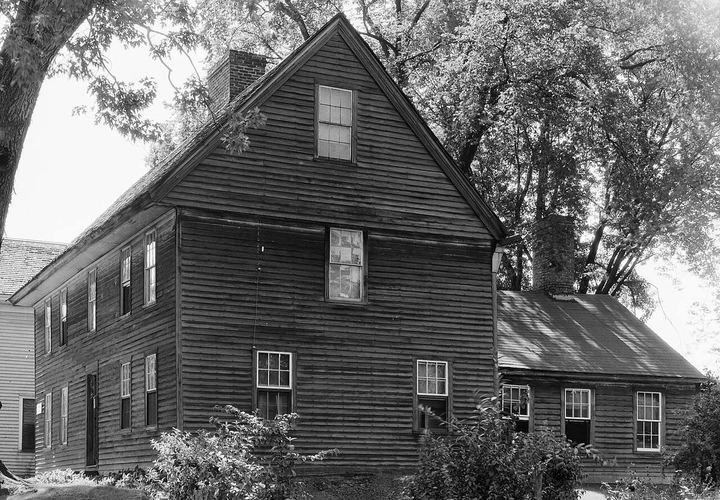

Summary
The Witch of Blackbird Pond is a historical novel in twenty-one chapters set in Connecticut Colony in 1687 and 1688. Katherine Tyler, called Kit, is sixteen and has grown up in freedom and comfort on her grandfather's plantation in Barbados. After his death she sails alone to New England aboard the brigantine Dolphin, intending to live with her mother's sister, whom she has never met. When the ship stops at Saybrook, a little girl, Prudence Cruff, drops her doll overboard, and Kit dives into the river to fetch it; the passengers, above all Prudence's sharp-tongued mother, are shocked that a respectable girl can swim, since a woman who floats was once thought a witch. Nat Eaton, the captain's son and mate, teases Kit but likes her. At Wethersfield she arrives unannounced at the house of her Aunt Rachel and stern Uncle Matthew Wood, with their daughters, the beautiful, wilful Judith and the gentle Mercy, lame since a childhood fever. Kit's silk gowns and easy manners fit badly in a Puritan household of meetinghouse sermons and endless chores. Two young men seek the cousins: wealthy William Ashby, who courts Kit and begins building a house, and John Holbrook, a divinity student from the Dolphin who comes to study under the Reverend Gershom Bulkeley. Kit and Mercy open a dame school, which the schoolmaster closes when he finds Kit letting the children act out the parable of the Good Samaritan, then reopens. In the Great Meadows, Kit befriends Hannah Tupper, an old Quaker widow living alone by Blackbird Pond, shunned and called a witch. Hannah's cottage becomes Kit's refuge, and there she secretly teaches Prudence to read. Meanwhile Governor Andros comes to take Connecticut's charter, and the colonists hide it. Nat and two shipmates are put in the stocks and banished from the town for a prank with jack-o'-lanterns in William's unfinished house. John declares himself to Matthew, but the family mistakenly thinks he means Judith; John later goes north with the militia. In the winter a fever strikes the town, killing children and bringing Mercy close to death, and a mob sets out to burn Hannah. Kit gets her away to the Dolphin, where Nat hides her; the next day Kit herself is arrested for witchcraft, on the Cruffs' complaint. At her examination Nat brings in Prudence, who reads from the Bible to prove what Kit really taught her, and her father speaks for Kit; she is freed. John returns to marry Mercy, Judith accepts William, and in the spring Nat sails up the river as captain of his own ketch, named the Witch, to ask for Kit's hand. Houghton Mifflin published the novel in 1958, and it won the 1959 Newbery Medal.
Virtues in this work
- Fortitude: Kit runs through the dark to warn Hannah Tupper and helps her escape the mob, knowing it may bring suspicion on herself.
- Charity: Kit spends her stolen hours at Hannah's cottage teaching Prudence Cruff to read when everyone else thinks the child cannot learn.
- Friendship: Nat Eaton brings Prudence to Kit's examination and takes Hannah away on the Dolphin.
- Humility: Kit, who arrived with seven trunks of silk gowns, learns to card wool, make candles and work beside her cousins as one of the household.
- Justice: Matthew Wood refuses to join the mob against Hannah and stands by Kit before the magistrates.
Plot or Argument
- Chapters 1-3: The voyage and the arrival
Kit sails from Barbados on the Dolphin, swims for Prudence's doll at Saybrook, meets Nat Eaton and John Holbrook, and arrives unannounced at the Wood house in Wethersfield.
- Chapters 4-7: A Puritan household
Kit's trunks of fine clothes, the meetinghouse, chores, Judith and Mercy, and the attentions of William Ashby; John Holbrook settles to study with the Reverend Bulkeley.
- Chapters 8-10: The dame school and the Great Meadows
Kit and Mercy keep school until the Good Samaritan play gets it closed; Kit finds the meadows and Hannah Tupper's cottage by Blackbird Pond, and Nat is there too.
- Chapters 11-14: Prudence, politics and the charter
Kit secretly teaches Prudence to read at Hannah's; quarrels over King James's rule; Governor Andros comes for the charter and the colonists hide it; a husking bee and John's misunderstood proposal.
- Chapters 15-17: Banishment and departure
Nat's jack-o'-lantern prank, the stocks and his banishment; John leaves with the militia; Kit, unhappy, thinks of returning to Barbados.
- Chapters 18-20: Fever, mob and trial
Fever strikes the town and Mercy nearly dies; the mob burns Hannah's cottage after Kit and Nat get her away; Kit is arrested and examined for witchcraft, and Prudence's testimony frees her.
- Chapter 21: Spring
Judith and William and John and Mercy are matched; Nat comes up the river with his own ship, the Witch, and asks Matthew Wood for Kit.
Characters
- Katherine (Kit) Tyler, protagonist
A spirited sixteen-year-old raised in Barbados who must find her place among the Puritans of Wethersfield.
- Nathaniel (Nat) Eaton, mate of the Dolphin
The captain's son, mocking and good-hearted, Hannah's friend and in the end Kit's suitor.
- Hannah Tupper, Quaker widow
An old woman living alone by Blackbird Pond, shunned as a witch, whose faith and kindness steady Kit.
- Matthew Wood, Kit's uncle
A stern, upright Puritan and a defender of the colony's charter, who stands by Kit when she is accused.
- Rachel Wood, Kit's aunt
Kit's mother's sister, gentle and worn with work, who welcomes her niece.
- Mercy Wood, Kit's cousin
Lame since a childhood fever, patient and wise, loved by John Holbrook.
- Judith Wood, Kit's cousin
Beautiful and headstrong, who sets her heart first on John and finally marries William.
- John Holbrook, divinity student
Earnest young scholar studying with the Reverend Bulkeley, who joins the militia and returns for Mercy.
- William Ashby, suitor
Wealthy young man of Wethersfield who courts Kit and builds a house for a bride.
- Prudence Cruff, child
A timid, neglected little girl whom Kit teaches to read in secret.
- Goodwife Cruff, Prudence's mother
Suspicious of Kit from the day she swims, and her accuser at the trial.
- Reverend Gershom Bulkeley, minister
A learned historical figure and royalist who takes John Holbrook as his pupil.
Lessons
Fear makes a scapegoat
When children fall sick, the town looks for someone to blame and finds the old woman nobody understands. The novel shows how quickly suspicion of difference becomes cruelty, and how much courage it takes to stand by the accused.
- Why do the townspeople blame Hannah for the fever?
- What makes Kit seem like a witch to Goodwife Cruff?
- What would you have done if you had seen the mob setting out?
Learning to belong
Kit arrives proud of her silk dresses and her freedom and feels nothing but strangeness in Wethersfield. Over a year she learns the worth of hard work, plain faith and family, while keeping her own warmth and courage.
- What does Kit find hardest about life in the Wood household?
- What does Kit learn from Mercy and from Aunt Rachel?
- Does Kit change, or does Wethersfield change to fit her?
Reading as a gift
Prudence's mother thinks her daughter is too dull to learn, but Kit teaches her to read and write, and in the end that skill saves Kit's life. Teaching someone to read gives them a voice.
- Why does Kit keep the lessons secret?
- How does Prudence's reading prove Kit innocent at the examination?
Faith in different forms
The Puritans of the meetinghouse and the Quaker Hannah both live by faith, though they distrust each other. Kit sees real goodness in Uncle Matthew's rectitude and in Hannah's quiet love, and learns to honour both.
- How does Hannah's way of speaking about God differ from the sermons Kit hears?
- When does Uncle Matthew show that his faith is real, even though he is stern?
- Why do you think the Puritans feared the Quakers?
Context
The novel is set in Wethersfield, one of the oldest English towns in Connecticut, on the Connecticut River just below Hartford, during the reign of King James II. In 1686-87 the crown joined the New England colonies into the Dominion of New England under Governor Sir Edmund Andros, who came to Hartford in October 1687 to take Connecticut's charter of 1662; by tradition the document was spirited away and hidden in the Charter Oak. The period also lay in the long shadow of earlier New England witch accusations, including a cluster in Connecticut in the 1640s-1660s, a few years before the Salem trials of 1692. Quakers had been persecuted and expelled from Massachusetts in the 1650s and 1660s. Gershom Bulkeley, minister and physician at Wethersfield, was a real figure and a supporter of royal authority.
Composition
Speare lived in Wethersfield and drew on its history and landscape, including the Great Meadows and the cove at the river then called Blackbird Pond. The Witch of Blackbird Pond was her second novel, after Calico Captive (1957), and was published by Houghton Mifflin on 1 December 1958.
Reception
The book won the 1959 Newbery Medal; Speare won the Medal again for The Bronze Bow in 1962. It has been read in American schools ever since, especially alongside the study of early New England, and Speare received the Laura Ingalls Wilder Award (now the Children's Literature Legacy Award) for her body of work in 1989.
Comparisons
- the-scarlet-letter
Hawthorne's Boston of the 1640s and Speare's Wethersfield of the 1680s both show Puritan communities judging a woman who stands apart; Hester Prynne's cottage on the edge of town is akin to Hannah Tupper's by the pond.
- the-bronze-bow
Speare's other Newbery novel also follows a young person consumed by one passion, Daniel's hatred of Rome, who is changed by love and by a wiser older figure.
- the-sign-of-the-beaver
Speare's later novel of 1700s Maine again sets a young settler among people the colonists distrust and makes reading and teaching central to the friendship.
- johnny-tremain
Both are Newbery-winning historical novels of New England in which a proud young person is humbled and finds a cause; Esther Forbes's Boston of 1773-75 inherits the charter quarrels of Speare's 1687.
- the-pilgrims-progress
Bunyan's book (1678), written in the same years and read in Puritan homes, shows the same world of conscience; Faithful's trial at Vanity Fair is an allegorical cousin of Kit's examination.
Quotes
“Kit Tyler had been on the forecastle deck since daybreak, standing close to the rail, staring hungrily at the first sight of land for five weeks.”
For Students
A reading companion for classical Christian high school students. See the student guide.
Reading Guide
Watch for
- Kit's swim for Prudence's doll at Saybrook in the opening chapters, and how that one act follows her to the trial.
- Kit's seven trunks of fine clothes and what she does with them as the year goes on.
- Each visit to Hannah Tupper's cottage, and what Kit finds there that she cannot find in town.
- The charter quarrel at the Woods' table, and how Uncle Matthew's politics show his character.
- Every misunderstanding between the young people, especially the night John asks Matthew's permission.
Key terms and names
- Puritans
- English Protestants who sought a plain, Bible-centred church and settled New England; the Woods and most of Wethersfield are Puritans.
- Quaker
- A member of the Society of Friends, who worship in silence and refuse oaths; Hannah Tupper is one, and the Puritans distrust her for it.
- Dame school
- A small school for young children, taught in a home; Kit and Mercy keep one in Wethersfield.
- Hornbook
- A wooden paddle holding a printed sheet of letters under a thin layer of horn, used for teaching reading; a primer with Prudence's name is evidence at the trial.
- Charter
- The royal document of 1662 by which Connecticut governed itself; Governor Andros comes to take it, and the colonists hide it.
- Goodwife
- The ordinary title of a married woman of the middling sort in New England, as in Goodwife Cruff.
- The stocks
- A wooden frame in a public place that held an offender's ankles for punishment and shame; Nat is set in them after his prank.
Seminar Questions
- Comprehension What does Kit do at Saybrook that makes the passengers suspicious of her?
- Comprehension Why is the dame school closed, and how does Kit get it opened again?
- Comprehension Who brings Prudence to Kit's examination, and what does Prudence do there?
- Interpretation Why does Hannah's cottage feel like home to Kit when the Wood house does not, at least at first?
- Interpretation Uncle Matthew is harsh with Kit but stands by her when she is accused. What does that show about him?
- Interpretation Why does Speare name Nat's new ship the Witch? What has the word come to mean by the end of the book?
- Interpretation Judith, Mercy and Kit each end with a different husband than the town expected. What does each choice show about her?
- Big Question How can a community hold firmly to its faith without turning against those who are different?
Faith Connections
- Luke 10:25-37 (Scripture)
Kit has the children act out the parable of the Good Samaritan and loses her school for it, yet the whole novel turns on the question it asks: who is my neighbour? Hannah, the despised outsider, proves the truest neighbour.
- Hebrews 13:2 (Scripture)
The letter to the Hebrews bids believers show hospitality to strangers. Kit lands at Wethersfield unannounced and unknown, and Aunt Rachel's welcome, Uncle Matthew's grudging roof and Goodwife Cruff's suspicion each answer that command differently.
- Exodus 23:1-2 (Scripture)
The law forbids raising a false report and following a multitude to do evil. The mob that sets out for Hannah's cottage, and the witnesses at Kit's examination, stand under this command.
- John Bunyan, The Pilgrim's Progress (Great Conversation)
Bunyan's book, published in 1678 and widely read by English Puritans, shows Faithful condemned by the townsfolk of Vanity Fair; Kit's examination before the magistrates invites the comparison.
Logic and Rhetoric
Central argument: Wethersfield fears the unknown: Kit can swim, Hannah worships differently, and a fever has no visible cause. Fear looks for someone to blame, and the strangers are blamed. But the evidence against Kit, a primer with Prudence's name, turns out to be proof of kindness when Prudence reads aloud. So the novel argues that charity and plain truth, patiently given, can overcome a community's fear of outsiders.
Rhetorical device: dramatic irony. At the examination the court treats the primer with Prudence's name as a sign of witchcraft, while the reader knows it records Kit's reading lessons at Hannah's cottage; Prudence's testimony turns the evidence around.
Debate: Resolved: that Kit was right to keep teaching Prudence in secret against her mother's wishes.
Writing Prompts
Essay: Kit's swim at Saybrook and her flight with Hannah on the night of the mob are both acts of rescue that put her in danger. Argue what the two scenes show about her courage and how it grows.
Comparison with The Scarlet Letter: Compare Hannah Tupper and Hester Prynne as women living apart from a Puritan town. How does each community treat them, and what does each author suggest about mercy?
Medical Lens
The novel's climax turns on an epidemic. A fever passes through Wethersfield in the winter of 1687-88, kills several children and brings Mercy Wood near death, and the frightened townspeople, finding no natural cause, blame witchcraft and the solitary Quaker woman Hannah Tupper. The book is a clear picture for young readers of how communities before germ theory sought agents for disease and turned on outsiders, a pattern seen in many plague and epidemic accusations. Mercy's lameness from a childhood fever is a quiet portrait of disability in a household that needs every pair of hands. Historically, Gershom Bulkeley of Wethersfield was both minister and physician, as many New England clergy were, and John Holbrook comes to study with him; the joining of the clerical and medical roles in one man is a period fact worth noting. The novel does not name the disease, and any identification is the reader's own.
- Chapter 3 and following
Mercy Wood, lame from a fever in childhood, does her work seated and with a crutch; the household takes her lameness as part of life.
- Chapters 18-19
Fever spreads through the town, children die, Mercy lies near death, and a mob blames Hannah Tupper's witchcraft.
- Chapter 19
Mercy's fever breaks on the night Kit returns from helping Hannah escape.
Creative Prompts
- Fiction
Write Prudence's first reading lesson at Hannah's cottage from Prudence's point of view.
- Dialogue
Write the argument at the Woods' supper table when the Reverend Bulkeley and Matthew Wood disagree about King James and the charter.
- Classroom
Make a map of Wethersfield from the novel, marking the landing, the Wood house, the meetinghouse, the Great Meadows and Blackbird Pond, and trace Kit's movements on the night of the mob.
- Essay
Compare Kit's examination with the accusations against Hannah, and argue what saves Kit when Hannah could only flee.
Further Reading
- Calico Captive, Elizabeth George Speare
- The Bronze Bow, Elizabeth George Speare
- The Sign of the Beaver, Elizabeth George Speare
- The Devil in the Shape of a Woman: Witchcraft in Colonial New England, Carol F. Karlsen
Verification notes
Publication facts (Houghton Mifflin, 1 December 1958; 1959 Newbery Medal), the April 1687 setting, Wethersfield landmarks and the main characters were checked at en.wikipedia.org/wiki/The_Witch_of_Blackbird_Pond. The detailed plot (the doll at Saybrook, John studying under Bulkeley, the misunderstood proposal, the charter, the fever and mob, the examination and Prudence's testimony, Nat's ship the Witch) follows litcharts.com/lit/the-witch-of-blackbird-pond/summary and shmoop.com/study-guides/witch-blackbird-pond/summary.html; the jack-o'-lanterns in William Ashby's unfinished house, the stocks and banishment (Chapter 16) and Goodman Cruff's part at the trial were confirmed in search-result summaries from shmoop and enotes. The 21-chapter count is from the shmoop table of contents. Speare's life and awards were checked at en.wikipedia.org/wiki/Elizabeth_George_Speare. The Chapter 1 sentence was checked against the first-chapter excerpt at https://campusstore.miamioh.edu/witch-blackbird-pond-reprint-speare/bk/9780440495963 and the passage quoted at https://www.enotes.com/topics/witch-blackbird/themes/the-nature-and-cost-of-freedom.
- Text is under copyright; check quotations against an authorized edition before publication.
- Chapter groupings in plotOrArgument are approximate; check against the 1958 edition.
- Why Kit left Barbados beyond her grandfather's death (his debts, and an unwanted marriage to an older planter, are commonly cited).
- The name and office of the magistrate at Kit's examination (Captain Talcott in one summary) and the exact part played by Goodman Cruff and Matthew Wood.
- Whether a physician or Reverend Bulkeley attends Mercy during the fever, and the season of the epidemic in the novel's chronology.
- Whether John Holbrook is captured by Indians while with the militia before he returns.
- The number of trunks Kit brings (seven is commonly given) and the specific household tasks (carding, candle-making) she learns.
- Whether the trial evidence is a hornbook or a primer/copybook bearing Prudence's name.