Work record
Twenty Years at Hull-House
1910 · Early 20th Century · Memoir · English
Abstract
Background. Written by a well-known Chicago reformer at the height of her influence, the volume grew out of magazine installments and aimed to describe settlement work candidly rather than as an idyll.
Content. The opening chapters trace an Illinois girlhood shaped by a principled father and the memory of Lincoln, then the restless years of illness, study and European travel that ended when a Spanish bullring prompted her to act. The remainder moves topic by topic through the house on Halsted Street: its first classes and clubs, relief in the hard winter of 1893, labor law and the railway-car strike, immigrant families, a meeting with the Russian novelist, sanitary and civic campaigns, the arts, exiles from Russia, and education.
Form. After four chronological chapters the book abandons strict sequence; each later chapter gathers two decades of experience around one subject, mixing recollection, reprinted lectures and reflection.
Themes. Service as neighborliness rather than condescension, the cost of delay, respect between immigrant parents and their children, fairness to all parties in industrial conflict, and the extension of democracy into social and cultural life.
Significance. A founding text of American social work and of the Progressive movement, it shaped how a generation understood the city, and it remains among the most widely read American autobiographies by a woman.
Key figures
- Jane Addams: Author, founder and head resident of Hull-House
- John H. Addams: Her father, miller and Illinois state senator
- Ellen Gates Starr: Co-founder of Hull-House
- Florence Kelley: Resident and first Illinois factory inspector
- Julia Lathrop: Resident and member of the State Board of Charities
- Abraham Lincoln: Her father's friend and a formative memory
- Leo Tolstoy: Russian writer she visited in 1896
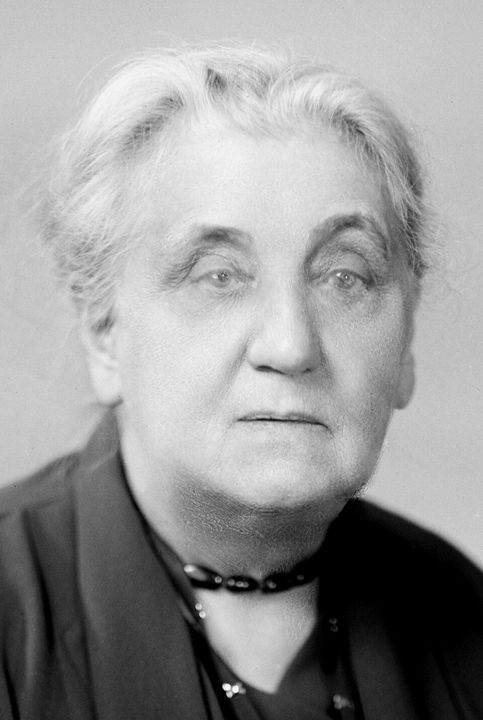

Summary
Twenty Years at Hull-House is Jane Addams's account of her early life and of the settlement house she founded on Chicago's West Side in 1889. The first four chapters are autobiographical. In Cedarville, Illinois, the young Jane, who has lost her mother in infancy, adores her father, a miller and state senator. She remembers first seeing city poverty at the age of about seven and vowing to live in a large house among the small ones; a recurring dream in which she alone must make a wagon wheel; and her father's advice to wear her old cloak to Sunday school so as not to make poorer girls feel badly. She recalls the black-draped flags on the gateposts and her father's tears when Lincoln died, and the letters from Lincoln that he treasured. At Rockford Seminary she resists pressure to become a missionary. After her father's death in 1881 she enters medical school in Philadelphia, but a spinal illness puts her in Dr. Weir Mitchell's hospital and then in bed for six months, and she drifts through years of travel and study marked by nervous depression. Watching a bullfight in Madrid in 1888, she is shocked to realize that she has been hiding behind endless preparation, and she tells her school friend Ellen Gates Starr of her plan to live among the poor. A visit to Toynbee Hall in London confirms it. In September 1889 the two women move into the old Hull mansion on Halsted Street, among Italian, Irish, German, Jewish, Bohemian and Greek neighbors. The later chapters describe the house's growth: a kindergarten, reading parties on George Eliot, clubs, a coffee-house, a gymnasium, a theater, a music school and the Labor Museum, where immigrant women demonstrate spinning and weaving for their American-born children. Addams describes the poverty of the 1893 depression, the sweatshops investigated by Florence Kelley, the first Illinois factory law of 1893 and its eight-hour clause, and the bitterness of the Pullman strike of 1894. She recounts her visit to Tolstoy and her failed attempt to bake bread with her own hands, her term as garbage inspector of the nineteenth ward, the typhoid epidemic of 1902 and a campaign against the sale of cocaine to boys, the founding of the Juvenile Court, political battles with the ward alderman, the clubs for young people, the arts, the Russian revolutionary exiles who came to Chicago, and her belief that education must be socialized for all. The book appeared serially in The American Magazine in 1910 and was published that year by Macmillan with illustrations by Norah Hamilton.
Virtues in this work
- Charity: Addams leaves a comfortable life to live on Halsted Street among the poor immigrants of Chicago's Nineteenth Ward.
- Humility: At eight she wears her old cloak to Sunday school, at her father's suggestion, so the other girls will not feel badly.
- Industry: She takes the job of garbage inspector, rising at six to follow the wagons through the ward's alleys.
- Justice: During the Pullman strike she tries to understand both the company and the workers rather than condemn either.
Plot or Argument
- Chapters I-III: Childhood, Lincoln and school
Addams recalls her father, her first sight of urban poverty, the dream of the wagon wheel, the lesson of the new cloak, the day Lincoln died, her father's political friendships, and her years at Rockford Seminary resisting the call to mission work.
- Chapter IV: The snare of preparation
Medical school, illness and long travels leave her restless and depressed until a bullfight in Madrid in 1888 shows her that preparation has become an excuse; she resolves to found a settlement and visits Toynbee Hall.
- Chapters V-VII: First days and early undertakings
Addams and Ellen Gates Starr move into the Hull mansion in September 1889. She explains the subjective necessity that draws educated young people to settlements and describes the first kindergarten, clubs, art exhibits, the coffee-house and the public kitchen.
- Chapters VIII-X: Poverty, economic debate and labor law
The depression of 1893 brings the residents face to face with relief work; Hull-House hosts debates among socialists, anarchists and reformers; Florence Kelley's investigation of the sweating system leads to the Illinois factory law, and the Pullman strike of 1894 reveals deep class bitterness.
- Chapters XI-XII: Immigrants and Tolstoyism
She describes the gulf between immigrant parents and their children and the Labor Museum built to bridge it, then her visit to Tolstoy and her struggle with his teaching that one must share the labor and fare of the poor.
- Chapters XIII-XIV: Public activities and civic cooperation
Addams serves as garbage inspector, residents investigate housing, typhoid, cocaine sales and midwifery, help create the Juvenile Court and contend with the ward's political machine.
- Chapters XV-XVIII: Clubs, arts, exiles and education
She describes the social clubs, the theater, music and art at Hull-House, the Russian revolutionary exiles who sought refuge in Chicago, and her conviction that the settlement must socialize education and democracy.
Characters
- Jane Addams, author and narrator
Founder of Hull-House, recalling how a restless young woman found her vocation among Chicago's poor.
- John H. Addams, father
Miller, Illinois state senator and friend of Lincoln, whose integrity shaped her conscience.
- Ellen Gates Starr, co-founder
School friend who joins her in founding Hull-House and leads its early art work.
- Florence Kelley, resident and reformer
Investigator of the sweating system and first Illinois factory inspector.
- Julia Lathrop, resident
Member of the State Board of Charities, active in public institutions and the Juvenile Court.
- Leo Tolstoy, host
Russian novelist whose teaching on bread labor challenges her.
- George Pullman, industrialist
Builder of a model company town whose 1894 strike she analyzes.
- Mary Rozet Smith, friend
Close friend and benefactor who travels with her to Russia.
Lessons
The snare of preparation
For years after college Addams studied and traveled, telling herself she was preparing for great things. A bullfight in Madrid made her see that preparation had become an excuse for inaction. The lesson is that at some point one must stop getting ready and begin.
- What did Addams realize after the bullfight in Madrid?
- Why does she call delay a snare?
- Is there something in your own life you are always preparing for but never beginning?
Living among, not only giving to
Hull-House was not a mission run from outside but a home in which educated residents lived among their neighbors. Addams says settlement work met a need of the residents as well as of the neighborhood. She treats friendship and shared life as the basis of service.
- What does Addams mean by the subjective necessity for social settlements?
- How does living on Halsted Street change what the residents learn and do?
- What is the difference between helping someone and living alongside them?
Honoring the older generation
Addams saw immigrant children growing ashamed of parents who could not speak English. The Labor Museum let mothers show their skill at spinning and weaving, and their children came to see them with new respect. The lesson joins education with filial piety.
- Why did some immigrant children look down on their parents?
- How did the Labor Museum change that?
- What skills or traditions do your parents or grandparents have that you might learn?
Seeing both sides
During the Pullman strike Addams knew both George Pullman and many of his workers, and she tried to understand each side's view without denying the bitterness. Her father, she writes, had taught her to look for charity on both sides of a conflict.
- Why does Addams find the Pullman strike so painful?
- What did she learn from her father about judging opponents?
- Is it possible to work for change and still be fair to those who oppose it?
Context
Chicago grew from about 300,000 people in 1870 to more than two million by 1910, much of the growth from immigration from Germany, Ireland, Italy, Bohemia, Poland, Russia and Greece. Industrial work brought long hours, child labor, tenement crowding and epidemic disease. The settlement movement began with Toynbee Hall in London's East End in 1884, inspired by Christian social thought and the example of Arnold Toynbee, and spread to the United States in the 1880s; Hull-House became the best known American settlement. Its residents worked through investigation and law as well as neighborliness, and the period's labor conflicts, such as the Pullman strike of 1894, divided public opinion sharply. Historians have offered differing assessments of the settlements: some emphasize their role in teaching American ways and middle-class standards to immigrants, while others stress their respect for immigrant cultures, shown in the Labor Museum, and their part in founding social work, public health and juvenile justice.
Composition
Addams wrote the book in 1909-1910, after her earlier works Democracy and Social Ethics (1902), Newer Ideals of Peace (1907) and The Spirit of Youth and the City Streets (1909). In her preface she says she wrote partly to give a faithful account of settlement work and partly to forestall two proposed biographies that made settlement life seem too smooth. Chapters appeared in The American Magazine and the book was published by Macmillan in New York in 1910. A sequel, The Second Twenty Years at Hull-House, followed in 1930.
Reception
The book was widely read and established Addams as one of the most admired women in the United States. She later seconded Theodore Roosevelt's nomination at the Progressive Party convention of 1912, and her opposition to American entry into the First World War cost her much public favor for a time. In 1931 she shared the Nobel Peace Prize with Nicholas Murray Butler. Twenty Years at Hull-House remains a standard text in American history, social work and the history of women's public life.
Comparisons
- autobiography-of-andrew-carnegie
Carnegie and Addams lived through the same industrial age from opposite sides of the factory gate; his account of philanthropy from wealth and hers of service by living among the poor make a natural pairing on what the fortunate owe to others.
- theodore-roosevelt-an-autobiography
Roosevelt's autobiography of 1913 sets out the Progressive program Addams helped support at the 1912 convention, written from the side of executive government rather than neighborhood work.
- up-from-slavery
Washington's Tuskegee and Addams's Hull-House were both institutions built by one founder to teach skills, cleanliness and citizenship, and both books argue by telling the founding story.
- lincoln-second-inaugural-address
Addams's chapter on Lincoln shows how his memory, and his call for charity toward both sides of a conflict, shaped her childhood conscience and her approach to the Pullman strike.
- hard-times
Dickens's novel of an English mill town dramatizes the industrial conditions that the settlement movement, begun in London, set out to address.
- the-story-of-my-life
Helen Keller and Jane Addams both turned physical limitation and long study into public work; Keller's later causes overlapped with those of Hull-House.
Quotes
Frequently cited
“I dreamed night after night that every one in the world was dead excepting myself, and that upon me rested the responsibility of making a wagon wheel.”
Frequently cited
“It is easy to become the dupe of a deferred purpose, of the promise the future can never keep”
Frequently cited
“The Settlement then, is an experimental effort to aid in the solution of the social and industrial problems which are engendered by the modern conditions of life in a great city.”
“people might be equal in things that mattered much more than clothes, the affairs of education and religion”
“his impressive statement that the greatest man in the world had died”
“if it were a womanly task to go about in tenement houses in order to nurse the sick, it might be quite as womanly to go through the same district in order to prevent the breeding of so-called "filth diseases."”
“the common stock of intellectual enjoyment should not be difficult of access because of the economic position of him who would approach it”
For Students
A reading companion for classical Christian high school students. See the student guide.
Reading Guide
Watch for
- The scenes with her father in Chapters I and II and what he teaches her about conscience and equality.
- The bullfight in Madrid in Chapter IV and how it changes her direction.
- Her explanation in Chapter VI of why educated young people need the settlement as much as the neighborhood needs them.
- The Labor Museum in Chapter XI and what it does for immigrant families.
- Her work as garbage inspector in Chapter XIII and the reactions of her neighbors.
Key terms and names
- Settlement house
- A house in a poor neighborhood where educated volunteers lived as residents and offered classes, clubs and services to their neighbors.
- Toynbee Hall
- The first settlement, founded in London's East End in 1884, which Addams visited in 1888.
- Sweating system
- Garment work done for very low pay in crowded tenement shops and homes, investigated by Florence Kelley.
- Pullman strike
- The 1894 strike against the Pullman Palace Car Company that grew into a national railroad strike.
- Labor Museum
- The Hull-House exhibit where immigrants demonstrated traditional crafts such as spinning and weaving.
- Juvenile Court
- A separate court for children founded in Chicago in 1899 with help from Hull-House residents.
- Progressive Era
- The period of about 1890-1920 when American reformers sought to address industrial and urban problems through investigation and law.
Seminar Questions
- Comprehension What did Addams vow as a child after seeing the poor streets of a nearby town?
- Comprehension Who founded Hull-House with Addams, and when did they move in?
- Comprehension What was the Labor Museum, and whom did it help?
- Interpretation Why does the bullfight, of all experiences, finally move Addams to act?
- Interpretation What does she mean by saying the settlement answers a subjective necessity?
- Interpretation How does her father's example shape the way she approaches the Pullman strike?
- Big Question Is it better to give to the poor from a distance or to live among them?
- Big Question What responsibility does an educated person have to a neighborhood?
Faith Connections
- Luke 10:29-37 (Scripture)
The parable of the Good Samaritan answers the question Who is my neighbor? Hull-House was founded on the conviction that neighbors are the people who live around us, whatever their language or nation.
- James 2:15-17 (Scripture)
Faith without works is dead. Addams's chapter on the snare of preparation is a sustained reflection on good intentions that never become deeds.
- Exodus 20:12 (Scripture)
Honor your father and your mother. The Labor Museum helped immigrant children honor parents whose skills they had come to despise.
- Leo Tolstoy, What Then Must We Do? (Great Conversation)
Addams read Tolstoy's account of the Moscow poor, which she calls What to Do, and visited him; his teaching that one must share labor and fare with the poor tested her own work.
Logic and Rhetoric
Central argument: Modern cities divide the educated and comfortable from the poor and the immigrant, to the harm of both. Educated young people suffer from a life of preparation without action, while neighborhoods lack the knowledge, culture and political voice the educated possess. Therefore Addams argues that the settlement, a home shared among neighbors, meets a need on both sides and helps make democracy social as well as political.
Rhetorical device: anecdote as argument. Addams makes her case through stories, such as the new cloak in Chapter I, the bullfight in Chapter IV and the Italian mother spinning in the Labor Museum in Chapter XI, each standing for a principle.
Debate: Resolved: that living among those one serves is more effective than giving to them from a distance.
Memory Work
It is easy to become the dupe of a deferred purpose, of the promise the future can never keep
people might be equal in things that mattered much more than clothes, the affairs of education and religion
Writing Prompts
Essay: Addams describes several turning points: the horrid little houses, the cloak, the bullfight, Toynbee Hall. Argue which one best explains why she founded Hull-House.
Comparison with Autobiography of Andrew Carnegie: Compare Carnegie's view of the duties of wealth with Addams's view of the duties of education. Which offers the stronger account of what the fortunate owe to others?
Medical Lens
The book is a primary source for Progressive Era public health and for the medical history of women of Addams's generation. Addams describes her year at the Woman's Medical College in Philadelphia, a spinal condition from childhood that put her in Dr. S. Weir Mitchell's hospital, six months bound to a bed, and years of what she calls nervous exhaustion and nervous depression; these belong to the period's diagnosis of neurasthenia and Mitchell's rest cure, and any later psychiatric reading is interpretive. At Hull-House residents worked as investigators of sanitation and disease: Addams served as garbage inspector of the nineteenth ward to prevent so-called filth diseases; residents traced the typhoid epidemic of 1902, in which the ward had a sixth of the city's deaths, to defective plumbing; Florence Kelley's inspectors destroyed garments finished in houses with unreported smallpox after the World's Fair; and Hull-House campaigned against the sale of cocaine to boys until a new Illinois law was passed in 1907. The book also mentions the Visiting Nurse Association, tuberculosis in the neighborhood and the County Hospital.
- Chapter IV, The Snare of Preparation
Medical school, the spinal difficulty, Weir Mitchell's hospital, six months in bed, and years of nervous depression.
- Chapter XIII, Public Activities and Investigations
Addams as garbage inspector of the nineteenth ward and the women of the neighborhood who thought it was not a lady's job.
- Chapter XIII, Public Activities and Investigations
The typhoid epidemic of 1902 and the residents' investigation of plumbing near clusters of cases.
- Chapter XIII, Public Activities and Investigations
The campaign against druggists selling cocaine to minors and the death of a former kindergarten pupil at seventeen.
- Chapter XIV, Civic Cooperation
The smallpox epidemic after the World's Fair, garments finished in infected houses, and Julia Lathrop's visits to the pest house.
Creative Prompts
- Essay
Addams calls delay the snare of preparation. Using Chapter IV, argue whether her years of travel were wasted or were in fact preparation.
- Classroom
Plan a Labor Museum for your own community: which older crafts or skills would you invite grandparents to demonstrate, and why?
- Dialogue
Write a conversation between Addams and Tolstoy about whether one must share the labor of the poor to serve them, drawing on Chapter XII.
Further Reading
- The Second Twenty Years at Hull-House, Jane Addams
- Democracy and Social Ethics, Jane Addams
- Citizen: Jane Addams and the Struggle for Democracy, Louise W. Knight
- American Heroine: The Life and Legend of Jane Addams, Allen F. Davis
Verification notes
Chapter titles and contents, the date of 18 September 1889, the Madrid bullfight, the 1893 factory law and Mrs. Kelley's appointment, the Pullman strike, the typhoid epidemic of 1902, the cocaine law of 1907 and the smallpox episode were checked against the attached Gutenberg text, which reproduces the Macmillan 1910 edition with its preface and list of Norah Hamilton's illustrations. Serialization in The American Magazine, the 1912 Progressive convention and the 1931 Nobel Prize are standard facts of her biography. The description of her illness as neurasthenia follows the usual historical reading; the book itself speaks of nervous exhaustion and depression. Quotes were checked against the attached text.
- The months of serialization in The American Magazine (1909-1910).
- Whether the 1892 address reprinted in Chapter VI was first given at the Ethical Culture summer school in Plymouth, Massachusetts, as the chapter's opening suggests.