Akbar the Great
1542–1605 · Mughal emperor who expanded his empire across northern India and welcomed debate among religions.
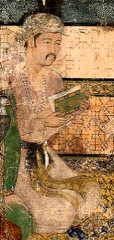
Akbar was the third Mughal emperor of India, grandson of Babur, the founder of the dynasty. He came to the throne in 1556 at thirteen, after his father Humayun died from a fall down library stairs, and his guardian Bairam Khan won the crucial second battle of Panipat that year. Akbar went on to conquer most of northern and central India. He never learned to read, perhaps because of a learning difficulty, but had books read to him and built a great library. He brought Hindu Rajput princes into his government and army, married a Rajput princess, and abolished the special tax on non-Muslims. At his new capital, Fatehpur Sikri, he built a House of Worship where Muslim, Hindu, Jain, Zoroastrian and Christian scholars, including Jesuits from Goa, debated before him. His minister Todar Mal reformed land taxes. Akbar's court supported painters, poets and historians, and his official biography, the Akbarnama, was richly illustrated. He died in 1605 and was succeeded by his son Jahangir.
Faith: A Muslim emperor who adopted programs to win the loyalty of the non-Muslim peoples of his realm. Source: Encyclopaedia Britannica

Key dates
- 1556 Becomes emperor; second battle of Panipat
- 1564 Abolishes the tax on non-Muslims
- 1571 Begins building Fatehpur Sikri
- 1575 Founds the House of Worship for religious debate
- 1605 Dies at Agra
More lives
Elizabeth I · Henry VIII · Isabella I of Castile · Louis XIV · Suleiman the Magnificent