Charlemagne
c. 747–814 · King of the Franks crowned emperor in 800, who united much of western Europe and revived learning.
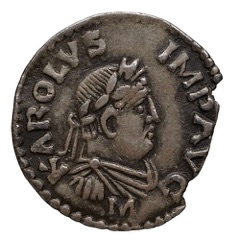
Charlemagne, whose name means Charles the Great, became king of the Franks in 768. Through many years of campaigns he conquered the Lombards in Italy, the Saxons in Germany, and Bavaria, and fought the Avars and the Muslim rulers of Spain, bringing most of western Europe under one ruler for the first time since Rome. His wars against the Saxons were long and harsh and included forced conversions. On Christmas Day 800, Pope Leo III crowned him emperor in Rome. Charlemagne could read but struggled to write, yet he brought scholars such as Alcuin of York to his court at Aachen, founded schools, and encouraged the careful copying of ancient books in a clear new handwriting called Carolingian minuscule. Many Latin classics survive today because they were copied in his time. He also standardized coins and weights and sent officials to check on local rulers. His friend Einhard wrote a short biography of him. He died at Aachen in 814, and his empire was divided among his grandsons.
Faith: Christian king of the Franks who promoted the renewal of Christian society and learning. Source: Encyclopaedia Britannica

Key dates
- 768 Becomes king of the Franks
- 774 Conquers the Lombard kingdom of Italy
- 800 Crowned emperor by Pope Leo III
- 814 Dies at Aachen
Fun facts
- The caliph Harun al-Rashid sent him an elephant named Abul-Abbas, which arrived at his capital, Aachen, in 802. (Source: Charlemagne (Wikipedia))
Read about them
As an Amazon Associate I earn from qualifying purchases. As a Bookshop.org affiliate I earn from qualifying purchases, which also support independent bookstores.
Grades 9–12
- Two Lives of Charlemagne · In the library
- Charlemagne by Derek Wilson (Vintage, 2007; ISBN 9780307274809)
Bookshop.org · Amazon
More lives
Alfred the Great · Genghis Khan · Henry II of England · Justinian I · Anna Komnene · Louis IX of France