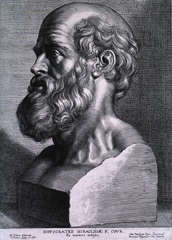
Hippocrates
c. 460–370 BC · Greek physician of Kos, called the father of medicine.
Hippocrates was born on the Greek island of Kos and belonged to a family of physicians who claimed descent from Asclepius, the god of healing. He taught medicine on Kos and traveled through Greece practicing it. Plato and Aristotle mention him as a famous physician, but little else is known of his life. About sixty medical writings, called the Hippocratic Corpus, were later gathered under his name, though they were written by many authors over many years. These works taught that diseases have natural causes, not punishments sent by the gods, and that physicians should observe patients carefully, record symptoms, and predict the course of an illness. They explained health as a balance of four bodily fluids, or humors, an idea that lasted for two thousand years. They stressed diet, exercise, rest and fresh air, and the famous rule to help, or at least to do no harm. The Hippocratic Oath, in which doctors swore to act for the good of their patients, keep their secrets, and not give deadly drugs, was taken in various forms by physicians for centuries.
Hippocrates is also an author in the library: author page and works.
Faith: Faith not well documented; he taught that disease had natural causes rather than being a punishment from the gods. Source: Wikipedia

Key dates
- c. 460 BC Born on Kos
- late 5th century BC Teaches and practices medicine
- c. 370 BC Dies, by tradition at Larissa
Fun facts
- A crater on the Moon is named after him. (Source: Hippocrates (Wikipedia))
Record-breaker
Firsts and records, worded as the sources give them ("first known", "at the time").
- He is credited as the first person to believe that diseases have natural causes rather than being sent by gods. (Source: Hippocrates (Wikipedia))
Read about them
Grades 9–12
- Hippocratic Writings · In the library
More lives
Aulus Cornelius Celsus · Pedanius Dioscorides · Galen · Herophilus
Notes: Which Hippocratic writings are by Hippocrates himself is unknown.