Sacagawea
c. 1788–1812 · Shoshone woman who traveled with the Lewis and Clark expedition to the Pacific.
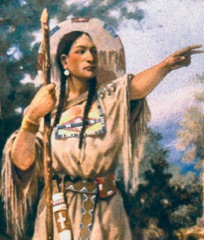
Sacagawea was born into the Lemhi Shoshone people in what is now Idaho. When she was about twelve, a Hidatsa raiding party captured her and took her to their villages near the Knife River in present-day North Dakota. In the winter of 1804–1805, Meriwether Lewis and William Clark hired Charbonneau as an interpreter for their expedition, because Sacagawea could speak Shoshone, and they would need Shoshone horses to cross the mountains. In February 1805 she gave birth to a son, Jean Baptiste, and she carried him in a cradleboard for the whole journey. She recognized landmarks in her homeland, identified edible plants, and saved valuable papers and instruments when a boat nearly capsized. When the expedition met the Shoshone, their chief turned out to be her brother, Cameahwait, and the explorers got the horses they needed. The presence of a woman and baby also signaled to other nations that the group was not a war party. Records suggest she died at Fort Manuel in 1812, though some later accounts claimed she lived much longer.
Faith: Faith not well documented. Source: Wikipedia
Key dates
- c. 1800 Captured by a Hidatsa raiding party
- 1805 Gives birth to Jean Baptiste; joins the expedition
- 1805 Meets her brother Cameahwait
- 1806 Expedition returns
- 1812 Probably dies at Fort Manuel
Fun facts
- Members of the Lewis and Clark expedition nicknamed her baby son 'Pomp', and she carried him with her on the journey. (Source: Sacagawea (Wikipedia))
Watch


Videos load from YouTube in privacy-enhanced mode only when you press play.
More lives
Notes: Her date of death is disputed; most historians accept 1812.