W. B. Yeats
1865–1939 · Irish poet and dramatist, leader of the Irish Literary Revival and winner of the Nobel Prize in Literature.
William Butler Yeats was born in 1865 in Dublin, Ireland, the son of a portrait painter. He was educated in Dublin and London and spent childhood holidays in County Sligo, in the west of Ireland. He studied at an art school in Dublin before turning to poetry. From an early age he was fascinated by Irish legends, which shaped his early poems. In 1889 he met Maud Gonne, an actress and campaigner for Irish independence, whom he loved for many years. With Lady Gregory and others he helped found the Abbey Theatre in Dublin, which opened in 1904 and became Ireland's national theatre. His later poetry, in collections such as The Tower (1928), became more direct and powerful, and poems such as 'Easter, 1916' and 'The Second Coming' are among the most famous in English. In 1917 he married Georgie Hyde-Lees. After Irish independence he served as a senator of the Irish Free State from 1922 to 1928. In 1923 he received the Nobel Prize in Literature. He died in France in 1939.
W. B. Yeats is also an author in the library: author page and works.
Faith: Raised Protestant; he held strong interests in mysticism and the occult. Source: Wikipedia
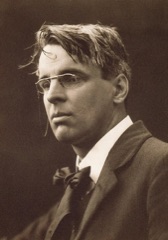
Key dates
- 1865 Born in Dublin
- 1889 Meets Maud Gonne
- 1904 Abbey Theatre opens
- 1917 Marries Georgie Hyde-Lees
- 1922 Becomes a senator of the Irish Free State
- 1923 Nobel Prize in Literature
- 1939 Dies in France
Watch


Videos load from YouTube in privacy-enhanced mode only when you press play.
Read about them
Grades 3–5
- Fairy and Folk Tales of the Irish Peasantry · In the library
Grades 9–12
- The Second Coming · In the library
More lives
Marguerite de Angeli · Richard and Florence Atwater · Mariano Azuela · Samuel Beckett · W. E. B. Du Bois · Bertolt Brecht