Work record
Fairy and Folk Tales of the Irish Peasantry
1888 · 19th Century · Short Stories · English
Abstract
Background. Aged twenty-three and living in London, Yeats was asked to assemble a Camelot Series volume. He drew on printed sources, including Croker's 1825 legends, Carleton's sketches, Kennedy's Wexford tales, Lady Wilde's recent book and Hyde's fresh translations from Irish.
Contents. Sections move from the sociable fairy host through stolen infants, sea-folk and the solitary sprites to ghosts, witches and healers, the Land of Youth, holy men, Satan's bargains, giants, and royal wonder tales. Highlights include a hunchback's cure at a fairy rath, lobster-pot cages for drowned souls, a noblewoman's ransom of her people, and a wife's griddle-cake ruse.
Method. Brief editorial essays explain each class of being in the countryfolk's own terms, setting their answers beside those of antiquarians and occult writers; endnotes give sources and glosses on Irish words. Ballads by Allingham, Ferguson, Walsh and Yeats himself punctuate the prose, so the book reads as a miscellany rather than a scholarly corpus.
Themes. Courtesy toward the unseen, the nearness of death, Christian and pre-Christian belief intertwined, and the triumph of wit and kindness over force and greed.
Significance. An early landmark of the Irish Revival, it introduced many English readers to banshees and pookas and gave Yeats the plot of his first major play.
Main characters
- Lusmore: Hunchbacked herb-gatherer favored by the fairies
- Jack Dogherty: Clare fisherman who releases imprisoned souls
- Teig O'Kane: Reckless youth burdened with a corpse
- Countess Kathleen O'Shea: Noblewoman who bargains with demon merchants
- Oonagh: Resourceful wife of the giant Fin M'Coul
- Daniel O'Rourke: Tipsy teller of a moonward eagle ride

Summary
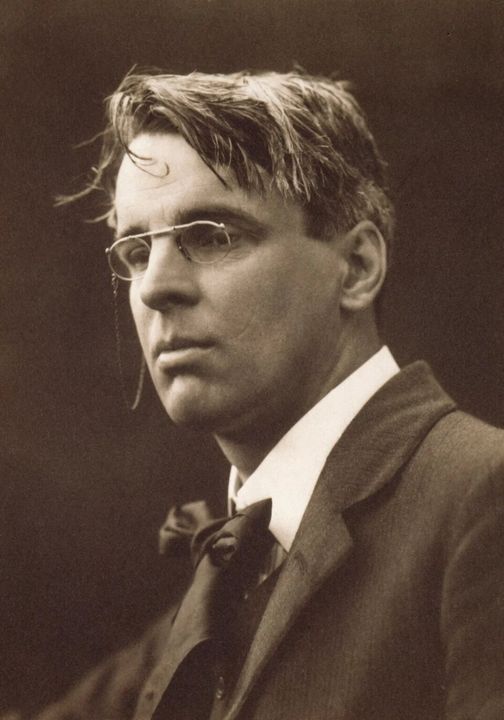
Fairy and Folk Tales of the Irish Peasantry is an anthology of Irish fairy lore, ghost stories, legends and comic tales chosen and introduced by the young W. B. Yeats. Rather than collecting stories himself, Yeats gathered the best versions already printed by nineteenth-century Irish writers and folklorists: Thomas Crofton Croker, William Carleton, Samuel Lover, Patrick Kennedy, Lady Wilde, Letitia Maclintock, Douglas Hyde and others, along with poems by William Allingham, Samuel Ferguson, Edward Walsh and Yeats himself. He arranged them by the kind of being they describe and wrote a short introduction to each section explaining the country people's beliefs. Yeats's general introduction argues that belief in fairies and ghosts is still alive in the Irish countryside, quoting an old man in County Sligo who complains he is annoyed by the fairies, and advising the collector to make friends with children and old men. The Trooping Fairies section opens with Allingham's poem The Fairies and includes Croker's Legend of Knockgrafton, in which the hunchback Lusmore improves the fairies' song and is relieved of his hump while a greedy imitator receives a second one, and Hyde's translation of Teig O'Kane and the Corpse, in which a wild young man must carry a corpse all night to find it a grave. Changelings includes Croker's Brewery of Egg-shells, where a mother tricks a fairy child into revealing its age, and Yeats's poem The Stolen Child. The Merrow section tells of Jack Dogherty, who visits a sea-man's house under the waves and frees the drowned souls kept in lobster-pot cages. The Solitary Fairies cover the lepracaun, the cluricaun, the far darrig, the pooka and the banshee; here Daniel O'Rourke rides an eagle to the moon. Ghosts and Witches, Fairy Doctors gather tales of the dead who return, of witches who steal butter in the shape of hares, and of fairy doctors who cure the fairy-struck, as in The Confessions of Tom Bourke. T'yeer-na-n-oge describes the Land of Youth and enchanted islands such as Hy-Brasail. Saints, Priests includes The Priest's Soul, about a learned priest who denied the soul, and Lover's comic King O'Toole and his Goose, with Saint Kevin. The Devil includes The Countess Kathleen O'Shea, in which a noblewoman sells her soul to demon merchants to save her starving people, a tale Yeats later turned into a play. Giants offers Carleton's Legend of Knockmany, where Fin M'Coul's wife Oonagh outwits the giant Cucullin by disguising Fin as a baby. The last section, on kings, queens and robbers, includes The Twelve Wild Geese and The Story of Conn-eda. The Walter Scott Publishing Company of London published the book in 1888 in its Camelot Series. It closes with Yeats's notes and a short list of authorities on Irish folklore.
Virtues in this work
- Charity: Countess Kathleen O'Shea gives away her wealth and finally her soul to save her people from the demon merchants.
- Humility: Lusmore, shunned for his deformity, adds modestly to the fairies' song and is rewarded, while the grasping Jack Madden is punished.
- Prudence: Oonagh in A Legend of Knockmany saves Fin M'Coul from the giant Cucullin by cleverness rather than strength.
- Piety: Jack Dogherty in The Soul Cages releases the drowned souls kept by the merrow so they may go to their rest.
Plot or Argument
- Introduction
Yeats argues that fairy and ghost belief survives among the Irish country people, explains how stories are gathered from fishermen and old storytellers, and praises the writers whose versions he has chosen, from Croker and Carleton to Lady Wilde and Hyde.
- The Trooping Fairies
A sectional essay asks who the fairies are, giving the peasants' answer (fallen angels), the Book of Armagh's and the antiquarians'. Tales include Frank Martin and the Fairies, The Priest's Supper, Teig O'Kane and the Corpse, The White Trout, Ferguson's poem The Fairy Thorn and The Legend of Knockgrafton.
- Changelings and The Merrow
Accounts of fairies who steal children and leave sickly substitutes, with The Brewery of Egg-shells, Jamie Freel and the Young Lady and The Stolen Child; then the sea-people, with The Soul Cages and Flory Cantillon's Funeral.
- The Solitary Fairies
The lepracaun, cluricaun, far darrig, pooka and banshee, in Allingham's poem The Lepracaun, Master and Man, The Piper and the Puca, Daniel O'Rourke's ride to the moon, The Kildare Pooka and The Banshee of the MacCarthys.
- Ghosts
Short tales and poems of the returning dead, including Allingham's A Dream, Grace Connor, The Black Lamb, The Radiant Boy and Carleton's The Fate of Frank M'Kenna.
- Witches, Fairy Doctors
Yeats distinguishes the feared witch from the consulted fairy doctor; tales of bewitched butter, the witch hare, The Horned Women, and The Confessions of Tom Bourke, a man with fairy powers of healing.
- T'yeer-na-n-oge
The Land of Youth and the enchanted lake and island, with The Legend of O'Donoghue, Rent-Day, Loughleagh (Lake of Healing), Griffin's Hy-Brasail and The Phantom Isle.
- Saints, Priests and The Devil
The Priest's Soul, The Priest of Coloony, The Story of the Little Bird, the conversion of King Laoghaire's daughters by Saint Patrick and King O'Toole and his Goose; then The Demon Cat, The Long Spoon, The Countess Kathleen O'Shea and Carleton's The Three Wishes.
- Giants
Croker's The Giant's Stairs and Carleton's comic A Legend of Knockmany, in which Oonagh saves Fin M'Coul from the giant Cucullin by baking iron griddles into bread.
- Kings, Queens, Princesses, Earls, Robbers
Wonder tales of enchantment and cleverness: The Twelve Wild Geese, The Lazy Beauty and her Aunts, The Haughty Princess, The Enchantment of Gearoidh Iarla, Hyde's Munachar and Manachar, Donald and his Neighbours, The Jackdaw and The Story of Conn-eda; followed by notes and a list of authorities.
Characters
- Lusmore, hero of The Legend of Knockgrafton
Gentle hunchback of the glen of Aherlow whose song pleases the fairies and who is freed of his hump.
- Teig O'Kane, hero of Teig O'Kane and the Corpse
Wild young man forced by the fairies to carry a corpse through the night until he finds it a grave.
- Jack Dogherty, fisherman in The Soul Cages
Clare fisherman who befriends the merrow Coomara and frees the drowned souls he keeps.
- Daniel O'Rourke, comic narrator
Man who, after a night of feasting, tells of riding an eagle to the moon.
- Countess Kathleen O'Shea, heroine
Noblewoman who sells her soul to two demon merchants to save her people from famine.
- Fin M'Coul, giant
Irish hero-giant who hides from the stronger Cucullin as a baby in a cradle.
- Oonagh, Fin's wife
Clever wife who outwits Cucullin and saves her husband in A Legend of Knockmany.
- King O'Toole, comic king
Old king of Glendalough whose beloved goose is restored by Saint Kevin.
- The banshee, solitary fairy
Woman of the fairies who follows the old families and wails before a death.
Lessons
Kindness rewarded, greed undone
Many tales turn on courtesy toward the unseen: Lusmore pleases the fairies with a gracious addition to their song and is healed, while Jack Madden, who rushes in for his own gain, leaves with two humps. The same pattern appears in the soul-saving Jack Dogherty and the self-giving Countess Kathleen.
- Why does Lusmore receive a gift while the second hunchback is punished?
- What does Countess Kathleen give up, and what happens to her soul in the end?
- Do these tales teach that good behavior is rewarded, or that it is right in itself?
A people's memory in story
Yeats insists that these stories preserve how Irish country people understood the world: death and the banshee, the sea and the merrow, healing and the fairy doctor. He treats the tellers and their beliefs with respect, and the anthology became part of a larger effort to recover Ireland's own literature.
- How does Yeats say a collector should go about gathering tales?
- Why does he arrange the book by kinds of fairies rather than by author?
- What stories or customs does your own family or town hand down?
Christian faith and older lore side by side
Priests and saints share the book with fairies and pookas. The peasants' answer that fairies are fallen angels, neither saved nor lost, shows how Christian teaching and older beliefs were woven together in Irish country life.
- What happens to the priest in The Priest's Soul who taught that there is no soul?
- How does Saint Patrick appear in the story of King Laoghaire's daughters?
- How should a Christian reader enjoy fairy tales that come from older beliefs?
Wit as a weapon
In A Legend of Knockmany, Munachar and Manachar and the comic tales, cleverness and good humor beat strength. Oonagh's griddle-cakes and Daniel O'Rourke's tall tale show the Irish delight in a good story well told.
- How does Oonagh make Cucullin believe Fin is too mighty to fight?
- Why do you think storytellers enjoyed tales where the weak outwit the strong?
- Is trickery ever a virtue?
Context
Yeats compiled the anthology at the start of the Irish Literary Revival, when writers and scholars were collecting the oral culture of the Irish-speaking and English-speaking countryside in the decades after the Great Famine. Earlier collectors such as Croker (1825) and Lady Wilde (1887) had printed fairy legends, and Douglas Hyde was translating tales directly from Irish speakers. Yeats wanted to present this material as literature and as evidence of a living imaginative tradition.
Composition
The Walter Scott Publishing Company issued the book in London and Felling-on-Tyne in 1888 as part of the Camelot Series edited by Ernest Rhys. Yeats selected tales already in print, added section introductions, notes and a list of authorities, and included his own poem The Stolen Child. The volume is inscribed to his mystical friend G. R.
Reception
The book sold steadily and was followed by Yeats's Irish Fairy Tales (1892) and his own collection The Celtic Twilight (1893). It helped popularize terms such as banshee, pooka and leprechaun for English-speaking readers, and The Countess Kathleen O'Shea became the source of Yeats's verse drama The Countess Cathleen (1892), later staged at the founding of the Irish Literary Theatre in 1899.
Comparisons
- grimms-fairy-tales
The Grimms collected German household tales as a national inheritance, as Yeats did for Ireland; both books include clever-wife and enchanted-sibling stories, and The Twelve Wild Geese parallels the Grimms' tales of brothers turned to birds.
- st-patricks-writings
Tírechán's account of Patrick and the daughters of King Laoghaire at the well, included in that collection, is the old source of a tale Yeats prints in his Saints, Priests section.
- the-second-coming
Yeats's mature poem of vision and dread grows from the same interest in the unseen that led the young editor to the fairy faith of Sligo.
- the-picture-of-dorian-gray
Oscar Wilde was the son of Lady Wilde, whose folklore Yeats reprints; his novel of a man who trades his soul for youth echoes the soul-bargain of The Countess Kathleen O'Shea in a very different key.
- christ-legends
Lagerlöf's Swedish legends and these Irish tales both mix Christian saints with folk belief, and both include talking animals, miraculous healings and a soul that cannot be lifted from hell.
Quotes
Frequently cited
“for every one is a visionary, if you scratch him deep enough. But the Celt is a visionary without scratching.”
Frequently cited
“Up the airy mountain, Down the rushy glen, We daren't go a-hunting For fear of little men;”
Frequently cited
“Come away, O, human child! To the woods and waters wild, With a fairy hand in hand, For the world's more full of weeping than you can understand.”
“Fallen angels who were not good enough to be saved, nor bad enough to be lost,”
“There was once a poor man who lived in the fertile glen of Aherlow, at the foot of the gloomy Galtee mountains, and he had a great hump on his back:”
“is an attendant fairy that follows the old families, and none but them, and wails before a death.”
“Witches and fairy doctors receive their power from opposite dynasties;”
“She was the idol of the people and the providence of the indigent.”
For Students
A reading companion for classical Christian high school students. See the student guide.
Reading Guide
Watch for
- Yeats's short essays at the start of each section, which explain what the country people believed about each kind of being.
- How many tales are retold by named writers such as Croker, Carleton, Lover, Lady Wilde and Hyde, each with a different style.
- Poems set among the prose, especially Allingham's The Fairies and Yeats's The Stolen Child.
- Saints, priests and the Devil appearing alongside fairies, as in The Priest's Soul and The Countess Kathleen O'Shea.
- Tales where kindness and wit win out, such as The Legend of Knockgrafton and A Legend of Knockmany.
Key terms and names
- Sidhe (shee)
- Irish word for the fairy people and their hills; it gives the second half of banshee.
- Changeling
- A sickly fairy child or bewitched log believed to be left in place of a stolen human baby.
- Merrow
- Irish sea-person, like a mermaid or merman, as in Coomara of The Soul Cages.
- Pooka
- Solitary shape-changing fairy, often a wild horse or goat, who carries riders on mad night journeys.
- Banshee
- Fairy woman who follows the old families and wails before a death.
- Fairy doctor
- Country healer believed to have knowledge from the fairies, consulted about sick cattle, changelings and the fairy stroke.
- T'yeer-na-n-oge
- Yeats's spelling of Tír na nÓg, the Land of Youth, an otherworld of enchanted lakes and islands.
Seminar Questions
- Comprehension How does Lusmore win the fairies' favor at Knockgrafton, and what goes wrong for Jack Madden?
- Comprehension What does Jack Dogherty find in the merrow's house under the sea, and what does he do about it?
- Comprehension What answers does Yeats give to the question of who the fairies are?
- Interpretation In The Stolen Child, the fairies say the world is more full of weeping than the child can understand. Are they offering a rescue or a trap?
- Interpretation Why might Yeats have placed The Countess Kathleen O'Shea in the section called The Devil rather than among the saints?
- Interpretation How does the voice of a comic tale like Daniel O'Rourke differ from a solemn one like The Priest's Soul?
- Big Question Can a Christian enjoy stories about fairies and pookas without believing in them, and what might they still teach?
- Big Question Why do people in every land tell stories about an unseen world close beside our own?
Faith Connections
- John 15:13 (Scripture)
Greater love has no man than to lay down his life for his friends; the Countess Kathleen gives up her very soul for her starving people, and the tale's ending shows heaven honoring that love.
- Ephesians 6:12 (Scripture)
Paul's warning about spiritual powers gives a Christian frame for the many tales in which unseen beings, fairy or demonic, contend for human souls.
- Luke 1:52 (Scripture)
He has put down the mighty and exalted the lowly; the shunned Lusmore is lifted up while the grasping Jack Madden is brought low.
- Patrick, Confession (Church Fathers)
Patrick's own account of his mission to Ireland stands behind the tale of King Laoghaire's daughters and the many saints and priests in this book.
Logic and Rhetoric
Central argument: The beliefs of Irish country people are a living imaginative tradition; the best printed versions of their tales preserve that tradition faithfully and with literary skill; therefore gathering them, arranged by the beings they describe and explained in the people's own terms, gives readers a true picture of the Irish imagination.
Rhetorical device: refrain. In The Stolen Child the fairies' call, Come away, O, human child, returns at the end of every stanza, with a final change from you to he as the child is taken.
Debate: Resolved: that Countess Kathleen O'Shea was right to sell her soul to save her people.
Memory Work
Up the airy mountain, Down the rushy glen, We daren't go a-hunting For fear of little men;
Come away, O, human child! To the woods and waters wild, With a fairy hand in hand, For the world's more full of weeping than you can understand.
Writing Prompts
Essay: Using The Legend of Knockgrafton and The Countess Kathleen O'Shea, explain what these tales reward and what they punish.
Comparison with Household Stories (Grimm's Fairy Tales): Compare The Twelve Wild Geese with a Grimm tale of brothers turned into birds. How do the Irish and German storytellers handle the sister's task?
Medical Lens
The anthology is a rich source for the history of folk medicine in nineteenth-century Ireland. Yeats's section notes describe the fairy doctor, consulted for sick cattle, suspected changelings and the fairy blast or fairy stroke, by which a person struck by the fairies develops a swelling or becomes paralysed; historians of medicine read such beliefs as a vernacular framework for sudden illness, stroke and infant wasting, though the tales themselves make no such identification. The changeling belief, in which a sickly or failing child is thought to be a fairy substitute, is presented here as lore; later events, such as the death of Bridget Cleary in 1895, showed how such beliefs could be acted on. Lusmore's hump, the healing mud of Loughleagh and the banshee's warning of death round out a picture of how country people explained deformity, cure and mortality.
- Changelings, introduction
Yeats explains the belief that fairies carry off healthy children and leave sickly substitutes that pine away, and the folk tests used to detect them.
- Witches, Fairy Doctors, introduction
The fairy doctor's knowledge of herbs and spells, and the fairy blast or stroke that causes swellings or paralysis.
- The Trooping Fairies, The Legend of Knockgrafton
The hunchback Lusmore, shunned by neighbors, is freed of his hump by the fairies; the greedy Jack Madden is given a second.
- T'yeer-na-n-oge, Loughleagh (Lake of Healing)
A lake whose black mud is said to cure scurvy and sores, and a traveler who arrives on crutches and leaves sound.
- The Solitary Fairies, The Banshee note and tales
The banshee's wail before a death in the old families, the funeral keen said to imitate her cry, and the death-coach.
Creative Prompts
- Classroom
Make a field guide to the beings in Yeats's table of contents (trooping fairies, merrow, lepracaun, pooka, banshee), with one sentence and one tale for each.
- Fiction
Retell The Legend of Knockgrafton as a storyteller would by a turf fire, then write a second version in which Jack Madden learns his lesson.
- Essay
Compare The Countess Kathleen O'Shea with a story of self-sacrifice from Scripture or the saints, and explain how the tale's ending answers the question of whether her bargain could stand.
Further Reading
- The Celtic Twilight, W. B. Yeats
Yeats's own 1893 record of fairy and ghost lore gathered in Sligo and elsewhere.
- Fairy Legends and Traditions of the South of Ireland, Thomas Crofton Croker
The 1825 collection from which many of Yeats's tales are taken.
- Ancient Legends, Mystic Charms, and Superstitions of Ireland, Lady Wilde
Lady Wilde's 1887 collection, a major source for this anthology.
- Beside the Fire, Douglas Hyde
Hyde's 1890 Irish-English collection of folk tales taken down from Irish speakers.
- The Burning of Bridget Cleary, Angela Bourke
A study of fairy belief and a notorious 1895 case in County Tipperary.
Verification notes
All eight quotes were found as exact substrings of the stored Project Gutenberg #33887 text of the Walter Scott Publishing Co. edition. Contents, contributors and section structure follow the stored table of contents and the attributions printed in the text. Some tales were translated from Irish (Douglas Hyde, J. J. Callanan); the anthology itself is in English. Yeats's generalizations about the Celt are reported as his own view.
- Confirm that the dedicatee G. R. is George Russell (AE).
- Confirm the exact count of tales and poems (about sixty-four entries in the table of contents) if a precise number is cited.
- Confirm the identification of Ernest Rhys as general editor of the Camelot Series in 1888.